
Some dinners are memorable because they take a lot of effort. Others become family favorites because they deliver big flavor without making an ordinary evening more complicated. Mississippi pot roast belongs firmly in the second category.
It’s a rich, savory beef dish known for its tender texture and distinctive tangy flavor. Unlike a traditional Sunday pot roast, which often leans on vegetables and a familiar beef gravy, Mississippi roast has a bolder personality.
A good Mississippi pot roast recipe should give you beef that’s tender enough to enjoy easily, with flavorful juices that don’t taste overwhelmingly salty. It’s comforting food with a little extra character, especially when served over mashed potatoes or alongside something that can soak up the sauce.
What Is Mississippi Pot Roast?
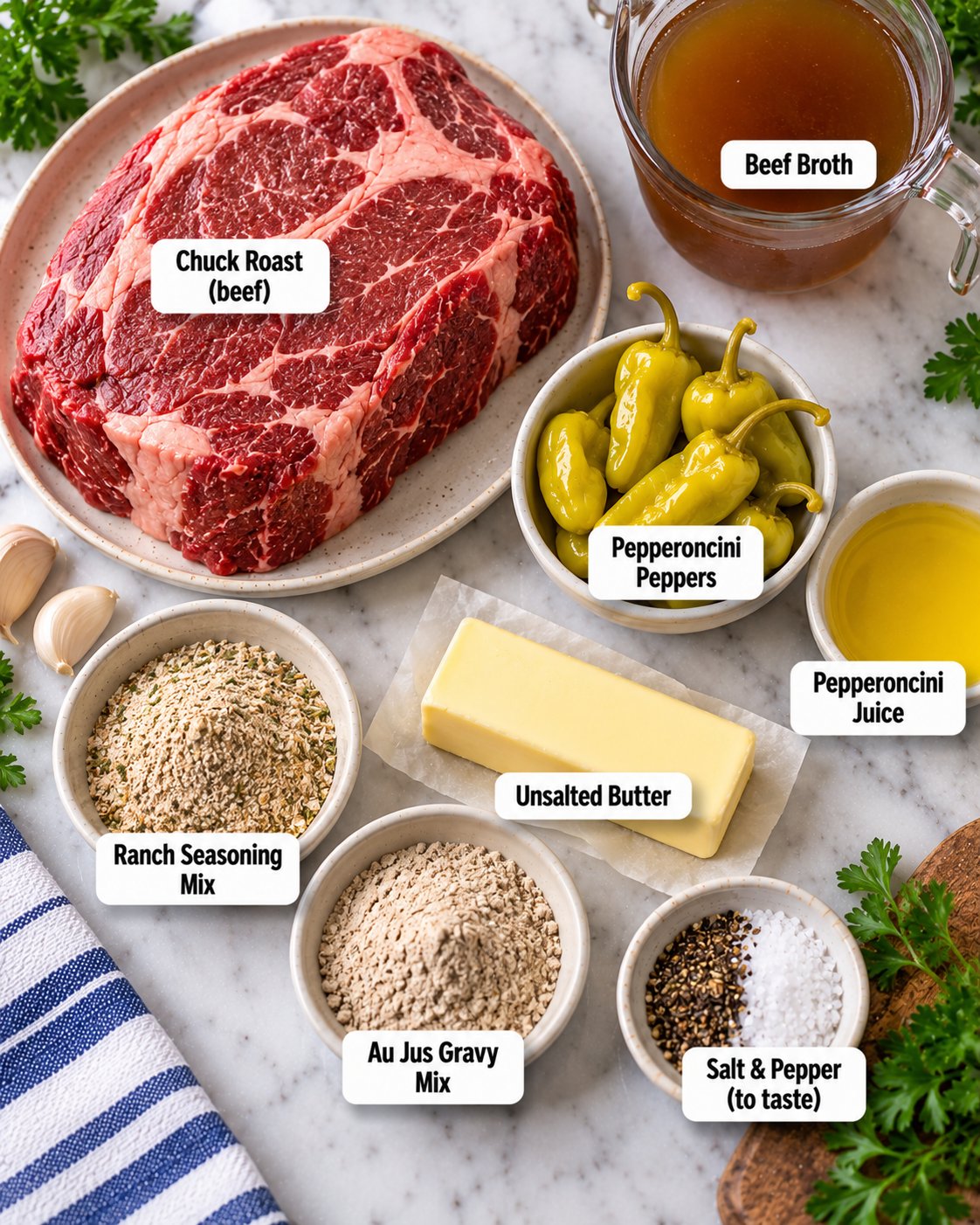
Mississippi pot roast is an American comfort-food dish associated with a particularly savory, tangy style of roast beef. Familiar versions often feature ranch-style seasoning and pepperoncini, although the exact combination depends on the recipe.
The finished beef is generally tender and surrounded by richly flavored juices. Its appeal comes from the contrast between the beef’s natural richness and the sharper notes in the seasoning.
What Makes the Flavor Different?
Traditional pot roast usually develops its character from beef, vegetables, and a savory cooking liquid. Mississippi roast is known for a more pronounced seasoning profile, often with a tangy edge.
That tanginess helps balance the richness of the meat. When everything works together, the sauce tastes bold without covering up the beef.
Mississippi Roast vs. Classic Pot Roast
A classic pot roast often feels like a complete meat-and-vegetable dinner. Mississippi pot roast is more focused on deeply seasoned beef and its accompanying juices.
Both can be comforting and delicious. The main difference is the flavor profile rather than the idea of serving tender roast beef for dinner.
Why This Pot Roast Is a Family Favorite
Mississippi pot roast fits naturally into family meals because it’s hearty and easy to pair with everyday sides. A generous serving of beef can make a simple plate of potatoes or noodles feel like a complete dinner.
It’s also useful when you’re feeding people with different preferences. The beef can be served in slices or softer portions, depending on the finished texture, and the juices add flavor to whatever accompanies it.
Tender Texture and Everyday Appeal
The best pot roast has a tenderness that makes it enjoyable without becoming dry or stringy. The beef should still taste substantial, even when it’s soft enough to separate easily.
That combination of tenderness and bold flavor is what gives Mississippi roast its popularity. It feels like a proper home-cooked dinner rather than just another beef dish.
Good Occasions for Mississippi Pot Roast
This roast suits Sunday dinners, casual family gatherings, and cold evenings when a hearty meal sounds appealing. It can also be a useful choice for planned leftovers.
Because the flavor is distinctive, simple sides usually work better than heavily seasoned ones. They allow the roast to remain the focus of the plate.
Tips for Tender, Flavorful Pot Roast
The cut of beef has a major influence on the finished texture. Cuts with connective tissue, such as chuck roast, are commonly suited to dishes where the goal is tender, rich beef.
A very lean cut may behave differently. It can become dry or firm rather than developing the texture people expect from Mississippi pot roast.
Why a Roast Can Turn Out Tough
Tough pot roast doesn’t always mean the meat was overcooked. Some cuts need sufficient cooking time for their connective tissue to soften, while leaner cuts may become less pleasant with prolonged cooking.
The right result depends on the beef cut and the recipe’s intended cooking conditions. The meat should be tender without feeling dry or fibrous.
Managing Saltiness and Tanginess
Mississippi roast can have a fairly concentrated savory flavor. Depending on the seasonings used, some versions may taste saltier than expected.
The tangy component is part of the dish’s identity, but it shouldn’t dominate every bite. A balanced roast has enough acidity to cut through the richness while still tasting primarily of beef.
Keeping the Beef Moist
The most satisfying roast has flavorful meat as well as flavorful juices. A rich sauce can’t completely compensate for beef that’s become unpleasantly dry.
The cut of meat, its fat content, and the recipe’s cooking conditions all influence moisture. That’s why it’s worth following the recipe designed for the particular roast being used.
Serving Suggestions
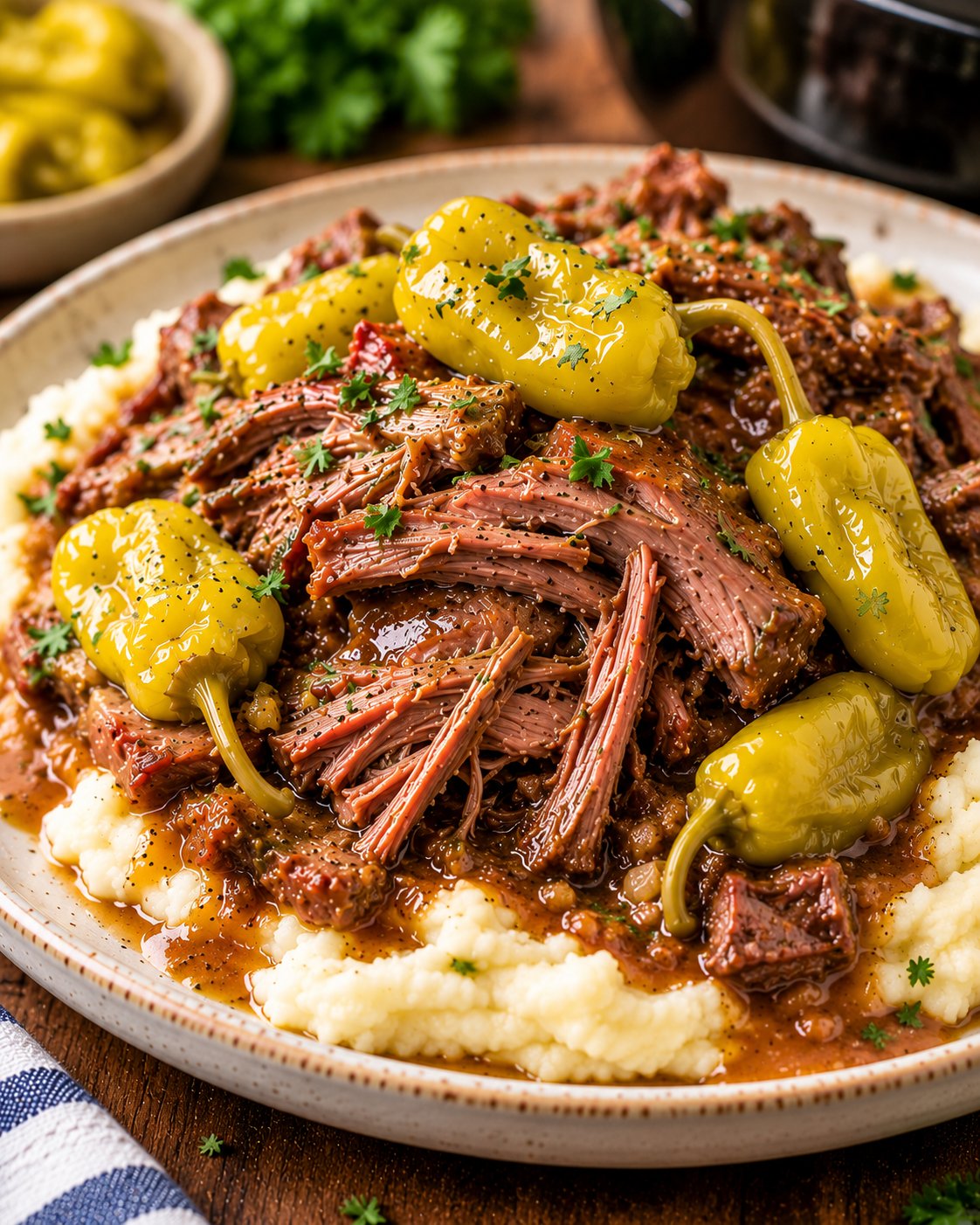
Mashed potatoes are one of the best partners for Mississippi pot roast. Their mild, creamy texture balances the beef’s stronger flavor, and the juices make a natural accompaniment.
Egg noodles and rice are other practical options. For a more casual meal, tender beef can also work well in sandwiches.
What to Do With Leftover Juices
The flavorful liquid is part of what makes Mississippi pot roast satisfying. It’s especially good with potatoes, noodles, or another mild side that complements the beef.
Because the juices may be concentrated, their flavor can seem stronger than the meat itself. A little can go a long way.
Storing and Reheating
Refrigerate leftover pot roast promptly in covered containers at 40°F or below. Cooked beef leftovers are generally best used within three to four days.
Freezing is a practical option for longer storage. The beef’s texture may change slightly after thawing, but many pot roast recipes freeze well.
Reheat leftovers thoroughly to 165°F. The aim is to warm the beef without losing more moisture than necessary.
Recipe Variations
Mississippi pot roast recipes vary in their level of tanginess, richness, and heat. Some versions have a stronger pepper flavor, while others are milder and more focused on the beef.
Slow-cooker and oven versions both exist, but they’re not automatically interchangeable. The cooking method and timing should follow the actual recipe card rather than being changed without testing.
Frequently Asked Questions about Mississippi Pot Roast Recipe
Why Is My Mississippi Pot Roast Tough?
The beef cut and its cooking conditions are usually important factors. A cut rich in connective tissue may need enough time to become tender, while a leaner roast may dry out.
Is Mississippi Pot Roast Spicy?
Not necessarily. Many versions are more tangy and savory than hot, although the level of heat depends on the peppers and seasonings used.
Can You Freeze Leftover Pot Roast?
Yes. Cooked pot roast can be frozen in suitable containers, and keeping some of its flavorful juices with the beef may help preserve its eating quality.
Final Thoughts
Mississippi Pot Roast Recipe is a dependable choice when you want a hearty beef dinner with more flavor than an ordinary roast. The savory, tangy juices make it especially good with simple comfort-food sides.
The best version is tender, balanced, and satisfying without being overly salty. You’ll find the complete recipe in the card below.
Mississippi Pot Roast
Ingredients
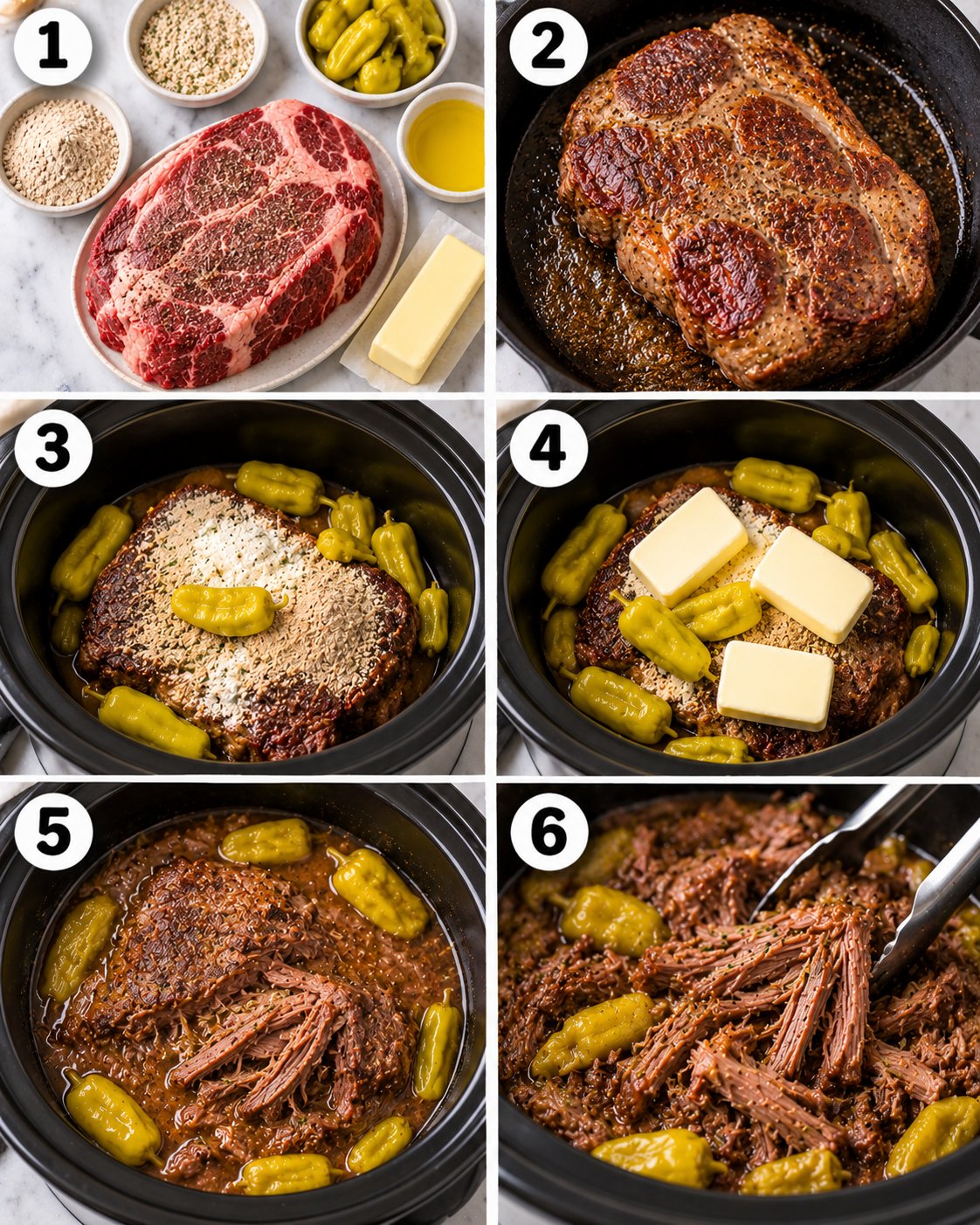
Method
- Preheat the oven to 275°F (135°C).
- Place the chuck roast in a large roasting pan.
- Sprinkle the ranch seasoning mix evenly over the roast.
- Arrange the pepperoncini peppers on top of the roast.
- Cut the butter into slices and place over the roast.
- Pour the beef broth around the roast in the pan.
- Cover the pan tightly with aluminum foil.
- Cook in the preheated oven for about 6 hours, or until the beef is tender and shreds easily.
- Remove the roast from the oven and let it rest for a few minutes.
- Serve sliced or shredded, with the flavorful juices poured over.