
Few dinners feel quite as comforting as a casserole with a savory meat filling and a generous layer of mashed potatoes on top. The potatoes turn lightly golden in the oven, and underneath is a rich, hearty filling that makes the dish satisfying enough to serve on its own.
Shepherd’s pie is one of those meals that looks simple but depends on getting a few details right. The filling should be flavorful without being watery, and the mashed potatoes should be soft and fluffy without sinking into the meat below.
A good shepherds pie recipe is about the contrast between those two layers. You want creamy potatoes, a savory filling, and enough structure that the dish can be served without turning into a puddle on the plate. It’s classic comfort food, especially on a chilly evening when a warm casserole sounds better than anything else.
Shepherd’s Pie vs. Cottage Pie: What Is the Difference?
Shepherd’s pie and cottage pie are closely related dishes, but the traditional distinction is the meat. Shepherd’s pie is made with lamb, while cottage pie is made with beef.
In American home cooking, the name shepherd’s pie is sometimes used for versions made with ground beef. That usage is common, but it isn’t the traditional distinction.
This matters for SEO because people searching for shepherd’s pie may expect lamb, while those searching for cottage pie may be looking specifically for beef.
The actual recipe card should determine the most accurate title. If the filling uses ground beef, Cottage Pie Recipe may be a better match for both search intent and culinary accuracy.
Best Meat and Vegetables for the Filling
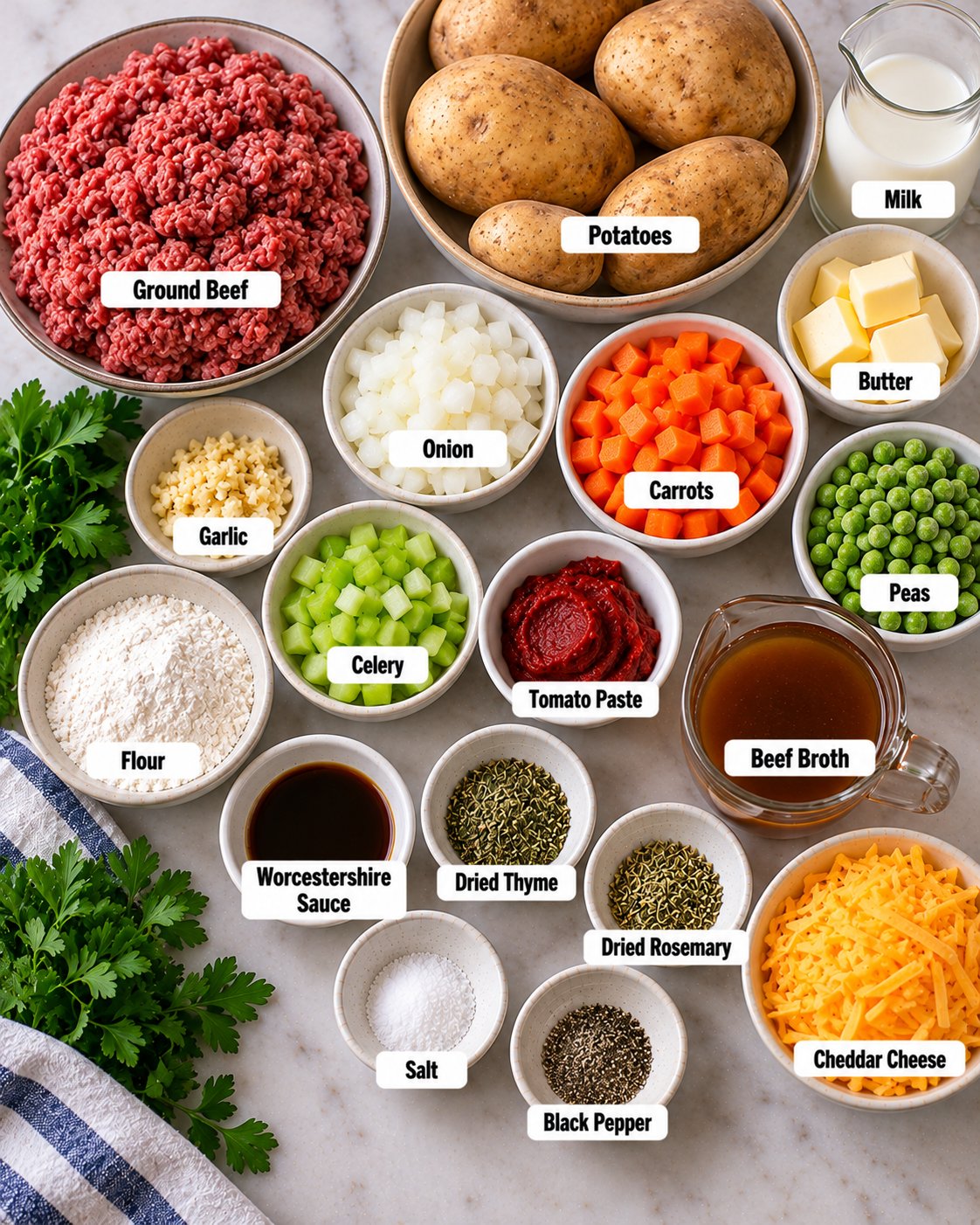
The filling is the heart of shepherd’s pie. Lamb provides a rich, distinctive flavor, while beef creates a slightly different savory character.
The fat content of the meat can affect the finished texture. Very lean meat may produce a drier filling, while meat with more fat can contribute richness.
Vegetables add color, sweetness, and variety. Carrots, peas, and onions are familiar additions in many versions, but the exact combination depends on the recipe.
The filling should feel hearty and cohesive rather than loose or greasy. Every spoonful should contain enough flavor to stand up to the mild mashed potatoes.
Tips for Fluffy Mashed Potato Topping
The mashed potato topping should be soft and creamy but firm enough to sit above the filling. Potatoes that are too loose can sink into the meat, while overly stiff potatoes may feel dry.
Potato variety affects texture. Starchy potatoes can create a fluffy mash, while waxier varieties may produce a denser consistency.
The amount of moisture in the potatoes also matters. A topping that feels perfect as a side dish may behave differently when used on a casserole.
The best shepherd’s pie has a topping that stays recognizable as a separate layer. It should complement the filling rather than disappear into it.
Ingredients and Recipe Card
The complete ingredients, measurements, and preparation instructions are in the recipe card below. Those details determine the meat, vegetables, seasoning, and potato topping used in this version.
For the finished dish, the balance between filling and potatoes is especially important. Too much filling liquid can make the casserole difficult to serve, while a very thick filling may feel dry.
The mashed potatoes should provide a creamy contrast to the savory meat. Together, the two layers create the familiar character of shepherd’s pie.
How to Prevent a Watery Filling
A watery filling can make shepherd’s pie difficult to serve. Liquid collects beneath the mashed potatoes, and the casserole may lose its structure when a portion is lifted out.
The meat and vegetables can both contribute moisture. Some vegetables release more liquid than others, especially when frozen products are used.
The sauce or gravy in the filling also needs the right consistency. It should coat the meat and vegetables without resembling soup.
A good finished filling feels rich and cohesive. It should be moist enough to taste satisfying but thick enough to support the mashed potato topping.
How to Get a Golden Topping
The golden surface is one of the most appealing parts of shepherd’s pie. It adds a little texture to the soft mashed potatoes and makes the casserole look especially inviting.
The type of potato topping and the oven conditions affect browning. Some toppings develop color more readily than others.
A beautifully browned top doesn’t automatically mean the center is fully heated, particularly when the casserole starts cold. The filling needs to be properly hot as well.
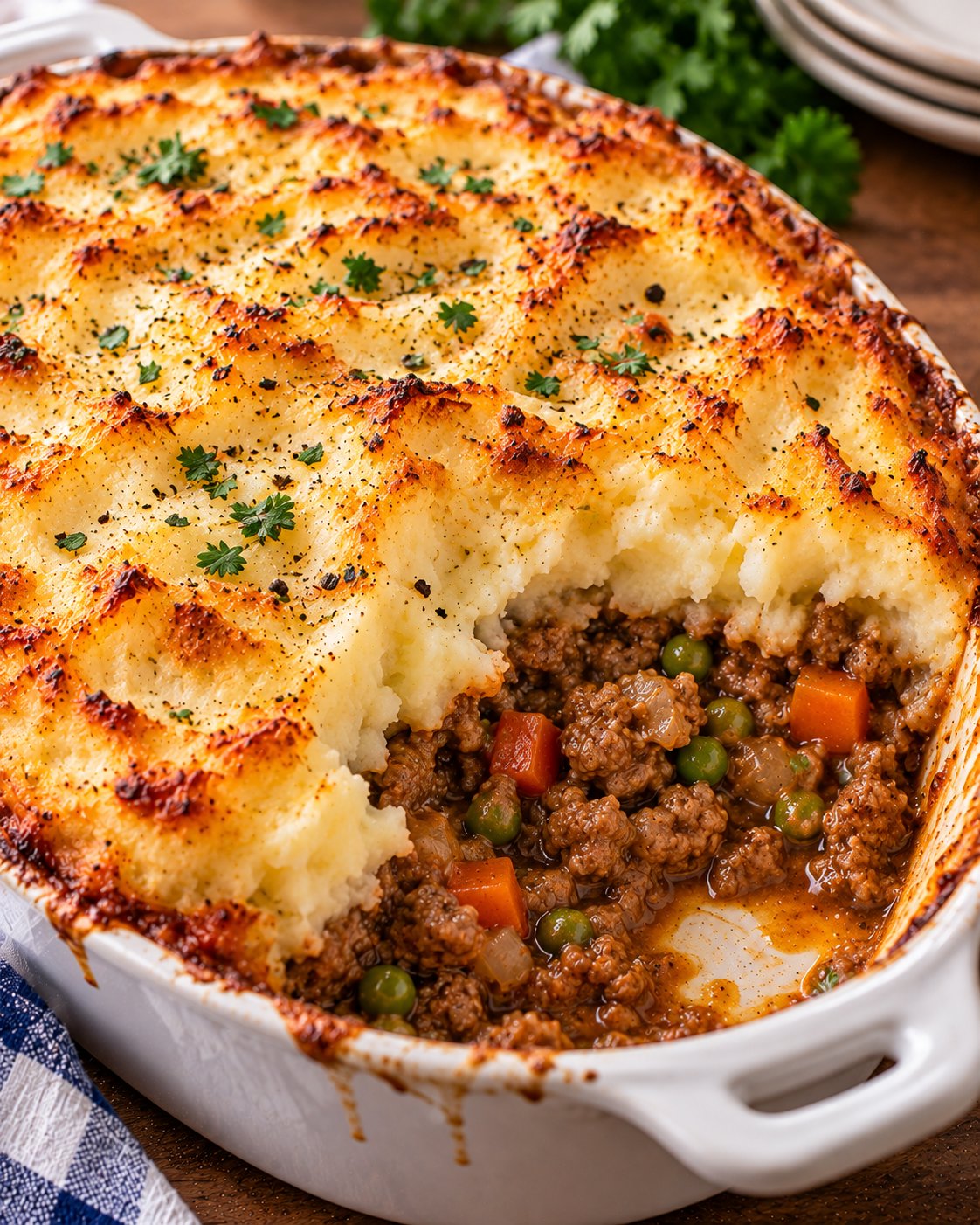
The ideal result has a lightly golden surface, creamy potatoes beneath, and a hot, savory filling.
Serving Suggestions
Shepherd’s pie is substantial enough to serve as a complete meal. It already contains meat, potatoes, and often vegetables, so it doesn’t need many sides.
A simple green salad can add freshness and crunch. Steamed green beans or roasted broccoli are other good choices when you want an extra vegetable.
For a family dinner, serve the casserole straight from the baking dish. Its rustic appearance is part of the appeal, and perfectly neat portions aren’t necessary.
Make-Ahead, Freezing and Reheating
Shepherd’s pie can be convenient for advance meal preparation, although the best approach depends on the filling and topping. Some versions can be assembled ahead, while others are better fully cooked before storage.
Refrigerate leftovers promptly at 40°F (4°C) or below and use within three to four days. Reheat thoroughly to 165°F (74°C).
Freezing is possible for many shepherd’s pie recipes, but mashed potatoes can change texture after thawing. The filling may also release additional moisture.
The best reheated casserole should be hot throughout, with a topping that remains pleasant rather than becoming dry around the edges.
Frequently Asked Questions About Shepherd’s Pie Recipe
Can I use beef instead of lamb?
Yes, beef is commonly used in American versions, although a beef-based dish is traditionally called cottage pie. The flavor will differ from lamb, so the seasoning balance may also change.
Why is my shepherd’s pie watery?
Excess liquid in the filling is a common cause. Meat, vegetables, and gravy can all contribute moisture, and the filling needs enough body to support the mashed potatoes.
Can I freeze shepherd’s pie?
Many shepherd’s pie recipes freeze well, especially when stored in suitable containers. The potatoes and filling may change texture after thawing, so follow the recipe’s freezing guidance.
Final Thoughts
Shepherd’s Pie Recipe is the kind of hearty dinner that makes a cold evening feel more comfortable. The savory filling and creamy mashed potatoes are a familiar combination that doesn’t need much embellishment.
The best result has a flavorful filling that isn’t watery and a topping that stays soft with a little golden color. When those details are right, it’s a casserole worth bringing back to the dinner table.
Shepherd’s Pie
Ingredients
Method
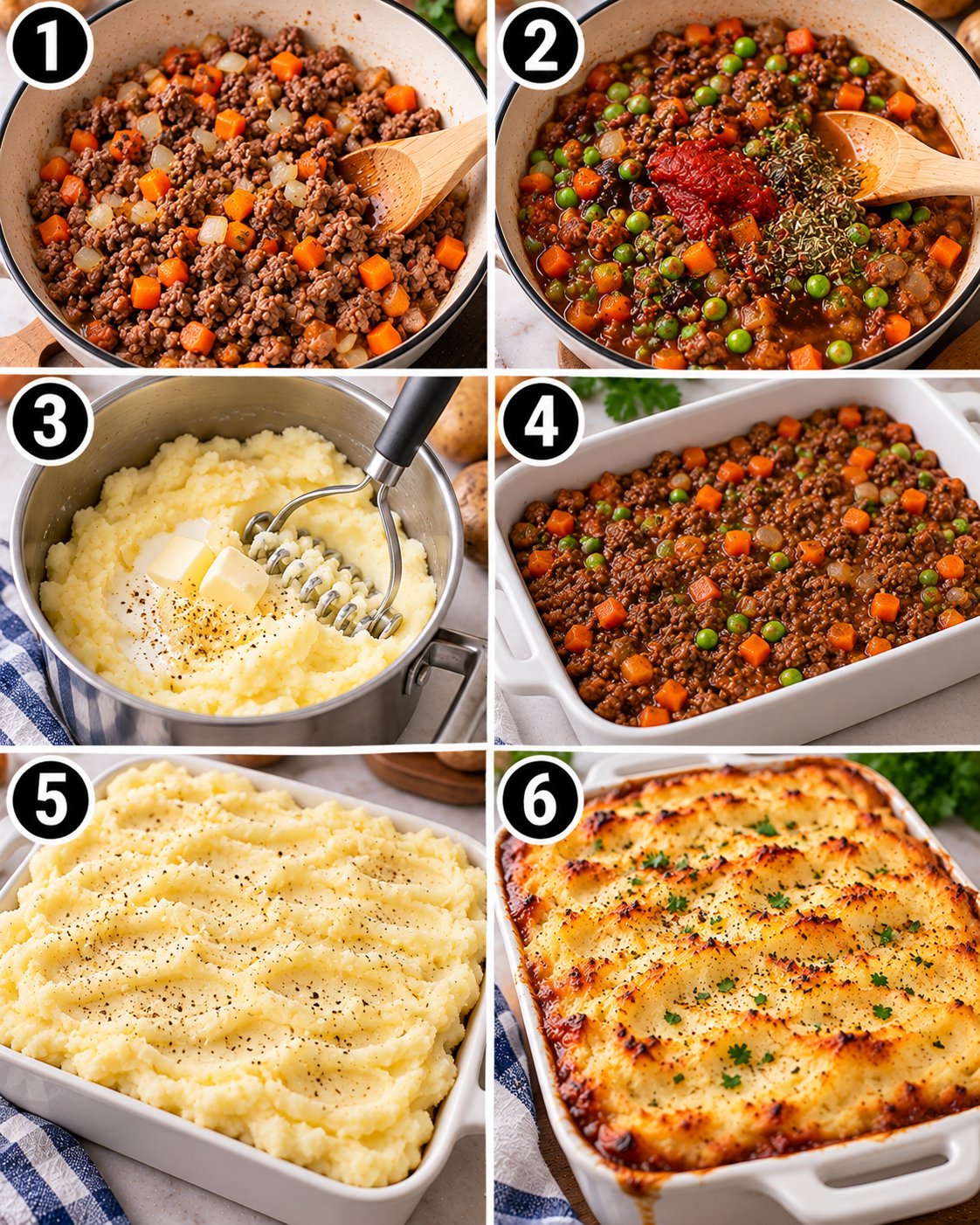
- Preheat the oven to 400°F (200°C).
- In a skillet, cook the ground lamb or beef over medium heat until browned.
- Add chopped onions and carrots, cooking until softened.
- Stir in the peas, flour, broth, Worcestershire sauce, thyme, salt, and pepper.
- Simmer the filling until thickened, then transfer to a baking dish.
- Boil the potatoes in salted water until tender.
- Drain and mash the potatoes with butter and milk until creamy.
- Season mashed potatoes with salt to taste.
- Spread the mashed potatoes evenly over the meat filling, smoothing out the top.
- Use a fork to create peaks on the mashed potato topping for better browning.
- Bake in preheated oven for 25-30 minutes, or until the topping is golden.