
Walk into an Italian pastry shop and you might spot a tray of little golden pastry horns filled with cream. They’re delicate, flaky, and just messy enough to make eating one feel like a treat. Those pastries are cannoncini, and they’re every bit as lovely as they look.
Italian cream-stuffed cannoncini bring together two very different textures. The puff pastry shell should be crisp and light, while the filling should be smooth and creamy. When you bite into one, the pastry breaks into delicate flakes before you reach the soft center.
The biggest challenge is keeping those textures separate until serving. Puff pastry absorbs moisture from cream fillings, so a pastry that’s crisp when first made can become soft after spending too much time filled. That’s why timing matters as much as presentation.
What Are Italian Cannoncini?
Cannoncini are small Italian pastries made from puff pastry shaped into hollow horns or tubes and filled with cream. They’re sometimes called Italian cream horns in English.
The name refers to their small cannon-like shape, although the finished pastries are much more delicate than that description suggests.
Traditional fillings vary, with pastry cream being a familiar choice. Other versions may use different custards or cream-based fillings.
Cannoncini are distinct from cannoli. Cannoli generally use a fried pastry shell, while cannoncini are associated with baked puff pastry.
Their appeal comes from the contrast between the crisp shell and smooth filling, making them a recognizable pastry-shop favorite.
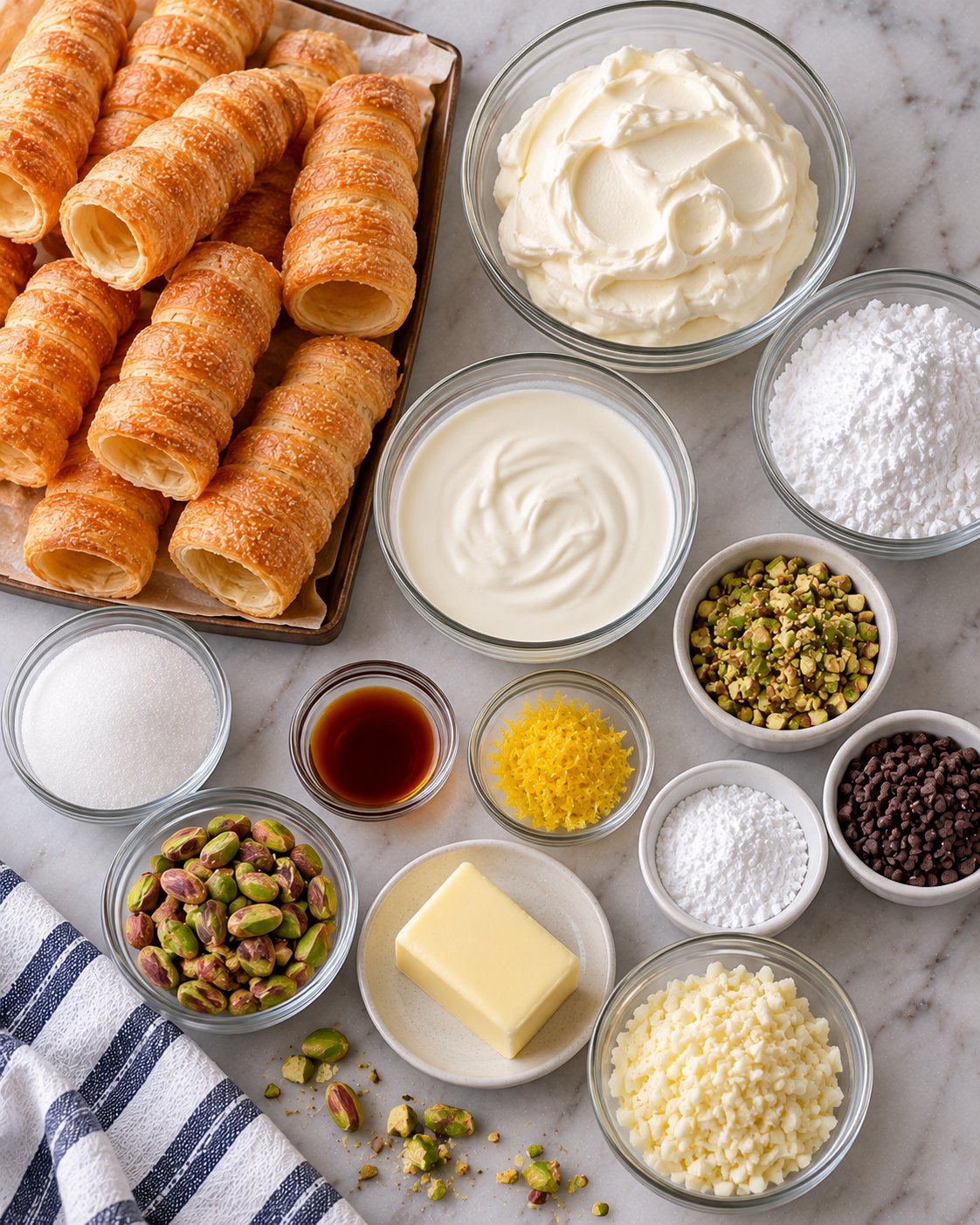
Why You’ll Love These Italian Cream Horns
Cannoncini look impressive without needing elaborate decoration. Their golden pastry shells and visible cream filling make them attractive on a dessert tray.
They’re also easy to serve as individual portions. Guests can pick up one pastry without cutting a cake or pie.
The texture is particularly enjoyable. Crisp puff pastry feels light, while the cream filling adds richness without requiring a heavy frosting.
They’re a good choice for celebrations when you want something a little different from ordinary cookies or cupcakes.
Puff Pastry and Filling Ingredients
Puff pastry creates the distinctive flaky shell. Its layered structure is responsible for the delicate texture that makes cannoncini different from ordinary pastry tubes.
The filling determines much of the flavor. Pastry cream, custard, and whipped cream fillings have different consistencies and storage requirements.
A thicker filling may hold its shape better, while a lighter one can create a softer finish. Neither is automatically correct for every cannoncini recipe.
Sweetness should be balanced. The pastry itself is relatively mild, so the cream provides much of the dessert’s sweetness.
Follow the ingredient list in your recipe card, particularly for the filling. Changing from pastry cream to whipped cream can alter both texture and storage needs.
Tools for Shaping Cannoncini
Cannoncini are commonly associated with metal cream-horn molds, which give the puff pastry its hollow shape.
Mold size affects the finished pastry. A larger horn may hold more filling but can be more delicate to handle.
The shape also influences presentation. Some cannoncini are narrow and tapered, while others are wider and more cylindrical.
The important thing is that the shell maintains enough structure to hold the cream without collapsing.
Use the shaping tools and method specified in the recipe card. Improvised substitutes may behave differently during baking.
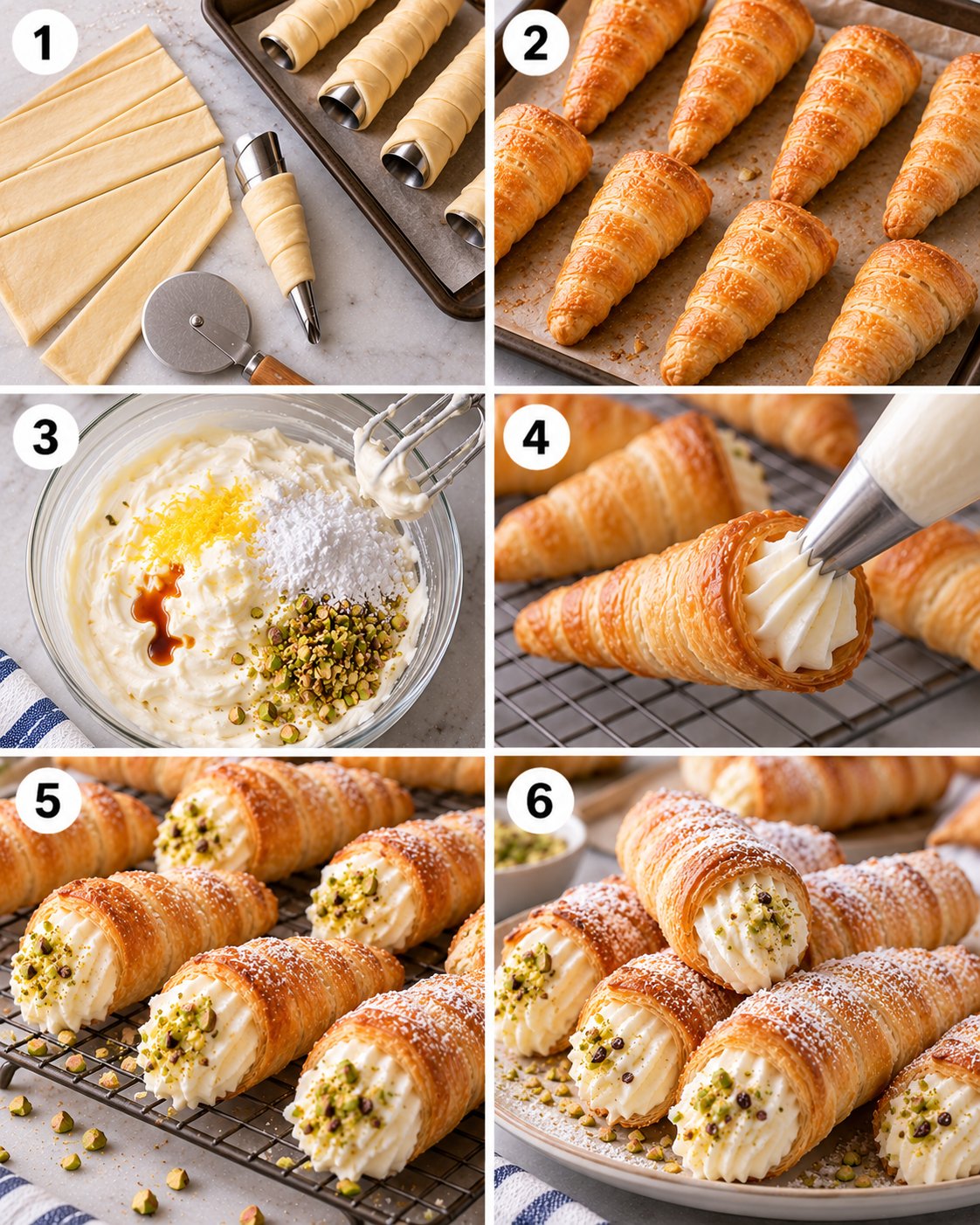
How to Make Italian Cannoncini
The complete pastry and filling instructions are provided in the recipe card below.
Puff pastry needs to develop its layered structure during baking, while the cream filling has its own consistency requirements. The two components should complement each other without making the finished pastry heavy.
The recipe card provides the appropriate method for shaping, baking, and filling this version.
Tips for Crisp, Even Puff Pastry Shells
Good cannoncini shells should be golden, flaky, and crisp enough to hold their shape. A pale or underbaked shell may feel soft rather than pleasantly delicate.
Puff pastry depends on its layers remaining distinct. If the pastry becomes compressed or overly warm before baking, the finished texture may suffer.
Even browning matters because a shell that’s crisp in one area but soft in another can be difficult to fill and serve.
The finished shell should feel light, not greasy or dense. That delicate texture is what makes cannoncini so appealing.
How to Make and Pipe the Cream Filling
The filling should be smooth enough to sit comfortably inside the pastry shell while retaining enough body not to run out.
Pastry cream is a familiar cannoncini filling, but whipped cream and other variations have different textures. A filling that’s too loose can make the pastry messy and may soften the shell more quickly.
The cream’s flavor should complement the buttery puff pastry rather than overpower it. Vanilla is a familiar choice in traditional pastry cream, although the actual recipe determines the flavor.
For the best result, the filling should be pleasant to eat on its own and thick enough for the pastry’s intended presentation.
How to Prevent Soggy Pastry
Moisture from the cream filling gradually moves into the puff pastry shell. That’s why filled cannoncini may lose their crispness during storage.
The filling’s consistency affects how quickly that happens. A loose cream can soften the pastry more readily than a thicker filling.
Storage conditions matter as well. Refrigeration is important for perishable cream fillings, but the cold environment can affect the pastry’s texture.
For the best contrast between crisp shell and creamy center, follow the recipe’s filling and serving guidance. A freshly assembled cannoncino usually has a different texture from one that’s been stored fully filled.
Serving, Make-Ahead and Storage Tips
Cannoncini are especially attractive on a dessert platter because their shape makes them easy to arrange. A simple presentation lets the golden pastry and cream filling stand out.
The shells and filling may have different make-ahead possibilities. Keeping them separate can help preserve texture when the recipe allows it.
Once filled, cannoncini containing pastry cream, custard, or other perishable dairy ingredients should be refrigerated promptly at 40°F (4°C) or below.
Freezing finished cream-filled cannoncini may affect both the pastry and filling. The shell can lose crispness, while some custards become grainy or separate after thawing.
For the best eating experience, consider texture as well as food safety when planning how far ahead to prepare them.
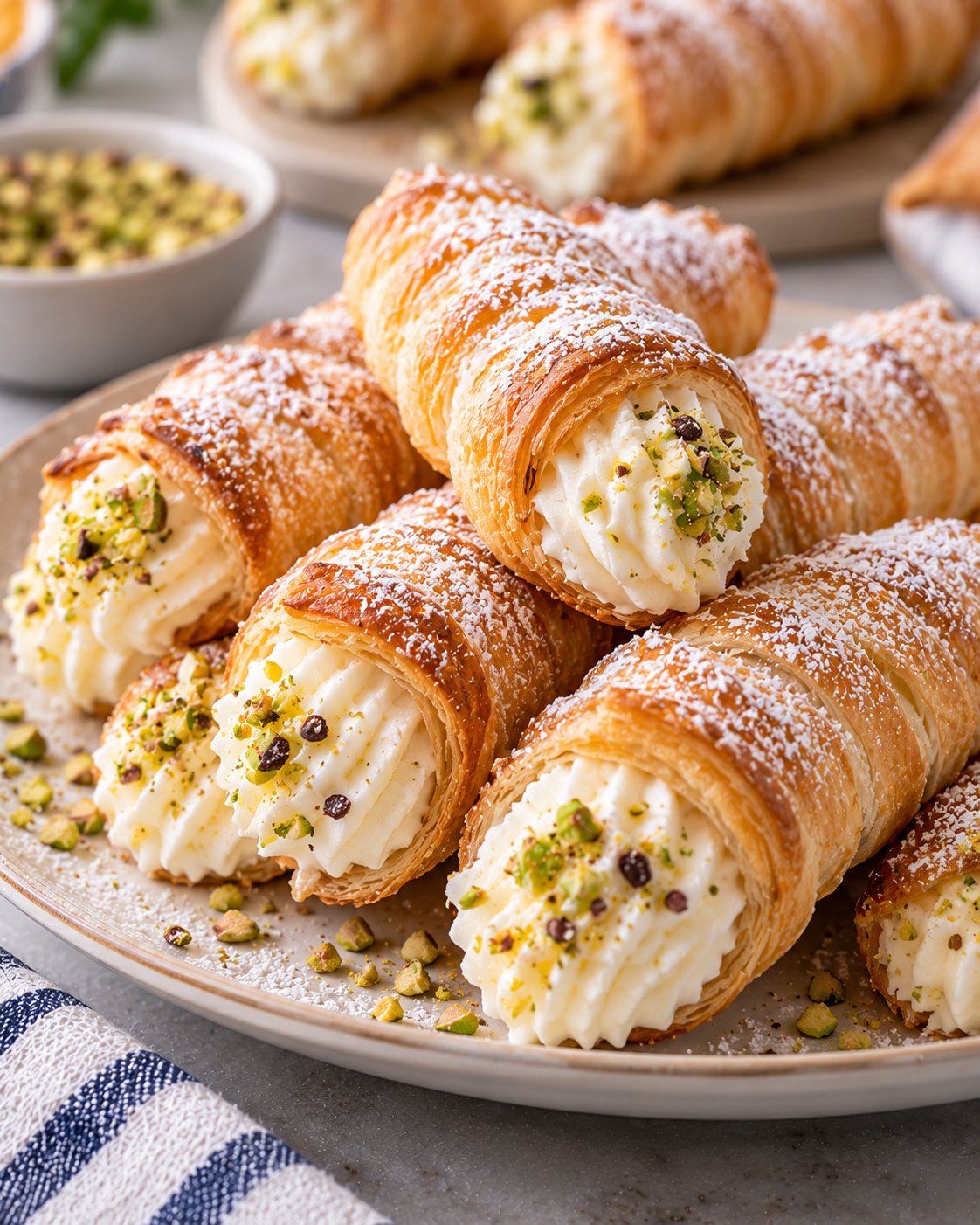
Frequently Asked Questions About Italian Cannoncini
What Is the Difference Between Cannoncini and Cannoli?
Cannoncini are typically made with baked puff pastry, while cannoli use a different shell that’s traditionally fried. Their fillings and textures also differ.
Can You Make Cannoncini Ahead of Time?
Some recipes allow the pastry shells and filling to be prepared separately ahead of serving. The finished pastries may soften once filled, so follow the recipe’s timing guidance.
What Cream Is Used in Italian Cannoncini?
Pastry cream is a traditional choice, although some variations use whipped cream or other custard-style fillings. The exact filling depends on the recipe.
Why Are My Cannoncini Soggy?
Moisture from the cream filling can soften puff pastry over time. Underbaked shells or a very loose filling may also contribute to the problem.
Final Thoughts
Italian cream-stuffed cannoncini are a lovely dessert because they combine crisp, delicate pastry with a smooth cream filling. Their simple shape makes them attractive without needing elaborate decoration.
The key is preserving the contrast between the shell and filling. When the pastry stays flaky and the cream has the right consistency, these little Italian cream horns are a treat worth sharing.
Italian Cannoncini
Ingredients
Method
- Preheat the oven to 400°F (200°C).
- Roll out the thawed puff pastry on a lightly floured surface.
- Cut into strips about 1 inch wide and wrap each strip around a cream horn mold.
- Place on a baking sheet and bake for 15-20 minutes or until golden brown.
- In a bowl, combine the pastry cream and vanilla extract.
- Fold in the whipped cream gently until well combined.
- Once the shells are baked and cooled, carefully remove them from the molds.
- Fill a piping bag with the cream filling.
- Pipe the cream into each pastry shell until filled.