
Stuffed cabbage rolls are the kind of meal that makes a kitchen feel like home. They aren’t particularly flashy, and they don’t need to be. The appeal is in the soft cabbage wrapped around a savory filling, with each roll becoming its own little portion of comfort food.
For many families, cabbage rolls are associated with recipes passed down through generations. The details vary widely depending on family tradition and regional background, but the basic idea is familiar: cabbage leaves hold a seasoned filling, creating a substantial dish that can be served with a sauce or cooking liquid.
The part that usually causes the most frustration is the cabbage itself. Leaves that are too firm can crack, while leaves that are overly soft may tear when handled. Once the cabbage has the right flexibility, the rest of the dish becomes much easier to manage.
What Are Stuffed Cabbage Rolls?
Stuffed cabbage rolls are cabbage leaves wrapped around a savory filling. Variations appear in several Central and Eastern European, Balkan, Middle Eastern, and other cuisines, each with its own seasonings, fillings, and serving traditions.
Some versions contain ground meat and rice, while others use different grains, vegetables, or meat combinations. The sauce also varies, from tomato-based preparations to lighter or more tangy styles.
That variety is part of the dish’s appeal. There isn’t one universal cabbage roll recipe that represents every family’s tradition.
What the versions have in common is the relationship between the cabbage and filling. The leaf should become tender enough to eat comfortably while still holding the filling together.
A well-made cabbage roll should feel cohesive and satisfying, with the cabbage contributing its own mild flavor rather than acting as a tough wrapper.
Why You’ll Love This Classic Recipe
Stuffed cabbage rolls have a satisfying, old-fashioned character. Each roll contains its own portion of filling, which makes the dish easy to serve at a family table.
They’re also substantial without needing elaborate sides. Depending on the filling, the rolls may already contain protein and grain, so a simple accompaniment can complete the meal.
The cabbage brings a mild sweetness as it cooks. That flavor balances savory fillings particularly well and helps the dish feel comforting rather than overly rich.
Cabbage rolls can also be useful for gatherings because the finished portions are easy to arrange and serve. The exact make-ahead possibilities depend on the filling and cooking method, but many versions are well suited to planning ahead.
Best Cabbage for Making Rolls
Green cabbage is a familiar choice for stuffed cabbage rolls because its broad leaves can be used to wrap a filling. The leaves need to be flexible enough to fold without breaking.
Savoy cabbage is another option in some recipes. Its crinkled leaves have a different texture and may be more flexible, although the finished appearance won’t be identical to smooth green cabbage.
Cabbage size matters because larger outer leaves generally provide more room for filling. Very small heads may produce leaves that are difficult to use for full-sized rolls.
Freshness also affects handling. Leaves that are badly damaged or dried out around the edges may tear more easily.
The best cabbage is one that suits the recipe’s intended roll size and preparation method. A good leaf should be sturdy enough to hold the filling while becoming tender during cooking.
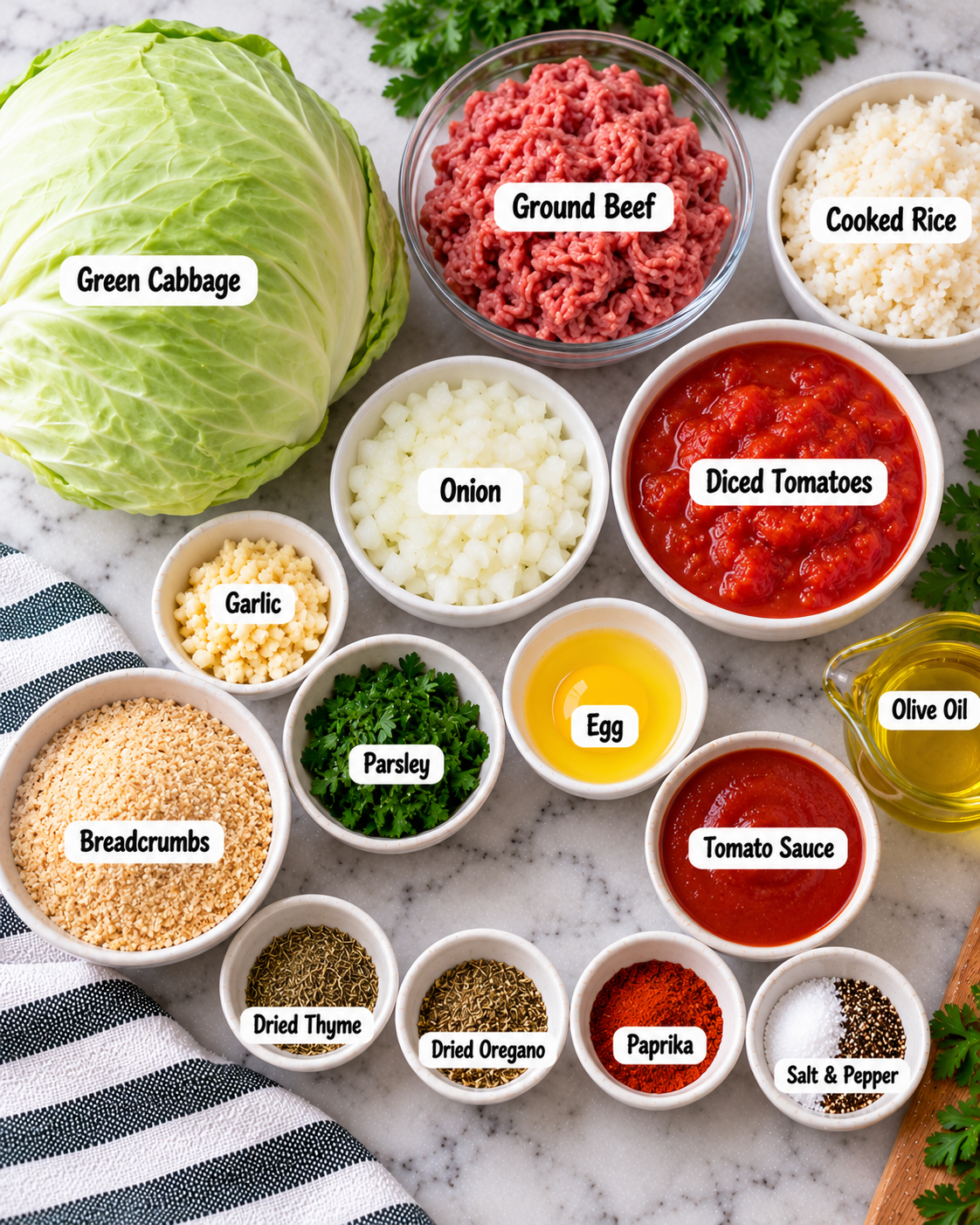
Stuffed Cabbage Rolls Ingredients
Cabbage is the defining vegetable, but the filling determines much of the dish’s flavor. Traditional versions often combine savory ingredients with a grain or another component that gives the filling structure.
Ground beef appears in many cabbage roll recipes, but it isn’t universal. Some versions use other meats or vegetarian fillings, so the actual recipe card should determine what belongs in this dish.
Seasonings also vary by tradition. Some cabbage rolls emphasize herbs and tomato, while others have a different savory or tangy character.
The cooking liquid or sauce matters because it influences how the cabbage softens and how the flavors come together.
Use the ingredient proportions in your recipe card. The filling needs enough structure to remain inside the leaves without becoming dense or dry.
How to Make Stuffed Cabbage Rolls
The complete preparation method is provided in the recipe card below, including the instructions for the cabbage, filling, and cooking method used in this version.
The most important thing to understand is that the cabbage and filling have different requirements. The leaves need to become flexible enough to wrap, while the filling needs to cook safely and maintain a pleasant texture.
That balance is what makes a cabbage roll successful. A neatly wrapped roll isn’t much use if the cabbage remains tough or the center hasn’t reached the appropriate temperature.
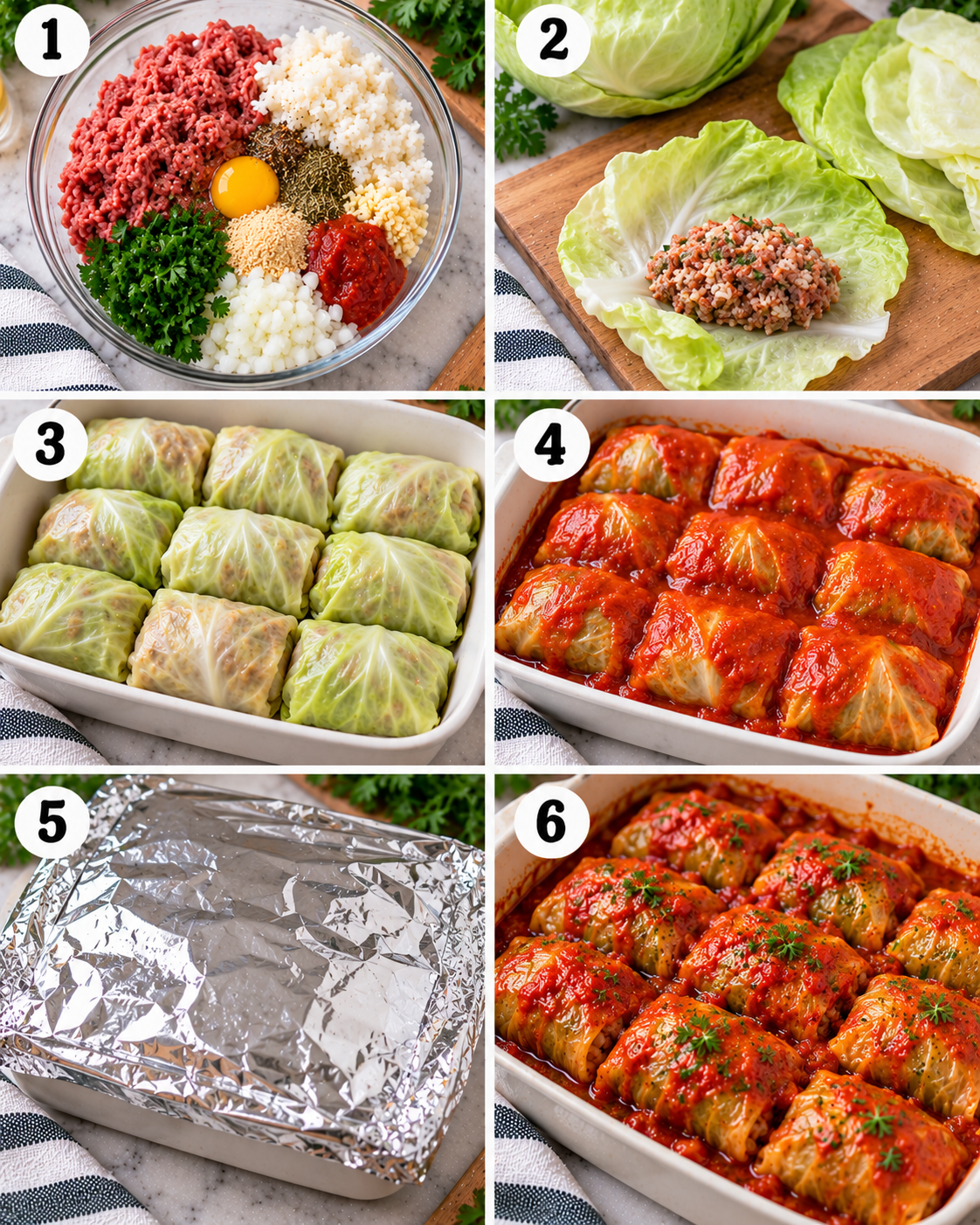
Tips for Softening Cabbage Leaves
Firm cabbage leaves can be difficult to work with because their thick ribs resist bending. When the leaf is too stiff, it may crack before the roll can hold its shape.
Different recipes use different methods to make the leaves flexible. The goal is the same: enough softness to wrap the filling without turning the cabbage into something fragile and easily torn.
The thick center rib can also affect how neatly a leaf folds. A leaf with a very prominent rib behaves differently from a thin outer section.
Don’t expect every leaf to be identical. Cabbage heads naturally contain leaves of different sizes and thicknesses, so some may be easier to use than others.
The best finished leaf should bend comfortably and remain intact. That makes the rolls easier to handle and gives the cooked dish a more pleasant texture.
How to Keep Cabbage Rolls from Falling Apart
A cabbage roll can lose its shape when the leaf tears, the filling is too loose, or the roll isn’t suited to the cooking method. Those problems often begin before the dish reaches the table.
The filling’s consistency matters. A mixture that’s too wet may be difficult to contain, while one that’s overly dense can make the finished roll feel heavy.
Leaf size is another factor. A small or damaged leaf may not provide enough coverage for the intended portion of filling.
The cooking environment can also affect the rolls. A recipe designed for gentle cooking may not behave the same way if the rolls are exposed to excessive movement or agitation.
A successful cabbage roll should hold together when served, but it doesn’t need to be perfectly shaped. A slightly rustic appearance is part of the dish’s homemade appeal.
Best Tomato Sauce for Stuffed Cabbage Rolls
Many cabbage roll recipes use a tomato-based sauce, although not every traditional version does. If your recipe includes tomato sauce, its flavor should complement the cabbage and filling rather than overwhelm them.
Tomatoes bring acidity, which can balance a rich meat filling. However, a sauce that’s excessively sharp may dominate the cabbage’s mild sweetness.
Some sauces are relatively smooth, while others contain more texture. The best choice depends on the style of cabbage rolls being prepared.
Sauce thickness also matters. A very thin sauce can feel diluted, while an overly concentrated one may make the dish heavy.
If your recipe uses a different sauce or cooking liquid, follow that version rather than adding tomato simply because it’s common in other cabbage roll recipes.
What to Serve with Cabbage Rolls
Mashed potatoes are a familiar accompaniment for cabbage rolls, especially when the dish includes a flavorful sauce. Their mild, creamy texture complements the savory filling.
Crusty bread is another good option. It makes a simple family dinner feel complete and works well when there’s sauce on the plate.
A crisp cucumber salad can provide freshness and acidity. That contrast is particularly appealing alongside rich meat-filled rolls.
For a lighter meal, cabbage rolls may be satisfying with only a small vegetable side. The filling often makes them substantial enough to stand on their own.
The best accompaniment is usually something simple. The cabbage rolls should remain the focus of the plate.
Make-Ahead, Freezing and Reheating
Stuffed cabbage rolls can be convenient for meal planning, but the storage approach depends on the filling and whether the rolls are raw or fully cooked.
Cooked leftovers should be refrigerated promptly in shallow, covered containers at 40°F (4°C) or below. Properly stored cooked cabbage rolls containing meat are generally best used within three to four days.
Freezing may be possible for many versions, although the cabbage can become softer after thawing. The sauce and filling may also change texture.
Reheat cooked leftovers thoroughly to 165°F (74°C). Because cabbage rolls contain a filling wrapped inside leaves, the center needs to be heated properly.
If the recipe uses raw ground meat, follow its safe cooking guidance. Ground beef and pork generally require 160°F (71°C), while ground poultry requires 165°F (74°C).
Frequently Asked Questions About Stuffed Cabbage Rolls
What Is the Best Cabbage for Stuffed Cabbage Rolls?
Green cabbage is a popular choice because its leaves are broad and suitable for wrapping. Savoy cabbage can also work in some recipes, although its texture and appearance differ.
Why Do My Cabbage Leaves Tear?
Leaves may tear when they’re too firm, damaged, or difficult to fold around the filling. The thickness of the center rib and the leaf’s size can also affect handling.
Can You Make Cabbage Rolls Ahead of Time?
Many versions are suitable for advance preparation, but the best approach depends on whether the filling contains raw meat and how the rolls are stored. Follow the recipe’s make-ahead guidance.
Can You Freeze Stuffed Cabbage Rolls?
Yes, many cooked cabbage roll recipes can be frozen. The cabbage may soften after thawing, and the sauce can change consistency, but the dish may still be enjoyable.
Are Stuffed Cabbage Rolls Always Made with Beef?
No. Different traditions use different meats, grains, and vegetarian fillings. Ground beef is common in some recipes, but it isn’t a universal requirement.
Final Thoughts
Stuffed cabbage rolls are comforting in a way that doesn’t depend on elaborate presentation. Tender cabbage, a savory filling, and a well-balanced sauce or cooking liquid create a dish that feels generous and familiar.
The most important detail is getting the cabbage leaves flexible enough to hold the filling without tearing. Once that texture is right, the rolls become a satisfying homemade meal worth making for the family table.
Stuffed Cabbage Rolls
Ingredients
Method
- Bring a large pot of salted water to a boil.
- Remove the core from the cabbage and carefully peel off the leaves.
- Blanch the leaves in boiling water for 2-3 minutes until flexible, then drain and set aside.
- In a mixing bowl, combine the ground beef, cooked rice, chopped onion, garlic, paprika, salt, and pepper. Mix well.
- Lay a cabbage leaf flat and place a spoonful of the filling at the base of the leaf.
- Fold the sides over the filling and roll it up tightly.
- Repeat with the remaining leaves and filling.
- Preheat the oven to 350°F (175°C).
- Spread a thin layer of tomato sauce in a baking dish.
- Place the rolled cabbage in the dish seam-side down and top with remaining sauce.
- Cover the dish with foil and bake for 60 minutes.