
A dish of scalloped potatoes has a way of stealing attention from the main course. You might put them on the table alongside roast chicken or holiday ham, but it’s often the creamy potatoes everyone goes back for. Those soft layers and the rich sauce are hard to resist, especially when the top has a little golden color.
The trouble is that scalloped potatoes can look finished before they’re actually ready. A bubbling sauce and browned surface don’t always mean the potatoes in the middle are tender. And if the sauce separates or becomes watery, even beautifully sliced potatoes can end up disappointing.
A good scalloped potatoes recipe should have tender slices throughout and a sauce that coats them without becoming soupy. The dish needs to be rich enough to feel comforting, but not so heavy that the potato flavor disappears.
Why You Will Love These Scalloped Potatoes
Scalloped potatoes are a natural choice for family dinners because they pair with so many main dishes. They’re familiar, filling, and attractive enough to serve at Easter, Thanksgiving, or Christmas without requiring elaborate decoration.
The combination of potatoes and a creamy sauce is simple, but the textures make it special. A tender potato slice surrounded by a smooth sauce feels much more satisfying than potatoes that are either dry or swimming in liquid.
This is also a side dish that encourages people to linger at the table. A generous casserole can be shared family-style, making it equally suitable for a Sunday dinner or a larger celebration.
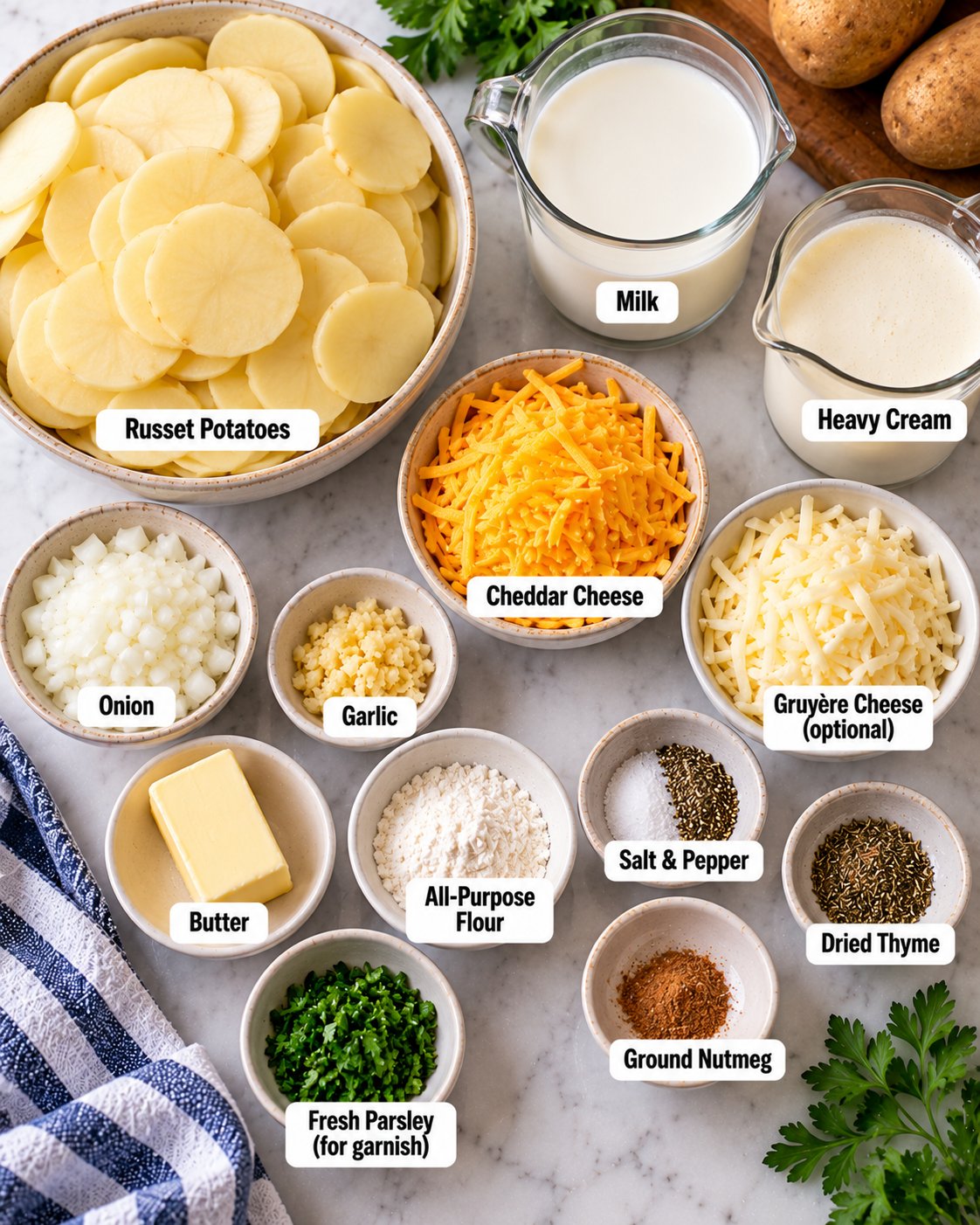
Best Potatoes for Scalloping
Potatoes differ in starch content, and that affects how they behave in a creamy casserole. Russets are relatively starchy and become soft and tender, while Yukon Gold potatoes tend to have a buttery flavor and hold their shape a little better.
Neither is universally better. Some people enjoy scalloped potatoes that almost melt together, while others prefer slices that remain distinct when served.
Consistency matters more than choosing the most expensive potato. When some slices are much thicker than others, the dish may have a mixture of tender and firm pieces.
Fresh potatoes also make a difference. Potatoes that have developed significant sprouts, green areas, or soft spots aren’t ideal for a dish where their flavor and texture are so noticeable.
Choosing the Cream Sauce
The sauce is what separates scalloped potatoes from a simple dish of baked sliced potatoes. It should feel creamy and smooth, with enough seasoning to bring out the potatoes’ mild flavor.
Traditional scalloped potatoes don’t always contain cheese. Some versions use a seasoned milk or cream sauce, while cheesy scalloped potatoes move closer to the style often associated with potatoes au gratin.
If your recipe includes cheese, the type matters. Some cheeses melt smoothly, while others can become oily or grainy under prolonged heat.
A sauce that’s overly salty or heavily seasoned can hide the natural potato flavor. The most enjoyable version lets the potatoes remain the center of the dish.
Ingredients and Recipe Card
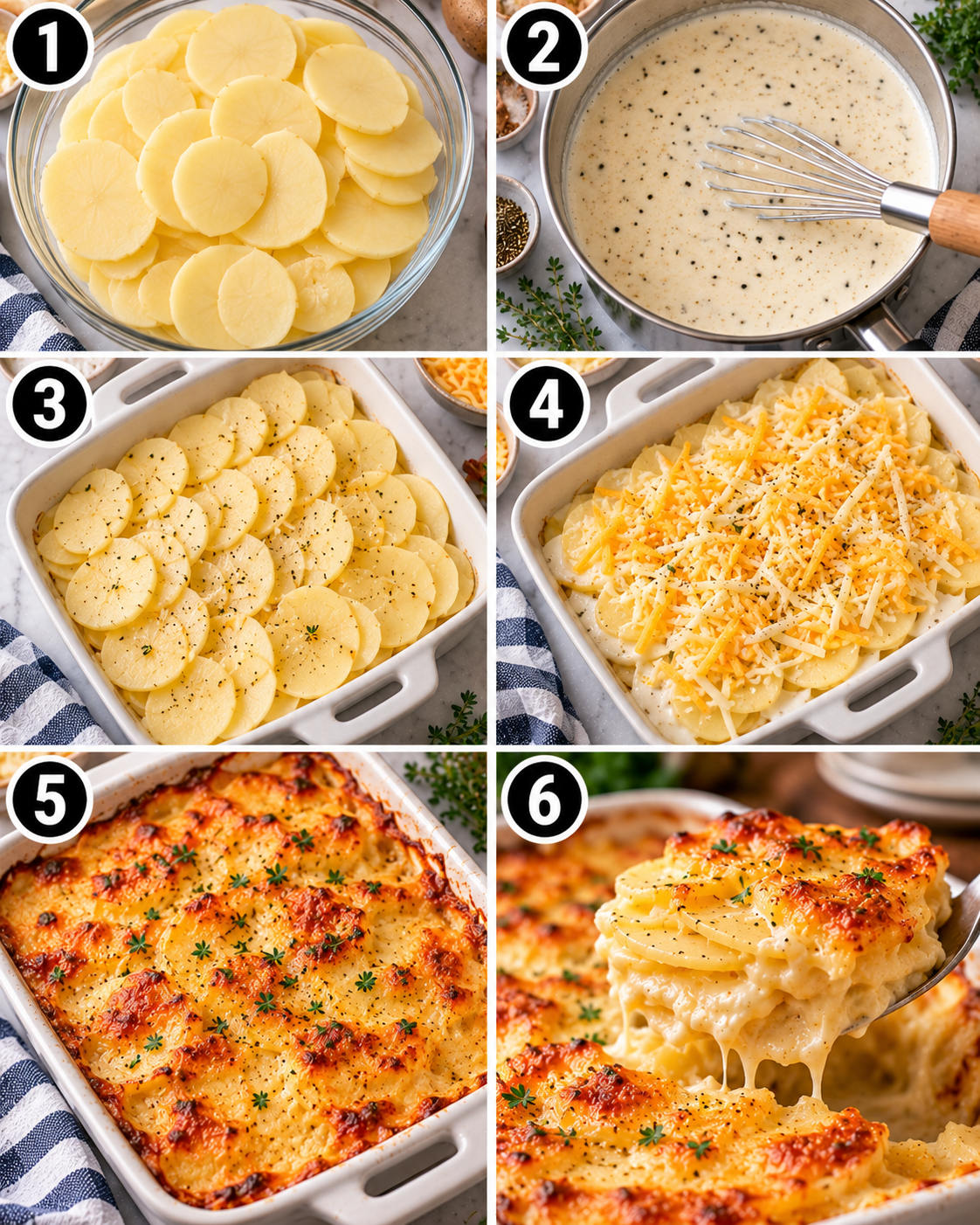
You’ll find the complete ingredients, measurements, and cooking directions in the recipe card. There is no need to repeat those details here, especially because the sauce and potato proportions are important to the finished texture.
What deserves attention is the relationship between the potatoes and the sauce. The slices need enough moisture to become tender, but an excess of thin liquid can leave the casserole soupy.
The recipe’s specific dairy products, seasonings, and any cheese should be followed as written. Substituting one for another may change how the sauce thickens or holds together.
Tips for Evenly Cooked Potato Layers
One of the most frustrating things about scalloped potatoes is finding firm slices in the center after the top looks beautifully browned. This usually comes down to slice thickness, the depth of the dish, or uneven heating.
Thicker slices need more time to become tender than thin ones. A deep casserole also takes longer for heat to reach the middle, particularly when the dish starts cold.
The potatoes should be tender enough to cut comfortably with a fork. They shouldn’t feel crunchy or resistant beneath the creamy sauce.
The baking dish itself can affect the result. Glass, ceramic, and metal dishes transfer heat differently, so the stated baking time should be treated alongside the recipe’s doneness cues.
How to Prevent a Watery Sauce
Scalloped potatoes sometimes develop a thin sauce that pools around the slices. The amount of liquid, the potato variety, and the sauce’s thickening ingredients all contribute to that result.
Starchy potatoes can help create a cohesive texture, but they don’t guarantee that every sauce will thicken properly. Dairy products and other ingredients behave differently depending on the recipe.
A sauce can also appear thinner while very hot. Its consistency may change slightly as the dish settles after baking.
The best finished casserole has a creamy coating between the potato layers. You should be able to serve a portion without leaving most of the sauce behind in the baking dish.
What to Serve with Scalloped Potatoes
Scalloped potatoes are especially good with baked ham because the salty meat contrasts with the creamy potatoes. Roast chicken and pork tenderloin are other dependable pairings.
A green vegetable helps balance the richness. Roasted asparagus, steamed green beans, or a simple salad adds color and a fresher flavor to the plate.
For holiday dinners, keep the other sides relatively straightforward. Scalloped potatoes already bring plenty of richness, so they don’t need to compete with several other creamy casseroles.
Make-Ahead and Storage
Scalloped potatoes can be convenient for entertaining, but the best make-ahead approach depends on the sauce and preparation method. Some versions can be assembled ahead, while others are better fully baked before storage.
Potatoes may discolor when exposed to air, and certain sauces can change texture during refrigeration. Follow the recipe’s specific make-ahead guidance rather than assuming every version behaves the same way.
Refrigerate leftovers promptly at 40°F (4°C) or below and use within three to four days. Reheat thoroughly to 165°F (74°C).
Freezing is possible for some scalloped potato dishes, but the potatoes may become softer and dairy-based sauces can separate after thawing.
Frequently Asked Questions About Scalloped Potatoes Recipe
Do scalloped potatoes need cheese?
No. Traditional scalloped potatoes can be made with a seasoned cream or milk sauce without cheese. Cheesy versions are also popular, but the ingredients should match the recipe rather than the name alone.
Why are my scalloped potatoes still hard?
The slices may be too thick, the casserole may need more cooking time, or the center may not have heated evenly. The potato variety and the depth of the dish can also affect tenderness.
Can I prepare them a day ahead?
Many scalloped potato recipes can be prepared ahead, but the best method depends on the sauce and potatoes. Follow the recipe’s instructions for assembling, refrigerating, and reheating.
Final Thoughts
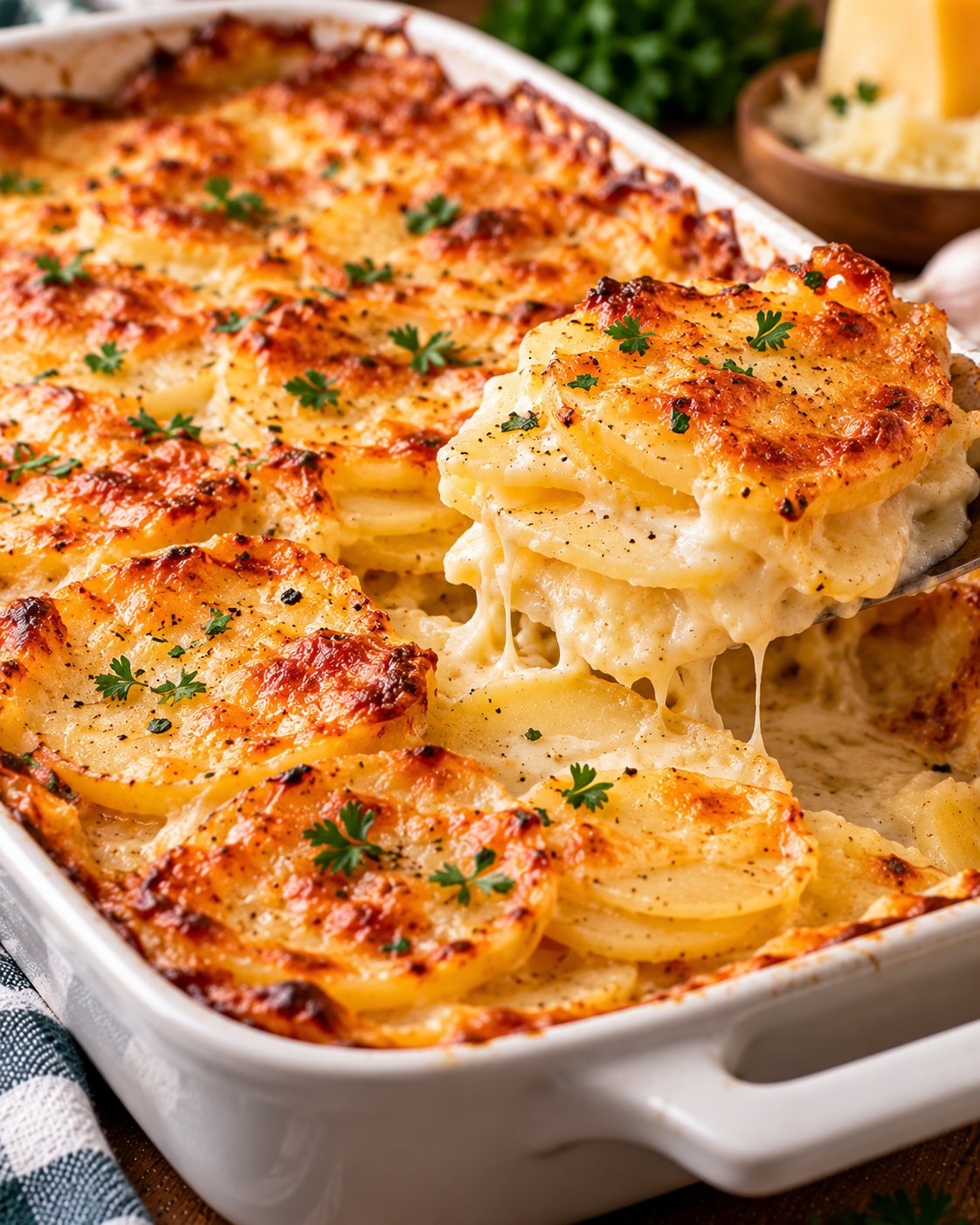
Homemade scalloped potatoes are one of those side dishes that feel just as welcome at a holiday table as they do with an ordinary Sunday roast. Their appeal is in the soft potato layers and the creamy sauce surrounding them.
When the potatoes are tender all the way through and the sauce stays smooth, there’s very little else the dish needs. That’s what makes a good pan of scalloped potatoes so memorable.
Scalloped Potatoes
Ingredients
Method
- Preheat your oven to 350°F (175°C). Grease a baking dish with butter.
- Thinly slice the potatoes and set aside.
- Layer half of the potato slices in the prepared baking dish.
- Pour half of the cream sauce over the potato layer.
- Add the remaining potato slices and pour the rest of the cream sauce over them.
- If using cheese, sprinkle it evenly on the top layer.
- Cover the dish with aluminum foil and bake for 45 minutes.
- Remove the foil and bake for an additional 15 minutes, or until the top is golden and bubbly.