There’s something satisfying about a tray of vegetables coming out of the oven with golden edges and that wonderful roasted smell. Potatoes turn tender in the middle, carrots develop a little sweetness, and onions become soft and savory.
Roasted Potatoes, Onions and Carrots is a simple side dish, but it can be surprisingly good when the vegetables are cooked properly. You don’t need a complicated sauce to make them interesting. The roasting itself brings out flavors that aren’t nearly as noticeable when the vegetables are boiled.
The biggest disappointment is a pan of pale, soggy vegetables. A good batch of oven roasted potatoes and carrots should have tender centers, browned edges, and enough texture that the vegetables don’t collapse when served.
Why This Roasted Vegetable Side Works
Potatoes, carrots, and onions complement one another because they offer different flavors and textures. Potatoes are mild and filling, carrots bring natural sweetness, and onions add a savory depth.
Roasting gives each vegetable a slightly different character. The edges become more flavorful as they brown, while the interiors remain tender.
It’s also a useful side for everyday meals. These vegetables pair with chicken, beef, pork, and many vegetarian main dishes without requiring special ingredients.
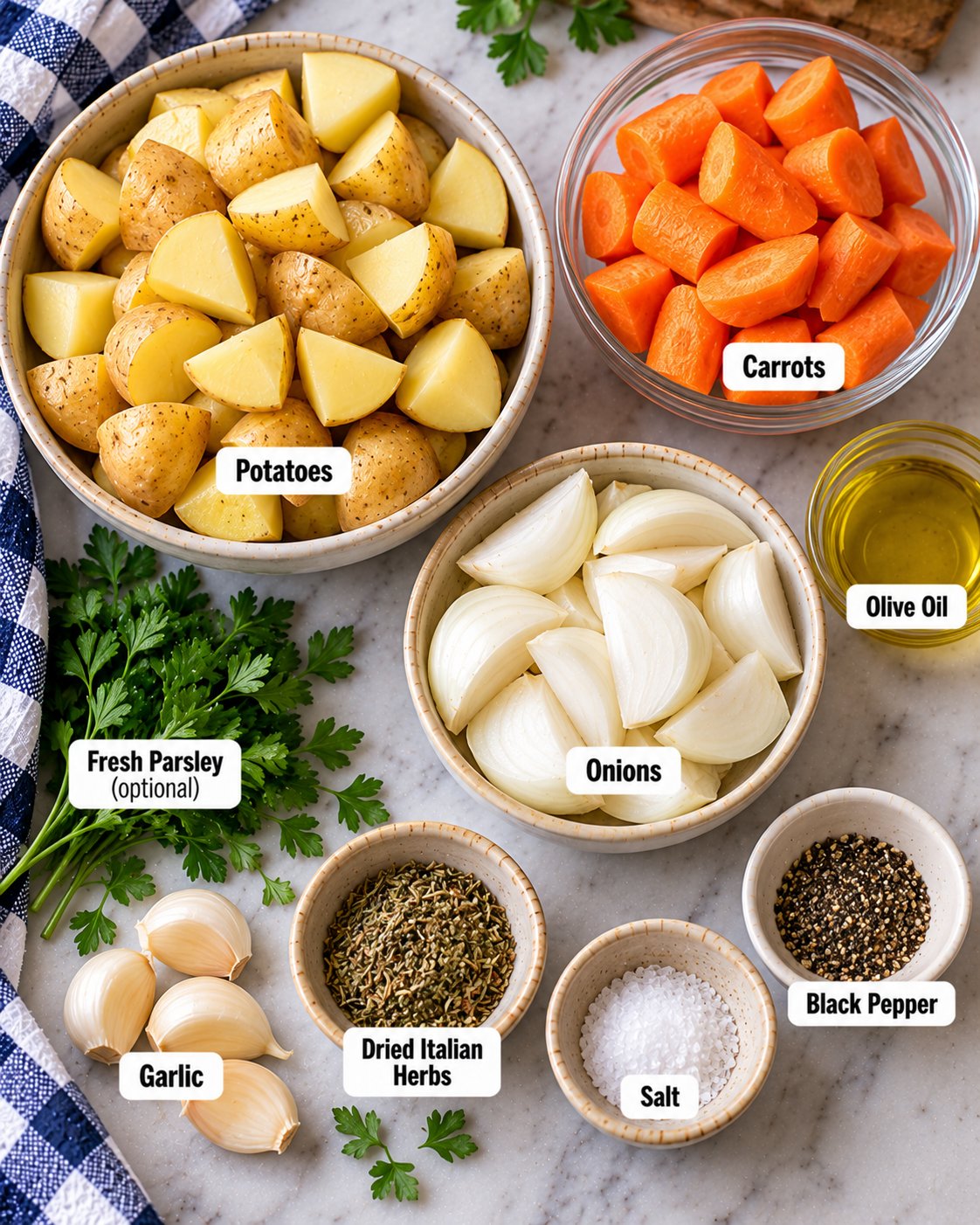
Best Potatoes and Carrots for Roasting
Waxy potatoes generally hold their shape well, while starchier potatoes can develop a fluffy interior. Yukon Gold potatoes offer a pleasant balance between the two.
Carrots should be firm and fresh. Very thick carrots can take longer to become tender than slender ones, especially when their pieces are substantially larger than the potatoes.
Onions soften and brown differently from root vegetables. Their natural sugars contribute sweetness, but thin pieces may darken sooner than larger potato chunks.
The best combination is one where the vegetables finish with pleasant textures rather than some being overcooked while others remain firm.
How to Cut Vegetables for Even Cooking
The size of the vegetable pieces has a direct effect on roasting. Large potato chunks need more time to become tender, while small carrot pieces can soften much sooner.
Carrots and potatoes also have different densities. Equal-looking pieces won’t always cook at exactly the same rate.
Onions present another challenge because their layers separate and become tender quickly. Their texture is part of the dish, but overly thin pieces can dry out.
A good roasted vegetable mixture has pieces that remain recognizable and comfortable to eat. The recipe’s cutting guidance should be designed around that result.
Ingredients and Recipe Card
The complete ingredient list, measurements, and roasting instructions are in the recipe card below. This article focuses on the details that make the vegetables taste good and develop the right texture.
The relationship between vegetables, seasoning, and cooking fat matters. Too little fat can leave some surfaces dry, while an excessive amount may make the finished dish greasy.
Seasoning should bring out the vegetables’ natural flavors. The potatoes, carrots, and onions should still taste distinct rather than being overwhelmed by a strong spice blend.
Seasoning and Browning Tips
Roasted vegetables benefit from enough seasoning to make their mild flavors stand out. Salt enhances the potatoes, while herbs and garlic can complement the carrots and onions.
Browning is especially important because it creates the roasted flavor people expect. Vegetables that only soften without developing color can taste more like steamed vegetables.
The type of pan and the amount of space available can influence browning. When vegetables are crowded, moisture may collect instead of escaping readily.
The finished dish should have a mixture of golden edges and tender interiors. Not every piece needs to be deeply browned, but some caramelized surfaces make a noticeable difference.
How to Prevent Soggy Vegetables
Soggy roasted vegetables usually have too much moisture around them. Vegetables naturally release water as they heat, and that water can interfere with browning.
Crowding can make the problem worse because steam becomes trapped between the pieces. The result may be tender vegetables without the appealing roasted edges.
The vegetables’ surface moisture matters too. Excess water can delay browning and leave the finished texture softer than expected.
A properly roasted batch should feel tender but not wet. The potatoes should hold together, and the carrots should have enough structure to provide a pleasant bite.
What to Serve with Roasted Vegetables
Roast chicken is a natural pairing for potatoes, onions, and carrots. The vegetables complement the savory flavor of the chicken and make the meal feel complete.
Pork chops and beef roast also work well. The mild potatoes and sweet carrots provide contrast to richer meats.
For a vegetarian dinner, serve the vegetables alongside lentils, beans, or another substantial protein. A fresh salad can add brightness to the plate.
Storage and Reheating
Refrigerate leftover roasted vegetables promptly at 40°F (4°C) or below and use within three to four days. The potatoes and carrots may soften during storage.
Reheating can restore some of the appealing texture, although the vegetables may not become quite as crisp as when freshly roasted.
Heat leftovers thoroughly to 165°F (74°C). Freezing is possible, but potatoes and carrots may become softer after thawing.
Frequently Asked Questions About Roasted Potatoes, Onions and Carrots
Should I parboil potatoes before roasting?
Some recipes use parboiling to change the potato texture, but it isn’t necessary for every roasted potato dish. Follow the method in the recipe card rather than adding an extra step automatically.
Can I roast carrots and potatoes together?
Yes, they make an excellent combination. The main consideration is that their size and density affect how quickly they become tender.
How do I get crispy roasted potatoes?
Good browning depends on surface moisture, pan space, the potato variety, and oven conditions. Crowding the vegetables can make them steam rather than roast.
Final Thoughts
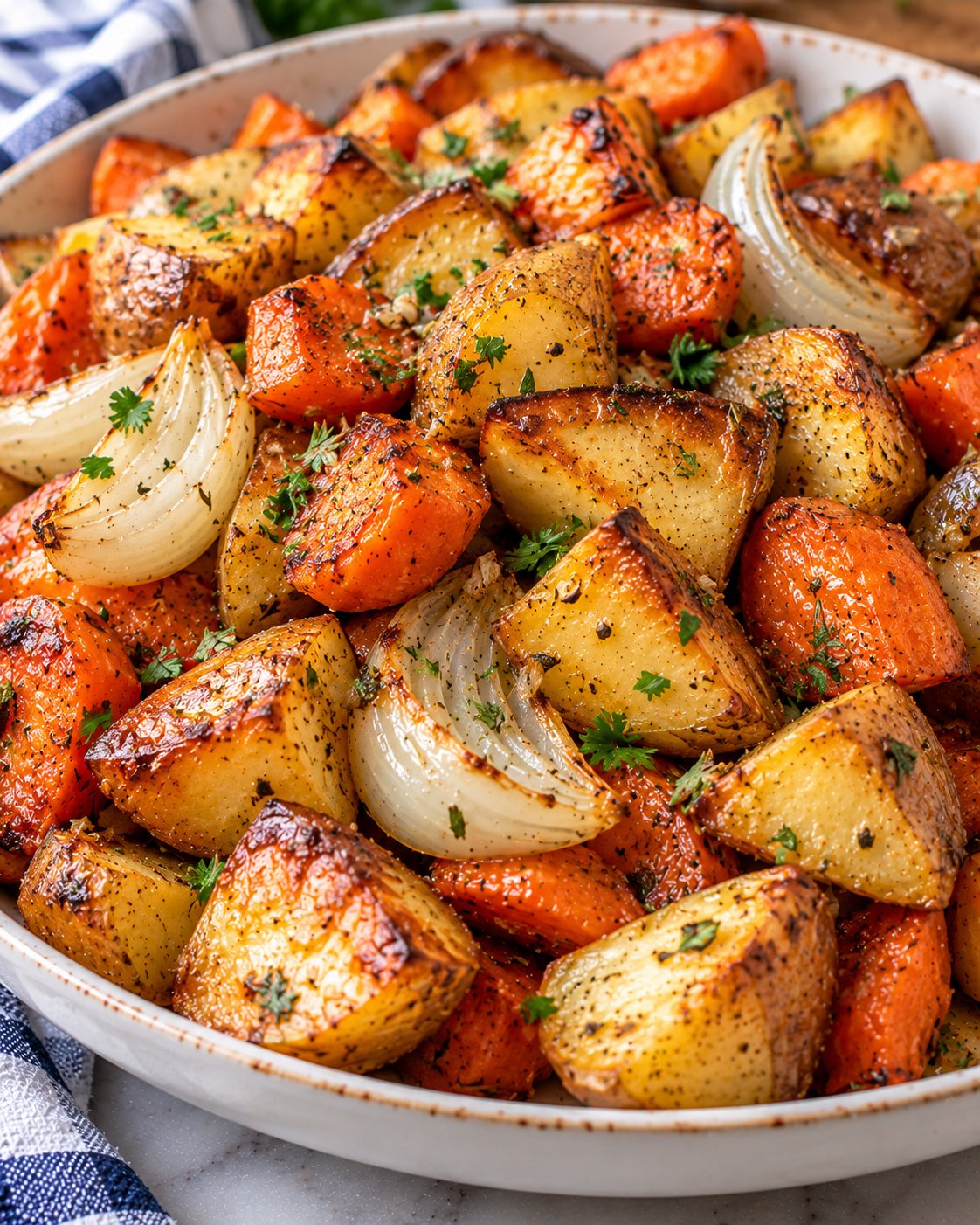
Roasted Potatoes, Onions and Carrots is one of those dependable side dishes that makes an ordinary dinner feel more complete. The vegetables are familiar, but their flavor becomes richer and sweeter in the oven.
The best result has tender centers, golden edges, and enough seasoning to make each vegetable enjoyable. It’s a simple combination that earns its place on the table.
Roasted Potatoes, Onions and Carrots
Ingredients
Method
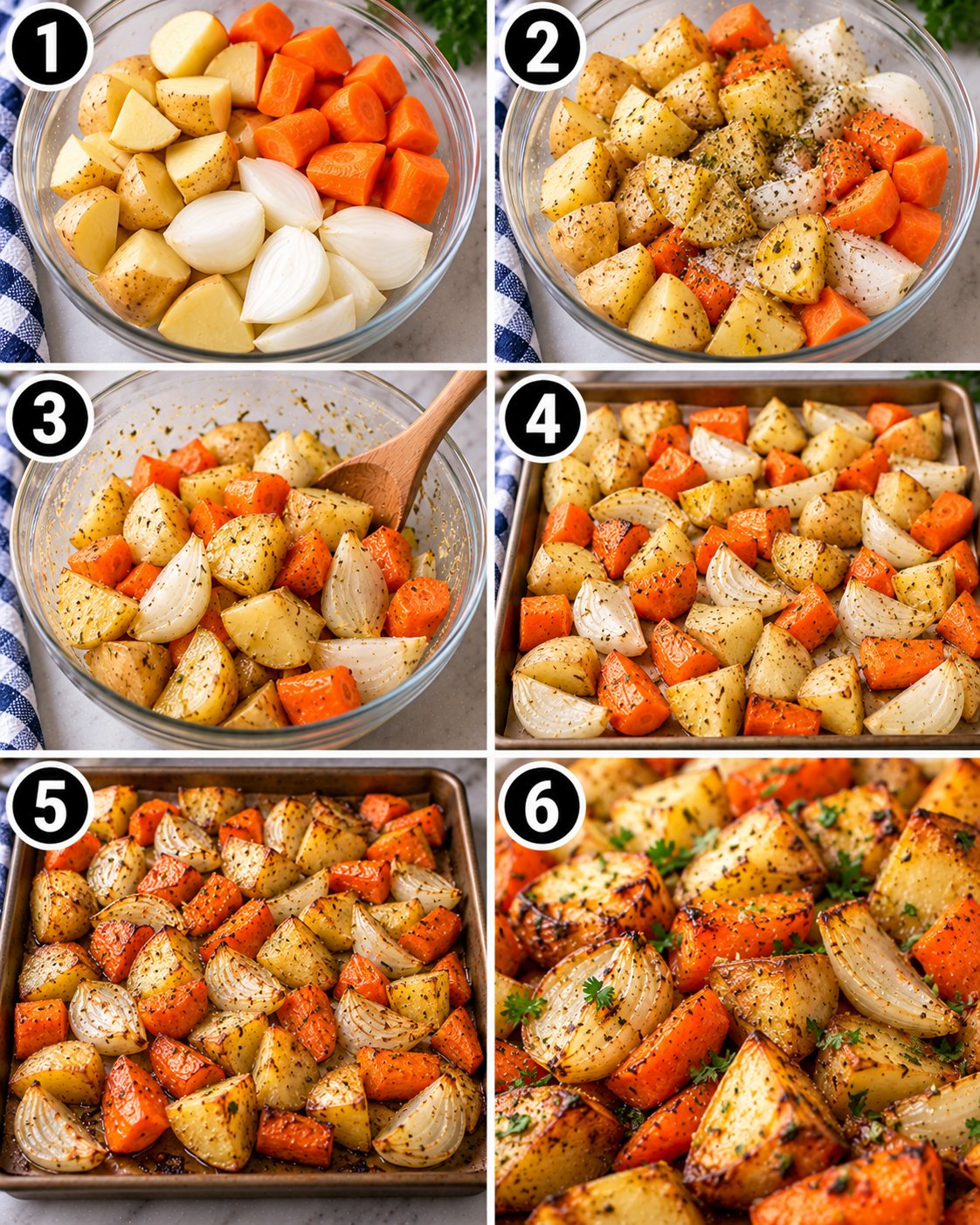
- Preheat the oven to 425°F (220°C).
- Peel and chop the potatoes and carrots into evenly sized pieces.
- Slice the onion into wedges.
- In a large bowl, toss the chopped vegetables with olive oil, salt, pepper, garlic powder, and herbs.
- Spread the vegetables in a single layer on a baking sheet.
- Roast in the preheated oven for about 45 minutes, stirring halfway through, until the vegetables are golden and tender.
- Remove from the oven and let cool slightly before serving.