
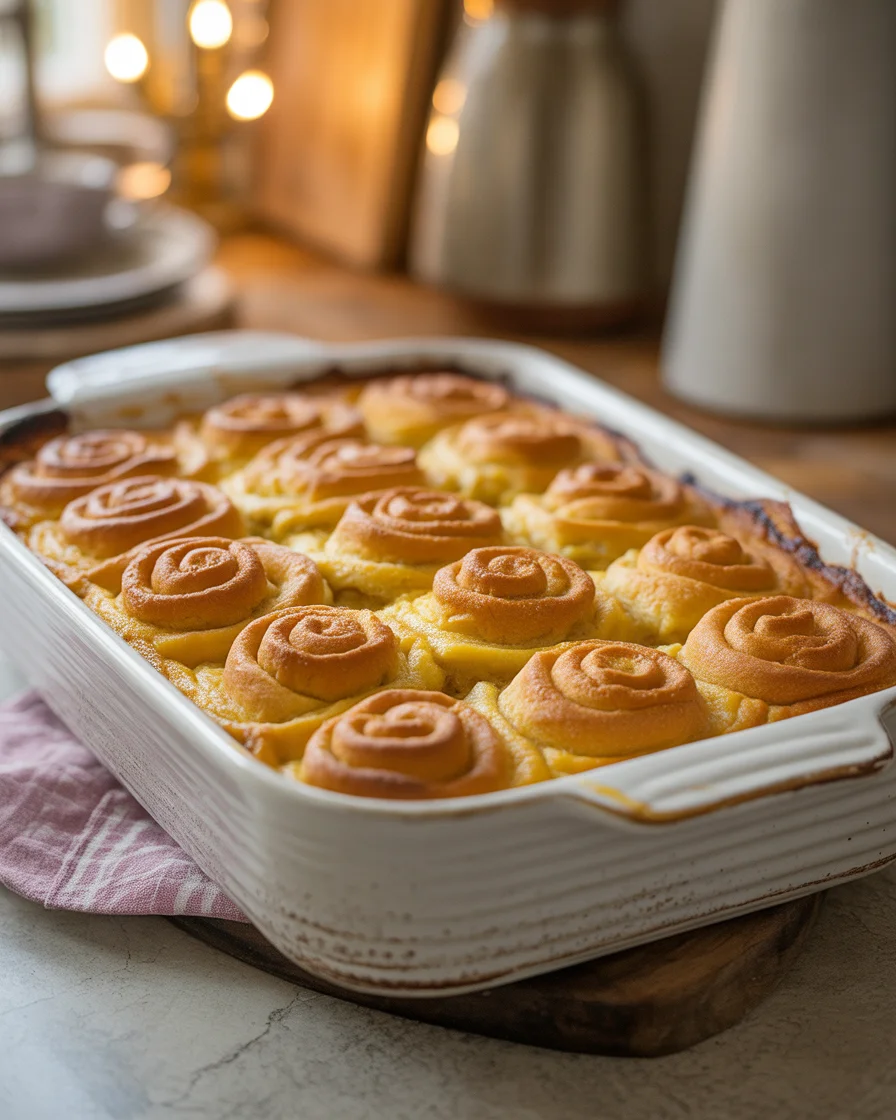
An overnight orange roll casserole is a welcome sight on a morning when you’d rather sit down with coffee than spend ages preparing breakfast. Warm, sweet, comforting like a cinnamon roll bake, but the orange flavour gives it a brighter finish that feels especially nice for holiday brunches.
It’s not just the taste that draws. An overnight recipe can take some of the pressure off a busy morning especially when you’re feeding guests. You still get that freshly baked breakfast feeling without having to scramble at the last minute.
Texture is what makes or breaks this dish. The rolls should be soft enough to hold their shape and the glaze should add sweetness without making the entire casserole mushy.
What Is Overnight Orange Roll Casserole?
Overnight Orange Roll Casserole is a sweet breakfast casserole using orange rolls or a similar bread base. Many versions are inspired by cinnamon roll casseroles, but the citrus flavour gives the finished dish a different character.
Some recipes call for refrigerated orange rolls; others call for prepared bread or homemade dough. Those differences matter because raw dough and already baked bread absorb moisture and respond differently to oven heat.
Overnight generally means the casserole is intended to be prepared ahead of time and refrigerated until the next day. That’s not to say every orange roll recipe can be left out overnight with safety or success.
A great make-ahead casserole is especially useful for Christmas morning, Easter brunch, or a weekend breakfast when you want something warm without a rushed start.
What’s the Difference Between Orange Roll Casserole and Regular Cinnamon Roll Casserole?
Cinnamon roll casserole is typically all about warm cinnamon flavour, sweet dough and icing. It smells like a bakery, which is nice on a cold morning.
Orange roll casserole brings in the citrus. Orange zest adds a fragrant aroma and orange juice or an orange flavoured glaze adds a little acidity that helps balance the sweetness.
The two flavours can also be coexistent. An orange cinnamon roll casserole can be both warm spice and bright citrus, making something that feels familiar but not exactly like a traditional cinnamon roll bake.
If you think regular cinnamon roll casseroles are too sweet, you may especially enjoy the orange version. “The citrus doesn’t necessarily reduce the sugar, but it can alter the perception of sweetness.”
What Type of Orange Rolls Are Best for This Casserole?
Refrigerated orange rolls are a convenience since they are already flavoured and sized. They are good for recipes specifically created for that type of dough, especially if you’re looking to make breakfast preparation manageable.
Homemade orange rolls give you more control over the citrus flavour and the dough texture. They can be a good choice if you enjoy baking from scratch, but they may require a different method and preparation timeline.
Some casserole styles may use pre-baked orange bread rolls. They absorb moisture differently than raw dough and so aren’t always interchangeable.
The key is to match roll type to recipe. Going from raw refrigerated dough to fully baked rolls can change everything from how moisture is absorbed to how the center sets.
How to Get the Fluffiest Overnight Casserole Orange Rolls Every Time
One of the biggest mistakes with sweet breakfast casseroles is being judged simply by the surface. The top can look gorgeous golden but the middle still needs some work especially in a deep baking dish.
The moisture balance is equally important. Too much liquid can make the casserole heavy and wet, too little may give dry edges. Different rolls are made with different doughs that take up liquid at different rates.
If the recipe contains an egg-based custard, the center must be heated to a safe temperature of 160°F (71°C). Use a food thermometer to determine doneness rather than just a browned top.
The dish you use also makes a difference. If your recipe calls for a shallow dish, you may need to adjust the baking conditions if you use a deeper casserole dish instead.
Why Does The Orange Glaze Taste So Good?
A rich breakfast casserole gets a fresh, fragrant finish from an orange glaze. If the glaze contains orange zest, which has the aromatic oils from the peel, the citrus flavour is especially strong.
The orange juice gives the icing a little acidity and can help to balance out a sweet icing. But too much liquid can cause the glaze to become runny, especially when it meets a warm casserole.
The sweetness of the rolls is also important. If the dough already has a strong orange taste and a sweet filling, a very heavy glaze can be too much.
A good glaze should complement the texture of the soft rolls, not hide it. You want the citrus to be present, but you still want the casserole to be the star of the show.
Can I Make an Orange Roll Casserole Ahead of Time?
Yes, if the recipe is specifically designed for overnight refrigeration. This is particularly the case if the casserole contains raw dough, eggs or dairy ingredients.
Certain casseroles that use bread will be improved by a rest as the bread absorbs the liquid around it. But raw refrigerated dough is different and a long rest can affect its texture or how it rises.
If the casserole contains perishable ingredients, store it at 40°F (4°C) or lower. Or leave it on the counter overnight. Not a good option.
But the real bonus for holiday mornings is that the prep is all done in advance. You can have a relaxed breakfast and still achieve the desired texture of the finished dish.
What to Serve With Orange Roll Casserole for a Brunch
Orange roll casserole is sweet so the most useful sides are savoury foods. The citrus glaze adds balance and makes the breakfast sausage, scrambled eggs or breakfast egg bake more substantial.
Another great option is fresh fruit. Berries and melon offer a refreshing counterpoint, especially when the casserole is rich and warm.
Coffee is a natural partner to orange-flavored baked goods, or go for unsweetened tea for something lighter. The casserole is the star so you don’t need a lot of additional sweet pastries.
For a more substantial brunch, I like to include one sweet casserole, one savoury dish and a simple fruit platter. This creates a balanced spread without complicating the menu too much.
Leftover Orange Roll Casserole Storage Instructions
If your casserole has eggs or dairy, refrigerate leftovers within two hours in a covered container. Refrigerated casseroles of egg dishes are usually best three or four days after they are made.
The rolls may become softer in storage as they continue to absorb moisture. That doesn’t mean the casserole has gone bad, but it sure can change the texture a lot.
Glaze can also be affected by reheating. If the glaze looks fresh, it can melt into the rolls, so don’t expect to see leftovers looking exactly the same.
Reheat leftover egg casserole until it reaches a thorough 165°F (74°C).
Frequently Asked Questions About Overnight Orange Roll Casserole
Can I substitute regular cinnamon rolls for orange rolls?
You might be able to substitute cinnamon rolls in a recipe that calls for those, but the flavour and moisture level might be different. Regular cinnamon rolls are typically more spiced and may have a different icing. You are able to make variation by adding orange flavour. It will not necessarily behave exactly like the original recipe.
Why is the middle of my orange roll casserole mushy?
A soggy middle can be a sign of too much liquid or not enough baking, or using a roll type that absorbs moisture differently than the one called for. A deep baking dish can also slow cooking in the center. Check the recipe’s proportions and doneness guidance instead of just looking at the top.
Can I do this casserole without eggs?
It is contingent upon the recipe. Some casseroles are made with eggs, which create a custard-like structure, while others are more reliant on the dough itself. A version without eggs is a better choice because leaving the eggs out of a custard-based version can leave the finished dish loose.
Can you freeze orange roll casserole overnight?
Some versions can be frozen, but the bread texture and glaze will change after thawing. Eggs also have a water releasing ability that adds tenderness to the casserole. If freezing, use the appropriate method for the recipe and reheat thoroughly before serving.
More Easy Breakfast Casseroles Recipes
If you love the convenience of an overnight orange roll casserole, you’ll find another useful breakfast in a French toast casserole. It also has a make-ahead option, but the bread and custard make for a different texture and taste.
If you want something savoury to balance a sweet brunch menu, try a sausage and egg
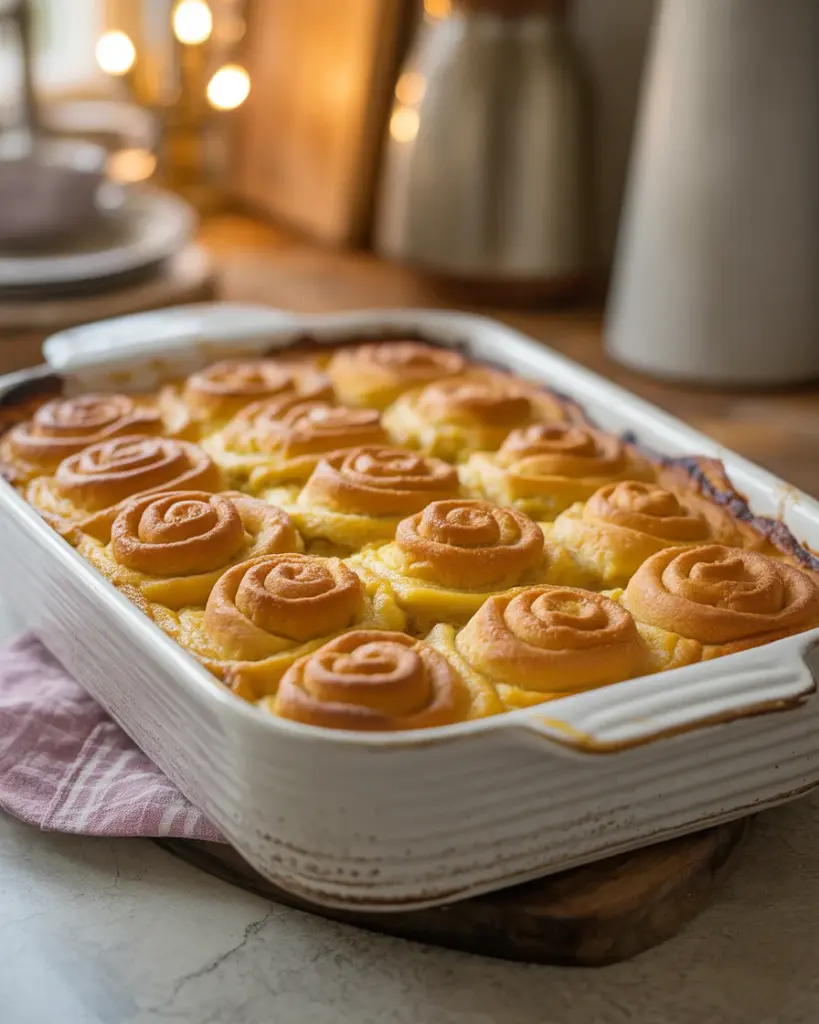
Overnight Orange Roll Casserole
Ingredients
Method
- Grease a 9x13 inch baking dish.
- Cut the orange rolls into quarters and place in the greased baking dish.
- In a mixing bowl, whisk together the eggs, milk, orange juice, orange zest, sugar, and vanilla extract.
- Pour the egg mixture evenly over the orange rolls, ensuring all pieces are soaked.
- Cover the dish with plastic wrap and refrigerate overnight.
- Preheat the oven to 350°F (175°C).
- Remove the casserole from the refrigerator and let sit at room temperature for about 30 minutes.
- Bake in the preheated oven for 25-30 minutes or until the top is golden and the center is set.
- In a small bowl, mix the powdered sugar, orange juice, and zest together until smooth.
- Drizzle the glaze over the warm casserole before serving.