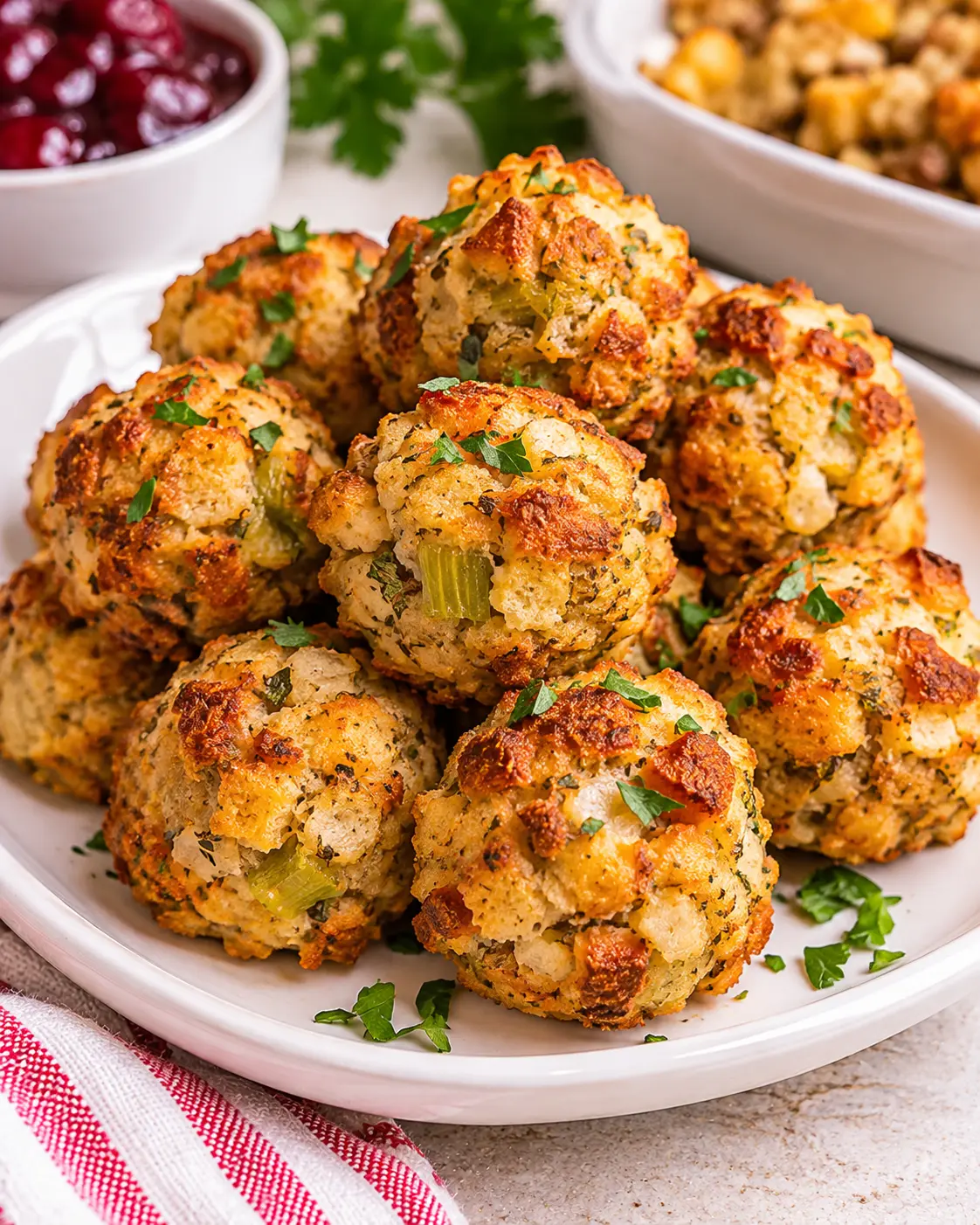
There’s something especially comforting about homemade stuffing with crispy golden edges, a soft, savory center, and the familiar aroma of herbs and butter. This Easy Stuffing Balls Recipe delivers everything I love about traditional stuffing in perfectly portioned little rounds that are easy to serve and even easier to enjoy.
I love making stuffing balls for Thanksgiving and Christmas because they bring a classic holiday flavor to the table without requiring another large casserole dish. Each one develops a lightly crisp exterior while staying tender inside, making them a wonderful alternative to traditional baked stuffing.
The best part is how practical this recipe is. You can prepare the mixture ahead of time, customize the seasonings, and even freeze leftovers for another meal. Whether you’re planning a holiday feast or looking for a comforting side dish for roast chicken, these homemade stuffing balls are a delicious choice.
In This Recipe
Why You’ll Love Stuffing Balls
Traditional stuffing is already a holiday favorite, but shaping it into individual portions creates a few advantages that make this recipe especially appealing. Instead of having crispy edges only around the outside of a casserole, every stuffing ball develops its own golden exterior.
The contrast between the lightly crisp surface and the soft, herb-seasoned center is what makes these so satisfying. You get the familiar flavors of buttery bread, sautéed onions, celery, and savory herbs in every bite.
Another reason I enjoy making stuffing balls is how easy they are to serve. Individual portions look attractive on a platter, and guests can help themselves without needing to scoop stuffing from a baking dish.
What Makes This Recipe Special
Crispy edges and tender centers: Baking the stuffing in individual portions allows more surface area to become golden. The centers remain soft and flavorful when the bread mixture has the right moisture level.
Simple pantry ingredients: Stale bread, butter, broth, vegetables, and seasonings form the foundation of this recipe. You don’t need unusual ingredients or complicated preparation techniques.
Perfect for holiday meals: Stuffing balls are an excellent side dish for Thanksgiving turkey, Christmas dinner, or a traditional Sunday roast. Their individual shape also makes portioning easy.
Convenient for entertaining: These stuffing balls travel well and can be prepared in advance. They’re particularly useful when you’re bringing a homemade side dish to a potluck or family gathering.
Easy to customize: Mushrooms, sausage, fresh herbs, and different types of bread can all change the flavor. You can keep the recipe traditional or adapt it to suit your holiday menu.
Freezer-friendly: Cooked stuffing balls can be frozen and reheated, making them a practical option for preparing holiday food ahead of time.
I also appreciate how versatile they are outside the holidays. A few stuffing balls served with roasted chicken, vegetables, and gravy can turn a simple weeknight dinner into something that feels a little more special.
For another comforting meal idea, try this hearty crockpot lasagna soup. It’s a wonderful option when you’re craving familiar, satisfying flavors without complicated preparation.
Best Bread for Stuffing
Choosing the right bread is one of the most important parts of making homemade stuffing balls. Bread provides the structure, absorbs the savory broth, and helps create the contrast between the crisp exterior and tender center.
I prefer bread that has enough body to hold its shape after absorbing moisture. A combination of traditional white bread and a rustic loaf can provide a particularly good balance of softness and texture.
White sandwich bread creates a familiar, tender stuffing, while sourdough or crusty country bread adds a slightly chewier texture and more developed flavor. Both options work well, depending on the result you prefer.
Fresh vs. Stale Bread: What Works Best?
Slightly stale or thoroughly dried bread is usually the best choice for stuffing balls. It absorbs broth more evenly without becoming excessively soft or gummy.
Fresh bread contains more moisture, which can make the stuffing mixture heavy and difficult to shape. Drying the bread before using it helps the pieces maintain their structure while still becoming tender when combined with the other ingredients.
The ideal bread should feel dry on the surface but not so hard that it remains tough after absorbing broth. Evenly sized cubes also help create a consistent texture throughout the stuffing balls.
If you only have fresh bread available, drying it gently in the oven can make it more suitable for stuffing. Allow the pieces to cool before combining them with the remaining ingredients.
Can You Use Sourdough or Cornbread?
Sourdough is an excellent option if you enjoy stuffing with a little extra character. Its subtle tang complements buttery onions, celery, and savory herbs.
Cornbread can also be incorporated for a Southern-inspired variation. It adds a delicate sweetness and a softer, more crumbly texture that pairs beautifully with sage and poultry seasoning.
Because cornbread tends to break apart more easily, I recommend combining it with a sturdier bread when making stuffing balls. This helps the mixture hold together while preserving the familiar flavor of cornbread stuffing.
For a comforting family dinner, serve these stuffing balls alongside grilled potatoes and a fresh green salad. The combination is simple, satisfying, and full of homemade flavor.

10 easy recipes your family will ask for again
- Our 10 most-loved dinners, sides & treats
- Printable PDF with clear steps & tips
- Plus one easy recipe email a week
Join 1,650+ home cooksNo spam · unsubscribe anytime
How to Make Stuffing Balls
Making homemade stuffing balls is straightforward once you understand how the bread mixture should look and feel. The goal is to create a mixture that’s moist enough to hold together but not so wet that the stuffing balls become dense or lose their shape.
The complete ingredient measurements and baking instructions are available in the recipe card. These additional notes explain the purpose of each ingredient and the techniques that help produce consistent results.
Expert Tips for Perfect Stuffing Balls
A few simple adjustments can make a noticeable difference in the flavor and texture of homemade stuffing balls. Most of the important details involve moisture control, seasoning, and choosing the right portion size.
Dry the bread thoroughly. Bread that’s too fresh can absorb broth unevenly and create a heavy texture. Using properly dried bread helps the mixture hold together while remaining tender.
Season the vegetables well. Onions, celery, and herbs form the flavor base of the stuffing. Taste the cooked vegetable mixture before it comes into contact with raw eggs, and adjust the seasoning as needed.
Use warm broth. Warm broth can help distribute moisture more evenly throughout the bread. Add it gradually because different bread varieties absorb different amounts.
Don’t add too much liquid. The stuffing should be moist enough to form a ball without becoming soggy. If the mixture feels overly wet, additional dried bread can help restore the proper consistency.
Use butter for flavor. Butter gives traditional stuffing its familiar richness and complements the herbs beautifully. Olive oil can be used for part of the fat, but the flavor will be slightly different.
Keep the portions consistent. Evenly sized stuffing balls bake more predictably and look attractive when arranged on a serving platter.
Chill the mixture if necessary. If the stuffing balls feel too soft or loose, a short rest in the refrigerator can make them easier to handle.
Prepare ahead when possible. Stuffing balls are convenient for holiday meal planning because the components can be prepared in advance. Keep the assembled mixture refrigerated and bake it thoroughly before serving.
Allow the exterior to brown. A lightly golden surface creates the delicious contrast that makes stuffing balls different from traditional casserole-style stuffing.
These turned out perfect on my first try. Crispy on the outside and soft in the middle, and the seasoning balance was spot on. My family asked for a double batch next time. Mia P., reader
For a holiday potluck or casual gathering, I like serving these stuffing balls with something cool and tangy, such as deviled egg salad. The creamy texture provides a pleasant contrast to the warm, herb-seasoned stuffing.
Storage & Reheating Information
One of the biggest advantages of this Easy Stuffing Balls Recipe is how well it fits into make-ahead meal planning. You can prepare them for a holiday celebration, save leftovers for another dinner, or freeze a batch when you want a convenient side dish later.
Proper storage helps maintain their flavor and prevents the bread from drying out excessively.
How to Store Stuffing Balls in the Refrigerator
Allow cooked stuffing balls to cool slightly before transferring them to an airtight container. Refrigerate them promptly, within two hours of cooking, to keep them safe for later meals.
When stored properly at 40°F or below, leftover stuffing balls can generally be kept for three to four days. Keep them covered so they don’t absorb odors or lose moisture.
If you’re preparing the mixture ahead of baking, refrigerate it promptly and avoid leaving it at room temperature for extended periods. For holiday planning, preparing the bread and vegetables separately in advance is often the most convenient option.
Can You Freeze Stuffing Balls?
Yes, cooked stuffing balls freeze well and are useful for preparing holiday meals ahead of time. Allow them to cool, then arrange them in a freezer-safe container with enough protection to prevent freezer burn.
For the best texture and flavor, I recommend enjoying frozen stuffing balls within approximately two months. Label the container with the date so you can easily keep track of your make-ahead dishes.
Thawing them overnight in the refrigerator is a convenient option before reheating. This helps them warm more evenly without drying out the exterior.
Best Ways to Reheat Stuffing Balls
Reheating stuffing balls in the oven is one of the best ways to restore their lightly crisp exterior. Arrange them on a baking sheet and warm them until the centers reach 165°F.
An air fryer can also work well for smaller portions because the circulating hot air helps refresh the outside. Keep an eye on them so they don’t become overly dry.
A light brushing of melted butter can add moisture and enhance the flavor during reheating. If the stuffing balls seem particularly dry, serving them with warm gravy is another delicious option.
Microwaving is convenient when you’re short on time, but the exterior will usually become softer. For the best balance of crispness and tenderness, the oven is my preferred method.
For another comforting family meal, try this tuna casserole pasta bake. It’s a nostalgic, satisfying dish that works well for busy weeknights.
Storing leftovers? Cool them quickly, keep them covered in the fridge and eat them within a few days. The FoodSafety.gov cold storage chart lists safe times for every kind of dish. Love this stuffing balls? Browse more Breakfast recipes on Cuts Food.
Frequently Asked Questions About Stuffing Balls
Can I Use Gluten-Free Bread?
Yes, gluten-free bread can work well for homemade stuffing balls, especially if you choose a sturdy loaf that holds its shape. Dry the bread thoroughly before combining it with the other ingredients, since some gluten-free varieties absorb moisture differently. Add the broth gradually and check the consistency before shaping.
What If My Stuffing Mixture Is Too Wet?
An overly wet stuffing mixture can make the balls difficult to shape and cause them to become dense during baking. Adding more dried bread cubes or a small amount of plain breadcrumbs can help absorb the excess moisture. Allow the mixture to rest briefly before shaping so the bread has time to absorb the liquid.
Can I Make Stuffing Balls Without Eggs?
Yes, although the texture may be more delicate because eggs help bind the ingredients together. A flaxseed mixture can provide some binding, while careful moisture control helps the stuffing maintain its shape. Press the portions firmly and consider chilling them before baking to reduce the chance of crumbling.
How Do I Keep Stuffing Balls From Falling Apart?
The key is using properly dried bread and enough moisture to bind the ingredients without making them soggy. Eggs also help the mixture hold together during baking. If the portions seem loose, press them more firmly and refrigerate them briefly before placing them in the oven.
What’s the Best Way to Serve Stuffing Balls?
Stuffing balls are especially delicious alongside roasted turkey, chicken, and warm gravy. They also pair well with mashed potatoes, roasted vegetables, and cranberry sauce for a traditional holiday meal. For a casual gathering, smaller stuffing balls can be served as savory appetizers with a creamy dipping sauce.
Let’s Get You Baking
This Easy Stuffing Balls Recipe brings all the comforting flavors of traditional holiday stuffing into convenient, golden-brown portions. With buttery bread, savory herbs, and tender vegetables, each stuffing ball delivers the familiar taste of Thanksgiving and Christmas in a slightly different form.
I love how flexible this recipe is for everything from holiday celebrations to simple family dinners. You can prepare the ingredients ahead of time, customize the flavors, and serve the finished stuffing balls with almost any roasted main dish.
If you’d like to explore additional variations, take a look at these basic stuffing balls with variations from Food.com and these traditional sage and onion stuffing balls. Both offer useful inspiration for experimenting with different seasonings and ingredients.
Whether you’re preparing a Thanksgiving feast, a Christmas dinner, or a comforting weeknight meal, these stuffing balls are a delicious way to make a familiar side dish feel special. Serve them warm, add a little gravy if you like, and enjoy every crispy, savory bite.
More Recipes to Try
If you enjoy festive stuffing recipes, try these Easy Cranberry Turkey Stuffing Balls for another delicious holiday variation.
You might also love this Easy Thanksgiving Cornbread Stuffing — Southern or this convenient Easy Thanksgiving Dinner for Two — Sheet Pan. For a classic holiday bread option, these Easy Thanksgiving Dinner Rolls — Soft Buttery are another wonderful addition to the table.
Easy Stuffing Balls
Ingredients
Method
- Cube and dry your bread in a 275°F oven until firm and lightly golden.
- Melt butter in a skillet. Cook onion and celery over medium heat until soft and fragrant. Add mushrooms if using and cook until any liquid evaporates. Stir in herbs and turn off the heat.
- Place bread in a big bowl. Scrape in the buttery vegetables. Add salt, pepper, and parsley.
- Whisk eggs with 1 cup warm broth. Pour over the bread and gently toss. If the mix seems dry, add more broth a splash at a time.
- Grease your hands and a sheet pan. Form balls the size of golf balls or slightly larger.
- Bake at 375°F for 20 to 25 minutes, turning once if you want extra even browning.
Notes
Nutrition Facts
Per 1 servingNutrition information is an estimate per serving and can vary with the brands, portion sizes and exact ingredients you use.
You’ll also love
 ⏱ 20 min
Easy Phyllo Cups
Cream Cheese Fruit Appetizer
 ⏱ 30 min
Savory Breakfast Protein Biscuits
 ⏱ 21 min
LEMON COOL WHIP COOKIES
 ⏱ 30 min
Easy Egg Muffins
Meal Prep Breakfast Cups
 ⏱ 50 min
Delicious Baked Oatmeal with Blueberries and Bananas for Breakfast
 ⏱ 26 min
Easy Custard Toast
Viral Baked Egg Breakfast
 ⏱ 55 min
Ultimate Homemade Almond Kringle
 ⏱ 45 min
Easy Biscuits and Gravy Casserole
Easy Brunch