
There’s something about a plate of steak fajitas that makes dinner feel more inviting. The beef, peppers, and onions arrive together, and everyone can build their own tortilla with whatever toppings they like. It’s a relaxed way to eat, especially when you have people around the table who don’t all want exactly the same thing.
Good steak fajitas aren’t really about loading the skillet with seasoning. The beef needs to be tender enough to bite through comfortably, the vegetables should still have a little character, and the seasoning should bring everything together without hiding the flavor of the steak.
That’s where a few small decisions matter. The cut of beef, how it’s sliced, and the way it’s served can make the difference between a dinner everyone enjoys and one that leaves you chewing through tough strips of meat.
Why You’ll Love These Steak Fajitas
Steak fajitas have a way of turning an ordinary dinner into something everyone participates in. Rather than serving fully assembled plates, you can put the beef and vegetables in the middle of the table and let people choose their own tortillas, toppings, and sides.
They also offer a satisfying contrast of textures. Tender steak feels substantial, while peppers and onions add sweetness and a little bite. A squeeze of lime or a fresh topping can brighten the whole combination without needing a heavy sauce.
Fajitas are also easy to adapt at the table. Someone who prefers fewer onions can choose more peppers, while another person can add salsa, avocado, or a spoonful of sour cream. You don’t have to prepare a completely separate meal to accommodate those preferences.
Best Steak Cuts for Fajitas
Skirt steak is closely associated with fajitas, and for good reason. It has a pronounced beefy flavor and a loose grain that works well when the meat is sliced properly. Its main drawback is that it can become chewy if it’s overcooked or cut in the wrong direction.
Flank steak is another popular option. It’s relatively lean, has a strong beef flavor, and produces attractive strips when sliced thinly across the grain. Because it’s leaner, it benefits from careful attention to doneness.
Sirloin can also make good beef fajitas, particularly when you want a cut that’s widely available and relatively easy to portion. It doesn’t have exactly the same texture as skirt steak, but it can be a practical choice for a family dinner.
Whichever cut your recipe uses, pay attention to the direction of the muscle fibers. Cutting across the grain shortens those fibers and makes the steak noticeably easier to chew. It’s one of the most useful details to understand when making fajitas.
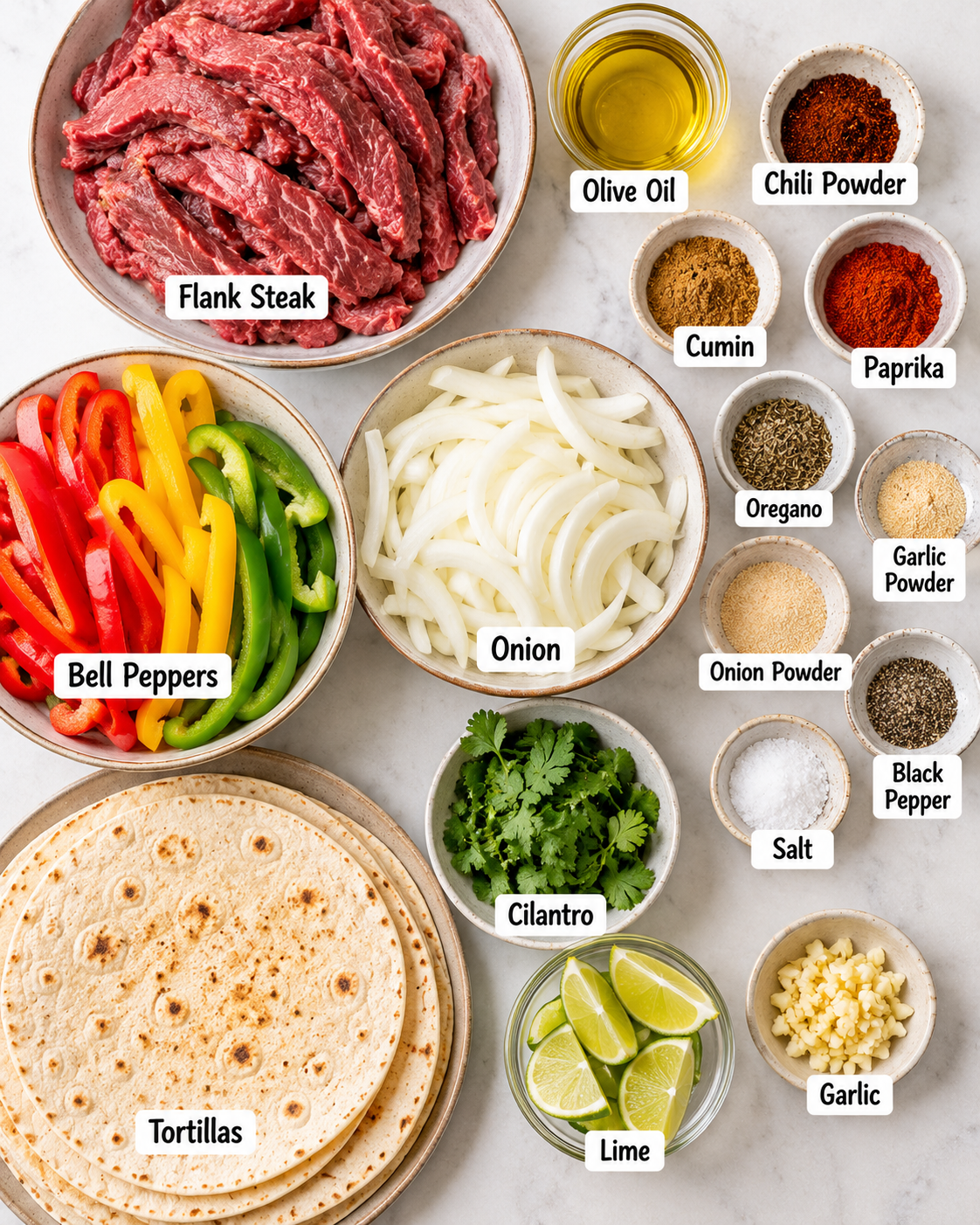
Steak Fajitas Ingredients
The ingredients in steak fajitas each have a fairly clear job. Beef supplies the rich, savory flavor, while peppers and onions add sweetness, color, and freshness. The seasoning ties those elements together, but it shouldn’t make every bite taste identical.
Bell peppers are particularly useful because their flavor changes as they soften. Red, yellow, and orange peppers tend to be sweeter than green ones, so the mixture of colors affects more than the appearance of the skillet.
Tortillas and toppings matter, too, even though they aren’t the focus of the filling. A fresh tortilla gives the steak and vegetables somewhere to go, while something acidic or creamy can balance the richness of the beef.
Use the ingredient choices in your recipe card as the starting point. Different fajita recipes use different seasonings and flavor combinations, and changing several components at once can make the finished dish taste quite different.
Steak Fajita Marinade and Seasoning
A marinade can add flavor to steak fajitas, but not every fajita recipe needs one. Some rely on a dry seasoning blend instead, allowing the beef’s natural flavor to remain prominent.
If your recipe uses a marinade, it’s worth understanding what it contributes. Acidic ingredients can brighten the flavor, while oil and seasonings help distribute aromatics across the meat. However, a marinade doesn’t automatically make every cut tender, and prolonged exposure to strong acids can affect the surface texture.
Dry seasoning has its own advantages. It can produce a concentrated flavor without adding extra liquid to the cooking surface, which is useful when you want the beef to develop a browned exterior.
The important thing is to follow the approach designed for your recipe. A steak fajita marinade and a dry rub aren’t always interchangeable, especially when the recipe has been developed around a particular cut of beef.
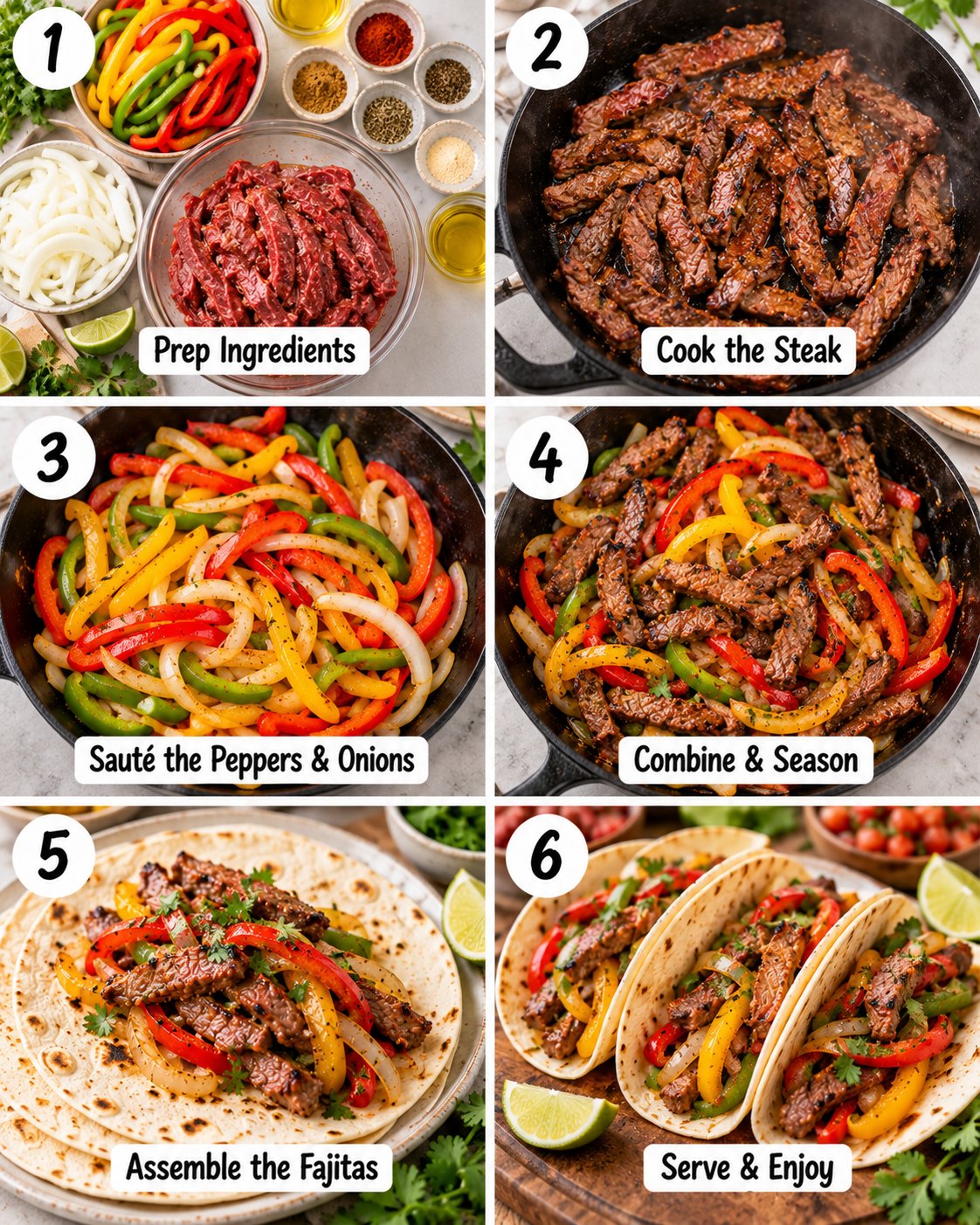
How to Make Steak Fajitas
You’ll find the complete recipe, quantities, and cooking instructions in the recipe card below. It includes the preparation details for this particular version of steak fajitas.
One thing worth paying attention to while cooking is the difference between browning and steaming. Beef and vegetables can release moisture, and a crowded skillet may struggle to develop the color associated with good fajitas. The result can still taste pleasant, but the texture and flavor will be different.
The other detail is timing. Peppers and onions don’t necessarily need the same texture as the steak, and the beef can lose moisture if it’s cooked beyond the point intended for the cut.
Tips for Tender, Juicy Steak
The most common complaint about homemade steak fajitas is chewy beef. Often, the problem isn’t the seasoning at all. It’s a combination of cut, cooking time, and slicing direction.
Skirt and flank steak have long muscle fibers. When those fibers remain long in the finished strips, the meat can feel tough even if it was cooked reasonably well. Slicing across the grain makes a substantial difference.
Overcooking is another common issue. Lean cuts have less fat to protect them from drying out, so they can become firm and chewy when exposed to too much heat for too long.
Resting the steak before slicing also helps limit moisture loss. The exact cooking and resting guidance depends on the cut and recipe, but rushing straight from the heat to thin slices can leave more juices on the cutting board than you’d like.
For whole cuts of beef, USDA guidance recommends a minimum internal temperature of 145°F (63°C) followed by a three-minute rest. Use a food thermometer rather than relying on color alone.
Best Peppers, Onions and Toppings
Bell peppers bring more to fajitas than a splash of color. Green peppers have a slightly grassy, sharper character, while red and yellow peppers generally taste sweeter. A mixture creates a more interesting balance than using only one variety.
Onions contribute a different kind of sweetness. Their flavor becomes milder as they cook, but they can still provide enough bite to balance the beef. Yellow and white onions are both common choices, although they won’t taste exactly alike.
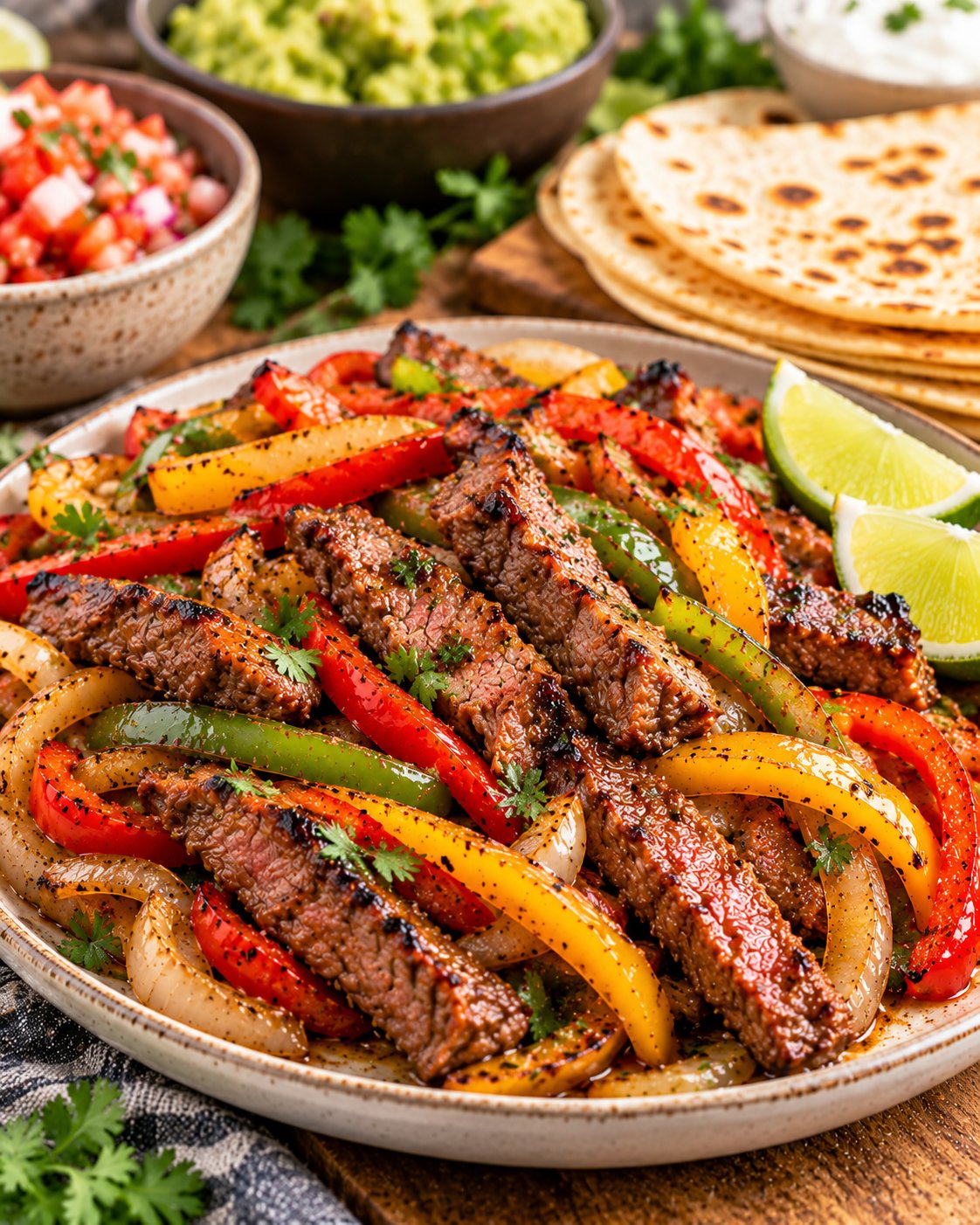
For toppings, fresh ingredients are especially useful. Pico de gallo adds brightness, avocado brings creaminess, and a little lime can cut through the richness of the steak. Shredded lettuce or fresh cilantro can also add texture when those flavors suit your preferences.
It’s easy to overwhelm fajitas with too many toppings. Start with the beef and vegetables, then add what improves the combination rather than covering it completely.
What to Serve with Steak Fajitas
Warm tortillas are the obvious companion, but the rest of the meal can be as simple or elaborate as you like. Rice and beans make the dinner more substantial, particularly when you’re serving a group.
A crisp salad is a good choice when you want something lighter. The freshness contrasts nicely with the savory beef and softened vegetables.
Corn salad, sliced avocado, or a bowl of salsa can also fit naturally into a fajita spread. If you’re serving several sides, choose ones with different textures rather than making everything rich and creamy.
For a casual family dinner, the fajitas themselves may be enough with tortillas and one simple accompaniment.
Storage and Reheating
Leftover steak fajitas are useful for lunch, although the steak can become firmer when reheated. The peppers and onions may also soften further, so the texture won’t be exactly the same as a freshly prepared skillet.
Refrigerate leftovers promptly in covered containers at 40°F (4°C) or below. Properly stored cooked beef is generally best used within three to four days.
When reheating, avoid unnecessarily prolonged heating that can dry out the steak. Leftovers should reach 165°F (74°C) throughout.
If you have extra tortillas and toppings, storing them separately from the hot filling usually preserves their texture better. Fresh toppings such as lettuce and avocado are best handled according to their own storage needs.
Frequently Asked Questions About Steak Fajitas
What Is the Best Steak for Fajitas?
Skirt steak is a classic choice because of its strong beef flavor, while flank steak and sirloin are also popular. The best cut depends on availability, budget, and the texture you prefer. Proper slicing is important whichever cut you choose.
Why Are My Steak Fajitas Tough?
The steak may have been overcooked, or it may have been sliced with the grain rather than across it. Some cuts are also naturally firmer than others. The cooking method and thickness of the slices both influence tenderness.
Do You Have to Marinate Steak for Fajitas?
No. Some recipes use a marinade, while others rely on a dry seasoning blend. Both can produce flavorful fajitas when suited to the cut and cooking method.
Can You Use Frozen Bell Peppers?
Frozen peppers can work in some recipes, but they usually release more moisture and may become softer than fresh peppers. If you want distinct, slightly crisp strips, fresh peppers generally give you more control over texture.
Can You Make Steak Fajitas Ahead of Time?
You can prepare components ahead when the recipe allows it, but steak is usually at its best soon after cooking. Reheated strips can become firmer, so a make-ahead version may have a different texture.
Final Thoughts
Easy steak fajitas are one of those dinners where a few thoughtful details matter more than a complicated ingredient list. A suitable cut of beef, peppers and onions with good texture, and balanced seasoning create the foundation.
Serve everything with warm tortillas and a few fresh toppings, and the meal feels generous without being difficult to enjoy. That’s what makes steak fajitas such a dependable choice for a relaxed family dinner.
Steak Fajitas
Ingredients
Method
- In a bowl, combine olive oil, lime juice, chili powder, cumin, and salt. Mix well.
- Add the skirt steak to the bowl and coat it with the marinade. Let it sit for 15-30 minutes.
- Heat a skillet over medium-high heat. Once hot, add the marinated steak.
- Cook for 3-4 minutes per side for medium-rare, or until desired doneness.
- Remove the steak from the skillet and let it rest for a few minutes.
- In the same skillet, add the sliced bell peppers and onions.
- Sauté for about 5-7 minutes until they are tender-crisp.
- Slice the rested steak against the grain into thin strips.
- Serve the beef and sautéed vegetables with warm tortillas, allowing everyone to build their own fajitas.