
There are soups you make when you want something light, and then there’s beef barley soup. This is the kind of meal that fills a bowl properly, with tender pieces of beef, satisfying grains, and a broth that develops a rich, savory character as everything cooks together.
Crockpot beef barley soup is especially welcome during colder months. It’s comforting without needing a cream-based broth, and the barley gives it a pleasantly substantial texture. A bowl with a slice of crusty bread can easily feel like dinner rather than just a starter.
The slow cooker is well suited to beef that benefits from gentle cooking, but barley needs a little more consideration. It absorbs liquid and continues to soften, which means the type of barley and the recipe’s timing have a noticeable effect on the finished soup.
Why You’ll Love This Slow Cooker Soup
The appeal of slow cooker beef barley soup is how well the ingredients complement one another. Beef provides savory richness, while barley adds a mild, nutty flavor and a chewy texture that makes the broth more satisfying.
It’s also a practical choice for days when you don’t want to spend the evening managing several pans. The slow cooker handles the main cooking period, leaving you with a substantial meal that doesn’t require an elaborate side dish.
Unlike a creamy soup, beef barley soup can feel hearty without being particularly heavy. The grains give it body, and the vegetables commonly used in beef soups bring their own sweetness and flavor.
It’s worth remembering that the soup will change as it sits. Freshly cooked barley has a different texture from barley that’s spent another night absorbing broth in the refrigerator.
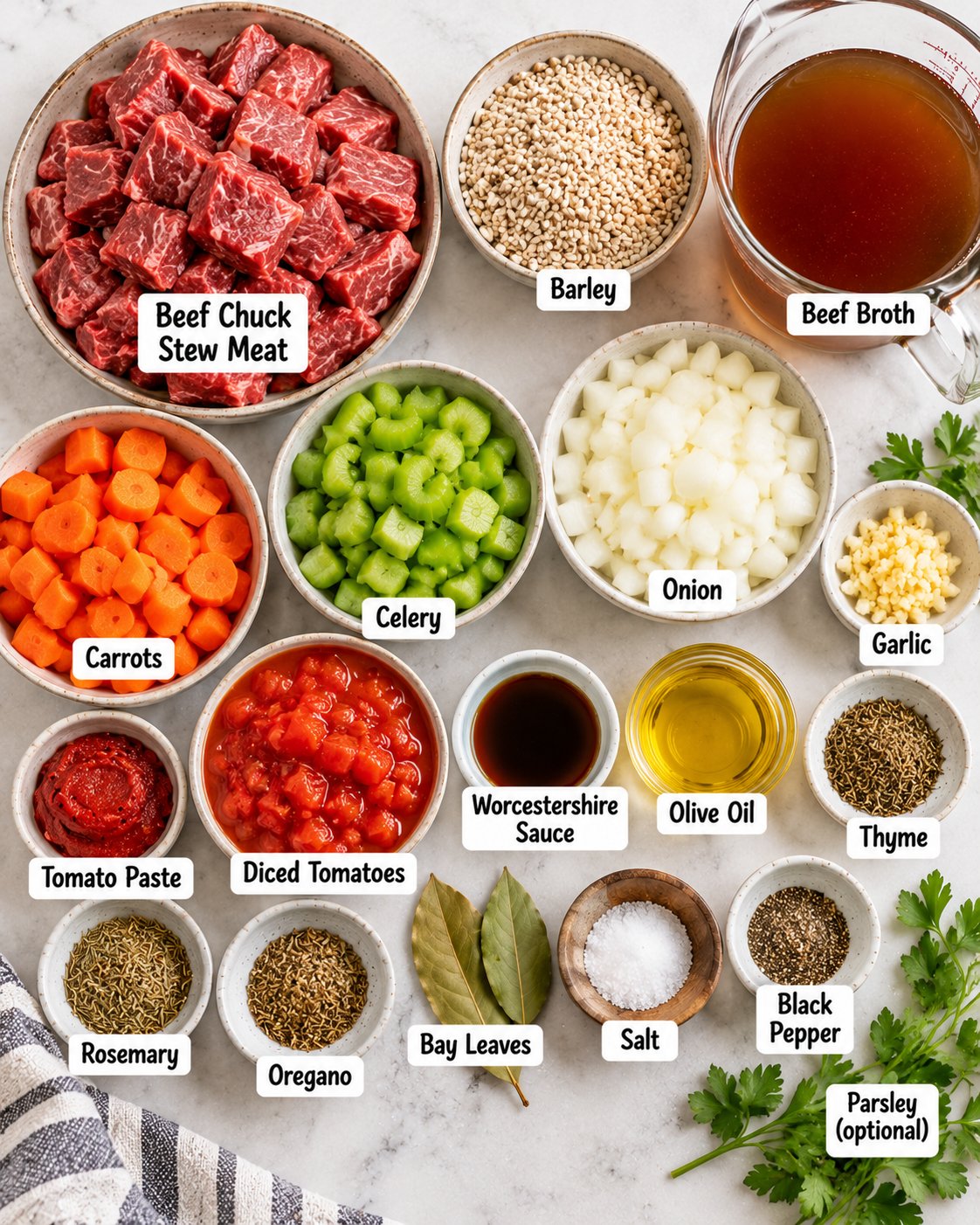
Best Beef for Beef Barley Soup
Chuck roast is one of the most useful cuts for a slow cooker soup. It contains connective tissue that softens during extended cooking, helping produce tender beef with a rich flavor.
Precut stew meat can be convenient, but the pieces may come from different cuts. That means some pieces can become tender sooner than others, even when they’re similar in size.
Leaner beef isn’t automatically a better choice. In a soup that spends a long time cooking, a very lean cut may become dry or stringy rather than pleasantly tender.
The ideal beef should soften enough to eat comfortably with a spoon. You want pieces that hold together in the bowl but don’t require much chewing.
Choose the cut specified in your recipe card whenever possible. Changing from chuck to a much leaner cut can affect both the texture and the cooking time.
What Type of Barley Should You Use?
Pearl barley is a common choice for beef barley soup. Some of the outer layers have been removed, so it generally cooks faster than hulled barley and becomes tender with a pleasant chew.
Hulled barley is less processed and retains more of its outer grain structure. It has a firmer texture and typically requires more cooking time, making it unsuitable as a casual substitution in some slow cooker recipes.
Quick-cooking barley behaves differently again. It’s designed to soften faster and can become overly soft when used in a recipe intended for regular pearl barley.
Barley also contains gluten, which is important for anyone who needs to avoid it. Despite its wholesome reputation, it isn’t suitable for a gluten-free diet.
The variety in your recipe card matters because the grain absorbs broth as it cooks. A change in barley type can alter both the texture and the amount of liquid remaining.
Crockpot Beef Barley Soup Ingredients
Beef and barley are the defining ingredients, but the broth plays an equally important role. A well-seasoned liquid brings the flavors together and gives the grains something savory to absorb.
Many beef barley soups also include familiar soup vegetables, such as carrots, celery, or onions. Their sweetness and aroma complement the beef, although the exact combination should match your recipe.
Prepared broth varies considerably in sodium content. That matters because the barley absorbs the liquid and the finished soup can become more concentrated as it thickens.
The barley itself has a relatively mild flavor. It contributes texture and substance rather than a strong seasoning note, so the surrounding broth needs enough character to make each spoonful satisfying.
Use the recipe card for the actual ingredient list and quantities. The most important relationship to preserve is the balance between grain, beef, and broth.
How to Make Beef Barley Soup in the Crockpot
The full slow cooker instructions are in the recipe card below. They cover the cooking method and timing for the particular beef and barley used in this version.
One useful thing to understand before starting is that the beef and barley don’t soften for the same reasons. Beef becomes tender as connective tissue changes during cooking, while barley absorbs liquid and its starches soften.
That distinction matters if you’re considering substitutions. A barley variety that cooks more quickly than the one specified can become overly soft before the beef reaches its intended texture.
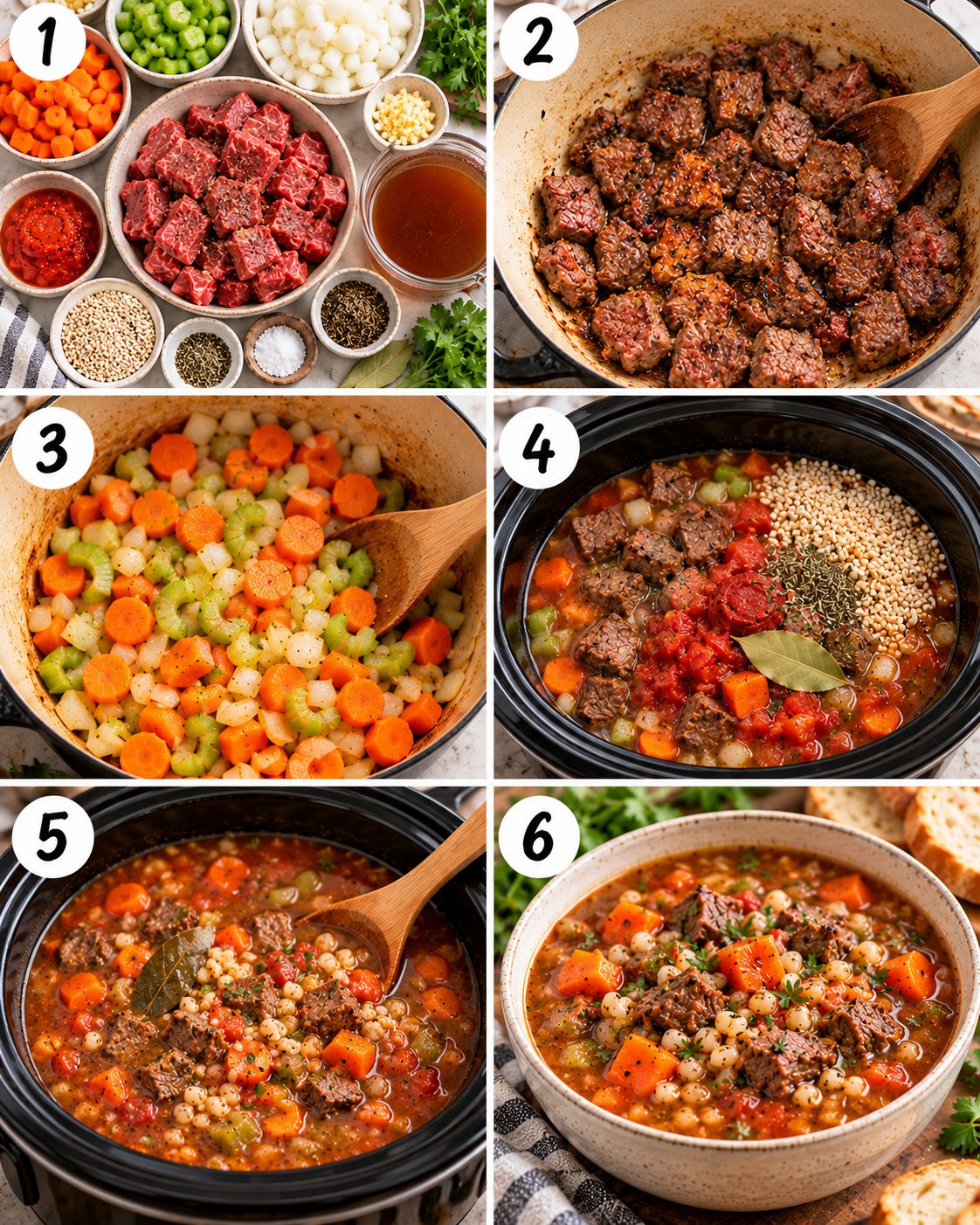
Tips for Tender Beef and Perfect Barley
A good beef barley soup has two distinct textures. The beef should be tender and juicy, while the barley should retain a gentle chew. If everything becomes equally soft, the soup can feel heavy and indistinct.
Beef tenderness depends on the cut and cooking conditions. A chuck-based soup may need sufficient time for the connective tissue to soften, whereas a leaner cut can behave differently.
Barley is less forgiving of excessive cooking. Once it has absorbed a large amount of broth, the grains can become swollen and soft, especially if they’re a quick-cooking variety.
It’s also worth checking the soup’s consistency before serving. Barley continues to absorb moisture as the soup rests, so the texture can change even after the slow cooker is switched off.
How to Adjust Soup Thickness
Beef barley soup often becomes thicker than expected, particularly after refrigeration. The grains continue absorbing liquid, leaving less free broth in the container.
Some people enjoy that almost-stew-like consistency. Others prefer a looser soup with plenty of broth surrounding the beef and barley. Neither preference is wrong, but the recipe’s liquid balance determines the intended result.
The type and amount of barley are major factors. Using more grain than specified can create a much thicker dish, even when the beef and vegetables are unchanged.
If you’re planning leftovers, expect the next day’s soup to be different from the first bowl. That change is normal for a grain-based soup.
Easy Variations
Mushrooms are a natural companion to beef barley soup because their earthy flavor complements both the meat and the grain. They can make the broth taste deeper without needing a heavy sauce.
Different vegetables can also change the character of the soup. Root vegetables contribute sweetness, while greens create a fresher finish. Their cooking requirements and moisture content aren’t identical, though.
For a more herb-forward variation, the seasoning can emphasize familiar savory herbs. A stronger spice profile would create a different kind of soup altogether.
When adapting the recipe, keep the barley and liquid proportions in mind. Adding extra grains or switching to a different variety can change the soup much more than adding a small amount of vegetables.
What to Serve with Beef Barley Soup
Crusty bread is one of the best companions for beef barley soup. It makes a hearty bowl feel like a complete meal and gives you something to enjoy with the broth.
A crisp green salad is another good choice, particularly when the soup is thick and substantial. The fresh vegetables provide a contrast to the warm beef and grains.
If you’re serving the soup for lunch, it may not need anything else. Barley makes it more filling than a simple broth-based soup.
For dinner, a small salad and bread are usually enough. There’s little need to add another heavy side when the soup already contains beef and grain.
Storage, Freezing and Reheating
Beef barley soup is convenient for leftovers, although the barley continues absorbing broth during storage. The next day’s soup may be noticeably thicker, and the grains may be softer.
Refrigerate cooked soup promptly in shallow, covered containers at 40°F (4°C) or below. Properly refrigerated beef soup is generally best used within three to four days.
Freezing is possible for many beef barley soups, but the barley can soften after thawing. The flavor may remain good even when the grain texture is less distinct.
Reheat leftovers thoroughly to 165°F (74°C). Pay attention to the beef pieces as well as the broth, especially when reheating a thick portion.
Frequently Asked Questions About Crockpot Beef Barley Soup
Can I Use Quick Barley in the Slow Cooker?
Quick-cooking barley softens faster than regular pearl barley. It may become mushy in a recipe developed for longer-cooking grains, so use a recipe that specifically accounts for the substitution.
Why Is My Beef Barley Soup So Thick?
Barley absorbs liquid during cooking and continues absorbing it while the soup sits. The amount and variety of barley are usually major factors in how thick the soup becomes.
What Is the Best Beef for Slow Cooker Beef Barley Soup?
Chuck roast is a popular choice because its connective tissue softens during prolonged cooking. Other cuts can work, but their texture and cooking requirements may differ.
Can I Freeze Beef Barley Soup?
Yes, many versions freeze well enough for convenient meals later. The barley may become softer after thawing, so the texture can differ from freshly cooked soup.
Is Barley Gluten-Free?
No. Barley contains gluten and isn’t suitable for people with celiac disease or those who must avoid gluten.
Final Thoughts
Crockpot beef barley soup is a dependable cold-weather meal because it offers so much in one bowl. Tender beef, chewy barley, and savory broth make it comforting without needing a long list of side dishes.
The two things to watch are beef tenderness and the barley’s texture. When both are right, this soup has the hearty, homemade character that makes leftovers something to look forward to.
Crockpot Beef Barley Soup
Ingredients
Method
- Chop the chuck roast into bite-sized pieces.
- Chop carrots, celery, and onion.
- In a slow cooker, combine the beef, pearl barley, carrots, celery, and onion.
- Add beef broth, salt, and pepper.
- Cover and cook on low for 8 hours, or until beef is tender and barley is cooked through.