
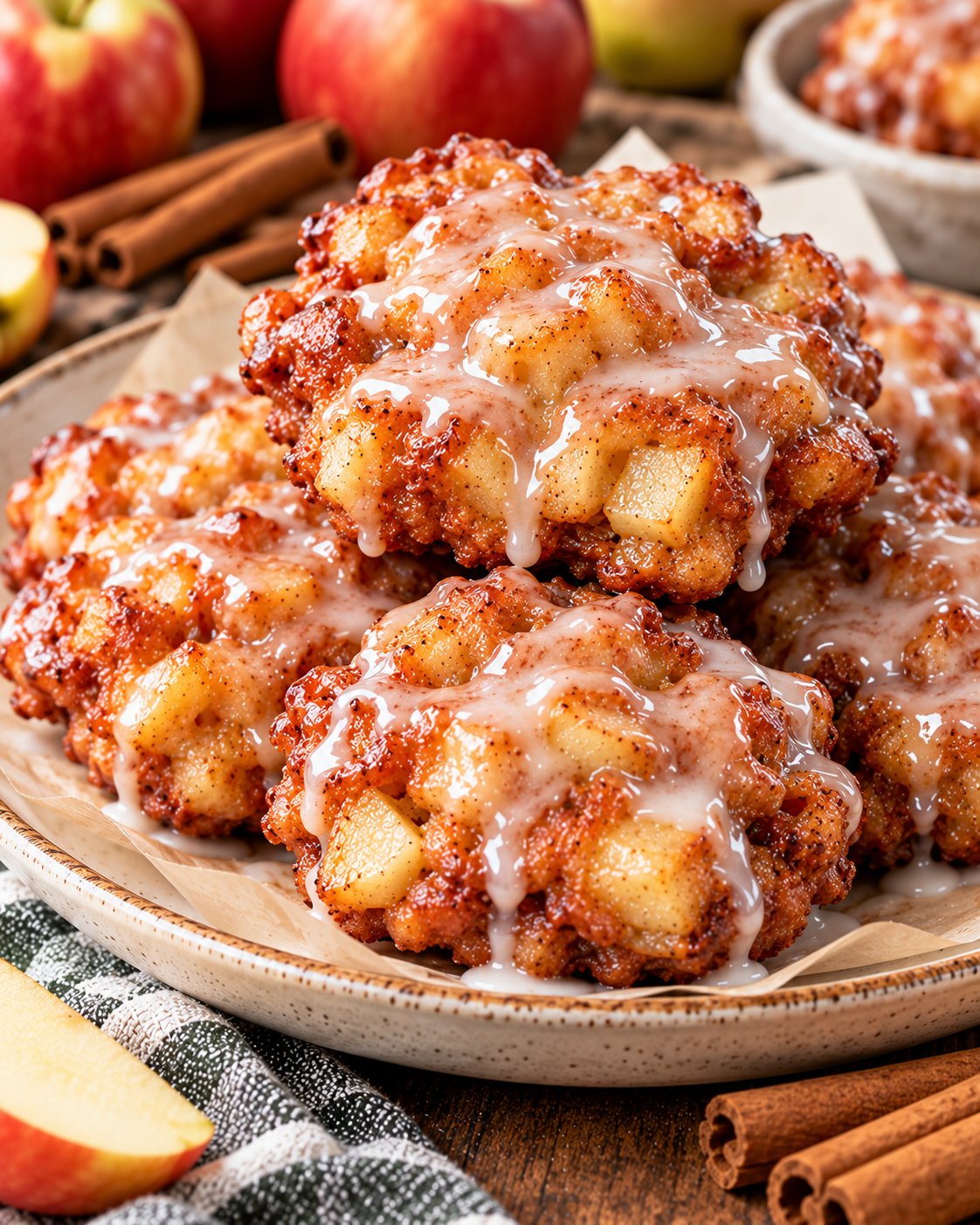
A good apple fritter is a little messy in the best possible way. It has an irregular shape, a golden exterior with plenty of little ridges, and soft pieces of apple tucked inside. When there’s a glaze, it settles into those uneven edges instead of sitting on a perfectly smooth surface.
That’s part of what makes homemade apple fritters so appealing. They don’t need to look identical to taste wonderful, and the combination of warm apple, tender dough, and a lightly crisp exterior has the comforting feel of an old-fashioned bakery treat.
The challenge is getting the inside and outside right at the same time. A fritter can look beautifully browned while the center is still underdone, or it can absorb too much oil and become heavy. Understanding those texture problems makes a real difference.
What Are Apple Fritters?
Apple fritters are sweet pastries made with apple pieces incorporated into a batter or dough. They are commonly fried, although different recipes use different styles and preparation methods.
Unlike a neatly shaped doughnut, an apple fritter often has an uneven, rustic appearance. Those irregular edges can become especially crisp, giving the finished pastry a satisfying contrast between the outside and the soft interior.
Apple fritters are associated with bakery counters and homemade comfort food. Their flavor usually centers on apples and warm baking spices, with a sweet finish that may include a glaze.
They aren’t all identical. Some versions are more doughnut-like, while others have a looser, batter-based texture. The recipe determines which style you’ll get.
Why You’ll Love These Homemade Fritters
The best reason to make apple fritters is the texture. You get tender apple pieces surrounded by pastry, with a golden exterior that provides a little crunch before you reach the softer center.
They also make good use of apples that have plenty of flavor. A well-chosen apple adds natural sweetness and a little acidity, keeping the pastry from tasting like plain fried dough.
There’s something charming about their irregular appearance, too. A fritter doesn’t have to be perfectly round, and those little bumps and ridges are often the most enjoyable parts.
For a weekend breakfast or afternoon treat, apple fritters feel special without needing elaborate decoration. The flavor is familiar, and the finished pastry is best enjoyed while its texture is still fresh.
Best Apples for Apple Fritters
Granny Smith apples are a popular choice because their tartness balances a sweet pastry. They also tend to hold their shape well, which is useful when you want recognizable apple pieces inside the fritter.
Honeycrisp apples bring a sweeter, juicier character. Their flavor is appealing, although moisture content can affect the finished texture depending on the recipe.
Braeburn and Pink Lady apples are other options worth considering. Both can offer a balance of sweetness and acidity, though their firmness and juiciness vary.
Very soft apples may break down too much, leaving the inside of the fritter wetter than intended. The best apple should soften pleasantly without disappearing into the dough.
Apple size and freshness also matter. Pieces that are too large may remain firm while the surrounding pastry cooks, so the cut specified in the recipe card is important.
Apple Fritters Ingredients
The apples give these fritters their identity, but the surrounding batter or dough determines whether they feel light, cakey, or more like a doughnut. Different recipes use different leavening and binding ingredients to create that structure.
Warm spices often complement apples, although the exact combination depends on the recipe. Cinnamon is familiar, but it shouldn’t overpower the fruit.
Sweetness needs balance. The pastry itself may be sweet, and a glaze can add another layer, so a flavorful apple helps keep the finished fritter interesting.
The cooking fat matters in fried versions because it influences both texture and flavor. A fritter that’s properly cooked should feel pleasantly rich, not saturated with oil.
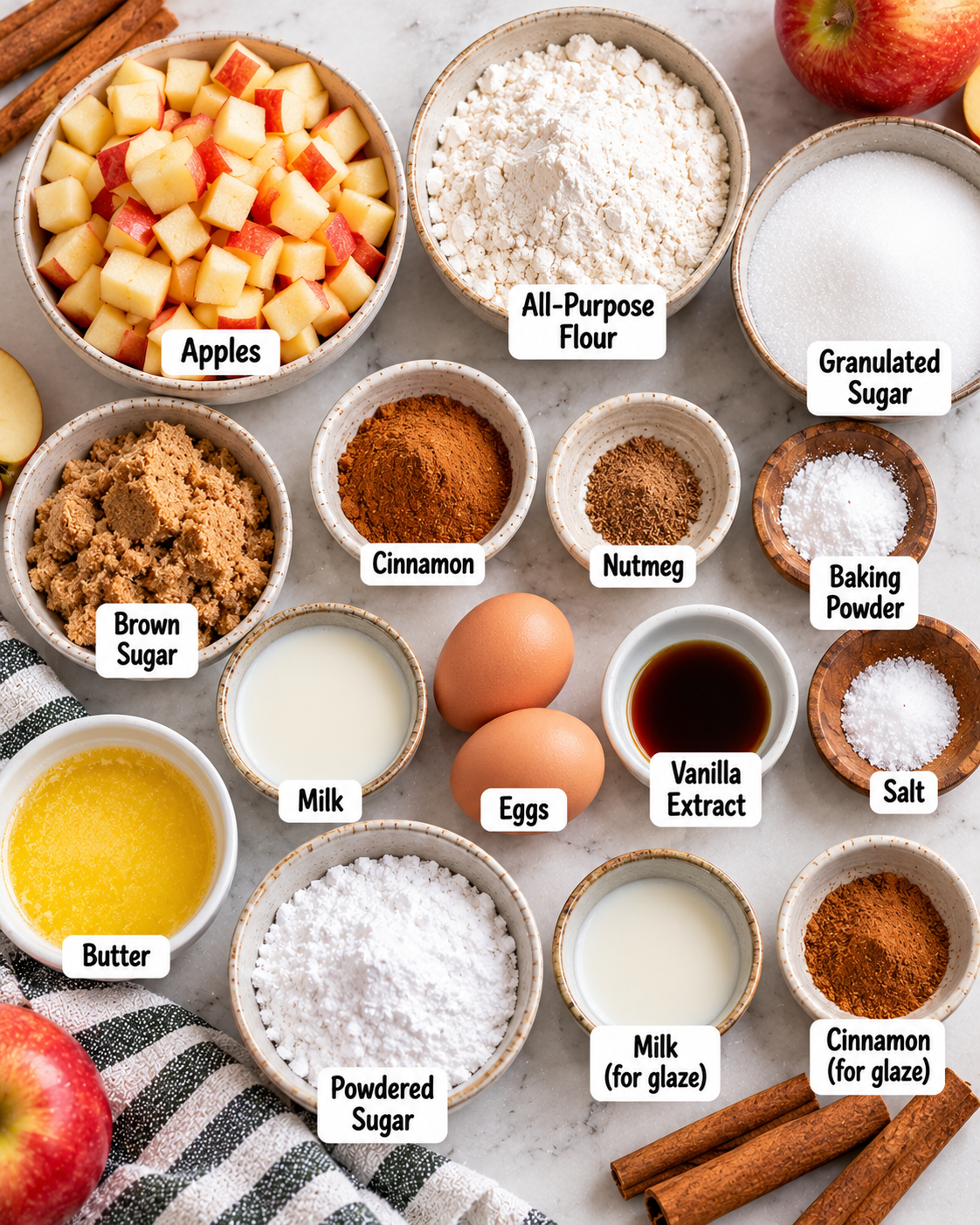
Your recipe card contains the complete ingredient list and quantities. Those proportions are important because the balance between fruit and dough affects how the fritters hold together.
How to Make Apple Fritters
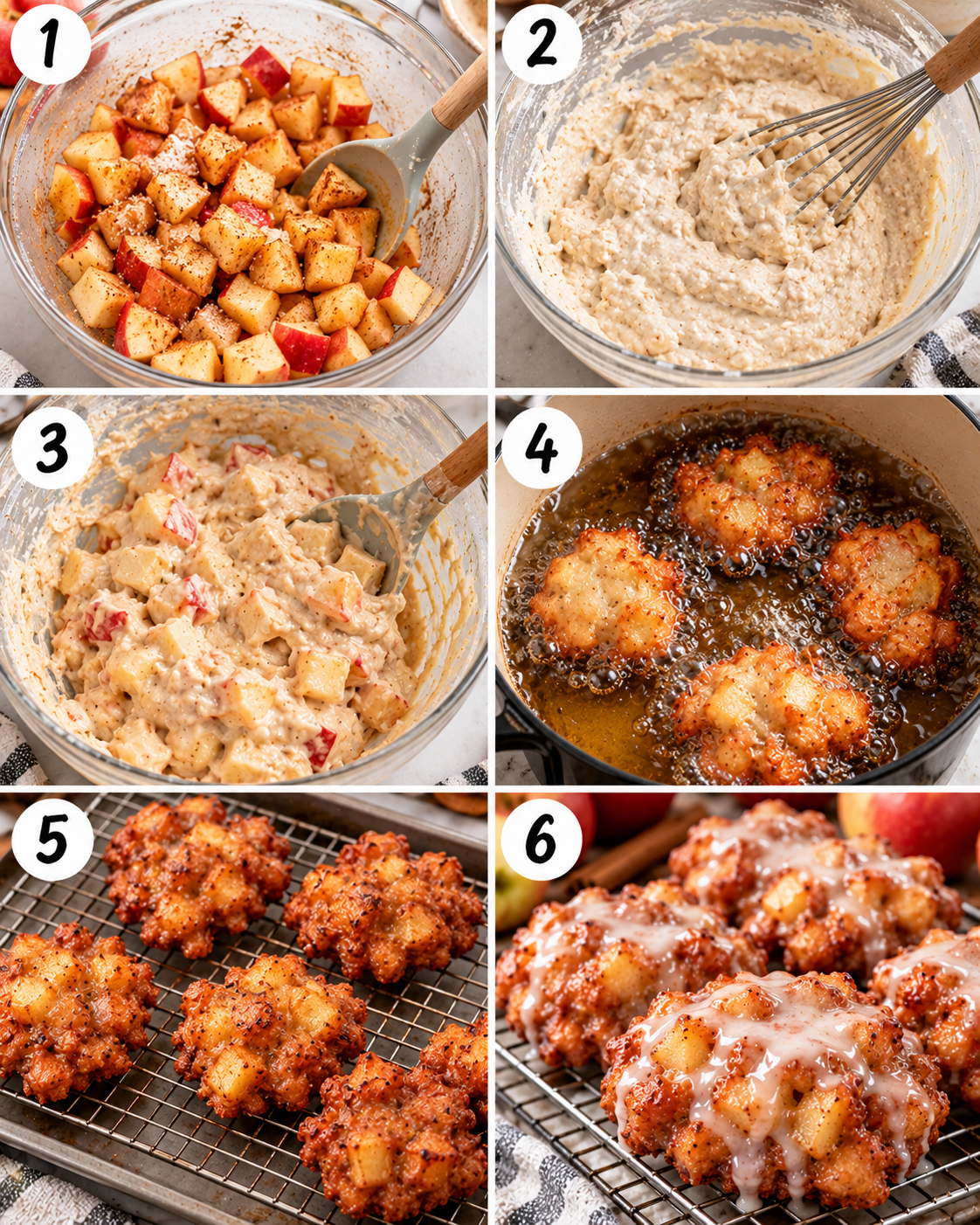
The complete preparation method is in the recipe card below, including the cooking instructions for this particular version.
One detail worth understanding is that apple fritters contain pockets of fruit, which can affect how heat moves through the pastry. A fritter with a thick center may need different attention from a thin, irregular piece.
The goal is a fully cooked interior and a golden exterior. Color alone isn’t always enough to judge the center, especially when the fritters are large.
Tips for Crispy Outside and Soft Inside
A good apple fritter has a little contrast. The outside should offer a delicate crispness, while the inside remains tender and moist without feeling raw or gummy.
In fried recipes, oil temperature is especially important. Oil that’s too cool can leave the pastry greasy, while oil that’s excessively hot may brown the exterior before the center is cooked.
Fritter size also affects the result. Large, thick portions may be harder to cook evenly, while very small pieces can become dry.
The apples contribute moisture as they soften. That’s welcome in the finished pastry, but an overly wet dough or batter can create a heavy center.
Freshness makes a difference, too. A fritter that’s crisp shortly after cooking may soften as it sits, particularly after being glazed.
How to Make the Glaze
If your recipe includes a glaze, it provides a sweet finish that complements the warm apple flavor. The best glaze should coat the fritter without completely hiding its texture.
Consistency matters more than elaborate flavoring. A very thin glaze may run off, while an overly thick one can form a heavy layer that makes the pastry excessively sweet.
Timing also changes the result. Glaze behaves differently on a warm fritter than on one that has cooled, and the recipe should specify the intended finish.
Not every apple fritter needs glaze. Some are served with a simpler sweet coating or enjoyed without one, allowing the apple and pastry flavors to remain prominent.
Common Apple Fritter Problems and Fixes
The most disappointing fritter problems are usually related to texture. A greasy exterior, a doughy center, or apple pieces that remain too firm can make the pastry feel unbalanced.
These issues often come from the relationship between fritter size, moisture, and cooking conditions rather than from a single missing ingredient.
Why Are My Apple Fritters Greasy?
In fried versions, oil that’s too cool can contribute to a greasy result. Overcrowding can also affect the oil temperature and the way the pastry cooks.
The fritters should feel rich but not heavy with absorbed oil. Follow the recipe’s temperature guidance and use a suitable thermometer when frying.
Why Are My Fritters Raw in the Middle?
A thick fritter may brown on the outside before the center is fully cooked. Excessively high oil temperature can make that problem worse.
The recipe’s intended portion size matters because it affects how evenly the pastry cooks. A beautiful golden color isn’t a guarantee that the center is ready.
Why Did My Fritters Turn Soft?
Freshly cooked fritters lose crispness as they sit, particularly when moisture moves from the interior toward the surface. Glaze can also soften the exterior.
That’s one reason apple fritters are often most enjoyable on the day they’re made.
Storage and Reheating
Apple fritters are generally at their best when fresh. Their crisp edges soften during storage, and a glaze may become sticky or absorb moisture.
The appropriate storage method depends on the recipe’s ingredients and glaze. Fritters containing perishable fillings or toppings may require refrigeration, while other versions have different storage needs.
Reheating can improve the texture of some fritters, but it won’t always restore the original crispness. Excessive reheating may dry out the center.
Freezing is possible for certain versions, although the apples and glaze may change texture after thawing. Follow the recipe’s storage recommendations for the most reliable result.
Frequently Asked Questions About Apple Fritters
What Apples Are Best for Homemade Apple Fritters?
Granny Smith, Honeycrisp, Braeburn, and Pink Lady apples are all reasonable choices, depending on the flavor and texture you want. Firmer apples generally hold their shape better.
Are Apple Fritters the Same as Apple Doughnuts?
Not exactly. Apple fritters often have irregular shapes and pieces of apple throughout, while doughnuts are typically more uniform. Some recipes overlap in texture and ingredients.
Why Are My Apple Fritters Not Crispy?
Excess moisture, unsuitable cooking temperature, or extended storage can all soften the exterior. The cause depends on whether the recipe is fried or prepared another way.
Can You Make Apple Fritters Ahead of Time?
You can make some versions ahead, but their texture is usually best shortly after cooking. The crisp exterior may soften during storage.
Can You Freeze Apple Fritters?
Some fritters freeze reasonably well, although the pastry, apples, and glaze may change texture after thawing. The finished result won’t necessarily be identical to a freshly cooked fritter.
Final Thoughts
Homemade apple fritters are a lovely treat because they don’t need to be perfect to feel special. Their uneven shape, tender apple pieces, and crisp golden edges are part of the appeal.
Choose flavorful apples and pay attention to the contrast between the outside and the center. When that texture is right, a simple apple fritter can be every bit as satisfying as something from a bakery.
Apple Fritters
Ingredients
Method
- In a large bowl, mix together the flour, baking powder, cinnamon, and sugar.
- In another bowl, whisk the milk and eggs together.
- Combine the wet and dry ingredients, then gently fold in the chopped apples.
- Heat the oil in a deep pot over medium heat until it reaches 350°F (175°C).
- Scoop spoonfuls of the batter into the hot oil, cooking a few at a time.
- Fry until golden brown, about 3-4 minutes per side.
- Remove fritters from the oil and place on a paper towel to drain excess oil.
- In a bowl, mix the powdered sugar and milk to make a smooth glaze.
- Dip the warm fritters into the glaze, allowing any excess to drip off.