
A pot of Southern butter beans has a way of making dinner feel like home. The beans are soft and comforting, the broth is full of savory flavor, and there’s something especially satisfying about serving them with warm cornbread.
Southern butter beans with smoked turkey bring another layer of flavor to that familiar combination. Smoked turkey contributes a deep, smoky character that complements the mild beans without needing to make the dish excessively heavy.
The best version has tender beans and a flavorful liquid with enough body to feel satisfying. You want the beans to be creamy, not falling apart into a paste, and the smoky flavor to support rather than overpower them.
Why Smoked Turkey Works with Butter Beans
Butter beans have a mild, slightly earthy flavor that pairs naturally with smoky meats. Smoked turkey contributes a savory character that can make the surrounding broth taste richer.
It’s a familiar alternative to pork in Southern-style bean dishes. The exact flavor depends on the cut of smoked turkey and how strongly it was smoked.
Smoked Turkey vs. Ham-Seasoned Beans
Ham and smoked turkey both contribute savory flavor, but they don’t taste identical. Ham can have a saltier, more distinctly pork-based character, while smoked turkey brings its own meat flavor and smoke profile.
A recipe using smoked turkey shouldn’t automatically be described as tasting exactly like ham-seasoned beans. The difference is part of what makes this version worth trying.
Why the Broth Matters
The liquid surrounding the beans is an important part of the dish. A flavorful broth makes the beans feel cohesive and gives you something delicious to enjoy with cornbread.
A thin broth isn’t necessarily wrong, but the finished consistency should match the intended Southern-style recipe.
Butter Beans vs. Lima Beans
The names butter beans and lima beans are often used for the same species of bean, although regional naming conventions vary. In some areas, larger, mature beans are more likely to be called butter beans.
The names can also refer to beans at different stages of maturity, which affects their size and texture.
Are They Interchangeable?
Not always without adjustments. Young green lima beans and mature dried butter beans can behave quite differently.
Fresh, frozen, canned, and dried beans also have different moisture levels and cooking characteristics. The recipe card should determine which type belongs in this dish.
Getting a Creamy, Tender Texture
Texture is one of the reasons Southern butter beans are so comforting. A good bowl has beans that feel soft and creamy while still remaining recognizable.
The broth may develop a little body from the beans themselves, giving the dish a satisfying consistency.
Why Butter Beans Can Be Tough
Bean tenderness depends on the variety, age, and preparation method. Older dried beans can behave differently from fresh or frozen beans.
The finished beans should be easy to eat without a firm or chalky center.
Avoiding Mushy Beans
Beans that lose all their structure can make the dish feel overly thick or pasty. Some softening is desirable, but the best texture retains a little definition.
The intended consistency depends on the family recipe. Some traditional versions are deliberately softer than others.
Brothy vs. Creamy Butter Beans
Some people prefer butter beans surrounded by plenty of flavorful broth. Others enjoy a thicker, almost gravy-like liquid.
Neither preference is automatically better. The most important thing is that the beans and broth feel balanced.
Serving Southern Butter Beans
Cornbread is a classic companion because its slightly crumbly texture works beautifully with the savory bean broth. It’s an especially comforting pairing for a casual family dinner.
Cooked greens, cabbage, or a fresh tomato salad can provide contrast. For a larger meal, butter beans also work alongside roasted or grilled meats.
A Simple Southern Dinner
Butter beans and cornbread can make a satisfying meal on their own, especially when the beans include smoked turkey. A vegetable side adds freshness without complicating dinner.
Storage, Leftovers, and Freezing
Butter beans can be convenient for leftovers, although they may become softer and the broth may thicken during refrigeration.
Refrigerate promptly at 40°F or below and use within three to four days. Because this dish contains smoked turkey, handle it as a perishable cooked meat dish and reheat leftovers thoroughly to 165°F.
Many cooked bean dishes freeze reasonably well, but the beans may soften after thawing.
Frequently Asked Questions
Are Butter Beans and Lima Beans the Same?
They commonly refer to the same species, but the terms can describe different sizes or maturity stages. That difference may affect the texture of a recipe.
Can Smoked Turkey Be Substituted?
Other smoked meats can create a similar savory direction, but they won’t produce identical flavor or salt levels. A substitution should be evaluated against the original recipe.
How Do You Keep Butter Beans Creamy?
The bean variety and overall recipe formulation influence creaminess. A good finished dish has tender beans and enough body in the broth without becoming pasty.
Can Butter Beans with Smoked Turkey Be Frozen?
Yes, many cooked bean dishes can be frozen. The beans may become softer after thawing, and the broth’s consistency can change.
Final Thoughts
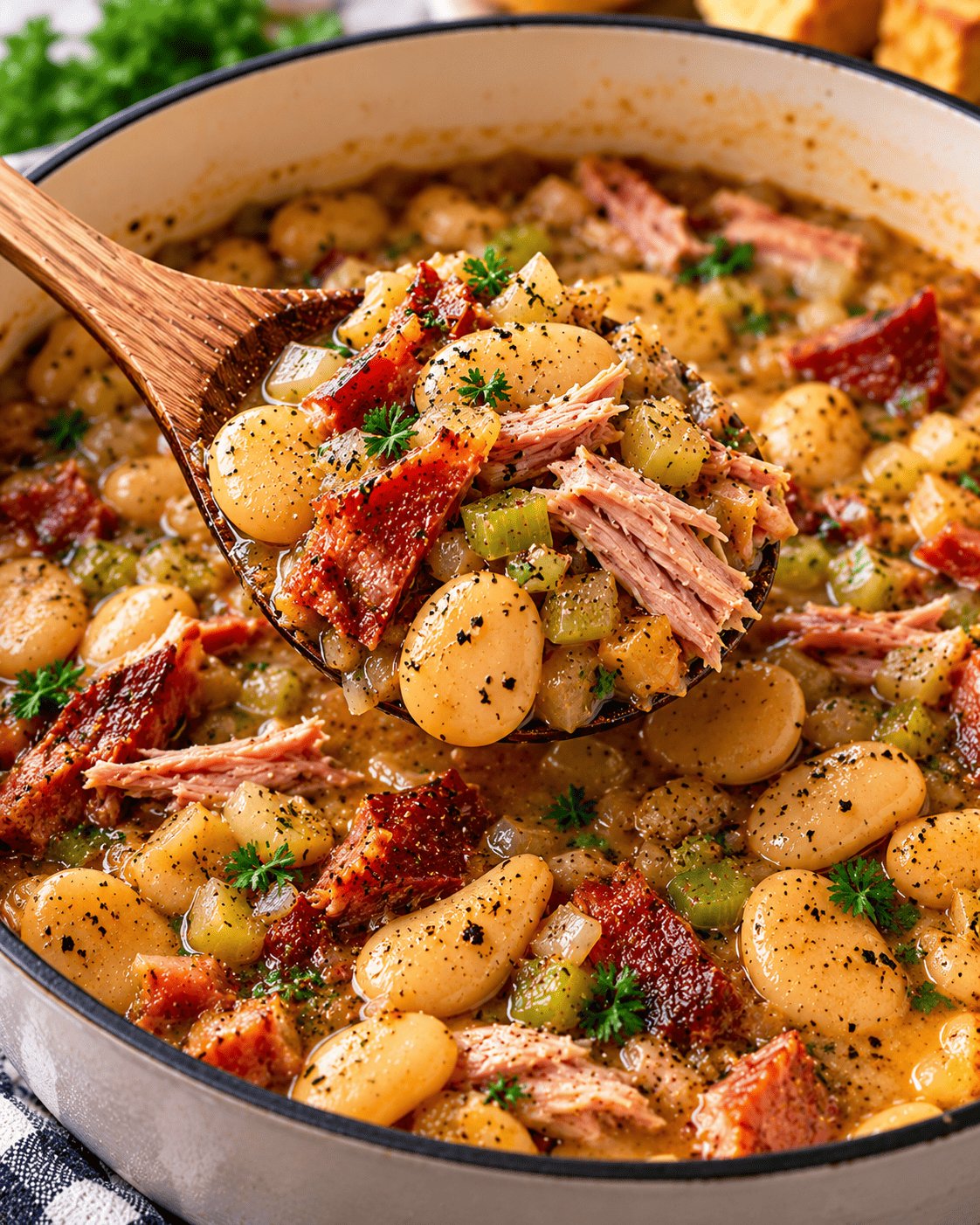
Southern Butter Beans with Smoked Turkey are a comforting side dish with enough flavor to become the centerpiece of a simple meal. The smoky turkey, tender beans, and savory broth create a combination that feels familiar and satisfying.
Serve them with cornbread and your favorite greens for a dinner that doesn’t need anything fancy to feel complete.
Southern Butter Beans with Smoked Turkey
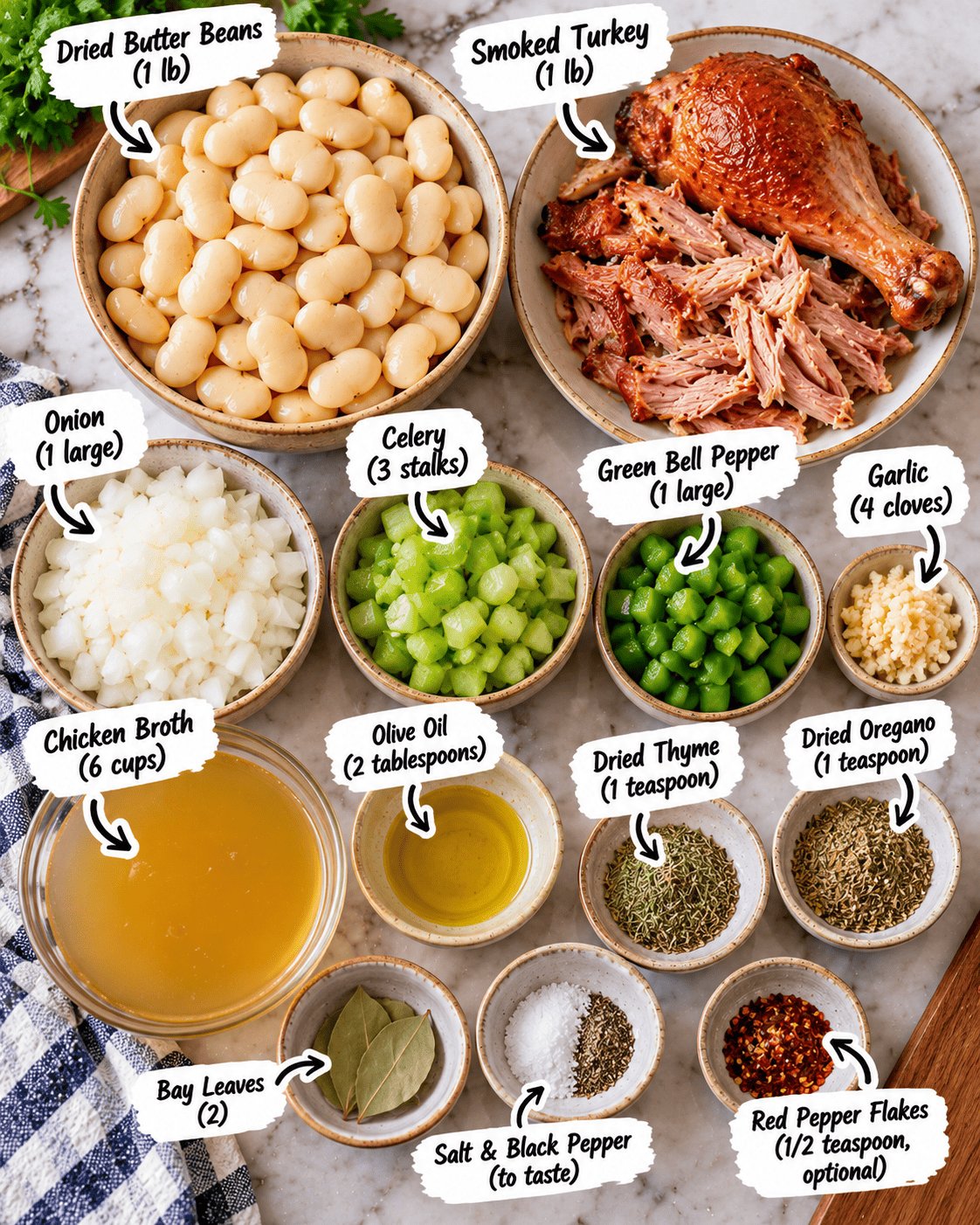
Ingredients
Method
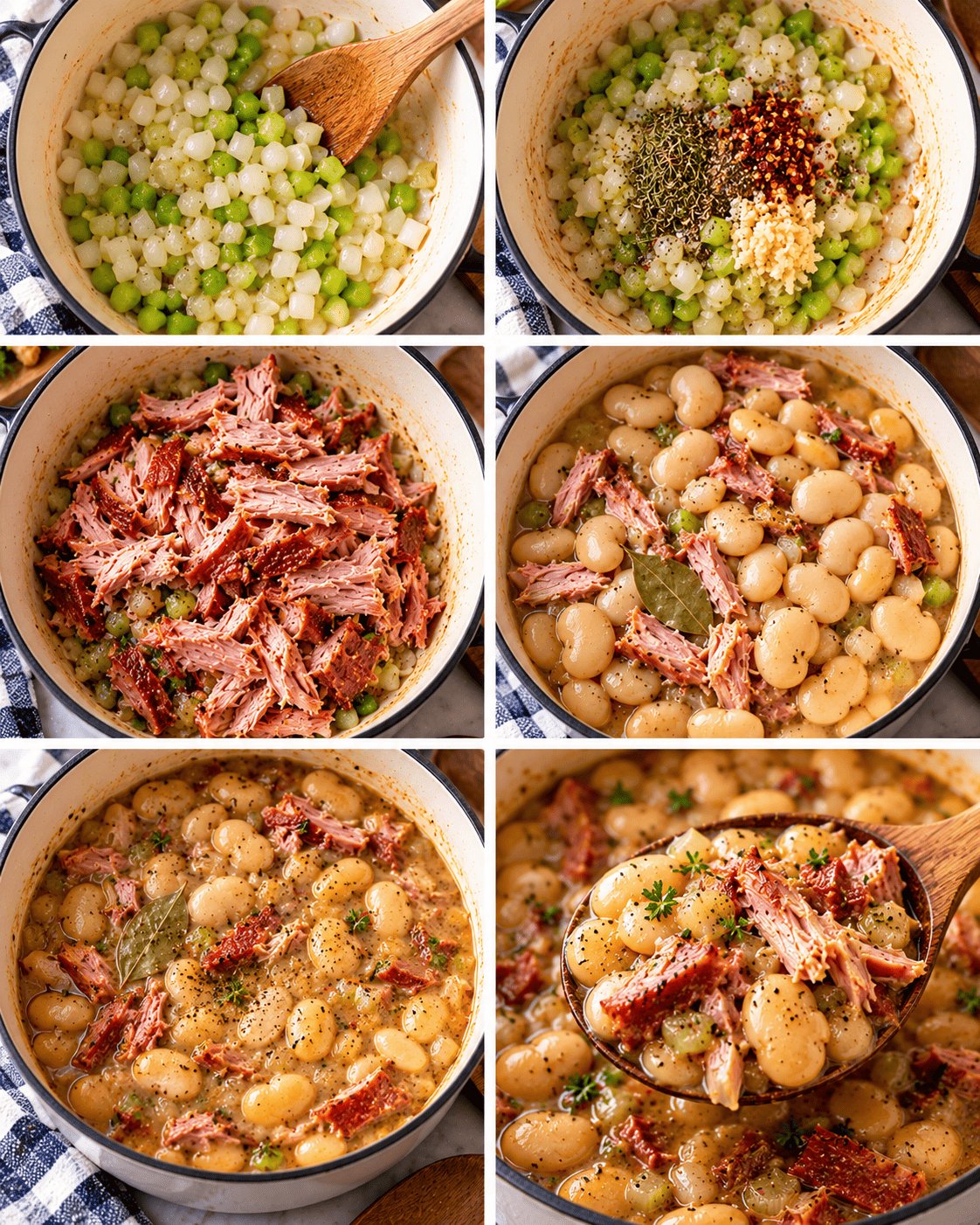
- Soak the butter beans in water overnight to soften.
- Drain and rinse the beans before using.
- In a large pot, combine soaked butter beans, smoked turkey, water or broth, salt, and pepper.
- Bring the mixture to a boil over medium-high heat.
- Reduce the heat to low and simmer for about 60 minutes, or until the beans are tender.
- Stir occasionally and check the water level, adding more if necessary to keep the beans submerged.