
Chicken noodle soup is one of the most comforting meals you can make, but fresh ginger and garlic bring a different kind of warmth to the bowl. The ginger adds a delicate spicy, aromatic flavour, and the garlic adds savoury depth that makes the broth especially inviting.
This Ginger Garlic Chicken Noodle Soup is a great option for cold nights, busy weeknights or when you want something comforting but not heavy on sauce. The tender chicken, noodles and fragrant broth are a familiar trio, but brighter and more aromatic.
Balance is the key to a good ginger chicken noodle soup. Too much ginger can overpower the broth and overcooked noodles can make the soup feel thick and starchy. The result is a bowl that’s delicious, comforting and nice from the first spoonful to the last because of a thoughtful balance.
What’s so special about this chicken noodle soup?
American chicken noodle soup is made with chicken broth, vegetables and mild herbs. The ginger garlic chicken noodle soup has a greater aromatic flavour.
The heat of ginger is gentle and unlike that of chilli peppers. Its lively, a little spicy character can make a familiar broth taste brighter and livelier.
The garlic gives it another layer of flavour. It gives the dish a savoury backbone that works with the chicken without being a heavy, cream-based sauce.
The finished soup can still be mild and family friendly. What makes it distinctive is not the spiciness, but the flavour and richness of the broth.
Depending on the recipe, the flavour may have some similarities to Asian-inspired chicken soups, but ginger and garlic alone don’t create a specific regional style. The completed dish has its character defined by the full list of ingredients.
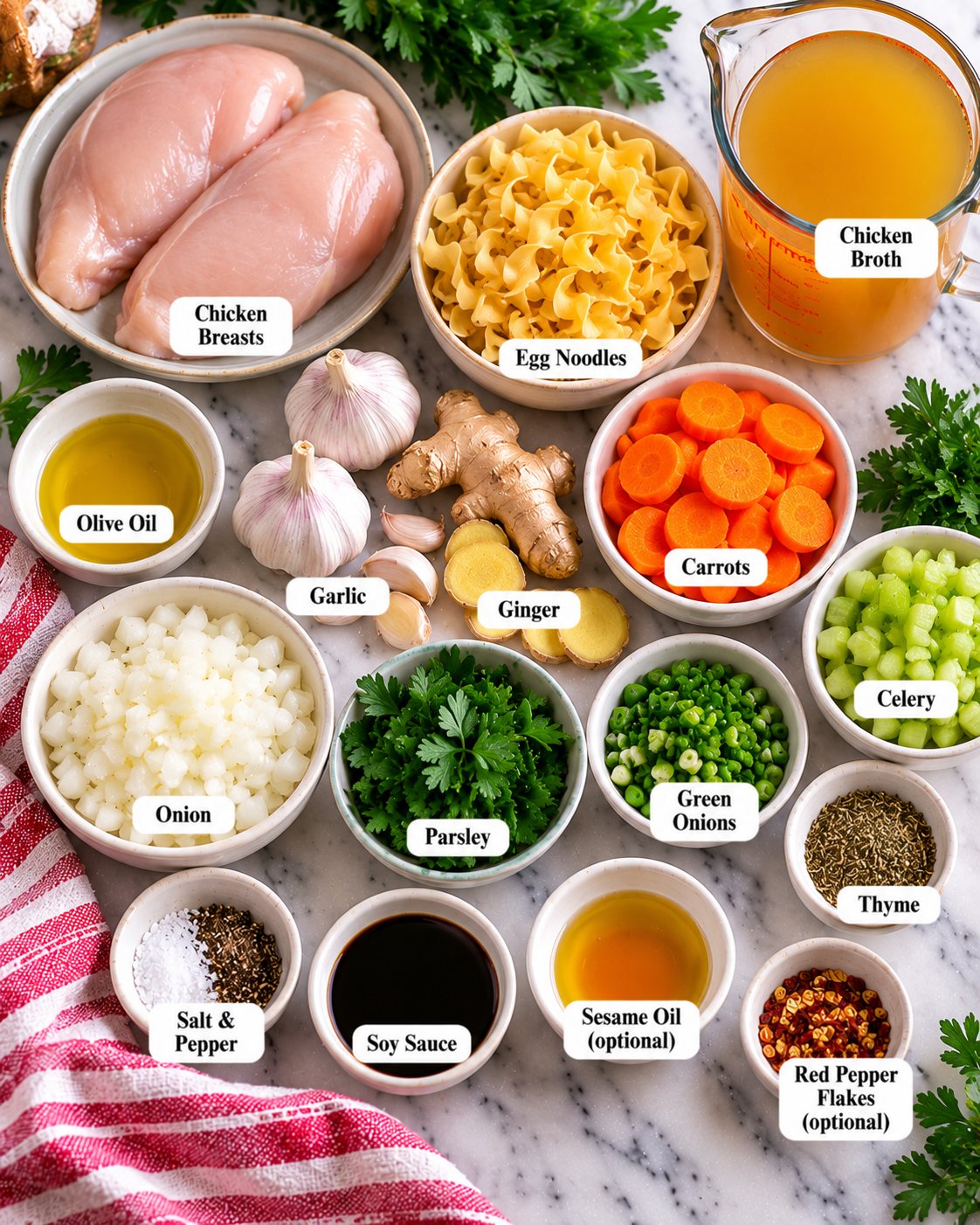
The Best Chicken & Noodles to Employ
Chicken breast or chicken thighs will both work in noodle soup, just produce slightly different results. The texture of breast meat is leaner, but thighs tend to have more fat and stay moist longer during cooking.
Left-over cooked chicken is handy in recipes calling for it. But it is treated differently to raw chicken and the cooking method should match the recipe card.
The choice of noodles affects the finished soup. Egg noodles are familiar and soft, but other noodles can give you a different experience.
Thin noodles cook quickly and soften easily. Thicker noodles can take a lot of bite but you may need to cook them differently.
Which is the best combination is a matter of preference – do you want a light, broth-dominant soup or a more substantial bowl with big chunks of chicken and noodles.
How Ginger & Garlic Influence the Broth
Ginger and garlic are a particularly good combination as they bring different aromas to the table. Ginger is bright and lightly peppery, garlic is savoury and rounded.
Fresh ginger often smells more pungent than dried ginger. But the two products are not always interchangeable. Their flavour strength and texture differ.
Garlic also changes character depending on how it is treated. Its flavour varies from sharp and pungent to sweet and mellow.
Chicken broth is the background to both ingredients. If the broth is too salty or too seasoned, it may be hard to appreciate the ginger and garlic.
A good soup needs a tasty broth, one that smells good on its own. The noodles and chicken should be an enhancement of that flavour, not a substitute for a tasteless broth.
Tips to a Flavourful Broth
A good broth is the foundation of a satisfying chicken noodle soup. You can have the best chicken and noodles, but if the broth is weak, the overall meal will be disappointing.
The balance of salt is particularly important. Store-bought broths can vary widely in salt content, so the same seasoning method won’t work for every brand.
Aromatic ingredients can add depth, but too many competing flavours may mask the ginger. The best broth should not be too complicated, but layered.
Acidity also contributes to the final taste. Some soup recipes benefit from a small amount of a suitable acid to add brightness, but it should fit the flavour profile you’re aiming for.
The idea is a broth that is savoury, aromatic and whole without resorting to salt or heat.
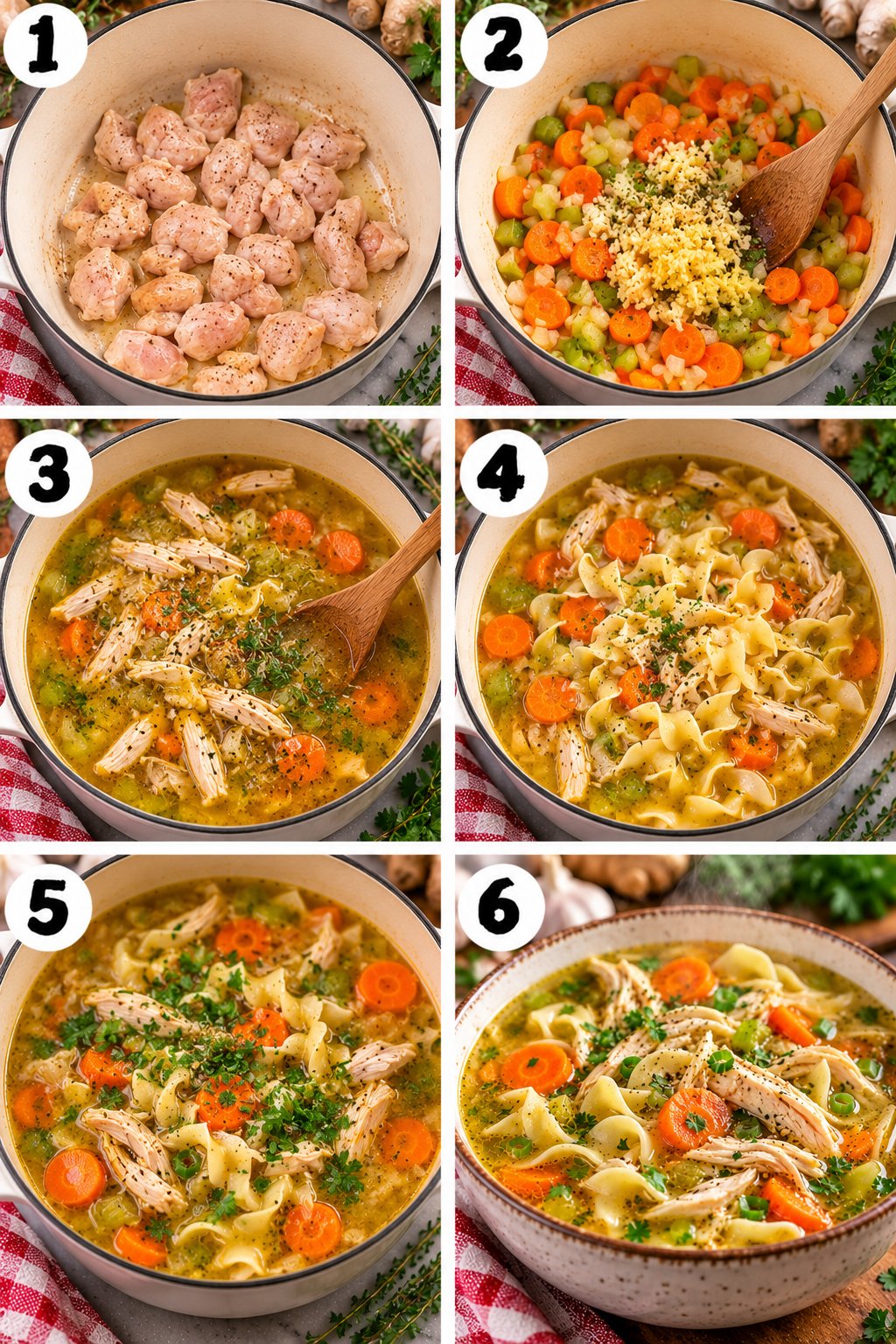
How to Prevent Noodles from Becoming Mushy
Noodles absorb liquid while they are cooking, and continue to soften as they sit in hot soup. That’s why a soup with the perfectly tender noodles can get noticeably thicker later on.
Some noodles take up more broth than others. Egg noodles, rice noodles and wheat noodles are not all the same, so substitutions will alter the outcome.
Mushy noodles are usually a result of overcooking. If their structure breaks down, the soup can get cloudy or too starchy.
Another issue is storage. Noodle soup left overnight will often soak up more broth, making the leftovers more viscous than the fresh soup.
If you want the best result watch the noodle type and follow the time in the recipe. A good chicken noodle soup will have noodles that are soft, yet retain their shape.
Variations and Add-Ins Made Easy
Ginger garlic chicken noodle soup with greens adds colour and freshness. Their light flavour may improve the aromatic broth without weighing the soup down.
Another substitute in recipes meant for them is mushrooms. They give an earthy, savoury character that complements garlic and ginger.
Some variations have some citrus or other acidic ingredient in it for a brighter flavour. That can change the character of the soup considerably. Balance matters.
A spicy version may have chili-based seasonings, but the heat should complement the ginger, not overwhelm it.
When you adapt the recipe, think about the cooking requirements of whatever you add. Tender greens and hearty vegetables behave differently, and the addition of other ingredients can affect how strong the broth turns out to be.
Freezing, Storing & Reheating
Chicken noodle soup is great for leftovers, but the noodles get soggy when stored. They also absorb enough broth that the soup is noticeably thicker.
Refrigerate promptly, in shallow covered containers. Cooked chicken soup, if stored properly in the refrigerator, will generally be good for three to four days.
You can freeze but the noodles may change in texture when thawed. Some noodles become very mushy or fall apart when reheated.
Reheat leftovers to a safe temperature of 165°F (74°C). Be sure to heat the soup up evenly, watching the chicken and the broth.
For best quality, follow the storage directions on the recipe and don’t leave the soup out at room temperature for long periods of time.
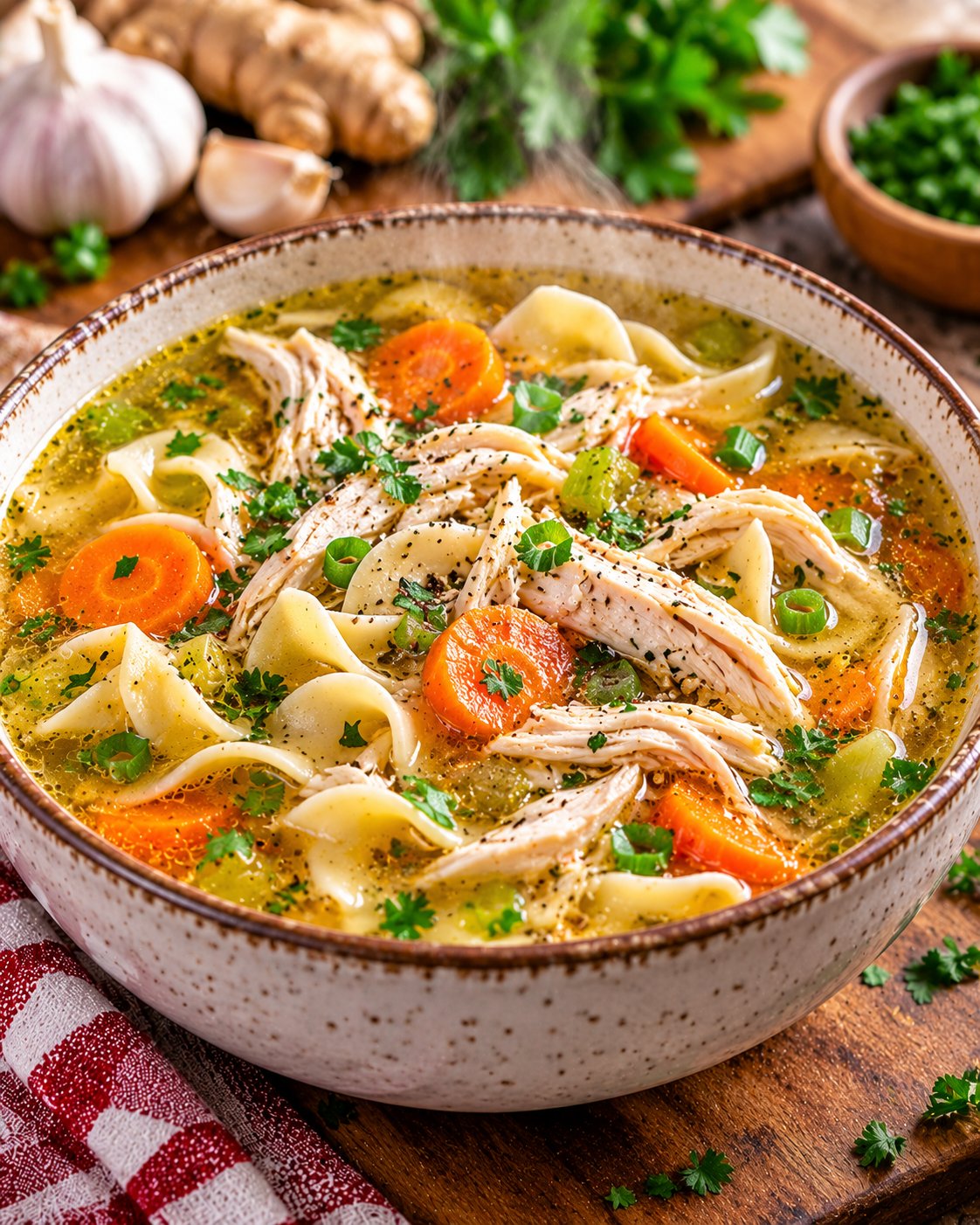
Frequently Asked Questions About Ginger Garlic Chicken Noodle Soup
Can I substitute ground ginger for fresh ginger?
While some recipes will allow for ground ginger, it is different in flavour profile and potency than fresh ginger. The swap can change the aroma and intensity of the soup, so a tested adjustment is better.
Does ginger garlic chicken noodle soup have a spicy kick?
Not necessarily so. Ginger adds a touch of peppery flavour and warmth but not the same heat as chilli peppers. The total spiciness of the soup depends on the entire seasoning mixture.
What can I do with leftover chicken?
Yes, in recipes that call for precooked chicken. Rotisserie chicken is convenient and flavourful but the cooking method needs to account for the fact that the meat is already cooked.
Why did my chicken noodle soup thicken overnight?
Noodles are still soaking up liquid in the fridge. That can reduce the amount of free broth and make the soup seem thicker the next day.
How do you reheat ginger chicken noodle soup?
Most chicken soups freeze well, though noodles can become mushy after thawing. The outcome depends on the type of noodle you use and the other ingredients in the soup.
Concluding remarks
Ginger Garlic Chicken Noodle Soup has all the comfort ingredients of classic chicken soup, but with a boost of aromatic flavour. The ginger and garlic give warmth and depth without complicated presentation.
A good-flavored broth, chicken cooked just right, and noodles with a little chew make for a satisfying meal. It’s a lovely recipe to have in your files for those evenings when a fragrant bowl of soup sounds especially good.
Ginger Garlic Chicken Noodle Soup
Ingredients
Method
- In a large pot, combine chicken broth, ginger, and garlic. Bring to a simmer.
- Add the chicken and cook for 20 minutes or until fully cooked.
- Remove the chicken, shred it, and set aside.
- In the same pot, add the noodles and cook according to package instructions.
- If using vegetables, add them a few minutes before the noodles are done.
- Once the noodles are cooked, return the shredded chicken to the pot and stir in soy sauce.
- Simmer for an additional 5 minutes, then serve hot.