
Pickled beets have a flavor that’s difficult to confuse with anything else. They’re earthy and gently sweet, with enough tang from the pickling liquid to make them stand out on a plate. Their deep ruby color is just as distinctive, especially when served alongside pale potatoes, greens, or a simple sandwich.
An easy pickled beets recipe can be a lovely way to enjoy beets beyond roasting or boiling them. The acidity changes how their natural sweetness comes across, creating a side dish that feels bright and savory rather than simply sweet.
There’s one important distinction to understand before making them: refrigerator pickled beets and shelf-stable canned pickled beets are not the same thing. The storage method determines which food-safety rules apply, and a recipe intended for refrigeration shouldn’t be treated as a tested canning recipe.
Why You’ll Love Homemade Pickled Beets
Homemade pickled beets let the earthy flavor of the vegetable remain the focus. A well-balanced pickling liquid adds sweetness and acidity without making the beets taste overwhelmingly sour.
They’re also versatile at the table. A few slices can brighten a sandwich plate, add color to a salad, or provide a tangy contrast to a rich main dish.
Their appearance is another advantage. That vivid red-purple color makes even a simple lunch feel more interesting.
Pickled beets also offer a different way to enjoy a vegetable that some people find too earthy on its own. The acidity can make the flavor feel fresher and more balanced.
Refrigerator Pickled Beets vs. Canned Pickled Beets
Refrigerator pickled beets are prepared for cold storage. They remain perishable and must be kept refrigerated according to the recipe’s guidance.
Canned pickled beets are different. A shelf-stable product requires a scientifically tested canning recipe with the correct vinegar acidity, proportions, processing method, and processing time.
You cannot safely convert an ordinary refrigerator pickle recipe into a shelf-stable canning recipe simply by sealing it in jars. A lid that seals doesn’t prove that the contents were processed safely.
Beets are a low-acid vegetable before pickling. Safe shelf-stable pickling depends on adequate acidification and proper processing, which is why tested recipes are essential.
If your recipe card describes refrigerator pickled beets, label and store them that way. If it describes home canning, verify that the method comes from a trusted tested source such as the USDA or National Center for Home Food Preservation.
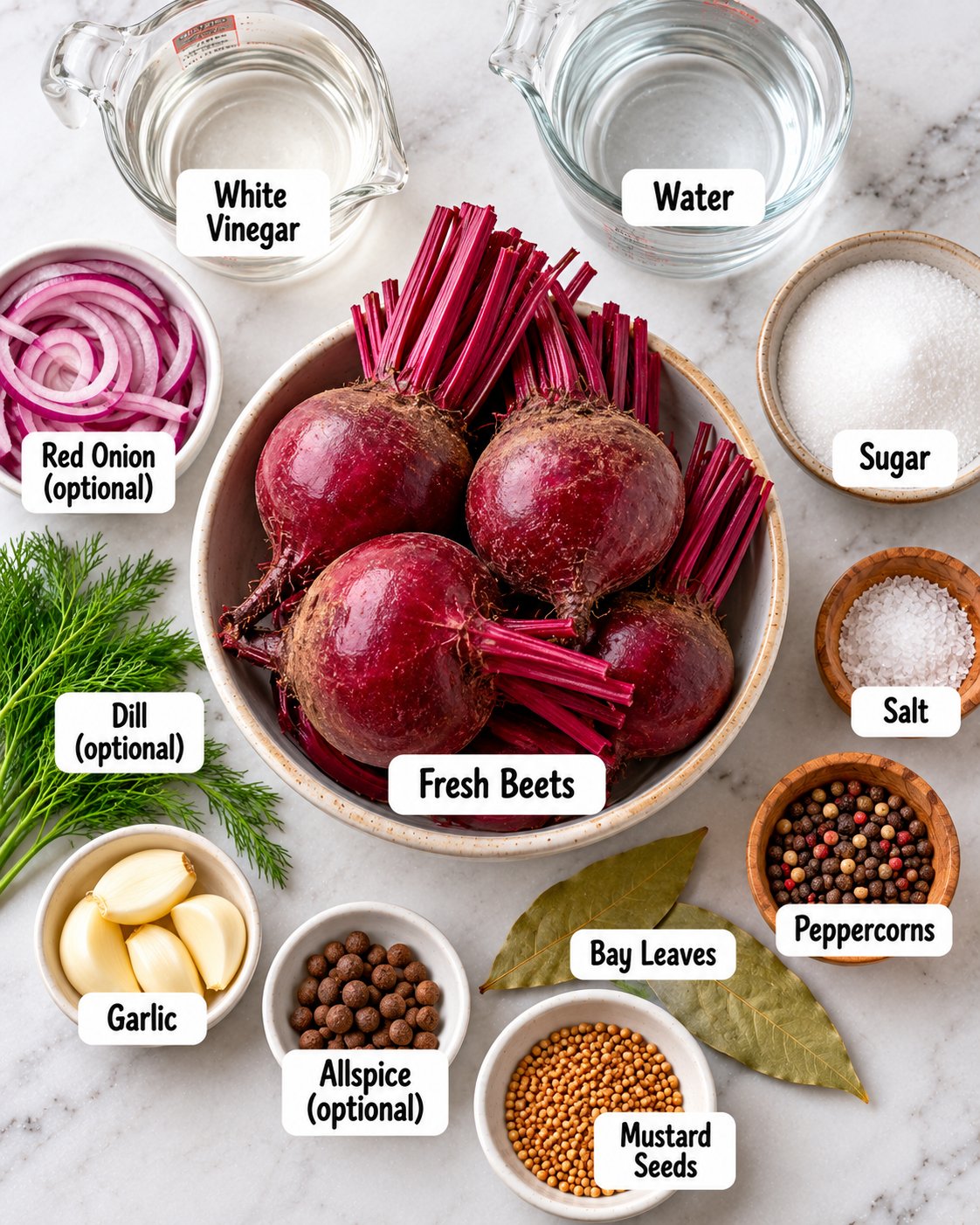
Best Beets for Pickling
Fresh, firm beets are a good starting point. Look for roots without major soft spots or signs of decay, and choose sizes that suit the finished presentation you want.
Smaller beets can have a pleasant texture and may be convenient for neat slices. Larger beets can work just as well, although their size affects handling and portioning.
Red beets create the familiar ruby-colored pickle. Golden beets have a milder-looking appearance and can produce a different presentation, although their flavor and color won’t be identical.
Freshness matters more than perfectly uniform shape. A beet that has become soft or dehydrated may not provide the same satisfying texture as a firm one.
The best finished pickled beet should be tender enough to eat comfortably while retaining some structure. A mushy beet loses much of the appeal of this simple side dish.
Pickled Beets Ingredients
Beets provide the earthy sweetness, while the pickling liquid brings acidity and seasoning. The relationship between those elements determines whether the finished beets taste pleasantly tangy or aggressively sour.
Vinegar is particularly important because it affects both flavor and, in tested canning recipes, safety. Different vinegar types can produce different flavors, and acidity levels aren’t always interchangeable.
Sweetness also varies between recipes. Some pickled beets are noticeably sweet, while others emphasize a sharper vinegar character.
Spices may add warmth or complexity, but they shouldn’t overwhelm the beets. A simple pickle can be especially appealing when the vegetable itself has good flavor.
Use the exact ingredients and proportions in your recipe card. For shelf-stable canning, never change the acid proportions of a tested recipe.
How to Make Pickled Beets
The full preparation instructions are provided in the recipe card below. They should specify whether this is a refrigerator pickle or a tested shelf-stable canning recipe.
That distinction is essential. Refrigerator pickles are not made safe for pantry storage merely by being placed in a sealed jar, and untested changes to vinegar concentration or processing can create serious food-safety risks.
Follow the method and storage instructions intended for this specific recipe rather than borrowing canning guidance from another source.
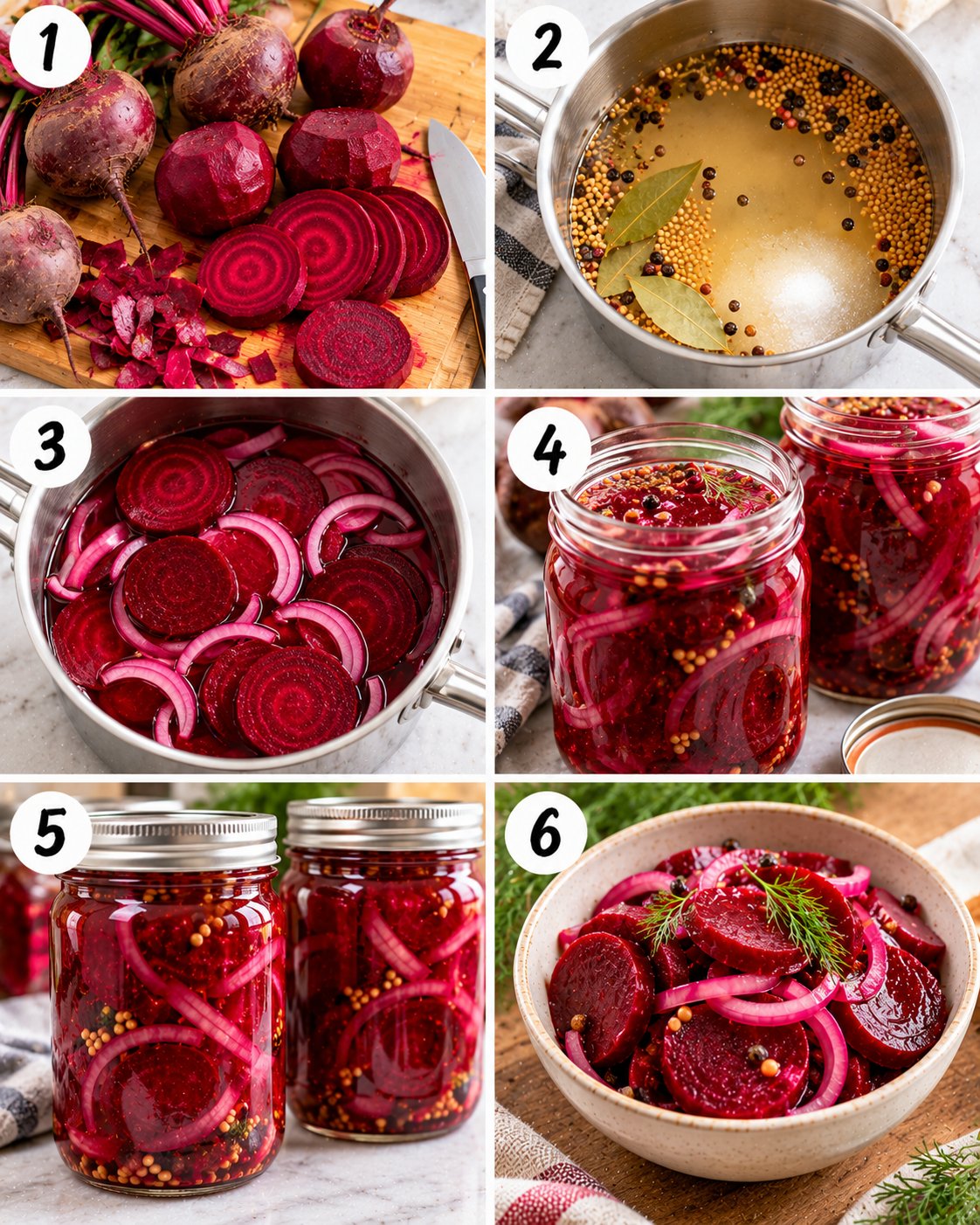
Tips for Balanced Sweet and Tangy Flavor
A good pickled beet should taste like a beet first, with sweetness and acidity working around its natural earthiness. If the vinegar is too dominant, the flavor can become harsh. If the sweetness is excessive, the result may taste more like a syrupy preserve.
The type of vinegar influences the character of the pickle. Some vinegars have a sharper flavor, while others bring additional fruity or mellow notes.
Seasonings can make the pickling liquid more interesting, but restraint is useful. Beets already have a distinctive flavor, and too many spices can make it difficult to appreciate.
For refrigerator pickles, flavor adjustments must still respect the recipe’s storage guidance. For shelf-stable canning, changes to acid and vegetable proportions should not be made unless they’re part of a tested recipe.
How Long Pickled Beets Need to Marinate
Pickled beets don’t necessarily taste the same immediately after preparation as they do after spending time in the pickling liquid. The acidity and seasonings need time to influence the vegetable.
The ideal marinating period depends on the size of the beet pieces and the recipe. Thin slices may develop flavor differently from larger pieces.
Texture can also change during storage. Beets may become softer over time, particularly when they’re already very tender before pickling.
Follow the recipe’s recommended waiting period rather than assuming that every batch will taste its best immediately. A little patience can make the sweet-tangy flavor feel more balanced.
Ways to Serve Pickled Beets
Pickled beets are excellent alongside rich foods because their acidity cuts through heavier flavors. They pair naturally with roasted meats, savory sandwiches, and potato-based dishes.
They’re also attractive in salads. Their color stands out against leafy greens, and their tangy flavor can reduce the need for a strongly acidic dressing.
A small serving can brighten a cheese or appetizer platter. The beets bring both color and a distinctive flavor that contrasts with creamy cheeses.
For a simple lunch, pickled beets can be served alongside eggs, beans, or other savory foods. Their versatility is one of the reasons they’re worth keeping in the refrigerator.
Storage and Shelf Life
Storage depends entirely on the recipe type. Refrigerator pickled beets must remain refrigerated at 40°F (4°C) or below and should be used within the period specified by the tested or reliably developed recipe.
Do not assume that homemade refrigerator pickles are shelf-stable because the jars have sealed. Refrigeration is still required.
Shelf-stable canned pickled beets need a tested acidification and processing method. Jar size, altitude, vinegar acidity, and processing time can all matter.
After opening a properly canned jar, refrigerate the remaining beets. Discard any jar with signs of spoilage, leakage, or an abnormal seal, and never taste questionable preserved food to determine whether it’s safe.
Frequently Asked Questions About Pickled Beets
Can I Store Homemade Pickled Beets in the Pantry?
Only if they were prepared using a scientifically tested shelf-stable canning recipe and processed correctly. Refrigerator pickled beets must remain refrigerated.
Can I Use Apple Cider Vinegar?
Some recipes use apple cider vinegar, but the vinegar’s acidity and the recipe’s tested proportions matter. For canning, don’t substitute vinegars unless the tested recipe permits it.
Why Are My Pickled Beets Too Sour?
The pickling liquid may have a strong vinegar flavor, or the balance of sweetness and acidity may not suit your preference. For refrigerator pickles, flavor changes should still follow safe recipe guidance; for canning, acid proportions must remain as tested.
How Long Do Pickled Beets Last?
There isn’t one safe storage period for every homemade recipe. Refrigerator pickles and properly processed shelf-stable canned beets have different requirements, so follow the instructions for the exact method used.
Can I Reuse Pickling Liquid for Another Batch?
Don’t assume previously used brine has the same acidity as fresh brine. For shelf-stable canning, use a tested recipe and freshly prepared brine as directed. Reusing brine for new vegetables without validated guidance isn’t recommended.
Final Thoughts
Easy pickled beets bring a lovely combination of earthy sweetness, bright acidity, and striking color to everyday meals. They’re a simple addition to salads, sandwiches, and dinner plates.
The most important part is matching the storage method to the recipe. Once that distinction is clear, you can focus on enjoying the flavor that makes homemade pickled beets so appealing.
Pickled Beets
Ingredients
Method
- Wash the beets thoroughly under running water.
- Trim the greens and taproot, leaving a small amount of the stem to prevent bleeding during cooking.
- In a pot, cover the beets with water and bring to a boil. Reduce heat and simmer for about 30 minutes, or until fork-tender.
- Once cooked, remove beets from the pot and cool. Peel the skins once cool enough to handle.
- Slice the peeled beets into rounds or wedges, as preferred.
- In a saucepan, combine vinegar, water, sugar, salt, and spices. Bring to a gentle simmer, stirring until sugar and salt dissolve.
- Pack the sliced beets into sterilized jars, leaving headspace at the top.
- Pour the hot pickling liquid over the beets, ensuring they are fully submerged.
- Seal the jars and allow them to cool at room temperature. Store in the refrigerator.
- Let the beets marinate for at least 24 hours for best flavor.