
Easy Irish Soda Bread No Yeast Quick is my little lifesaver for the nights when I want fresh bread but I forgot to buy yeast again. You know the vibe, the soup is bubbling, the butter is on the counter, and then you realize the bread situation is sad. This recipe fixes that fast, with simple pantry stuff and a quick mix. It bakes up with a crisp crust, a tender middle, and that cozy, homey smell that makes people wander into the kitchen “just to check.” If you have about an hour, you can have warm bread on the table. 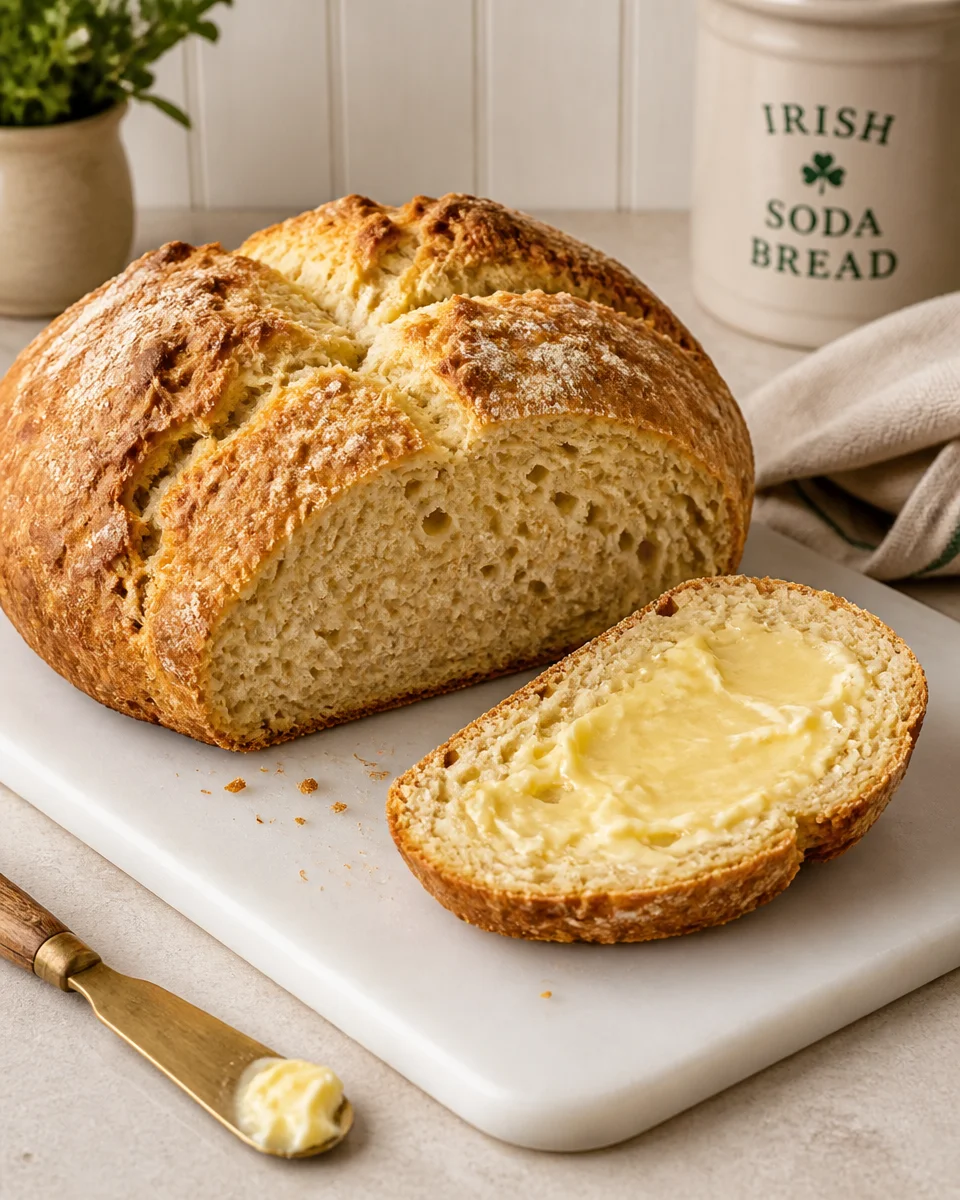
What goes in Irish Soda Bread
Let’s keep it real, this is not a complicated bread. That is the whole point. Traditional versions are very simple, and the baking soda does the heavy lifting instead of yeast. The main thing is using a sour ingredient like buttermilk so the soda can do its job.
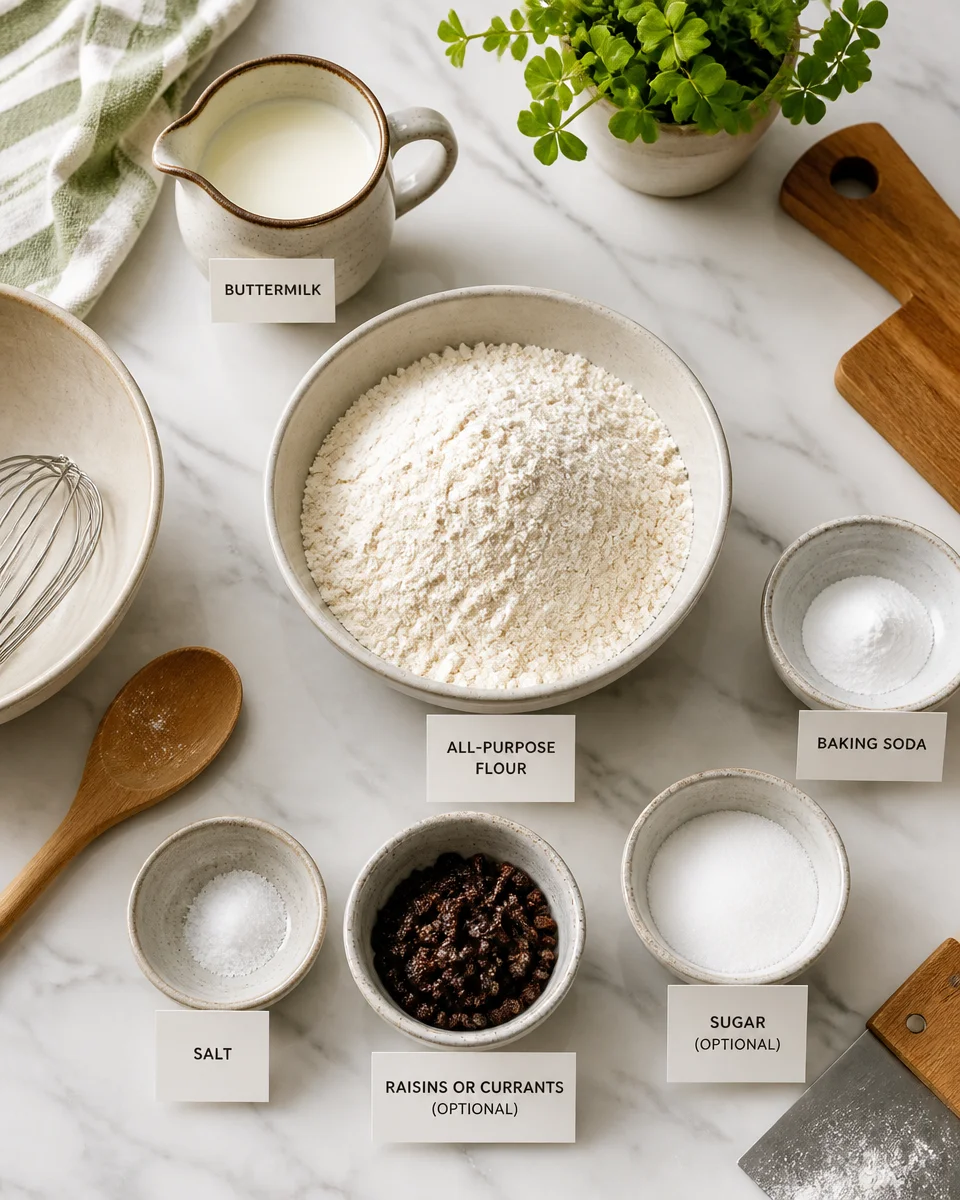
Here’s what I use for my Easy Irish Soda Bread No Yeast Quick, plus a few practical swaps if you need them.
- All purpose flour: Basic and dependable. If you want a bit more texture, you can replace up to 1 cup with whole wheat flour.
- Baking soda: Check the expiration date. If it’s old, the bread won’t rise well.
- Salt: Don’t skip it. It keeps the flavor from tasting flat.
- Buttermilk: This is the magic partner for baking soda. No buttermilk? Use milk plus 1 tablespoon lemon juice or vinegar and let it sit 5 minutes.
- Optional add ins: A small handful of raisins or currants, a spoon of sugar, or a little caraway if you like that classic bakery taste.
If you love quick breads like I do, you might also like this easy cheddar cheese quick bread for something more savory and snacky.
Quick note on flour: don’t pack it into the measuring cup like you’re stuffing a suitcase. Spoon it in and level it off. That one little habit keeps the loaf from getting dry and heavy.
Irish Soda Bread Tips
I’ve made this loaf enough times to know where people usually get tripped up. The good news is that even the “oops” loaves still taste great with butter. But if you want your Easy Irish Soda Bread No Yeast Quick to come out reliably, these tips help a lot.
How to mix it without overdoing it
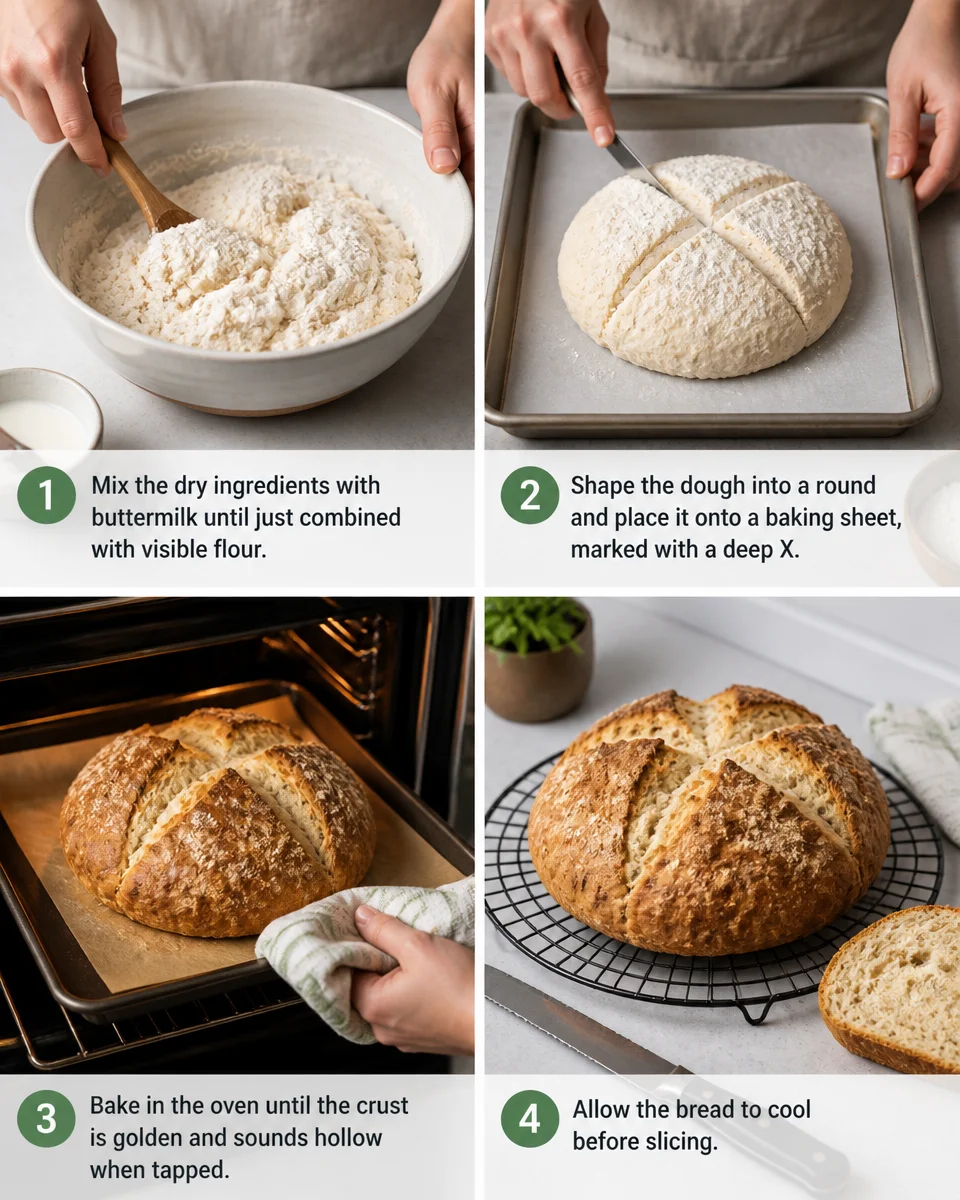
The biggest tip is to mix gently. Once the buttermilk hits the baking soda, the reaction starts right away. Stir just until you don’t see dry flour anymore, then stop. If you knead it a lot or stir like crazy, the bread can turn tough. I usually do a few turns on the counter just to shape it, nothing more.
Shaping and scoring the top
Shape it into a round, set it on a baking sheet or in a cast iron skillet, then cut a deep X on top. This helps it bake evenly, and it also gives you that classic soda bread look. The cut should be confident, like you mean it.
Also, don’t flatten it too much. A taller round loaf helps the center stay soft and not dry out.
If you’re building a whole cozy meal, this easy colcannon Irish mashed potato with cabbage is so good next to a thick stew, and it stays very on theme.
Baking and knowing when it is done
Bake until the crust is deep golden and the loaf sounds hollow when you tap the bottom. If you have a thermometer, you want the center around 200 to 205 F. Let it cool at least 15 minutes before slicing. I know that’s hard because the smell is basically a trap, but it slices better and the crumb finishes setting up.
“I made this for my family on a rainy Sunday and it was gone in an hour. The crust was perfect and it didn’t feel fussy at all. Definitely making it again.”
One more thing: this bread is best the day it’s baked. The next day, I toast it and it’s still really good. If you are into other no yeast options, this easy beer bread 3 ingredient no yeast is a fun one to try too.
What Is Irish Soda Bread?
Irish soda bread is a quick bread that uses baking soda instead of yeast for lift. That means no rising time, no proofing, and no waiting around. The rise comes from the reaction between baking soda and something acidic, usually buttermilk.
The texture is a little different from yeasted bread. It’s more tender and a bit crumbly, and the crust can get nicely crisp. It’s not meant to be fluffy like sandwich bread. It’s meant to be simple, filling, and perfect with butter, jam, soup, or a slab of cheddar.
I like to think of Easy Irish Soda Bread No Yeast Quick as the bread you make when you want comfort food without a bunch of steps. It’s also great for beginners because you can see results fast.
To make this section extra useful, here’s a quick snapshot of what to expect when you bake it.
If you are the type who likes to bake different quick breads through the week, this easy cantaloupe quick bread is surprisingly lovely and a nice change of pace.
Irish Soda Bread History
This bread has roots in Ireland from the 1800s, when baking soda became more widely available. For many families, yeast baking could be tricky or expensive, and flour options were often softer wheat that did not behave like strong bread flour.
Using baking soda and sour milk or buttermilk gave people a practical way to bake at home. It was often cooked in a pot or bastible over a fire, and later in ovens as those became more common.
One thing that surprises people is that the super sweet, raisin packed “Irish soda bread” you sometimes see in the U.S. is more of an Irish American twist. Traditional everyday loaves were usually plain, meant to go with meals. So if you want to add raisins, go for it, but know you’re making a variation, not the strict old school version.
And honestly, I love that. Food evolves, and home cooks make what works for their families.
Variations
This is where you can have fun while still keeping the recipe easy. Once you’ve made Easy Irish Soda Bread No Yeast Quick one time, you’ll feel more confident playing with it.
Here are a few easy ideas:
- Raisin or currant: Add about 3/4 cup. Great with butter and tea.
- Orange zest: Brightens it up, especially if you add raisins too.
- Cheddar and herbs: Add shredded cheddar and chopped chives or rosemary for a savory loaf.
- Seeded top: Sprinkle oats or sesame seeds on top before baking for extra crunch.
If you want a cheesy version that feels almost like a meal on its own, I also keep this easy cheddar cheese quick bread in my back pocket for busy weeks.
One small caution when you add mix ins: don’t overload the dough. Too many extras can weigh it down and make the center gummy. Keep it simple and you’ll be happy.
Common Questions
1) Can I make this without buttermilk?
Yes. Mix 1 tablespoon lemon juice or vinegar into 1 3/4 cups milk, let it sit 5 minutes, then use it like buttermilk.
2) Why did my loaf turn out dense?
Most of the time it’s from overmixing or using baking soda that is past its prime. Mix gently and check your soda.
3) How do I store Irish soda bread?
Wrap it and keep it at room temp for a day or two. After that, slice and freeze. Toast slices straight from the freezer.
4) Should I bake it in a skillet or on a baking sheet?
Either works. A cast iron skillet can give a slightly crisper crust. A baking sheet is simpler and still great.
5) Can I make it gluten free?
You can try a cup for cup gluten free flour blend, but results vary by brand. Look for one meant for baking, and expect a more delicate crumb.
A warm loaf fixes a lot
If you’ve been craving homemade bread but didn’t want to mess with yeast, Easy Irish Soda Bread No Yeast Quick is truly the easiest place to start. Keep the mixing gentle, bake it until golden, and let it cool just enough to slice without squishing it. For more inspiration and slightly different takes, I like reading World’s best No Yeast Bread – Irish Soda Bread – RecipeTin Eats and Irish Soda Bread (no yeast & no rising) – Nellie Bellie when I’m in a baking mood. Now go grab the butter, heat up the oven, and make a loaf that makes your kitchen feel instantly happier.
More Recipes to Try
If you are planning another homemade meal, these recipes are worth exploring next: Easy Rich Banana Bread, Hot Fudge Brownie Bread, Easy Pineapple Quick Bread and 10-Minute No-Oven Bread Magic.
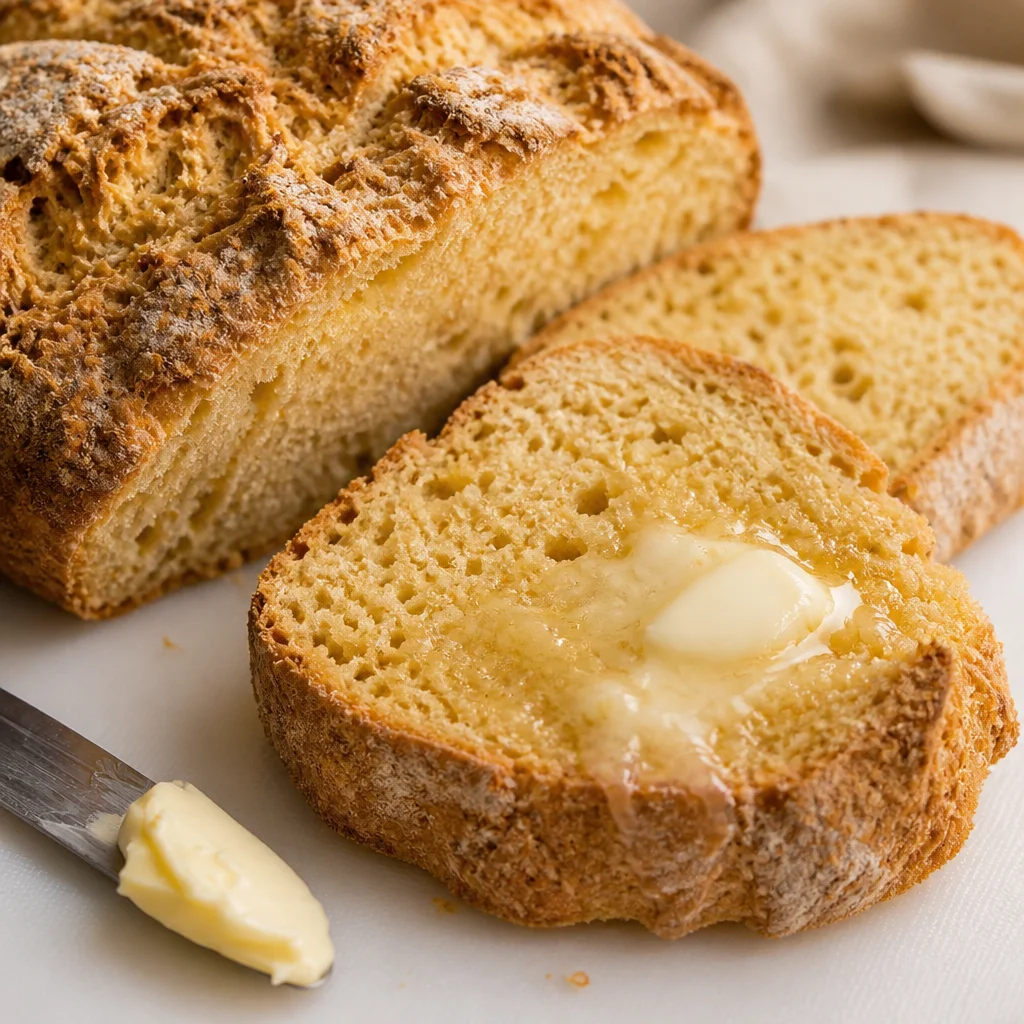
Easy Irish Soda Bread No Yeast Quick
Ingredients
Method
- Preheat the oven to 425°F (220°C) and line a baking sheet or prepare a cast iron skillet.
- In a large mixing bowl, combine the flour, baking soda, and salt, whisking to mix well.
- Make a well in the center of the dry ingredients and pour in the buttermilk, stirring gently until just combined and no dry flour remains.
- Turn the dough out onto a lightly floured surface and shape it into a round loaf, being careful not to overwork the dough.
- Transfer the shaped dough to the prepared baking sheet or skillet and cut a deep ‘X’ on top of the loaf.
- Bake in the preheated oven for about 30-40 minutes, or until the crust is deep golden and the loaf sounds hollow when tapped on the bottom.
- Use a thermometer to check that the center of the loaf is between 200°F and 205°F.
- Remove from the oven and let the loaf cool for at least 15 minutes before slicing.