
A bowl of good coleslaw can make a barbecue plate feel complete. It’s cool, crunchy, and refreshing beside grilled meat, pulled pork, or a sandwich piled high with savory filling. The cabbage gives it that satisfying bite, while the dressing brings everything together.
The trouble with homemade coleslaw is that it doesn’t always stay crisp. A salad that looks perfect when first mixed can turn watery after sitting in the refrigerator, leaving the cabbage soft and the dressing thin.
This easy coleslaw recipe is all about getting that balance right. You want cabbage that still has some crunch, a dressing that tastes fresh rather than heavy, and enough flavor to stand up to the foods served alongside it.
Why You’ll Love This Easy Coleslaw
Coleslaw is one of the most useful side dishes for casual meals. It fits naturally beside barbecue, burgers, fried chicken, and picnic sandwiches.
It’s also a welcome contrast to rich food. The cabbage adds crunch, and a tangy dressing can make a heavy meal feel more balanced.
Another advantage is that coleslaw doesn’t need elaborate presentation. A fresh bowl with evenly coated cabbage is attractive on its own.
The best version is easy to serve and enjoyable to eat without leaving a puddle of dressing on the plate.
Best Cabbage and Vegetables for Coleslaw
Green cabbage is the familiar base for many classic coleslaw recipes. It has a mild flavor and firm texture that works well with both creamy and vinegar-based dressings.
Red cabbage adds color and a slightly different flavor. It can also release pigment into the dressing, particularly after extended storage.
Carrots are a common addition because they bring sweetness and a little extra crunch. Their bright color makes the salad look more inviting.
Pre-shredded coleslaw mixes can be convenient, but their freshness and texture vary. A mix that’s already dry or limp may not produce the same crisp result as freshly prepared cabbage.
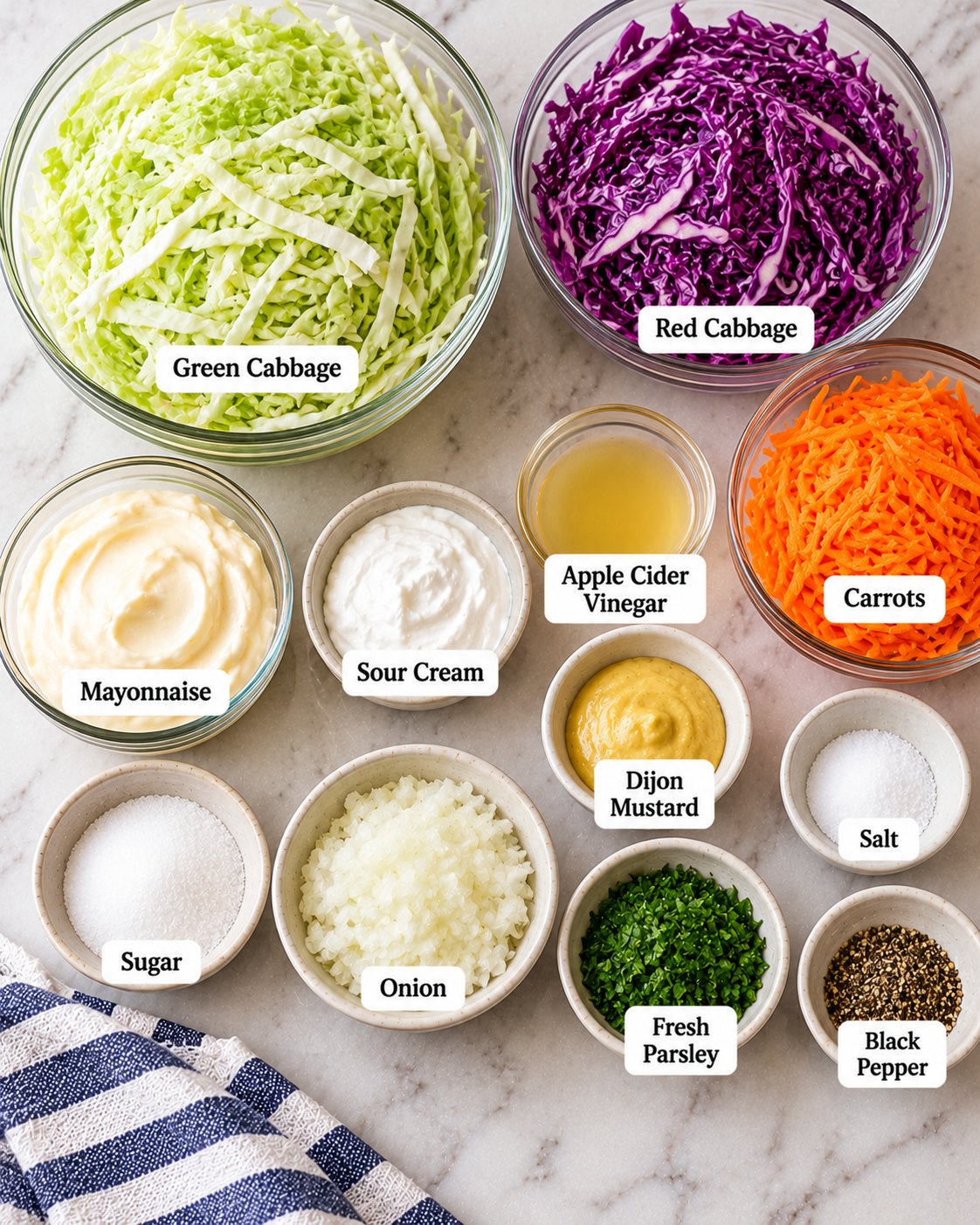
Easy Coleslaw Ingredients
Cabbage provides the main texture, while the dressing determines whether the salad tastes creamy, sharp, sweet, or somewhere in between.
Some coleslaw recipes use mayonnaise-based dressing, while others rely on vinegar and oil. Neither style is automatically better, but they produce noticeably different results.
Seasoning should complement the cabbage rather than hide it. Too much sweetness can make coleslaw taste more like a dessert salad, while excessive acidity can overwhelm the vegetables.
The ingredient proportions in your recipe card determine the intended flavor. Adding extra dressing isn’t always an improvement, especially when the cabbage will release moisture as it sits.
Creamy Coleslaw Dressing
A creamy coleslaw dressing should cling lightly to the cabbage without making it feel heavy. The goal is a smooth coating that allows the vegetable’s crunch to remain noticeable.
Mayonnaise-based dressings are common, but some recipes use additional ingredients to change the tanginess and consistency. The exact combination matters because a thin dressing may become watery after refrigeration.
If your recipe uses a vinegar dressing instead, that is a different style of coleslaw. There’s no need to add mayonnaise simply because creamy coleslaw is popular.
The best dressing should taste balanced alongside the main meal, particularly when served with salty or smoky foods.
How to Make Coleslaw
The complete recipe and preparation method are in the recipe card below.
One thing worth remembering is that cabbage releases moisture after it comes into contact with seasoning and dressing. That affects how the salad tastes and feels after it has been stored.
A good finished coleslaw should remain pleasantly crisp, with enough dressing to coat the vegetables rather than drown them.
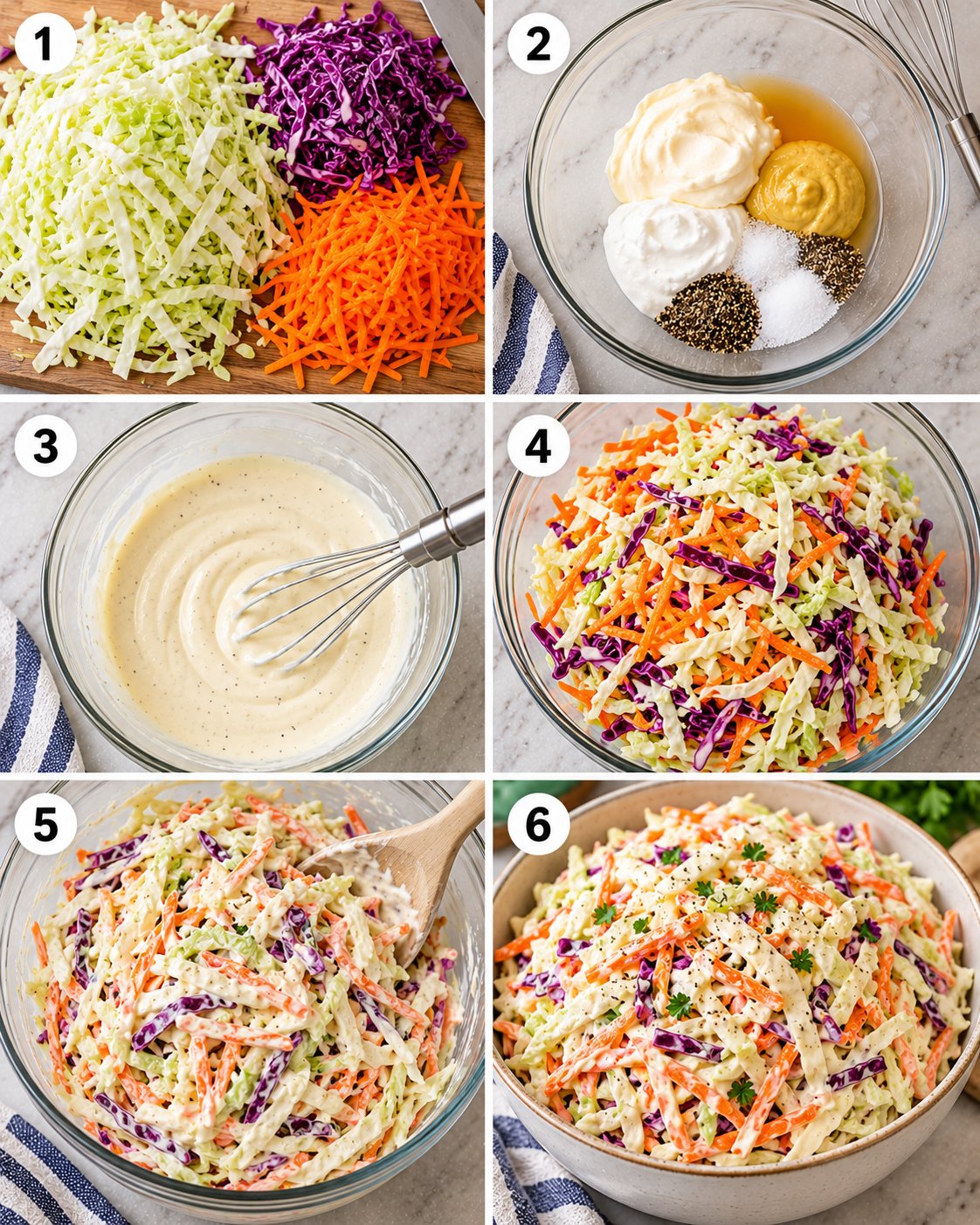
How to Keep Coleslaw Crisp, Not Watery
Watery coleslaw is often the result of moisture leaving the cabbage. Salt and other ingredients in the dressing can draw water from the vegetable over time.
The cabbage’s freshness also matters. Older, limp cabbage won’t regain the same crunch simply because it’s mixed with dressing.
The amount of dressing influences the result, too. A heavily dressed salad may feel softer than one with a lighter coating.
If you’re preparing coleslaw for a gathering, consider how long it will sit before serving. Texture can change noticeably during that time.
Adjusting Sweetness and Tanginess
The best coleslaw has enough acidity to taste fresh without becoming harsh. Sweetness can soften that sharpness, but it shouldn’t completely cover the cabbage flavor.
The right balance depends partly on what you’re serving. A tangier slaw can be particularly appealing with pulled pork or fried food.
A milder dressing may suit a simple family dinner or a meal with strongly seasoned sides.
Taste preferences vary, so there isn’t one universal level of sweetness. The recipe’s proportions provide a starting point, and any adjustments should preserve the intended dressing consistency.
What to Serve With Coleslaw
Pulled pork is one of the most familiar partners for coleslaw. The crisp cabbage provides a refreshing contrast to the rich, savory meat.
Fried chicken and fried fish are other natural pairings. A cool salad balances the crunchy coating and makes the plate feel less heavy.
Coleslaw is also excellent with burgers, hot dogs, and grilled meats. It can be served on the side or used as a topping when the meal suits it.
For a lighter lunch, it works beside sandwiches or baked potatoes. Its versatility is what makes it worth keeping in your side-dish rotation.
Make-Ahead and Storage Tips
Coleslaw can be convenient for entertaining, but the texture may soften as it sits. The cabbage can release liquid and thin the dressing, especially after an extended period in the refrigerator.
Keep prepared coleslaw refrigerated at 40°F (4°C) or below. If it contains mayonnaise, dairy, or other perishable ingredients, proper cold storage is especially important.
At outdoor gatherings, don’t leave perishable coleslaw unrefrigerated for more than two hours, or one hour when temperatures exceed 90°F (32°C).
Freezing isn’t generally recommended. Cabbage loses much of its crisp texture after thawing, and creamy dressings may separate.
Frequently Asked Questions About Coleslaw
Why Does Homemade Coleslaw Get Watery?
Cabbage releases moisture after it comes into contact with dressing and seasoning. The amount of dressing and the storage time can make the problem more noticeable.
Can You Make Coleslaw the Day Before?
Many versions can be made ahead, although the cabbage may soften and the dressing may thin. The best timing depends on the recipe and the texture you prefer.
Is Coleslaw Better with Mayonnaise or Vinegar?
Both styles are popular. Creamy coleslaw has a richer finish, while vinegar-based coleslaw generally tastes lighter and sharper.
Can You Freeze Coleslaw?
Freezing usually damages the cabbage’s crisp texture. Creamy dressings can also separate after thawing, so fresh or refrigerated coleslaw is generally preferable.
Final Thoughts
Easy coleslaw is a simple side dish that can make a big difference to a meal. Crisp cabbage and a well-balanced dressing bring freshness to everything from barbecue to sandwiches.
The key is keeping the vegetables crunchy and avoiding more dressing than they need. When those details are right, coleslaw is anything but an afterthought.
Easy Coleslaw
Ingredients
Method
- Finely shred the cabbage and carrots and place them in a large mixing bowl.
- In a separate bowl, combine mayonnaise, apple cider vinegar, sugar, salt, and black pepper.
- Mix the dressing until smooth and well blended.
- Pour the dressing over the cabbage and carrots.
- Toss together until the vegetables are evenly coated with the dressing.
- Let the coleslaw sit for about 10 minutes before serving to allow flavors to meld.