
There is just something about a homemade chocolate layer cake that completes a celebration. You don’t need a fancy design or a perfectly smooth bakery finish. A hefty slice of soft chocolate cake with rich frosting is usually all the convincing anyone needs.
The best chocolate layer cake has more than a strong chocolate flavour going for it. The crumb has to be moist and tender, the frosting should complement the cake, and the layers should hold together when you cut a slice.
These are important details, because a beautiful cake can still be a disappointment if it’s dry or hard to serve. It only takes a little understanding of what happens to cake layers to make the final dessert that much more satisfying.
Why You Will Love This Chocolate Layer Cake
Chocolate layer cake is always a good idea for birthdays, holidays and family celebrations. It’s a showstopper on a cake stand, but the familiar flavour is a crowd-pleaser for those who like traditional desserts.
It’s the distinction between cake and frosting that makes it so attractive. Between the richer filling are soft, tender layers for a good balance.
It is also a dessert that doesn’t need fancy decorations. A simple frosting finish can be made to look inviting if the layers are stacked evenly.
How Many Layers Is This Cake?
Chocolate layer cakes can have two, three or more layers depending on recipe and pan size. The number of layers will determine the height of the cake, the spread of frosting and the overall presentation.
A taller cake can look dramatic but should be stable enough to cut cleanly. Thin layers are delicate, especially when the crumb is fairly moist.
This cake needs the right number of layers as per the recipe card. Don’t switch the sizes of the pans or change the way you divide the batter unless you consider how it will affect the baking.
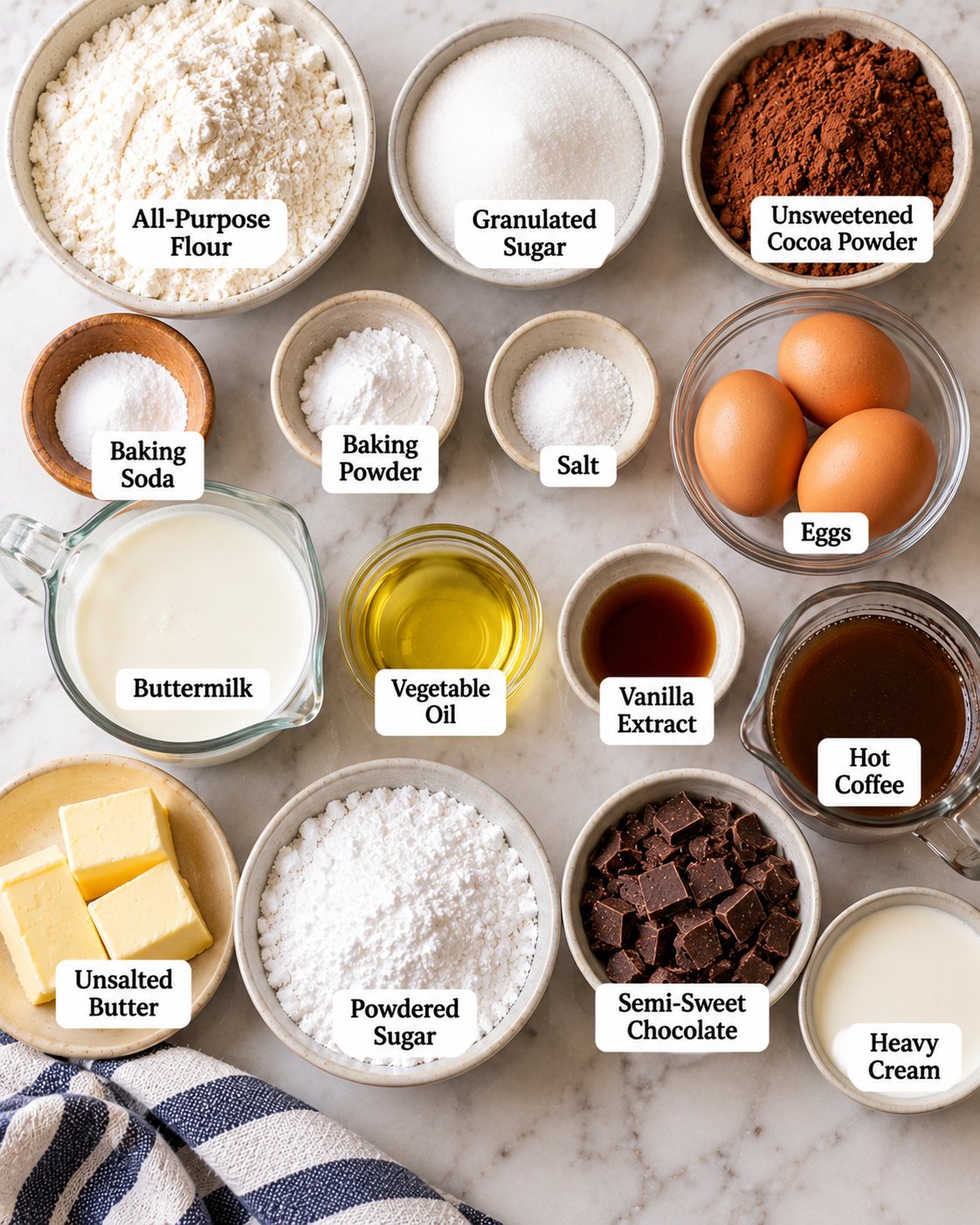
Ingredients for Chocolate Layer Cake
You can use cocoa powder , melted chocolate , or a combination of both for the chocolate flavour of the cake . Each has a slightly different taste and texture.”
Flour and other structural ingredients are what hold the cake together. Fat and liquid ingredients add tenderness and moisture, and leavening helps the layers rise.
The frosting adds another level of chocolate flavour , although the sweetness and richness depends on the recipe .
These ingredients function as a system. You can’t just swap one type of cocoa or chocolate for another and get the same results. So follow the recipe card for exact ingredients and amounts.
Top Cocoa and Chocolate for Cake and Frosting
Dutch-process cocoa is less acidic than natural cocoa powder. That distinction can impact recipes that use certain leavening ingredients, so the two can’t be swapped out without modification.
Dark chocolate has a more intense cocoa flavour, while milk chocolate is sweeter and milder. The best choice will depend on whether the chocolate is used in the cake or the frosting.
Frosting is about texture as much as it is about flavour. Some chocolate frostings are fluffy and spreadable, some are denser and more fudge-like.
The goal is a frosting that enhances the cake flavor-wise, not overwhelms it with sweetness.
Recipe for Chocolate Layer Cake
For complete cake and frosting directions, see the recipe card below. This version includes the pan sizes, baking guidance and assembly information.
One thing to remember is that the layers need enough structure to support the frosting. If the cake is warm or unusually fragile, it may be difficult to put together neatly.
How to get moist, even cake layers
A moist cake should be tender, not wet or gummy. If you bake it too long, the crumb will dry out, especially at the edges.
Pan size determines how fast the cake bakes. Even with the same batter, a deeper layer may need a different timing than a shallower one.
A wonky oven is also capable of producing lopsided layers. The recipe’s cues for doneness are more reliable than just the baking time.
The layers need to cool properly when baked. If the chocolate cake is very warm it may fall apart or break when handled.
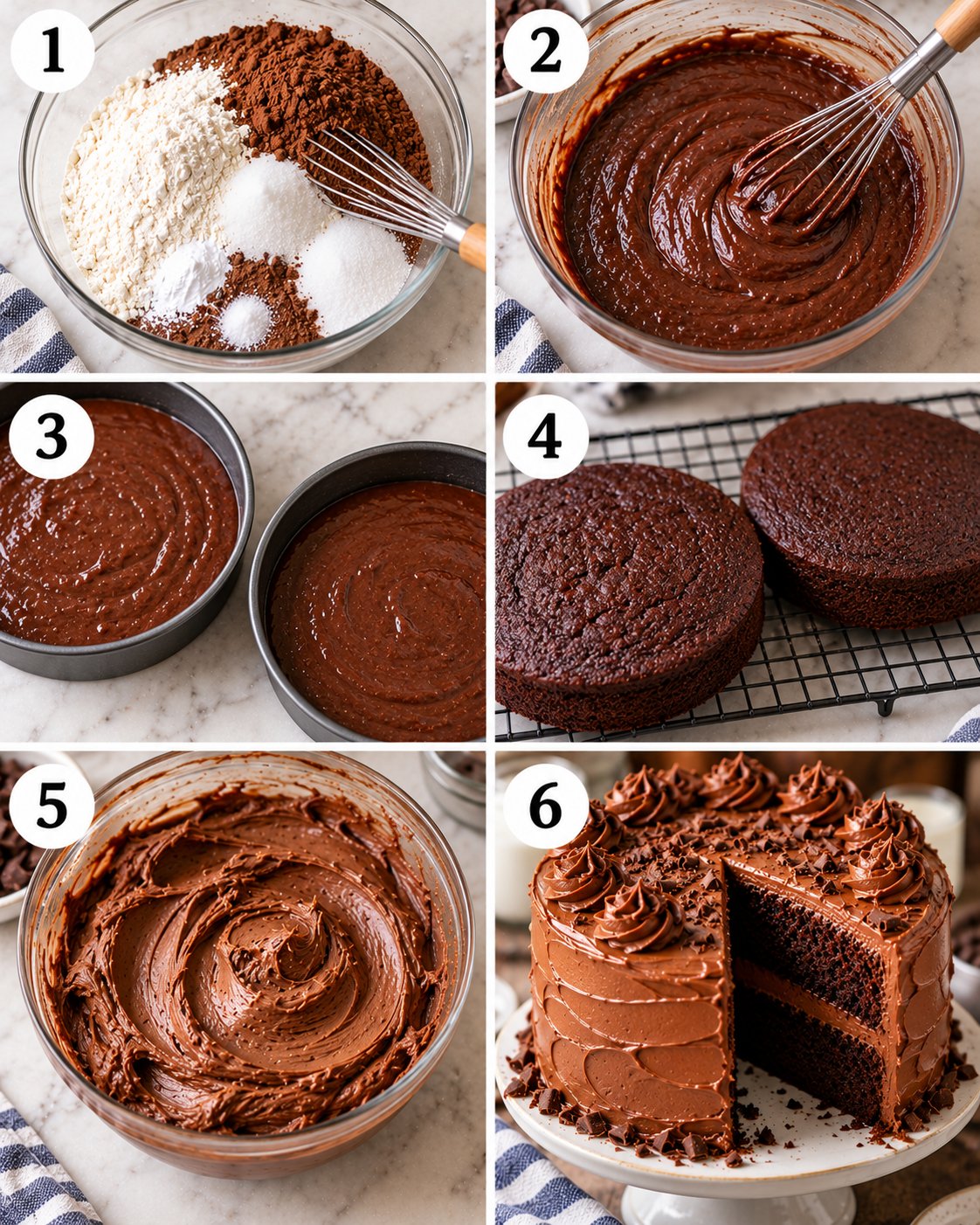
Cooling, Levelling and Frosting the Layers
Frosting and warm cake don’t always get along well. The heat can make the frosting soft and it is difficult to keep the layers looking neat.
Levelling is helpful if your cake has a pronounced dome, but not every homemade cake needs to be perfectly flat. The aim is a stable stack, no unnecessary trimming.
Consistency of frosting is important, too. You can squeeze out a very soft filling between layers; frosting that is too stiff may pull crumbs off the cake.
If the frosting is easy to spread and holds its shape, you are ready for a clean finish. The recipe is your best guide to the texture you want.
Common Issues: Cake Stays Dry, Layers Fall Apart or Slip
Usually, dry chocolate cake is the result of overbaking or an off-balance of ingredients in the recipe. A cake can appear to be perfectly baked on the outside and still lose too much moisture on the inside.
If the layers are too fragile, or handled before they are sufficiently cooled, they may crumble. It can also happen when the crumb is abnormally dry.
Sliding layers are usually a frosting or stability problem. If the cake has a soft filling, uneven layers, or an unstable stack, it may be hard to serve.
It’s worth finding out what the real trouble is before changing the recipe. A dry cake cannot be saved with more frosting, and a sliding layer can’t be fixed with a denser cake.
Storage & Freezing Make-ahead
Chocolate cake layers can often be made in advance, which is useful when you’re making a celebration cake. Where you store it will depend on whether the cake is frosted and what the frosting contains.
Some frostings contain dairy ingredients that spoil and need to be kept in the refrigerator. Others have different storage needs, so follow the recipe’s instructions.
Cover the cake to keep the crumb from drying out. Some frostings can harden in the refrigerator and the cake’s texture can change.
Freezing plain cake layers can be more predictable than freezing a fully decorated cake (especially if the frosting is delicate).
Frequently Asked Questions about Chocolate Layer Cake
How to Keep Chocolate Cake Moist
Be careful not to overbake, stick to the ingredient proportions and store the cake properly. A good balance of liquid, fat, and flour helps produce a tender crumb.
Why Are My Cake Layers Not Level?
Uneven heat in the oven, placement of the pan and how the batter is distributed can all affect how well layers rise. Size of the pan and oven circumstances matter too.
Can I Make Chocolate Cake Layers in Advance?
Yes, you can make many of the chocolate cake layers ahead and refrigerate or freeze. Wrap and assemble as instructed in the recipe.
Why is my frosting falling off?
The cake may be warm, the frosting too soft, or the layers may not hold up. Depending on what kind of frosting you use and how you assemble the cake .
Conclusion
A good chocolate layer cake doesn’t need any fancy topping. A moist cake, decadent frosting and stable layers make it a dessert worth serving for any celebration.
But with a balanced cake and frosting, a simple homemade slice can feel special.
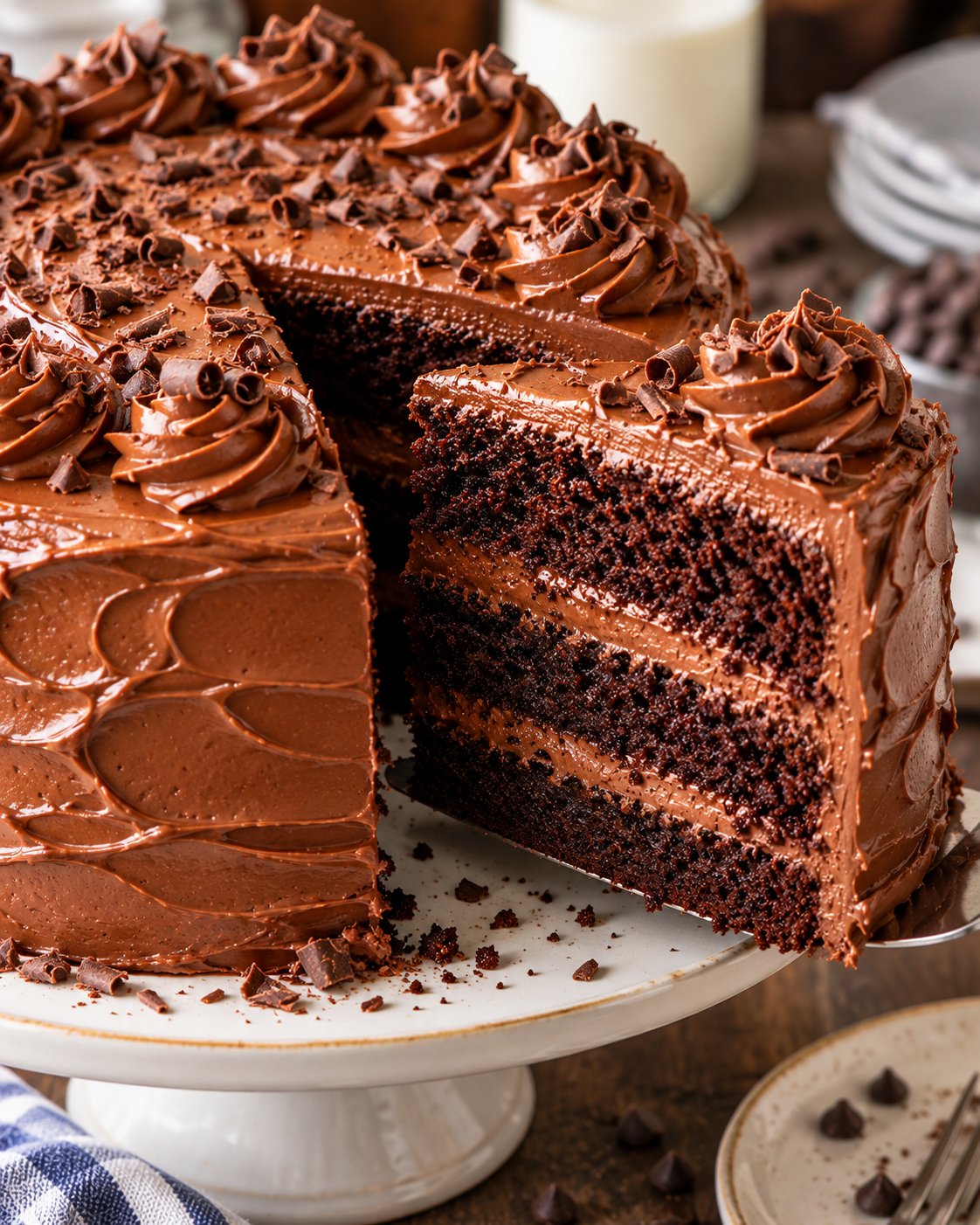
Chocolate Layer Cake
Ingredients
Method
- Preheat the oven to 350°F (175°C). Grease and flour two 9-inch round cake pans.
- In a large mixing bowl, sift together the flour, sugar, cocoa powder, baking powder, baking soda, and salt.
- Add the oil, buttermilk, eggs, and vanilla to the dry ingredients. Mix on medium speed for 2 minutes until well combined.
- Stir in the boiling water (the batter will be thin). Pour evenly into the prepared cake pans.
- Bake for 25-30 minutes or until a toothpick inserted into the center comes out clean.
- Cool the cakes in the pans for 10 minutes, then remove and cool completely on a wire rack.
- In a mixing bowl, beat the butter until creamy. Gradually add powdered sugar and cocoa, alternating with heavy cream, beating until smooth and fluffy.
- Add vanilla extract and mix until fully incorporated.
- Level the tops of the cooled cakes if necessary. Place one layer on a serving plate and spread a layer of frosting on top.
- Place the second layer on top and frost the top and sides of the cake.
- Serve immediately or refrigerate until ready to serve.