
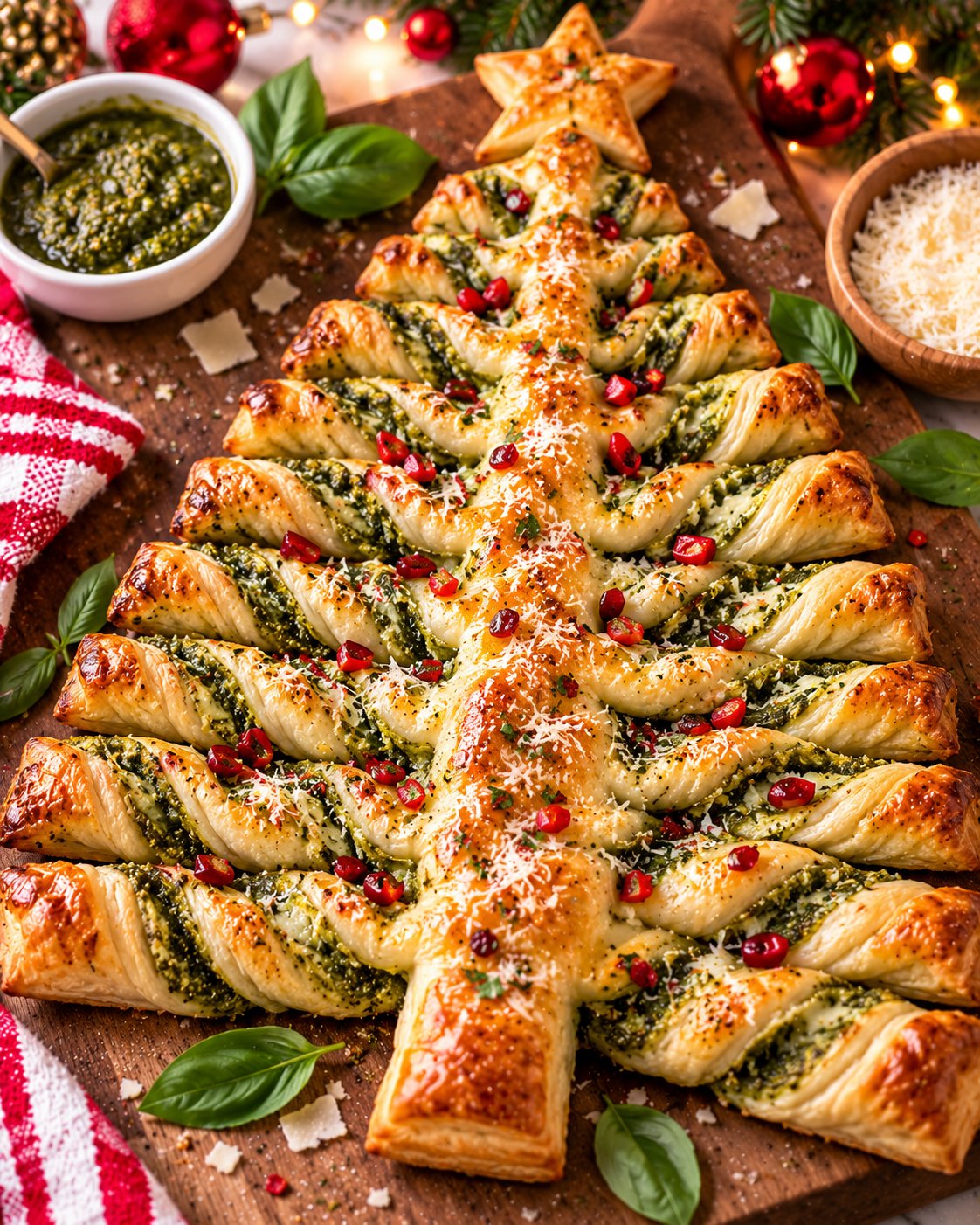
Holiday appetisers are more inviting when they look so festive they could be part of the table setting. That’s exactly what this Basil Pesto Puff Pastry Christmas Tree does. It takes a common pastry and savoury filling and turns them into a stunning centrepiece for your Christmas get-togethers.
I particularly love the flaky puff pastry and fragrant basil pesto combination. The pastry is light and crisp, and the pesto adds a savoury herbal flavour that makes the appetiser feel more interesting than plain cheese bread.
A finished Christmas tree should not only look good but should taste good, too. A pretty shape is not a substitute for a soggy middle or an overstuffed pesto. This holiday appetiser works because it’s the perfect balance of filling and pastry.
What is a Christmas Tree Puff Pastry?
The puff pastry Christmas tree is a holiday appetiser or dessert designed to look like a Christmas tree. It usually consists of layers of puff pastry with a filling in between.
The tree shape is especially popular in December, as it provides a festive presentation without the need for elaborate decoration.
Flavours can be savoury, such as with pesto, cheese or other fillings or sweet, such as chocolate or cinnamon.
The pastry tree should have distinct branches and a golden flaky exterior. The filling adds flavour and the pastry gives the main texture.
What’s the Difference Between a Puff Pastry Christmas Tree and a Pull Apart Christmas Tree?
The puff pastry Christmas tree is made with laminated pastry which bakes into thin flaky layers. Texture: Light, crispy and buttery.
A pull apart Christmas tree can be one of several different appetisers. They can be made with arrangements of bread dough or rolls or filled dough balls.
Both are meant to be shared, but the texture can be quite different. Those made with bread tend to be softer and chewier, while those made with puff pastry are more delicate and crisp.
Depending on the occasion. An elegant appetiser might be puff pastry, but a pull apart tree made with bread might feel more substantial.
Which Puff Pastry Should I Use for This Recipe?
Puff pastry is convenient because it contains the laminated layers that create the familiar flaky texture. Butter or other fats are used by different brands which can affect flavour.
The pastry should be appropriate to the shape and filling you are using in your recipe. Some products are sold in sheet form, others require further processing.
Especially the temperature. If the puff pastry is too warm, the fat softens and the dough will stretch and be difficult to work with.
But very cold pastry can be brittle so it needs to be treated according to the package and recipe instructions.
The best pastry is crisp, with distinct layers, but not greasy or heavy.
Basil Pesto and Cheese: The Perfect Christmas Tree Stuffing
The concentrated herbal flavour of basil pesto marries well with buttery pastry. The appetiser is savoury and complex tasting, garlic-y and basil-y and doesn’t need a complicated sauce.
Cheese adds another dimension of flavour and can provide a nice creamy or stretchy texture depending on the variety.
It works, though, due to the punchy nature of pesto, which is able to hold its own against the pastry, and cheese, which tempers its power.
But stuffing too much can lead to problems. The oil in the pesto or the moisture in the cheese can affect the rise and colour of the pastry.
A good filling shouldn’t take away from the flaky layers that are the real star of the show.
How to Get the Flakiest Puff Pastry Christmas Tree, Every Time
Layers of dough and fat give puff pastry its characteristic texture. If you let the pastry get too warm before baking, those layers won’t be able to puff up properly.
Crispness can also be ruined by wet filling. The pesto and cheese have to complement the pastry, not make it a soggy mess.
The thickness of the tree is important, because very thick parts may need more baking time than delicate branches. Uneven thickness can produce a nicely browned exterior with a softer centre.
The result also depends on the baking surface and the oven conditions. The right heat is essential for puff pastry to rise and achieve that golden finish.
For best presentation, the finished tree should be crisp enough to pull apart, but tender inside.
How to Make the Perfect Christmas Tree Shape in Puff Pastry
This appetiser is characterised by the silhouette of a Christmas tree. The best known presentation is a balanced shape with a clear trunk and branches.
The branches should be proportional to the overall size. Too narrow sections can become fragile. Too wide sections can make the tree look less defined.
The symmetry gives the pastry a polished look, but don’t worry about small imperfections. A hand-made Christmas tree can be charming even if the branches are not identical.
The pastry also needs room to expand as it bakes. With the layers going up, a busy design can lose a little definition.
The goal is to create a festive tree that looks good and is still practical for guests to share.
How to Make Puff Pastry Christmas Tree Appetiser
This appetiser is particularly pretty served on a big board or platter. Its tree form makes it a natural centrepiece for a holiday snack table.
A small ramekin of marinara or other appropriate dipping sauce can provide a tangy counterpoint to the rich pastry. But the pesto filling itself could be plenty flavorful already.
For a larger appetiser spread, combine the pastry tree with fresh vegetables, olives and a simple selection of cheeses.
Since puff pastry is at its crispest right after baking, think about how long it will sit before guests begin to eat.
A festive presentation doesn’t take much decoration. The green pesto and golden pastry already give a lovely Christmas look.
Can Christmas Tree Puff Pastry be made ahead of time?
Some puff pastry appetisers can be prepared in advance, but the best final texture comes from a freshly baked pastry.
Moist fillings can soften the dough when stored, and puff pastry that has been fully baked may lose its crispness when chilled.
Some recipes allow you to assemble ahead of time or even freeze the product, but this will depend on the filling and pastry product and which method will work best.
If you’re making the appetiser for a holiday gathering, be sure to follow the make-ahead guidance in the recipe, rather than assuming the assembled pastry can sit for a long time.
Frequently Asked Questions About Puff Pastry Christmas Tree
Can I purchase store bought pesto?
Yes, store-bought basil pesto is convenient. Brands vary in saltiness and oiliness and flavour so choose one that is compatible with the cheese and pastry.
Why is my puff-pastry Christmas tree soggy?
If the filling is too moist or too oily, the pastry will not come out crisp. The baking conditions and the pastry temperature may also be a factor in the result.
Can I make this Christmas tree cheese-free?
Yes, there are some pesto puff pastry recipes that don’t use cheese. The taste and texture will be different so it is better to make a recipe without cheese.
How to freeze puff pastry Christmas tree
Some puff pastry appetisers freeze well either before or after baking, depending on the filling, and the results can vary. Pesto and cheese can alter texture. Follow the freezing instructions in the recipe.
More Easy Puff Pastry Appetiser Recipes
If you love this puff pastry Christmas tree, you might also enjoy these other savoury appetisers: pesto pinwheels and cheese twists. Both showcase the flaky texture of puff pastry in a smaller, easy-to-serve size.
Baked brie in puff pastry is a richer centrepiece for a holiday gathering and savoury pastry bites are easy finger food.
Basil Pesto Puff Pastry Christmas Tree
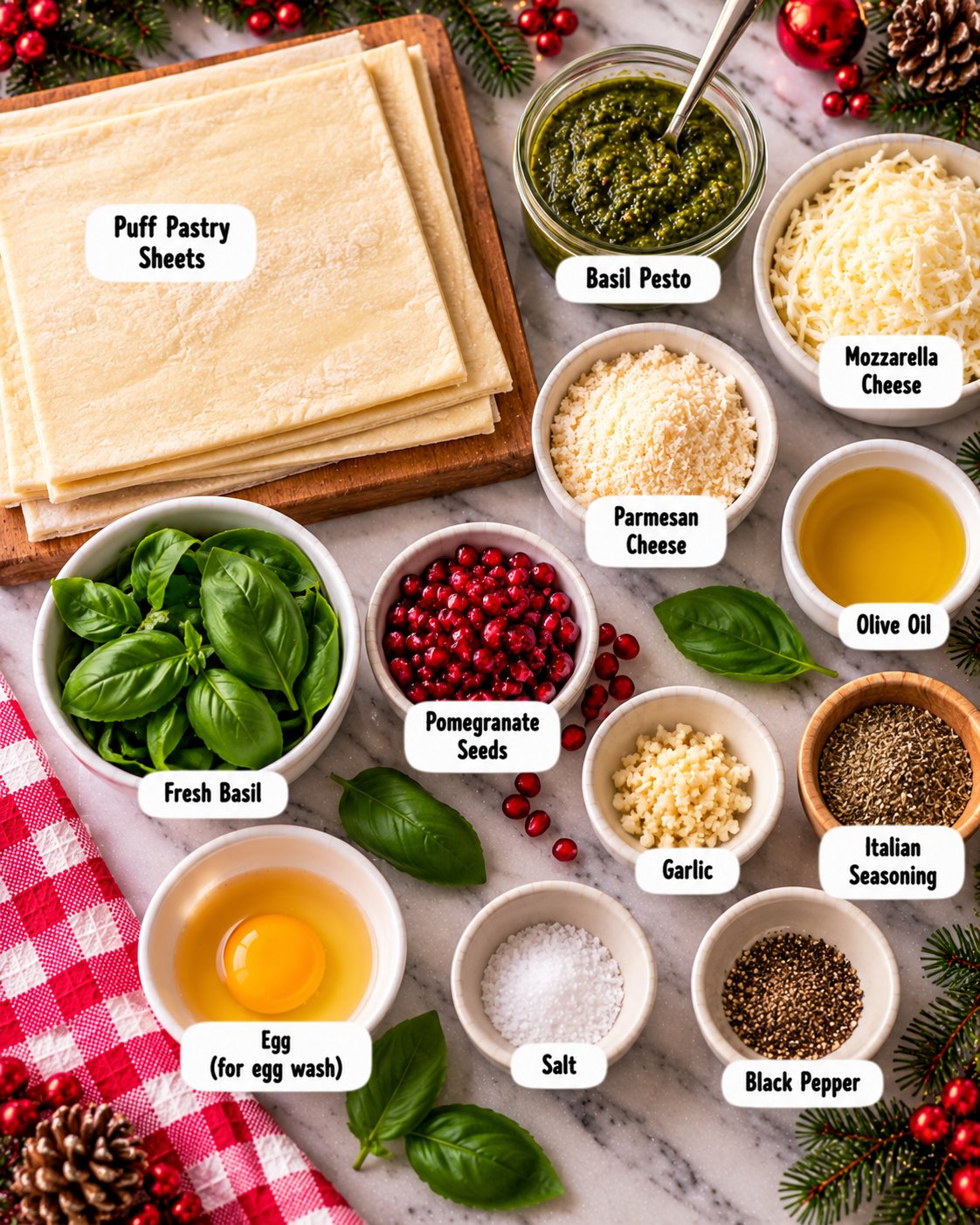
Ingredients
Method
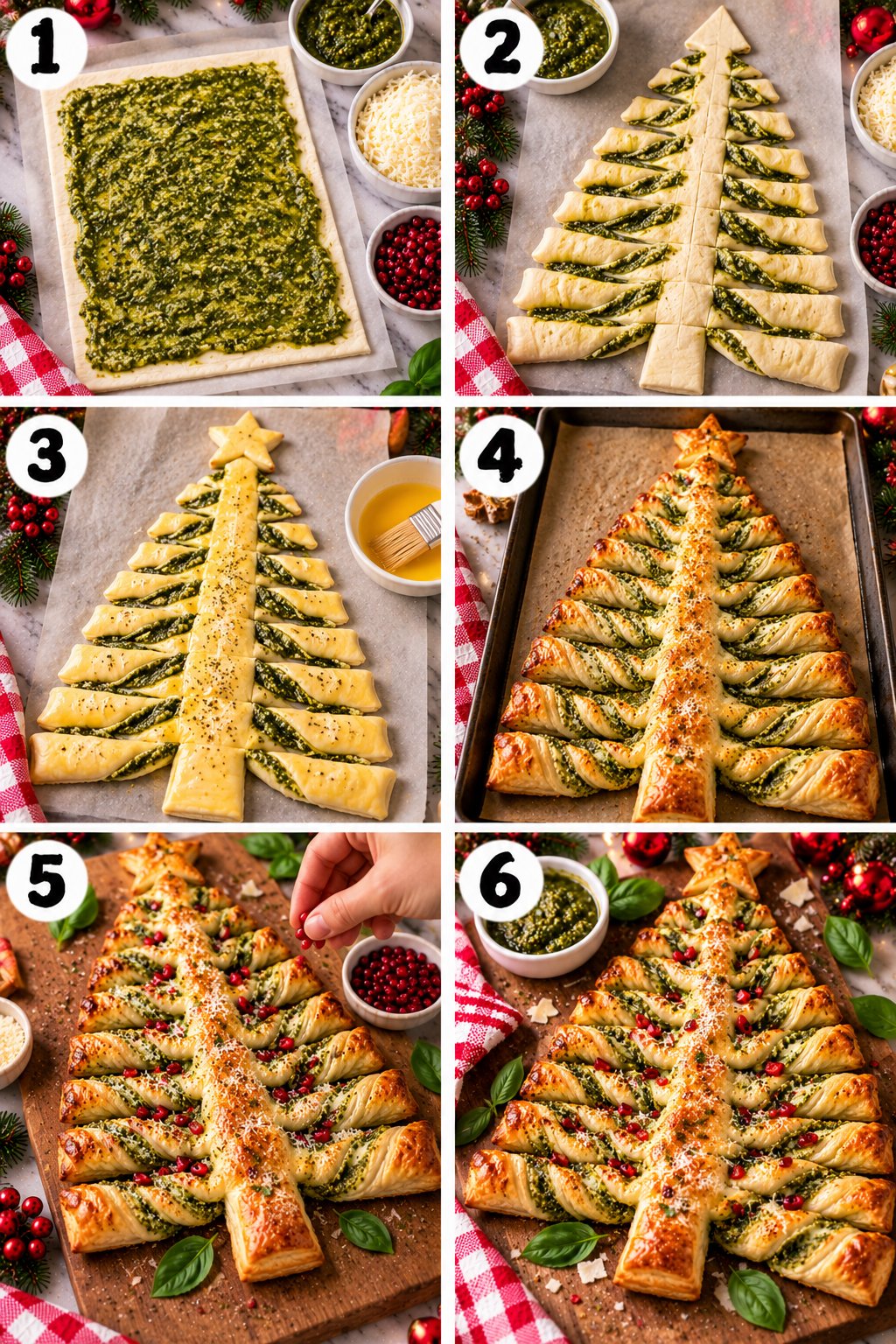
- Preheat the oven to 400°F (200°C).
- On a clean surface, roll out one puff pastry sheet and place it on a baking sheet lined with parchment paper.
- Spread basil pesto evenly over the pastry, leaving a border around the edges.
- Sprinkle shredded cheese over the pesto.
- Roll out the second puff pastry sheet and place it over the first sheet, pressing the edges to seal.
- Using a sharp knife, cut the pastry into a tree shape, ensuring to include branches.
- Make cuts along the edges of the branches to create a flaked look, being careful not to cut through the trunk.
- Gently twist the branches to expose the filling.
- Bake in the preheated oven for 25 minutes or until golden and puffed up.
- Let cool for a few minutes before serving. Optionally serve with marinara or another dipping sauce.