
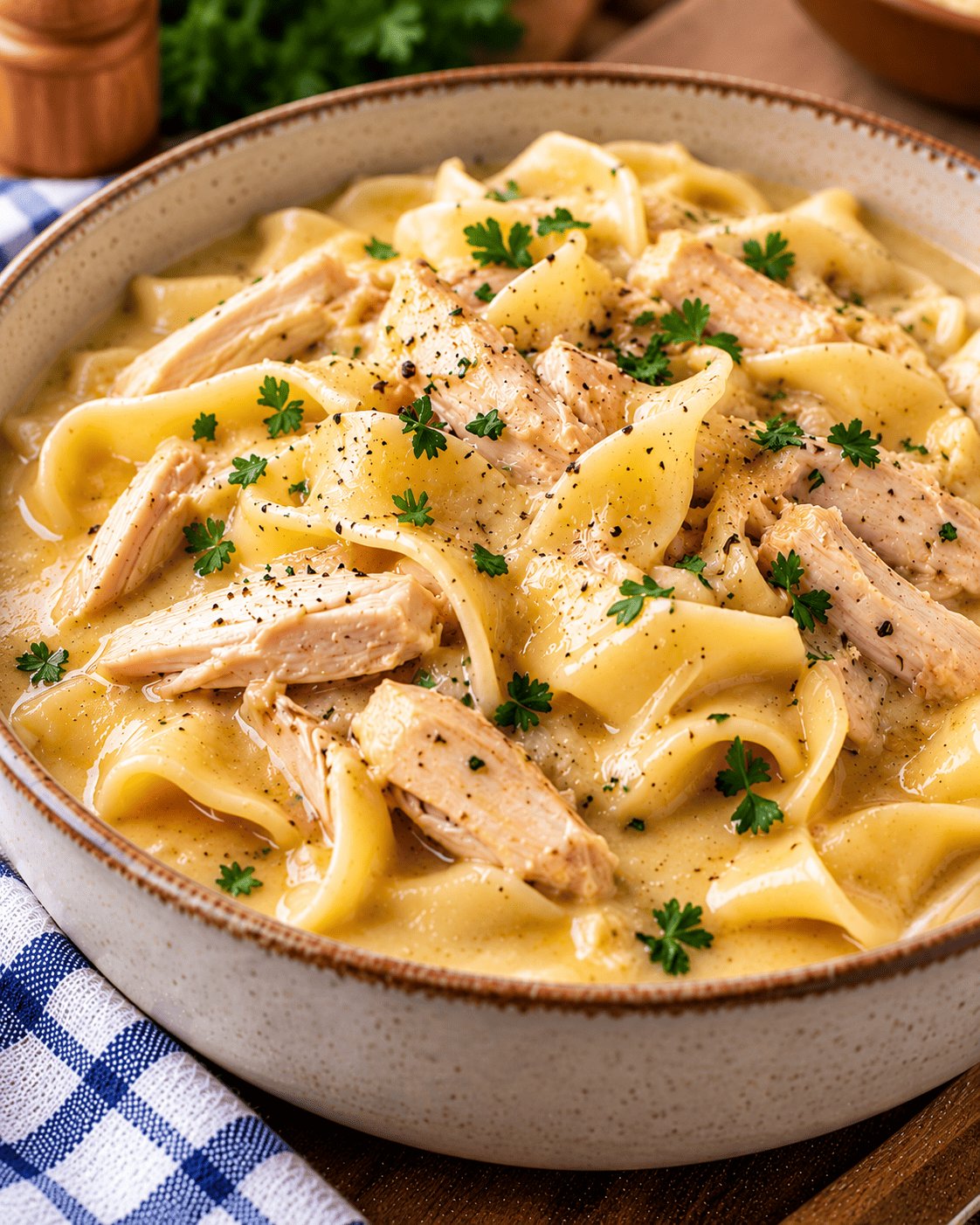
Amish chicken and noodles is the kind of dinner I reach for when the day has been long, everyone’s hungry, and I just want something cozy that actually tastes like it came from a real kitchen. It’s tender chicken, soft noodles, and a savory broth that turns into this warm, comforting bowl that feels like it’s giving you a little hug. The flavor is simple, but it’s not boring, and that’s the whole point. You make it when you want comfort food without a bunch of fancy steps. If you’ve ever stood in front of the fridge thinking, “I need something filling that won’t cause complaints,” this one’s for you.
Why You’ll Love This Recipe
Flavor and texture
What I love most about amish chicken and noodles is the way it lands right in the middle of “soupy” and “stewy” without trying too hard. The broth gets rich from the chicken, the noodles soak up flavor, and every bite tastes like it belongs there. When it’s done right, the noodles are **tender but not mushy**, and the chicken is **soft and juicy**, not dry and stringy.
It’s also one of those meals that makes your house smell amazing. Not “perfume candle” amazing. More like “someone is actually cooking dinner” amazing.
If you’re the kind of person who loves cozy chicken dinners, you might also like this baked comfort dish I make on busy nights: chicken and dressing casserole. Different vibe, same comfort-food payoff.
When to serve it
I serve this when it’s chilly outside, when someone’s under the weather, or when we’ve had a week of takeout and I need a reset meal. It’s also great for Sundays because it feels special without being complicated. And if you’ve got family coming over, this is an easy crowd-pleaser because it’s familiar and filling.
One more thing: it reheats like a champ. So if you’re trying to plan lunches for the next day, this is a smart pick.
What makes Amish chicken and noodles distinctive
So what’s the big deal? Why not just call it chicken noodle soup and move on? For me, amish chicken and noodles is distinctive because it’s usually thicker, heartier, and more noodle-forward than a typical soup. It’s not trying to be light. It’s trying to be satisfying.
Here are a few practical things that make the biggest difference in the version I stick to:
- Simple seasoning like salt, pepper, and maybe a little onion and celery for that classic savory base.
- Good broth that doesn’t taste watery. If you shortcut too much here, you’ll notice.
- Noodles that can handle simmering without falling apart.
- Time to let everything come together. Not hours, but long enough that it stops tasting like separate parts.
A common mistake is overloading it with random spices. This dish shines when it’s straightforward. If you want extra comfort, add richness with broth choices or a little butter at the end, not a cabinet full of seasonings.
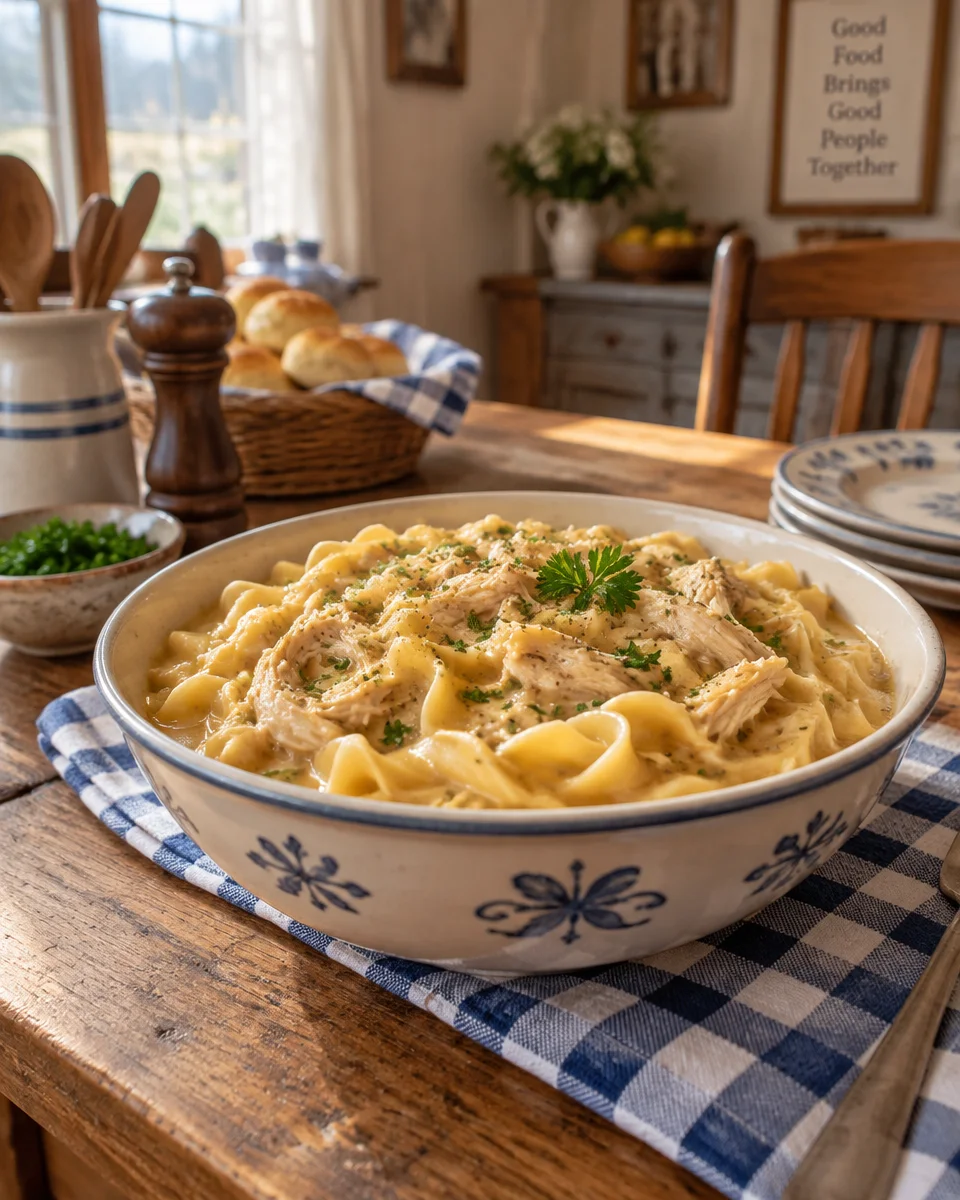
Noodle texture and broth richness
This is where people get frustrated, so let’s talk about it like real life: noodles can go from perfect to sad in a hurry. The broth can also go from rich to bland if you don’t taste as you go.
For noodle texture, the biggest tip is to simmer gently and pay attention. A hard boil can beat up noodles fast, especially if they’re wide or homemade style. And once noodles are done, they keep softening as they sit.
For broth richness, use broth you’d actually sip. If you’re using store-bought, don’t be shy about tasting and adjusting. I usually add salt in small pinches near the end because the broth reduces a bit and flavors concentrate. If you salt too early and reduce too much, you can accidentally push it too far.
And listen, if you’re in the mood for another cozy chicken situation that leans more “comfort bowl,” this one is a favorite: crockpot chicken and gravy over rice. It’s not the same dish, but it scratches the same itch.
Chicken options and how they affect flavor
You’ve got options here, and each one changes the final taste and feel.
If you use bone-in chicken, you tend to get deeper flavor. It’s just reality. Bones add richness, and dark meat stays tender. If you use boneless chicken breast, it’s faster and easy, but you’ll want to be careful not to cook it into dryness.
Here’s how I choose depending on the day:
- Bone-in thighs: richer flavor, hard to mess up, very forgiving.
- Whole chicken: great flavor, great for feeding a bunch of people, takes a bit more handling.
- Boneless breasts: convenient, mild flavor, easiest to overcook.
- Rotisserie chicken: super fast, good for shortcuts, but watch the salt level since it’s usually seasoned.
If you use rotisserie chicken, I suggest adding it later so it warms through without getting mushy. Also, taste your broth before adding extra salt because rotisserie chicken can bring plenty.
For a fun change of pace with chicken that still feels family-friendly, you can check out these chicken and waffle tacos. Totally different style, but it’s a good reminder that chicken doesn’t have to be boring.
How to avoid overcooked noodles
This deserves its own section because overcooked noodles are the number one thing that makes people swear off making this again. The trick is simple: cook the noodles only until they’re just tender, then stop pushing them around.
Practical tips that actually help:
- Keep the heat at a gentle simmer, not a rolling boil.
- Stir enough so nothing sticks, but don’t constantly stir like it’s pasta water.
- If you know you’ll be serving later, consider cooking the noodles slightly less so they finish as they sit.
- If you’re storing leftovers, know the noodles will soak up broth overnight. That’s normal.
One more thing I learned the hard way: if you add noodles and walk away to scroll your phone “just for a minute,” that minute turns into ten. Set a timer. Future you will be grateful.
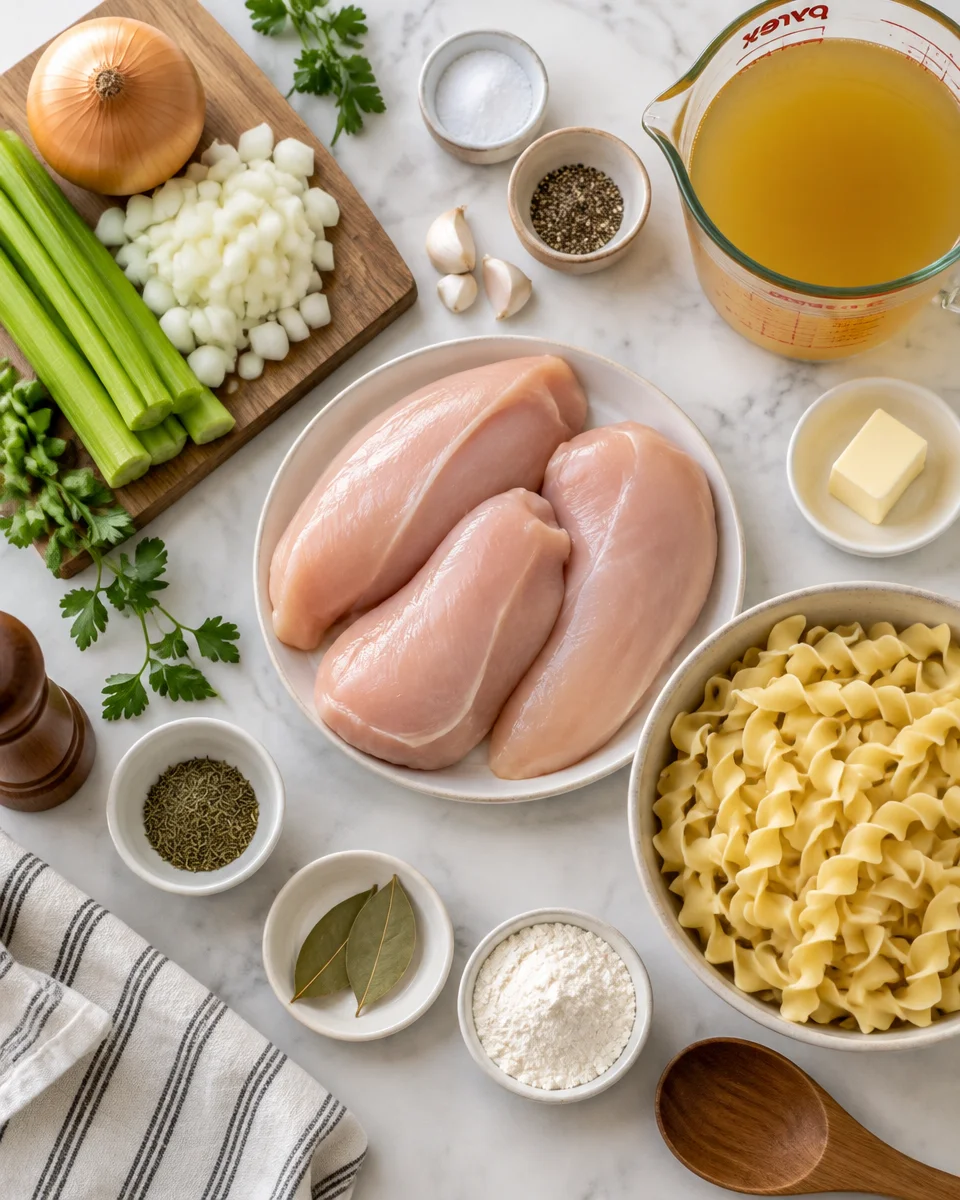
Adjusting thickness without losing flavor
Some people want this dish brothy. Some want it thick enough to eat with a fork. Either way is fine, but you want thickness that still tastes like chicken and noodles, not like starchy paste.
If it’s too thin, the best fix is usually patience. Let it simmer a little and reduce naturally. That concentrates flavor, too. If it’s too thick, add a splash of broth, not plain water, so you don’t dilute the taste you worked for.
Another trick is to pull out a small scoop of noodles and broth, mash the noodles a bit, and stir it back in. It thickens without adding a weird raw flour taste. If you do use a thickener, keep it minimal and make sure it’s fully cooked so it doesn’t taste chalky.
“I made this on a cold Tuesday and my kids actually asked for seconds. The noodles were perfect, and the broth tasted like it had been simmering all day.”
Traditional serving ideas and sides
Let’s talk about what to serve with it, because this is the kind of meal where the sides can be super simple. Honestly, a bowl of amish chicken and noodles can stand alone, but I usually add something fresh or crunchy on the side so everything feels balanced.
Here are a few easy side ideas that make sense:
- Buttered green beans or peas for a classic, no-drama veggie.
- A simple salad with a tangy dressing to cut the richness.
- Dinner rolls or biscuits if you want to swipe up broth.
- Applesauce if you like that sweet, homey side with savory food.
If you’re doing a comfort-food spread for a get-together, another easy option to have in the lineup is crock pot chicken and stuffing. It keeps things in the same cozy family, and it’s handy when you need something low effort.
Make-ahead, refrigeration and freezing tips
This dish is great for planning ahead, but there’s one catch: noodles keep absorbing broth. That means leftovers are usually thicker the next day. Not bad, just different.
Here’s what I do:
Make-ahead: If you’re making it early, consider cooking and storing the noodles separately, then combining when you reheat. If that sounds like too much work, just plan to add extra broth when reheating.
Refrigeration: Store in a sealed container. It’ll keep well for a few days. When reheating, add broth and warm gently so the chicken stays tender.
Freezing: You can freeze it, but noodle texture may soften more after thawing. If you want the best results, freeze the chicken and broth part and add fresh noodles after thawing.
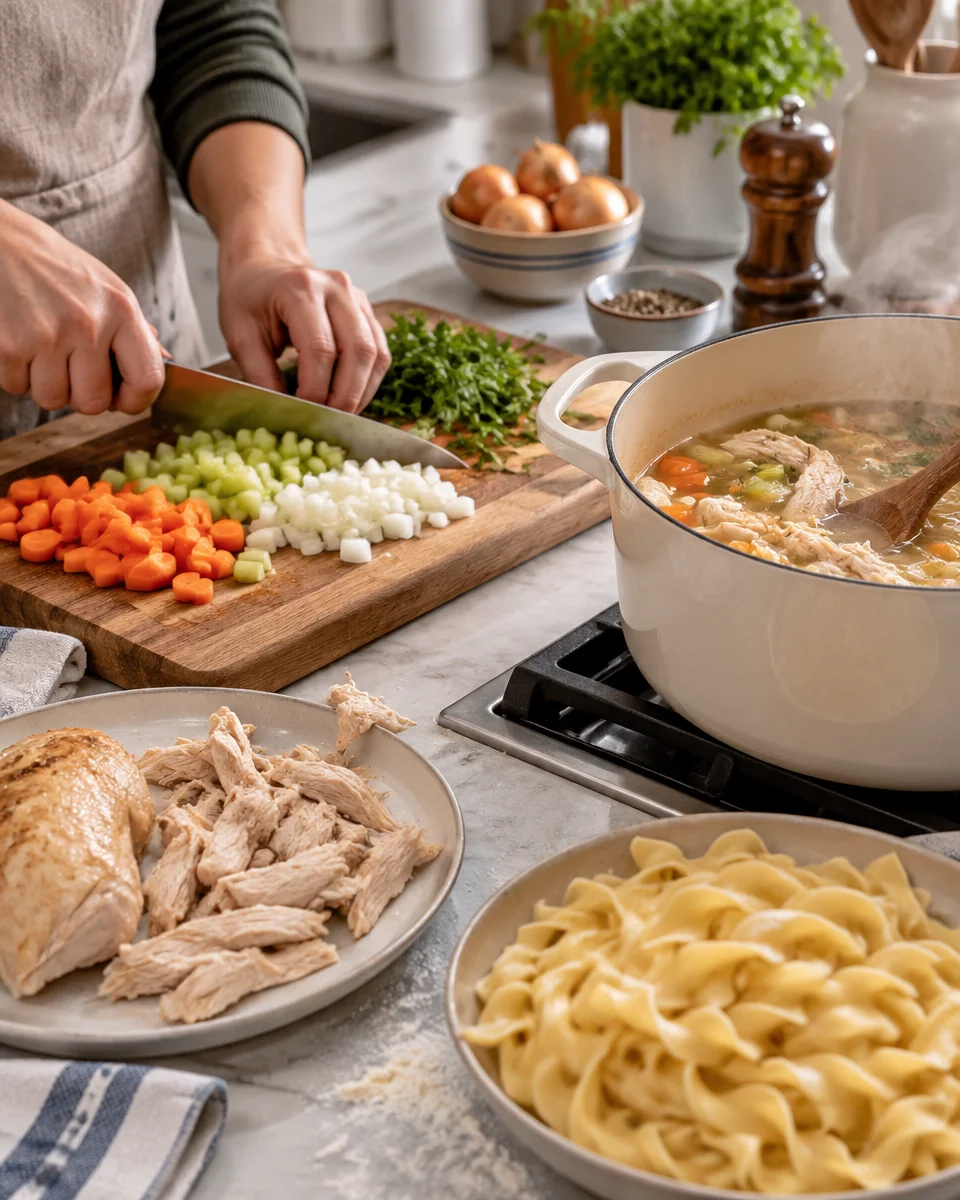
Frequently Asked Questions About Amish Chicken and Noodles
What noodles are used in Amish chicken and noodles?
Traditionally, people use wide egg noodles or homemade style noodles. The key is choosing noodles that can simmer without turning into mush. If your noodles are very thin, shorten the cook time and watch them closely.
Is Amish chicken and noodles a soup?
It depends on how you make it. Some bowls are brothy like soup, but a lot of versions are thicker and heartier, closer to a stew. I usually aim for “thick soup” because it feels comforting and still spoonable.
Can I freeze chicken and noodles?
Yes, but expect softer noodles after thawing. If you’re picky about noodle texture, freeze the chicken and broth and add noodles fresh when you reheat.
How do I fix it if it tastes bland?
Add salt gradually, then a little black pepper. If it still tastes flat, a bit more broth concentrate or a small pat of butter can help. Bland usually means it needs salt or needs to simmer a little longer to bring flavors together.
Why did my noodles fall apart?
Most likely they boiled too hard or cooked too long. Next time, keep it at a gentle simmer and set a timer. Also, some noodle brands are just more delicate than others.
Final Thoughts
If you want a cozy dinner that feels like home, amish chicken and noodles is hard to beat, especially when you pay attention to noodle timing and keep the broth flavorful. I like that it’s flexible, forgiving, and still tastes special in that simple, old-fashioned way. If you want to compare notes with another home cook, I’ve also referenced Easy Amish Chicken & Noodle Recipe | Buns In My Oven when I’m in the mood to see how other kitchens do it. Now go grab your biggest pot and make it, and don’t forget to use the recipe card for the exact amounts and timing so it turns out just right.
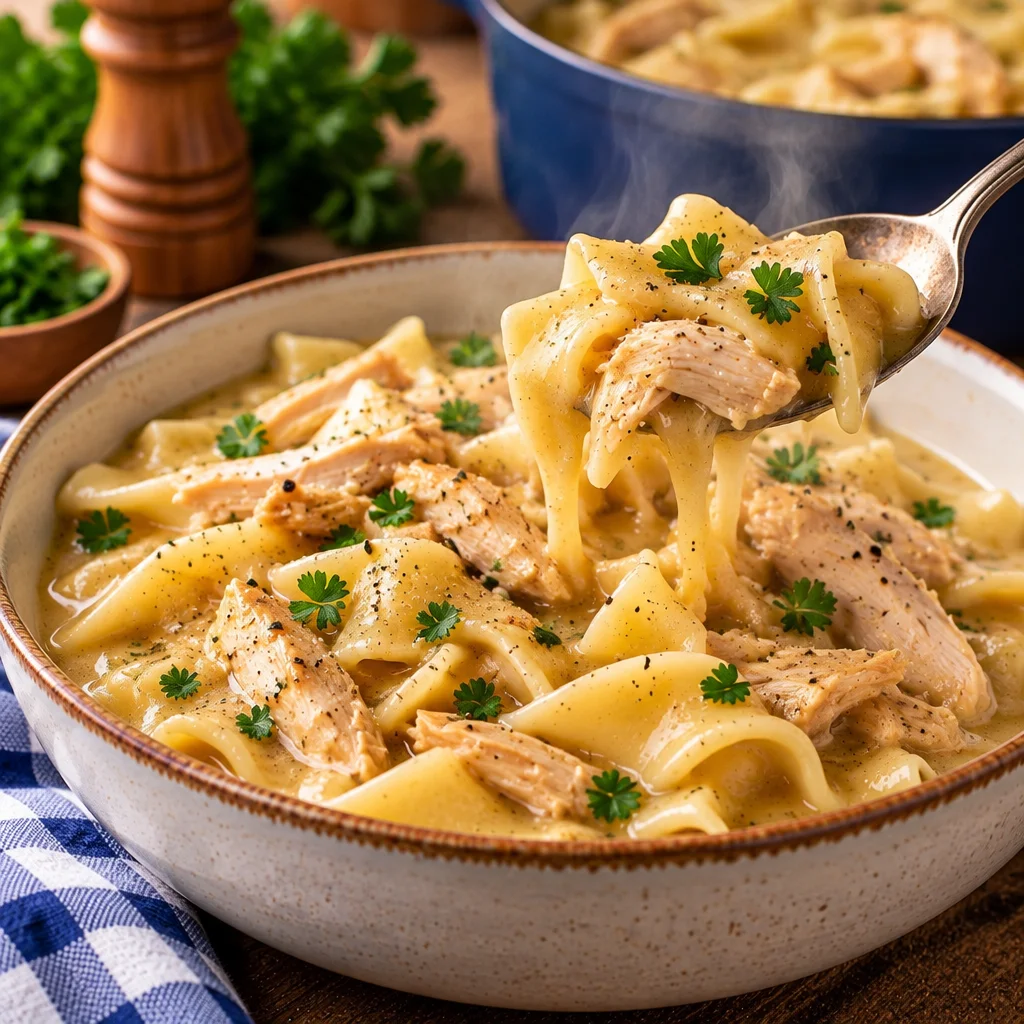
Amish Chicken and Noodles
Ingredients
Method
- In a large pot, combine the whole chicken, chicken broth, onion, celery, salt, and pepper.
- Bring to a gentle simmer and cook until the chicken is tender (about 30 minutes).
- Remove the chicken, shred the meat, and return it to the pot.
- Add the wide egg noodles to the broth and cook according to package directions until just tender.
- Stir in additional salt and pepper to taste as needed.