
A good sirloin steak doesn’t need much to be satisfying, but a touch of smoke can give it a completely different character. The familiar beef flavor takes on a deeper, wood-fired note that makes the steak feel especially suited to a backyard dinner or weekend cookout.
Smoked sirloin steak is appealing because sirloin has a substantial beefy flavor without the heavy richness of some fattier cuts. The challenge is keeping the meat juicy. Sirloin is generally leaner than ribeye, so a beautifully smoky exterior doesn’t automatically guarantee a tender center.
The best smoked sirloin steak recipe should produce beef with a pleasant smoky aroma, balanced seasoning, and a texture that’s easy to enjoy. The smoke should complement the steak rather than overpower it.
What Makes This Recipe Special
Smoking gives sirloin a different flavor profile from an ordinary grilled steak. The wood smoke contributes aroma and depth while allowing the beef’s natural character to remain noticeable.
Sirloin is also versatile enough for a family dinner or a more relaxed gathering. It pairs naturally with potatoes, grilled vegetables, and simple salads.
The most satisfying result is a steak that tastes smoky without being bitter and feels juicy without excessive fat.
Why Sirloin Works Well for Smoking
Sirloin has a pronounced beef flavor that can stand up to smoke. It’s also typically leaner than some premium steak cuts, which gives it a firmer, meatier character.
That leanness is both an advantage and a consideration. The steak can feel substantial and flavorful, but it may become dry if the cooking conditions aren’t suited to the cut.
Beef Flavor and Smoke
Wood smoke can add a savory depth that makes sirloin feel different from a pan-seared steak. The flavor should be noticeable without masking the meat.
A heavily smoked steak may taste harsh or bitter. A balanced result lets the beef remain the main attraction.
Why Lean Meat Needs Attention
Sirloin doesn’t usually have the same level of internal fat as ribeye. That means the finished texture can be more sensitive to doneness.
The best steak should remain moist enough to enjoy comfortably. A dry, chewy center can make even a flavorful smoked exterior disappointing.
Choosing the Right Sirloin Cut
The word sirloin describes several related beef cuts, and they don’t all have identical textures. Top sirloin is a common steak cut, while other sirloin portions may be firmer or shaped differently.
The actual cut matters because it affects tenderness and the finished eating experience.
Top Sirloin vs. Other Sirloin Cuts
Top sirloin is often valued for its beefy flavor and relatively tender texture. Other sirloin cuts may have more connective tissue or a firmer bite.
A recipe developed for one cut shouldn’t automatically be treated as suitable for every steak labeled sirloin.
Thickness and Texture
Steak thickness influences how the exterior and center develop. A thin steak behaves differently from a thick one, especially in a smoker.
The best result depends on the cut and the recipe’s tested approach rather than a universal cooking time.
How to Keep Smoked Sirloin Juicy
Juiciness is one of the most important qualities in smoked sirloin. Because the meat is relatively lean, an overly dry center can make it feel tough.
The steak’s doneness, thickness, and resting period all influence its final texture.
Understanding Doneness
Steak doneness affects both color and tenderness. Some people prefer a pink center, while others enjoy a firmer, more thoroughly cooked steak.
For food safety, the USDA recommends cooking whole beef steaks to at least 145°F, followed by a three-minute rest. A thermometer provides a more reliable reading than appearance alone.
Carryover Heat and Resting
The internal temperature of meat can continue rising briefly after it leaves a heat source. This is known as carryover cooking.
Resting also allows the finished steak’s juices to redistribute. The exact effect depends on the steak’s size and cooking conditions.
Avoiding Overcooked Sirloin
Overcooked sirloin can feel dry and chewy because it contains less fat than some other steak cuts. A smoky crust won’t fully compensate for an unpleasantly dry center.
The goal is beef that’s safely cooked and still enjoyable to slice and eat.
Smoke Flavor and Seasoning Options
Different woods create different smoke profiles. Hickory is often associated with a stronger smoky flavor, while fruitwoods such as apple or cherry may contribute a milder character.
The best choice depends on the flavor you want. A stronger wood isn’t automatically better for a lean steak.
Keeping the Smoke Balanced
Too much smoke can make beef taste bitter or overly intense. The ideal flavor has a noticeable smoky note while preserving the sirloin’s natural character.
Seasoning Variations
Simple savory seasonings can allow the smoke and beef to stand out. More assertive rubs create a different style of steak.
These are flavor options rather than ingredients necessarily included in the original recipe.
Serving and Leftover Ideas
Smoked sirloin pairs well with roasted potatoes, grilled vegetables, corn, or a fresh green salad. Mild sides help balance the steak’s rich, smoky flavor.
Leftover sirloin can also work in sandwiches, salads, or grain bowls when properly stored.
Slicing and Serving
Sirloin can feel more tender when its muscle fibers are shorter in each bite. The direction of the grain influences the eating experience.
A good serving should be easy to chew and allow the smoky beef flavor to remain noticeable.
Storage
Refrigerate cooked steak promptly at 40°F or below and use within three to four days. Reheat leftovers thoroughly to 165°F.
Lean steak may become firmer after refrigeration and reheating, so the texture may differ from freshly served meat.
Frequently Asked Questions about Smoked Sirloin Steak Recipe
What Temperature Should Smoked Sirloin Steak Reach?
The USDA recommends a minimum internal temperature of 145°F for whole beef steaks, followed by a three-minute rest. The recipe’s smoker settings and timing are separate considerations.
Is Sirloin Good for Smoking?
Yes, sirloin has enough beef flavor to pair well with smoke. Because it’s relatively lean, the finished texture deserves particular attention.
Should Smoked Sirloin Be Reverse Seared?
Reverse searing is an option in some smoked steak recipes, but it isn’t required for every version. The actual recipe should determine whether that technique is appropriate.
Final Tips and Serving Ideas
Smoked Sirloin Steak Recipe is a satisfying way to give a familiar beef cut a deeper, wood-fired flavor. The best result balances smoke, seasoning, and tenderness without allowing any one element to dominate.
Serve it with simple potatoes, vegetables, or a fresh salad. For more backyard dinner ideas, explore related smoked meats and grilled steak recipes. The complete recipe is in the card below.
Smoked Sirloin Steak
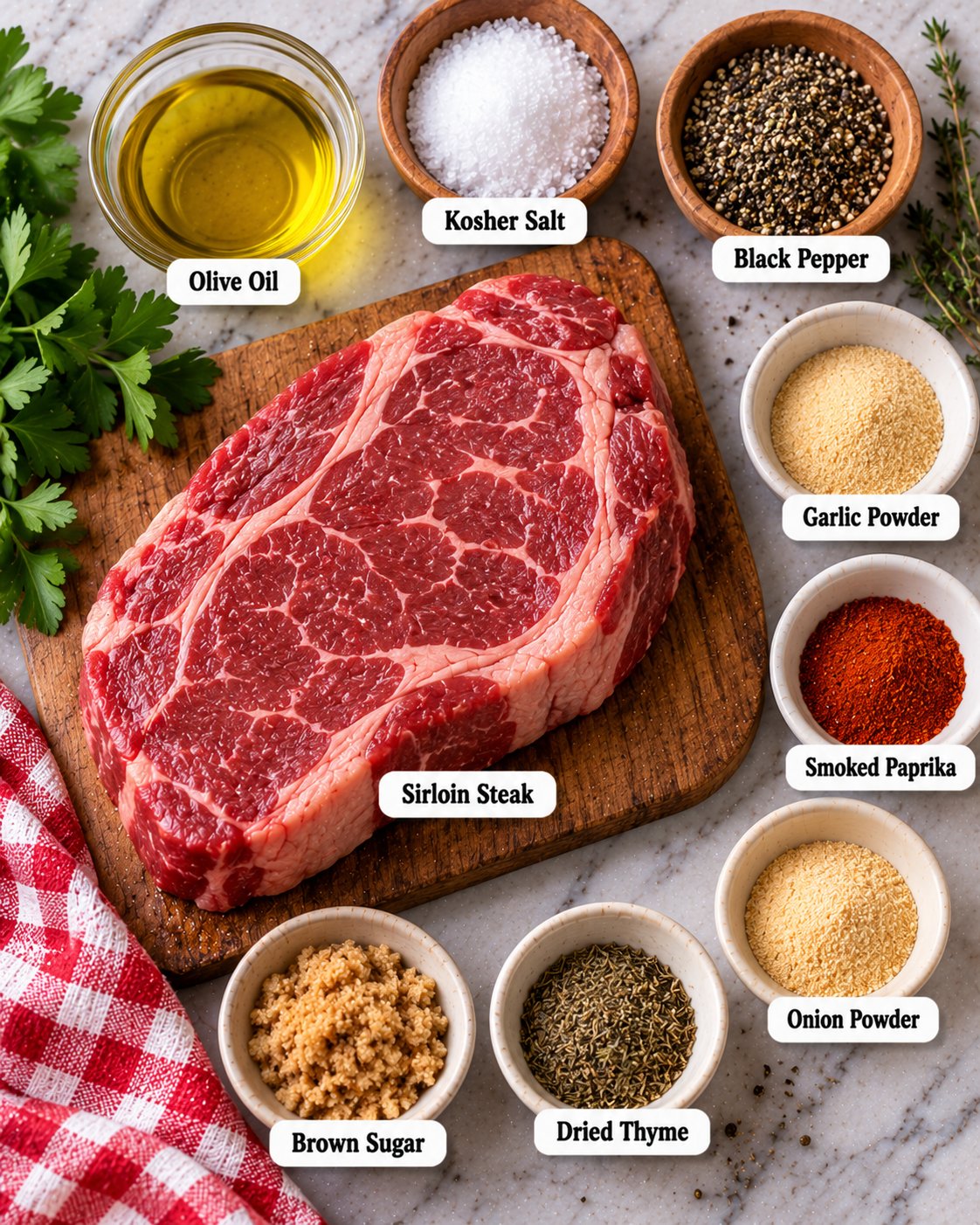
Ingredients
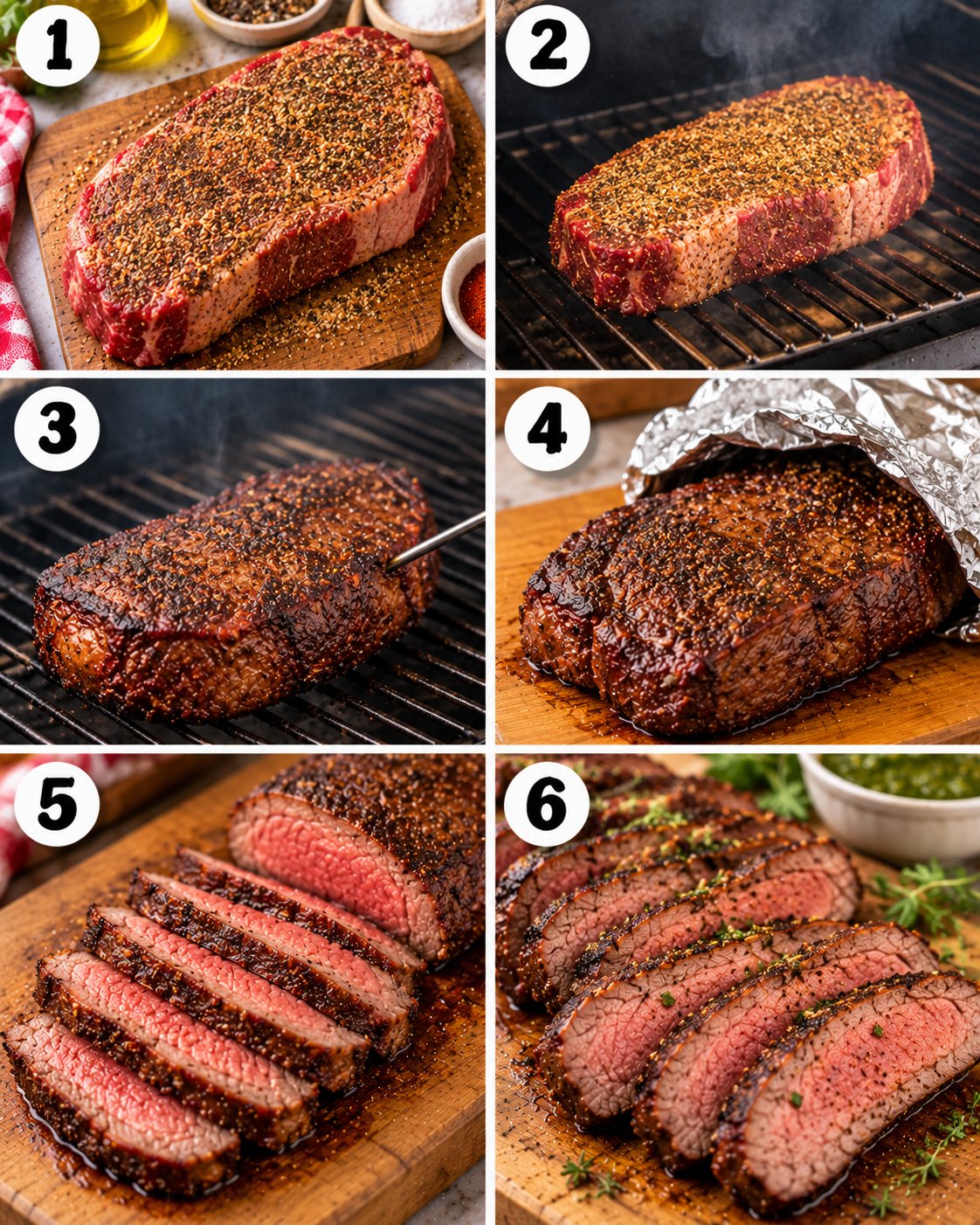
Method
- Season the sirloin steaks with salt, black pepper, and garlic powder. Let them sit at room temperature for 30 minutes.
- Prepare your smoker according to the manufacturer’s instructions and preheat it to 225°F (107°C).
- Add your choice of wood chips to the smoker.
- Place the seasoned sirloin steaks on the smoker grate and close the lid.
- Smoke the steaks for about 1.5 hours or until the internal temperature reaches 135°F (57°C) for medium-rare.
- Once done, remove the steaks from the smoker and let them rest for 10-15 minutes.