
Easy Sourdough Bread Beginner No Knead is for the nights when you want real bread but you do not want to babysit dough or wrestle with kneading. I started making it because store bought loaves were either too pricey, too bland, or weirdly sweet. This method is simple, forgiving, and honestly kind of relaxing once you get the rhythm. If you have a sourdough starter that is alive and bubbly, you are already most of the way there. Let me walk you through exactly how I make my favorite beginner loaf at home. 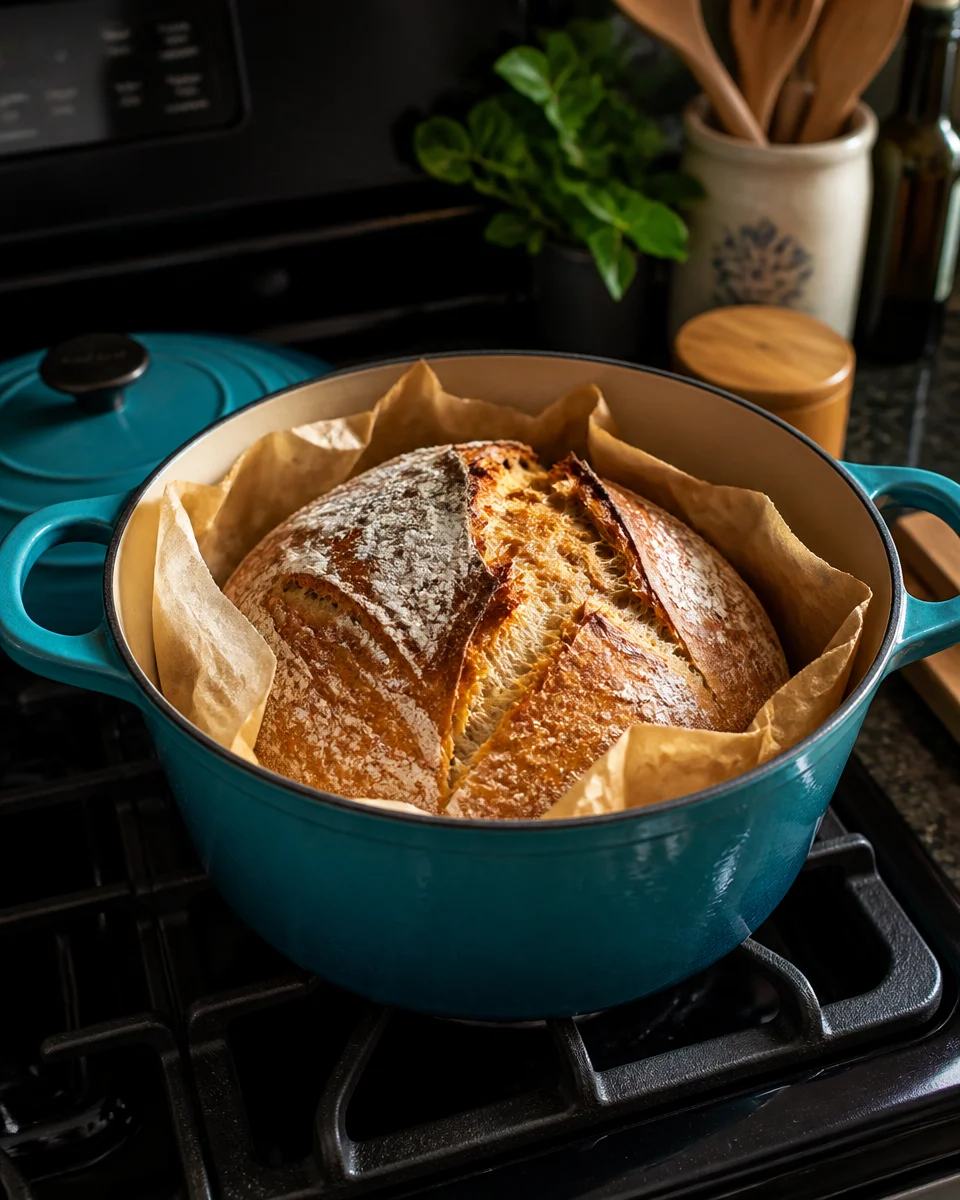
Benefits of Making Sourdough at Home
I used to think sourdough was only for serious bakers with fancy baskets and perfect scoring patterns. Then I realized most of the magic is just time. When you make it at home, you get a loaf that tastes like something, with a crackly crust and a soft inside that is great for toast.
Here is why I keep coming back to it:
Better flavor happens naturally from fermentation. You do not need extra sugar or “bread flavoring” stuff.
Less waste because you can plan around your starter and bake when it works for you. If you are also looking for other easy baking projects that feel low pressure, I love keeping this one bookmarked: easy gingerbread snowballs. Totally different vibe, but the same cozy payoff.
It is cheaper than bakery sourdough. Flour, salt, and water are not expensive, and one good loaf can cover breakfasts and lunches for days.
Also, I swear there is something comforting about having bread in the oven that you made with your own hands. It makes the house smell like you have your life together, even if the sink is full of dishes.
Basic Equipment For Making Sourdough Bread
You do not need a professional setup. I am all about using what you already have, and upgrading only if you get obsessed later.
What you actually need (and what is nice to have)
Here is my realistic list:
- Large mixing bowl for the dough
- Kitchen scale if possible, because sourdough is easier by weight (but I will give simple guidance either way)
- Measuring spoon for salt if you are not using a scale
- Clean towel or plastic wrap to cover the bowl
- Jar or container for your starter
- Dutch oven or any heavy oven safe pot with a lid for the best crust
If you do not have a Dutch oven, do not panic. You can still bake it on a sheet pan with another pan of hot water in the oven for steam. It will not be exactly the same, but it will still be good bread.
On days when I do not want to turn on the oven at all, I have played around with quicker breads too. This one is surprisingly fun: 10 minute no oven bread magic.
Sourdough Bread Ingredients
This is the part I love. The ingredient list is short, and nothing is hard to find. The real secret ingredient is patience, but we will talk about timing in a second.
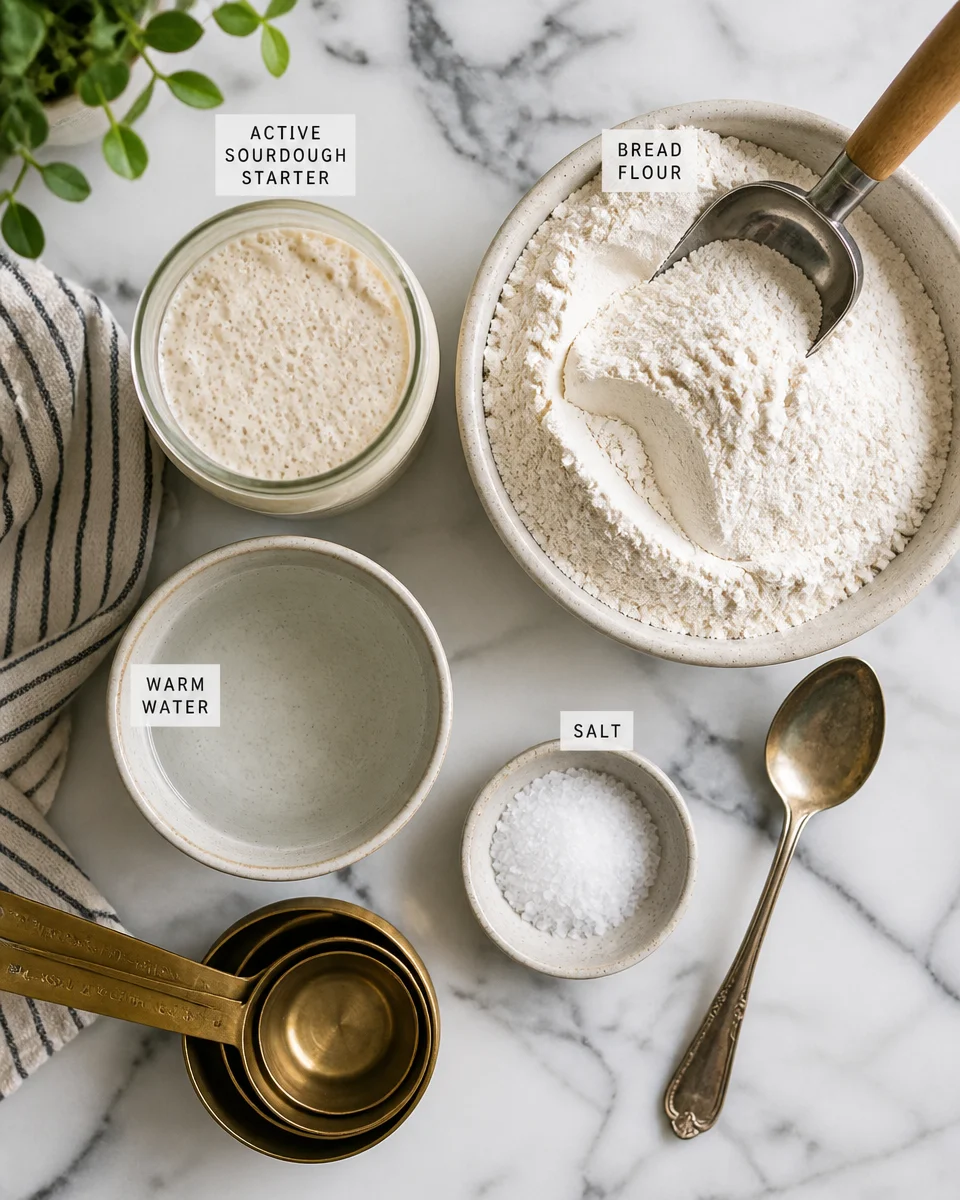
- Active sourdough starter: bubbly and recently fed
- Warm water: not hot, just comfortably warm
- Bread flour or all purpose flour: bread flour gives a chewier bite, but all purpose works
- Salt: do not skip it, it wakes up the flavor
Ingredient tips from my own trial and error:
If your starter is sluggish, your loaf will be too. I like to feed mine and wait until it looks airy and doubled. Flour wise, do not stress. I have made plenty of good loaves with plain all purpose flour. Bread flour helps the dough hold its shape a little better, but beginners should use what they have.
If you are in the mood for another no yeast bread day (like when your starter is not ready), this is a solid backup: easy Irish soda bread no yeast quick.
How To Make Sourdough Bread
This is my easy flow for Easy Sourdough Bread Beginner No Knead. No stand mixer. No kneading. Just mix, wait, fold a bit, wait again, then bake.
Step by step in plain language
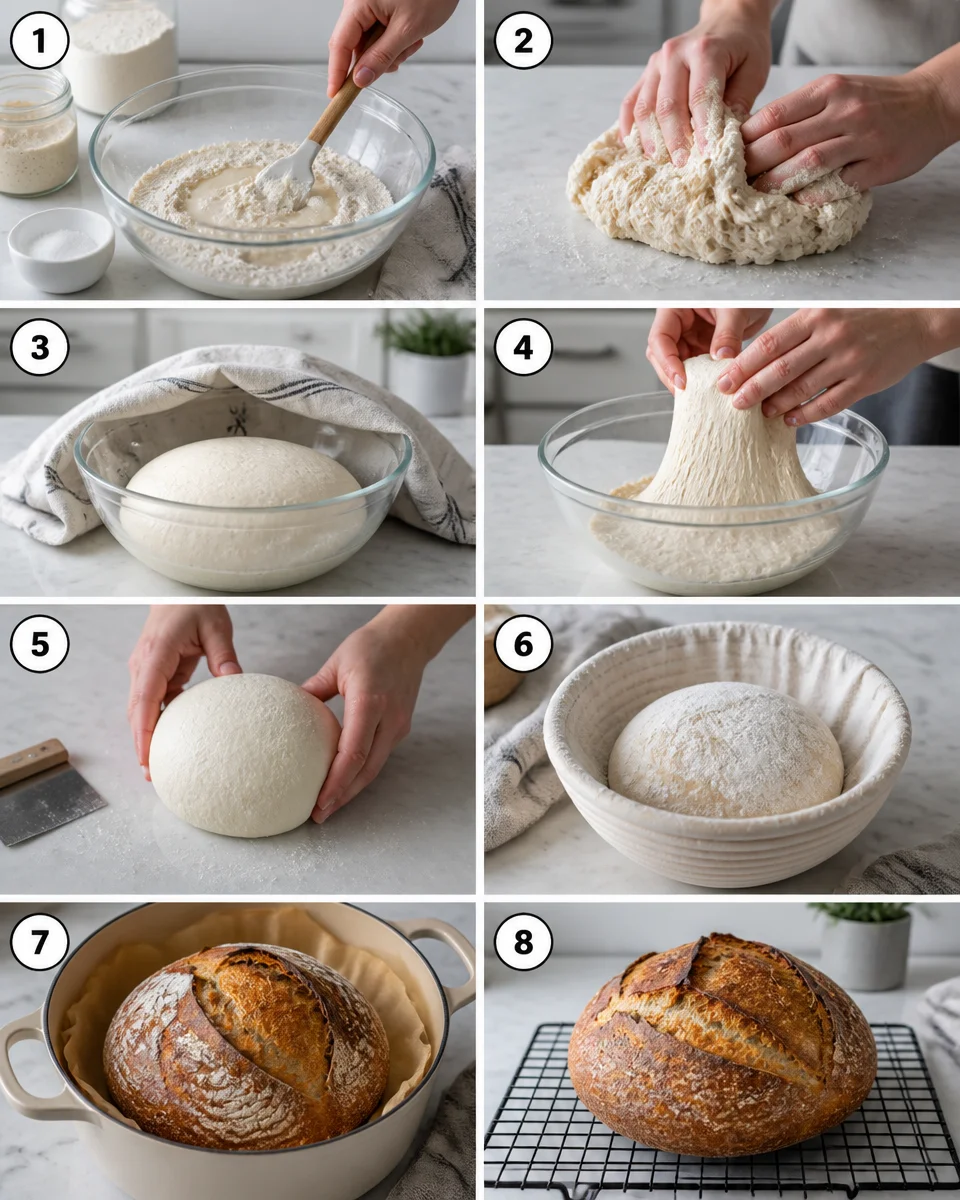
1. Mix the dough.
In a big bowl, stir together your water and active starter until it looks milky. Add flour and salt. Mix with a spoon or your hand until there are no dry patches. The dough will look shaggy and a little sticky. That is normal.
2. Let it rest.
Cover the bowl and let it sit for 30 to 45 minutes. This rest helps the flour hydrate and makes the dough easier to handle.
3. Do a few gentle folds.
Instead of kneading, you are going to do a simple fold. Wet your hand, grab one side of the dough, stretch it up a bit, and fold it over itself. Turn the bowl and repeat a few times. Do this once or twice more over the next hour if you can. If you forget, it will still be okay. This is beginner friendly for a reason.
4. Bulk rise (the long wait).
Cover the bowl and let the dough rise at room temperature until it looks puffier and smoother. In many kitchens this takes 6 to 10 hours. I usually mix in the afternoon and let it rise into the evening.
5. Shape it.
Lightly flour your counter. Turn out the dough and shape it into a round. You are basically tucking the edges under to create a bit of surface tension. It does not have to be perfect.
6. Second rise.
Place the dough seam side down in a towel lined bowl (or a basket if you have one). Cover and let it rise again until it looks slightly puffy, usually 1 to 2 hours at room temp, or overnight in the fridge for extra flavor.
7. Bake.
Heat your oven to 450 F with your Dutch oven inside. When it is hot, carefully place the dough into the pot. Cover with the lid and bake 20 minutes. Remove the lid and bake another 20 to 25 minutes until deep golden brown.
8. Cool before slicing.
This is the hardest part. Let it cool at least 1 hour. If you slice too early, the inside can turn a little gummy.
If you want a super simple baking win on a different day, this is a fun one to try too: easy beer bread 3 ingredient no yeast.
“I tried this as my first ever sourdough and it actually worked. The crust was crunchy, the inside was soft, and my family ate half the loaf while it was cooling. Your tips about waiting to slice saved me.”
Temperature Tips
Temperature is the sneaky part of sourdough. Not in a scary way, but it explains why your dough might rise fast one day and crawl the next.
How to adjust when your kitchen is too cold or too warm
If your kitchen is warm (around 75 to 80 F), your dough will ferment faster. Watch the dough, not the clock. Look for a puffier dough that jiggles a bit when you shake the bowl.
If your kitchen is cool (below 70 F), you have a few options:
Use slightly warmer water when mixing, not hot water. Think warm bath.
Move the bowl to a cozier spot like inside the turned off oven with the light on.
Give it more time. Sometimes it just needs an extra couple hours.
Also, the fridge is your friend. An overnight cold rise makes the dough easier to score and can deepen the flavor. I do that when I want fresh bread in the late morning without waking up at dawn.
Common Questions
Why is my sourdough dense?
Usually the starter was not active enough or the dough did not rise long enough. Give it more time and make sure your starter is bubbly and doubling after feeding.
Do I have to use a Dutch oven?
No, but it helps a lot with oven steam and crust. If you do not have one, bake on a preheated sheet pan and place a metal pan with hot water on the lower rack.
How do I know the dough is done rising?
It should look puffier and smoother, and feel airy when you gently press it. If it barely changes after hours, your kitchen may be cold or your starter may be weak.
Can I use all purpose flour only?
Yes. The loaf may spread a little more, but it still bakes up delicious. If it feels too wet, hold back a splash of water next time.
How should I store sourdough?
Once fully cool, keep it cut side down on a cutting board for the first day. After that, I like a paper bag or a loose bread bag. Avoid sealing it airtight right away or the crust can soften too much.
A cozy wrap up and a little nudge to try it
If you have been wanting to try Easy Sourdough Bread Beginner No Knead, this is your sign to just go for it. Keep it simple, watch your dough, and do not stress about making it pretty. For extra guidance, this Easy No-Knead Sourdough Bread Recipe (Beginner Friendly) is a great reference to compare timing and visuals. And if you end up with a sweet tooth while your loaf cools, stash a treat like delicious no bake gingerbread cheesecake cups recipe in the fridge for later. Bake the loaf, let it cool, and then enjoy that first warm slice with butter because you earned it. 
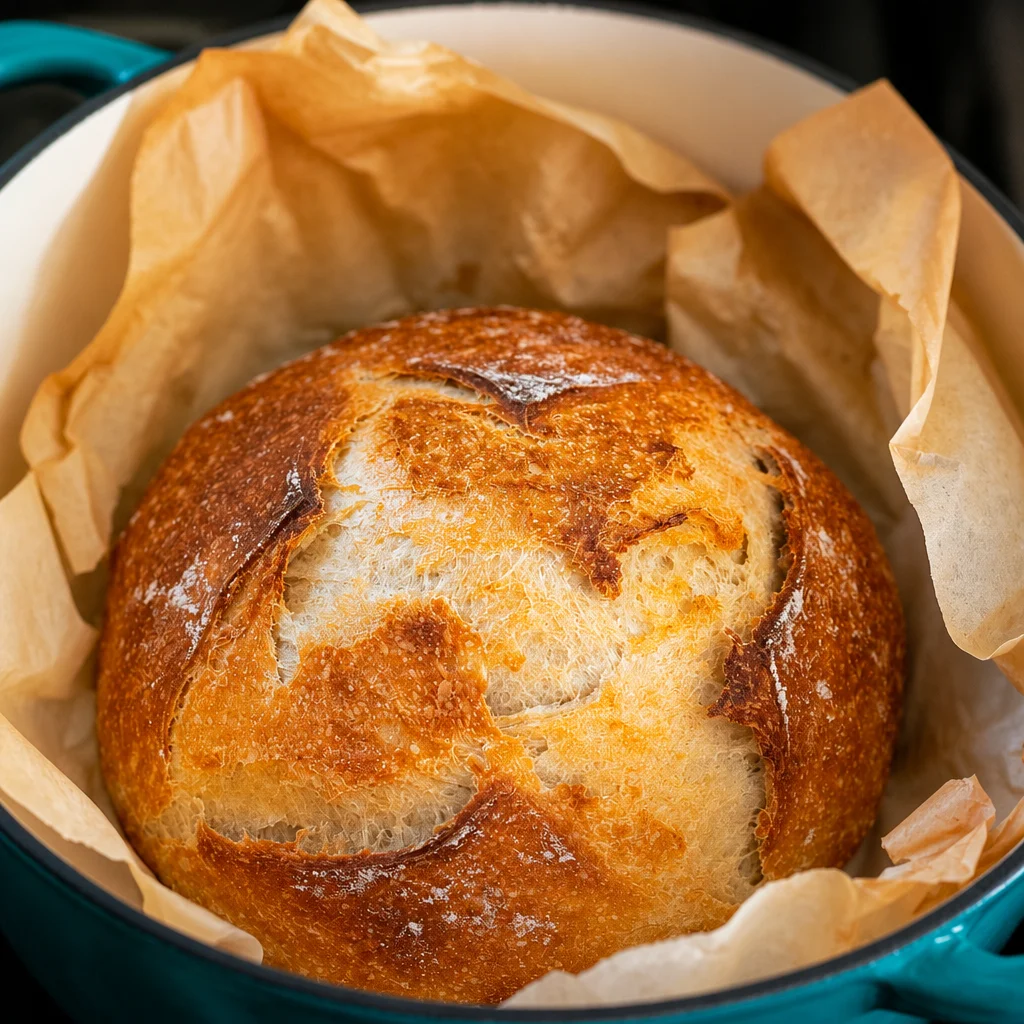
Easy Sourdough Bread Beginner No Knead
Ingredients
Method
- Mix the dough: In a big bowl, stir together your water and active starter until it looks milky. Add flour and salt and mix with a spoon or your hand until there are no dry patches. The dough will look shaggy and a little sticky.
- Let it rest: Cover the bowl and let it sit for 30 to 45 minutes.
- Do a few gentle folds: Wet your hand, grab one side of the dough, stretch it up a bit, and fold it over itself. Repeat this once or twice more over the next hour.
- Bulk rise: Cover the bowl and let the dough rise at room temperature until it looks puffier and smoother, usually taking 6 to 10 hours.
- Shape it: Lightly flour your counter, turn out the dough, and shape it into a round.
- Second rise: Place the dough seam side down in a towel lined bowl, cover it, and let it rise again until slightly puffy, usually 1 to 2 hours.
- Preheat the oven to 450°F with your Dutch oven inside.
- Carefully place the dough into the hot pot, cover with the lid, and bake for 20 minutes.
- Remove the lid and bake for another 20 to 25 minutes until deep golden brown.
- Cool before slicing: Let it cool at least for 1 hour before slicing.