
Easy German Pancake Oven Puffed Skillet is my go to move when I want something that feels special, but I do not want to stand at the stove flipping pancakes one by one. You know those mornings when everyone is hungry at the same time, the coffee is barely working, and you still want breakfast to be warm and impressive. This is the recipe I pull out because it looks like I tried way harder than I did. It puffs up tall, the edges get golden, and the middle stays soft and custardy. Plus it is all done in one skillet, which means fewer dishes and a happier me. 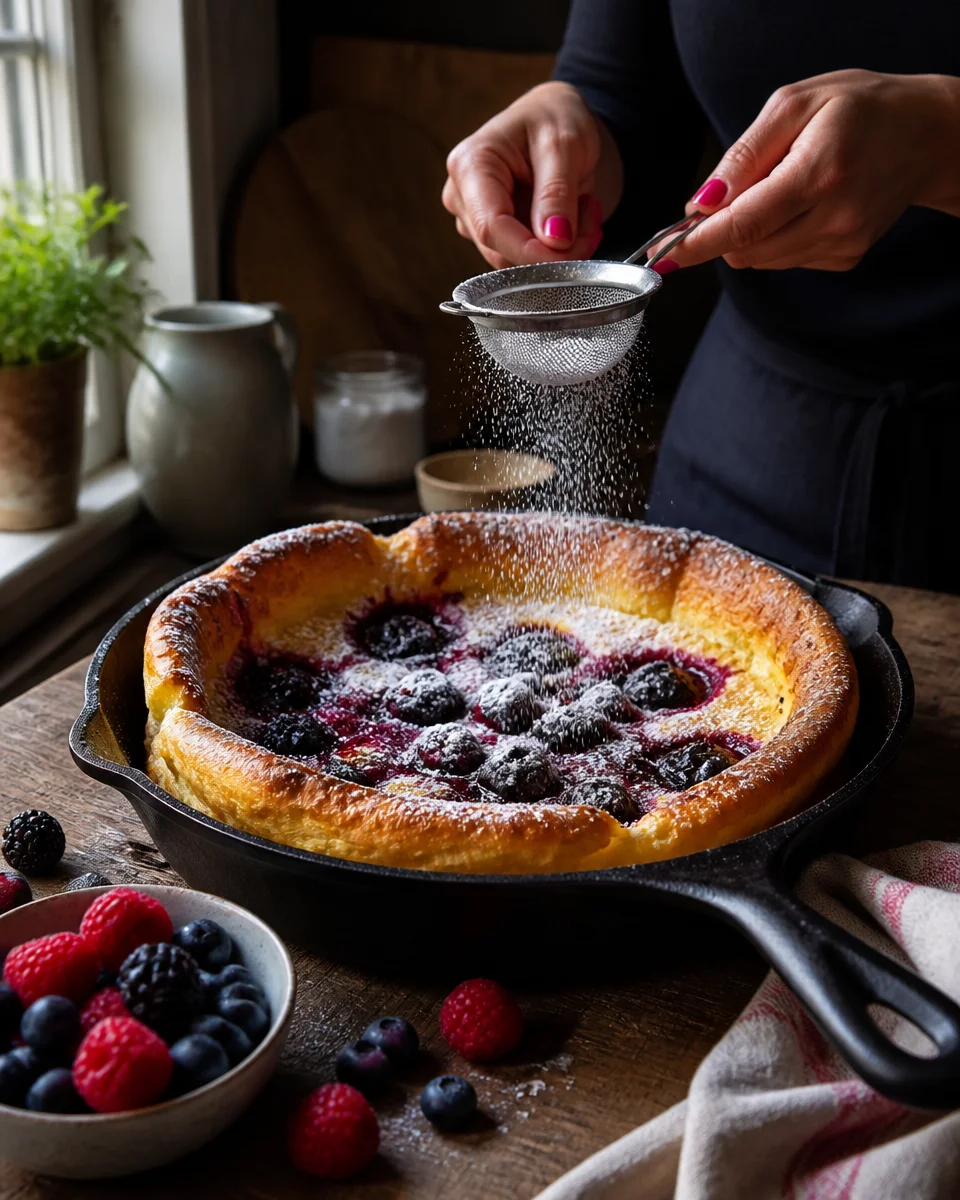
German Pancakes Recipe
This is the version I make most often because it uses basic pantry stuff and it is really forgiving. If you have eggs, milk, flour, and a little butter, you are basically set. The magic is that it bakes fast in a hot pan, and the batter climbs up the sides like it is showing off.
If you want a deeper dive on the whole Dutch baby style pancake, I have another helpful page you can check out here: easy dutch baby pancake one pan oven pancake. It is the same cozy vibe and also super beginner friendly.
What you will need
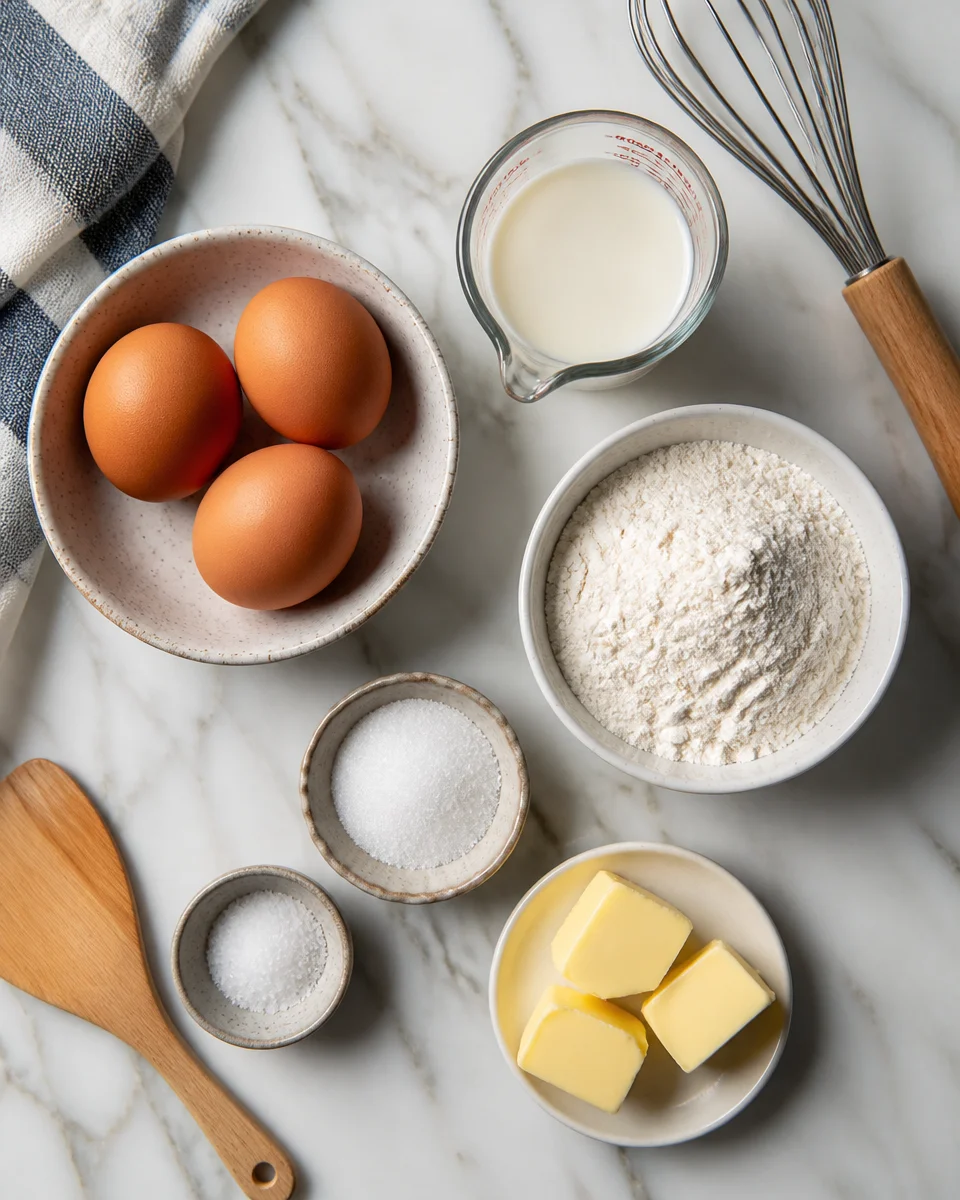
- 3 large eggs
- 1/2 cup milk (whole milk gives the nicest texture, but any milk works)
- 1/2 cup all purpose flour
- 1 tablespoon sugar (optional, but I like it)
- 1/2 teaspoon salt
- 3 tablespoons butter
- Optional add ins: vanilla, cinnamon, a little lemon zest
Skillet size: I usually use a 10 inch cast iron skillet. A 9 inch works too, it just puffs a bit taller. If you do not have cast iron, use an oven safe skillet or even a baking dish, but the skillet is my favorite because the edges brown so well.
;
How to Make German Pancakes from Scratch?
This part is almost laughably easy, which is probably why I love it. The only thing you have to respect is the heat. A hot oven plus a hot buttery skillet is what gives you that dramatic puff.
Simple step by step directions
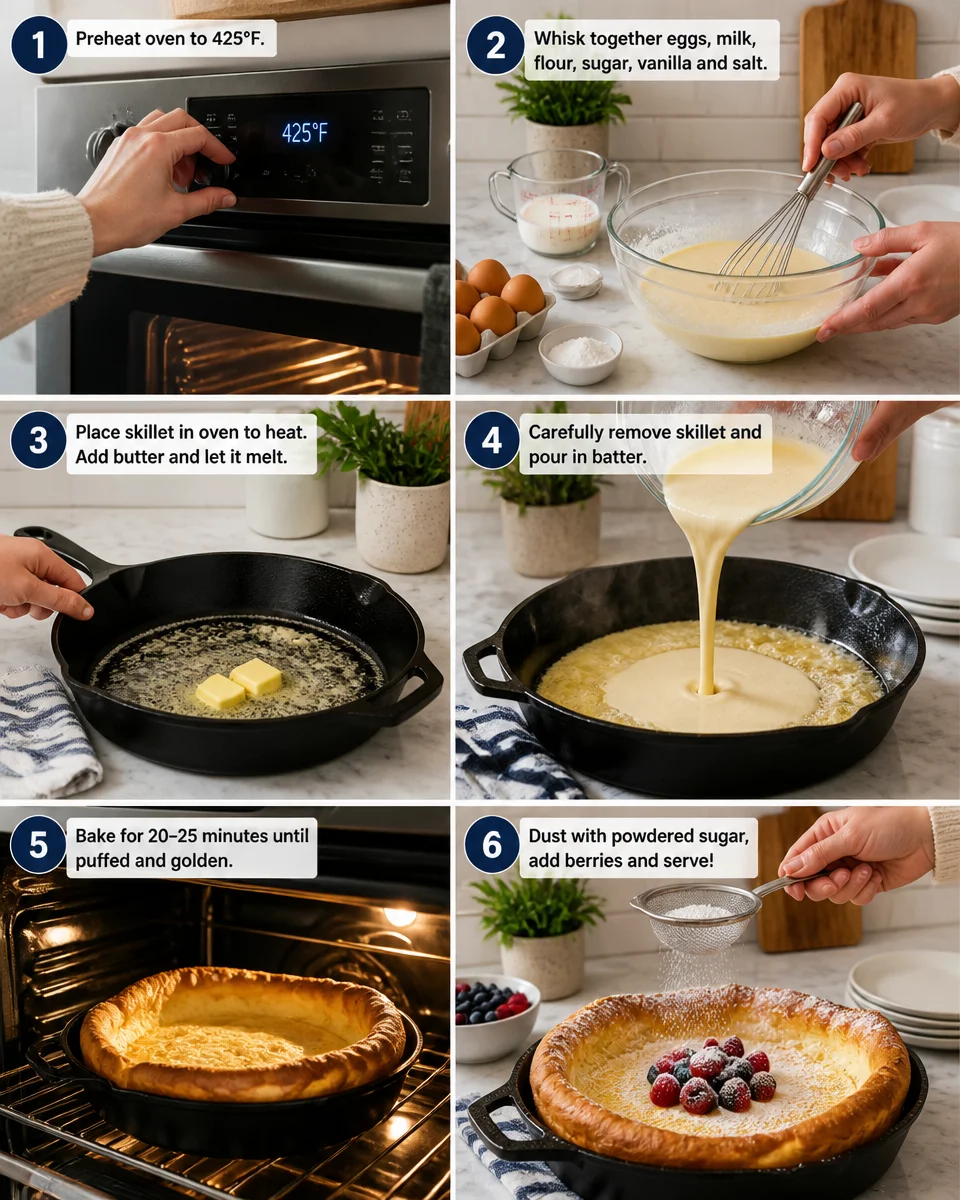
1) Heat the oven. Set your oven to 425 F. Let it fully preheat. This matters more than you think.
2) Warm the skillet. Put your skillet in the oven while it heats. You want it hot, not just warm.
3) Blend the batter. In a bowl, whisk eggs, milk, flour, sugar, and salt until smooth. I sometimes use a blender for 15 seconds when I am feeling lazy. A few tiny lumps are fine, but smoother batter puffs more evenly.
4) Add butter. Carefully pull the hot skillet out, add butter, and swirl until melted and foamy. The smell is already doing a lot here.
5) Bake. Pour the batter into the buttery skillet and pop it back in the oven. Bake 14 to 18 minutes. Do not open the oven door to peek. I know it is tempting.
6) Serve right away. It will deflate a bit as it sits. That is normal. Still delicious, just less dramatic.
One more fun thing: if you like quick visual recipes, this little story style version is handy on a phone: easy dutch baby pancake web story.
“I made this for my kids on a Saturday and they thought it was a restaurant pancake. The edges were crispy and the middle was like a warm vanilla custard. I am never going back to flipping pancakes.”
Why is it called a German Pancake?
This is one of those recipes with a name that makes people pause. It is often called a German pancake, Dutch baby, or oven pancake depending on where you grew up. From what I have read over the years, the “Dutch baby” name likely came from an American restaurant, and “Dutch” may have been a mix up of “Deutsch,” meaning German. So it stuck, and now we all get to enjoy a puffy oven pancake with a slightly confusing passport.
What I can say from experience is that the style is similar to popovers or a big baked crepe. It is eggy, it puffs fast, and it loves simple toppings. And honestly, once you taste it, you stop caring what it is called because you are too busy going back for another slice.
If you are building a cozy brunch table, you might also like pairing it with something sweet for later, like this cherry and chocolate treat: easy black forest cake german cherry chocolate. Not for breakfast every day, but for a celebration, absolutely.
Tips and Tricks
I have made this enough times to learn what helps and what messes it up. Here are the things I would tell a friend if they were standing in my kitchen holding a whisk.
Use a hot pan. This is the big one. A cold skillet means less puff and more sad flat pancake.
Room temp ingredients help, but do not stress. If your eggs and milk are not ice cold, great. If they are, it still works. It just might puff a tiny bit less.
Do not overbake. You want it puffed and golden, not dry. If the edges are deep golden and the center looks set but still soft, pull it.
Do not open the oven door. The puff is basically steam and heat doing a balancing act. Let it do its thing.
Cast iron is your friend. It holds heat like a champ and makes the edges extra crisp.
And since this is a one pan kind of morning, if you ever want another low effort breakfast for a crowd, these are great too: easy and delicious sheet pan pancakes for happy mornings. Different texture, same “I fed everyone without losing my mind” energy.
Serving Suggestions
This is where you can make it feel totally different every time. The base pancake is lightly sweet, so it works with classic toppings and even a few savory twists.
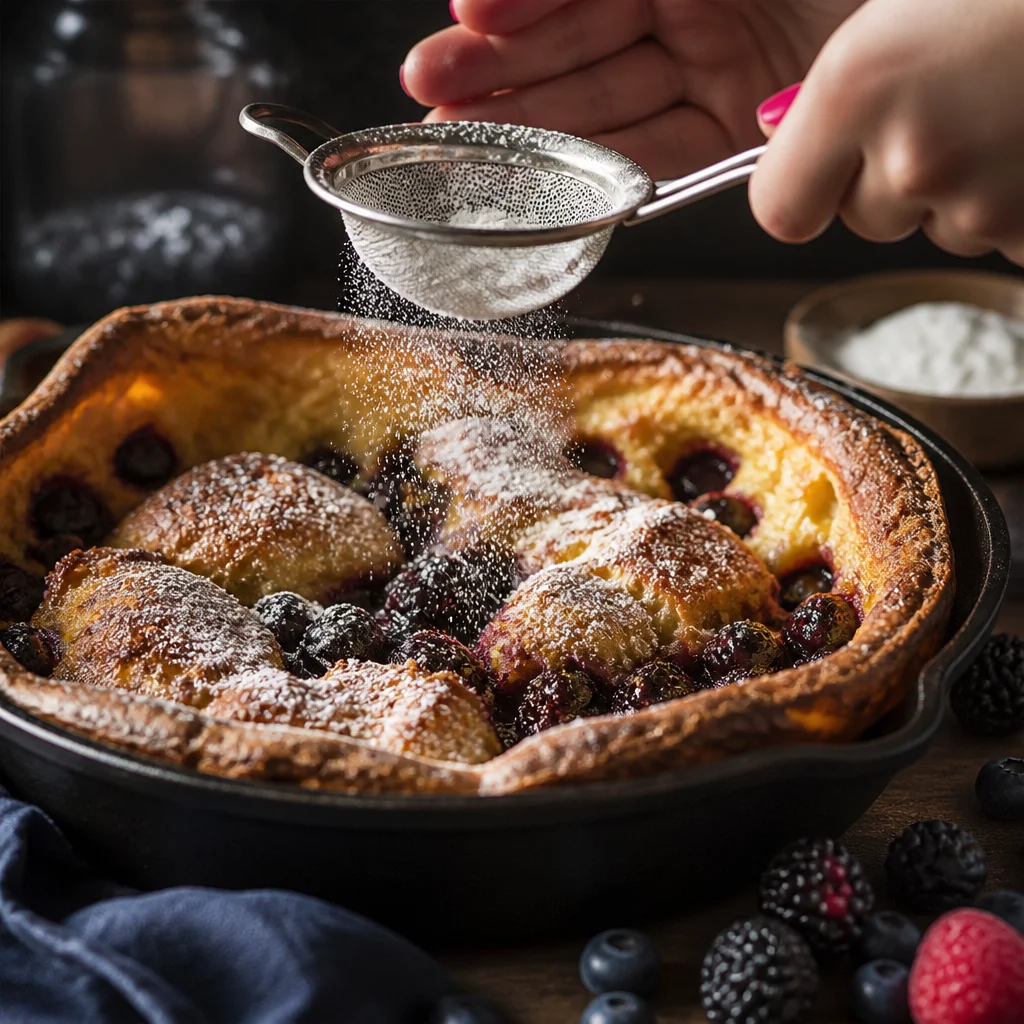
- Powdered sugar and lemon for that simple bright flavor
- Maple syrup and butter because it is a classic for a reason
- Sliced strawberries or blueberries
- Apple slices cooked in butter and cinnamon
- Greek yogurt and honey for a little tang
- Nut butter and bananas when you want it filling
- Savory idea: crispy bacon and a little grated cheese
I usually bring the skillet right to the table because it looks fun and rustic. Just remind people the handle is hot. I have learned that lesson the hard way and I would like you to skip that experience.
If you are doing a full weekend spread and want something savory later in the day, this skillet dinner is a totally different vibe but still super satisfying: easy blackened catfish southern cajun skillet.
Common Questions
Can I make the batter ahead of time?
Yes, you can whisk it and keep it in the fridge for up to about 12 hours. Give it a quick whisk again before baking. You might lose a little puff, but it is still tasty.
Why did my pancake not puff up?
Usually the oven was not hot enough, the skillet was not preheated, or the oven door got opened early. Also make sure your baking time is not too short.
What is the best pan if I do not have cast iron?
Any oven safe skillet works. A metal baking dish works too. Just avoid anything with a handle that is not oven safe.
Can I make it gluten free?
You can try a 1 to 1 gluten free flour blend. The texture may be a bit different, but it generally still bakes up nicely.
How do I store leftovers?
Wrap and refrigerate for up to 2 days. Reheat in the oven or toaster oven so the edges crisp back up a bit. Microwave works, but it gets softer.
A cozy ending and a little push to try it
If you want an impressive breakfast with minimal work, Easy German Pancake Oven Puffed Skillet is the move. It is quick, it is one pan, and it gives you that big golden puff that makes everyone look up from their phones. I hope you try it soon, and if you do, top it with whatever makes you happiest and eat it while it is warm. For another solid version to compare ideas and timings, I have also used tips from Best Ever German Oven Pancakes – The Recipe Critic when I was testing bake times in different ovens. Now go heat that skillet and let breakfast do the showing off for you.

More Recipes to Try
If you are planning another homemade meal, these recipes are worth exploring next: Easy Dutch Baby Pancake — Puffed Oven Skillet, Easy Ube Pancakes — Purple Fluffy Breakfast, Easy Breakfast Potatoes Recipe — Crispy Skillet and Easy Scrambled Pancakes — TikTok Viral Breakfast.
German Pancakes
Ingredients
Method
- Preheat your oven to 425°F (220°C).
- Place your skillet in the oven to warm it up.
- In a bowl, whisk together the eggs, milk, flour, sugar, and salt until smooth. Using a blender for 15 seconds is an option for a smoother batter.
- Take the hot skillet out of the oven, add the butter, and swirl it until melted.
- Pour the batter into the buttery skillet and return it to the oven.
- Bake for 14 to 18 minutes. Avoid opening the oven door to check during baking.
- Remove from the oven and serve immediately. Expect it to deflate slightly as it sits.