
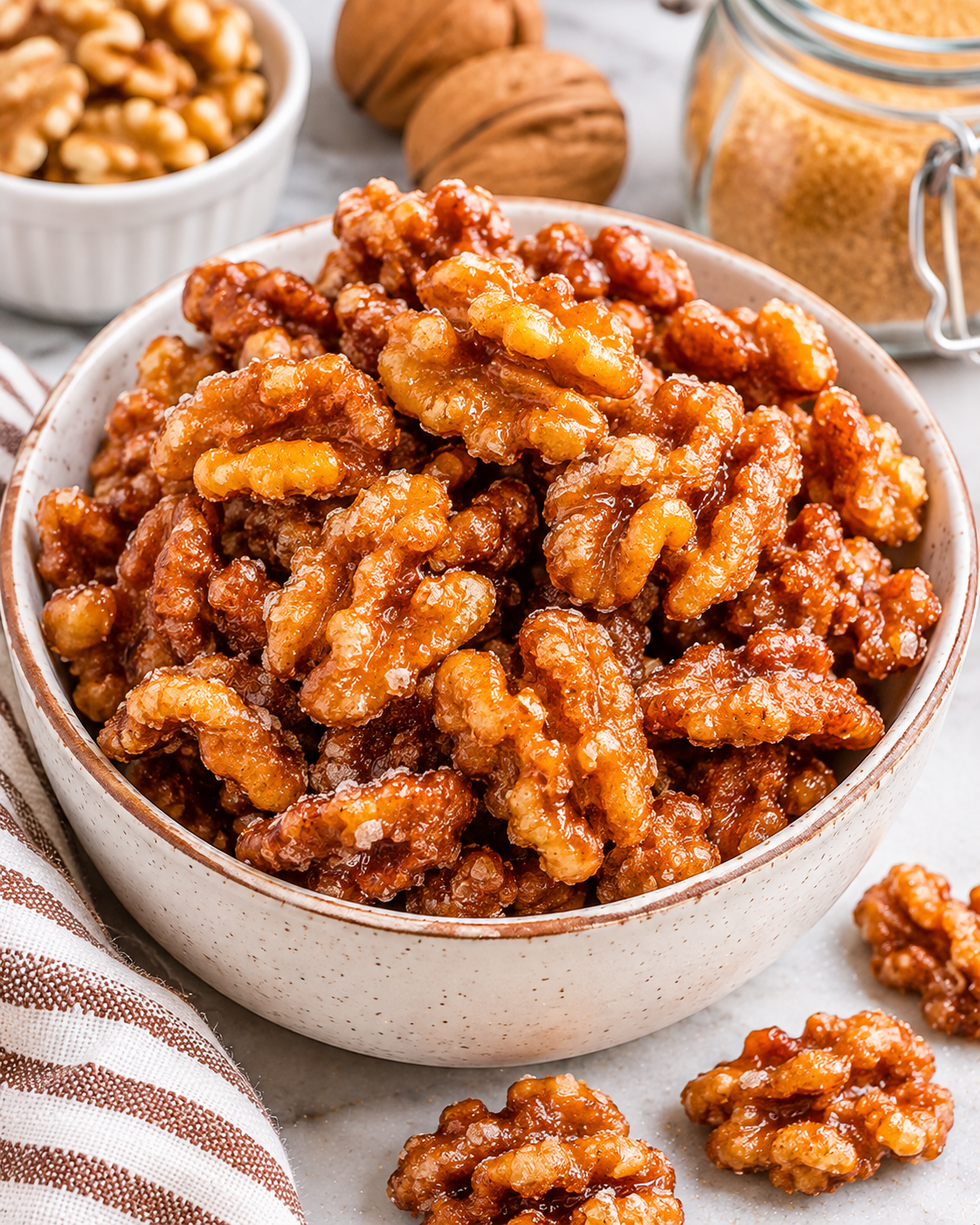
There’s something irresistible about a handful of sweet, crunchy walnuts coated in a delicate layer of caramelized sugar. This Easy Candied Walnuts Recipe transforms ordinary walnuts into a delicious homemade treat with a glossy coating, a satisfying crunch, and just the right balance of sweetness and nutty flavor.
What I especially love about these stovetop candied walnuts is how little effort they require. You don’t need an oven, complicated candy-making equipment, or a long list of ingredients. A skillet, a few pantry staples, and a little attention are all it takes to create a batch of beautifully glazed walnuts.
They’re also incredibly versatile. I enjoy keeping them on hand for topping salads, adding crunch to yogurt, decorating desserts, or serving alongside cheese and crackers. Whether you’re preparing a quick snack, putting together a holiday appetizer board, or making a homemade food gift, these candied walnuts are a wonderful recipe to have in your collection.
Why You’ll Love This Easy Candied Walnuts Recipe
Homemade candied walnuts offer the perfect combination of simplicity and flavor. The natural richness of walnuts pairs beautifully with a sweet sugar coating, while a little salt helps balance everything.
Unlike some candied nut recipes that require a long baking time, this stovetop version develops its coating directly in a skillet. The sugar melts, coats the walnuts, and forms a crisp shell as the nuts cool.
The result is a snack that feels special without requiring much preparation. It’s especially convenient when you need something sweet for unexpected guests or want to add a finishing touch to a simple dish.
The Secret to Perfectly Crunchy Candied Walnuts
The most important part of making candied walnuts is understanding how the sugar behaves as it heats. Sugar and water initially form a syrup, which gradually becomes more concentrated as the moisture evaporates.
Depending on the temperature and how the mixture is stirred, the sugar may briefly appear dry or grainy. This happens when sugar crystals form around the walnuts, and it’s a normal stage in some stovetop candying methods.
With careful heat control, the coating can become smoother and more caramel-like as the sugar continues to heat. The exact appearance depends on the sugar mixture, but the goal is an even coating that hardens as the walnuts cool.
I recommend watching the pan closely rather than relying entirely on cooking time. Sugar can change from golden and fragrant to overly dark surprisingly quickly, especially toward the end.
Why the Stovetop Method Works So Well
The stovetop method is particularly useful because it gives you direct control over the sugar coating. You can monitor the syrup’s consistency, adjust the heat when necessary, and remove the walnuts as soon as they’re evenly coated.
It also avoids the longer oven time associated with some traditional candied nut recipes. This makes it a practical choice when you’re preparing a salad, dessert, or appetizer shortly before serving.
The key is using moderate heat and keeping the walnuts moving so the sugar distributes evenly. Once the coating is ready, transferring the nuts to parchment helps prevent them from sticking together in one large cluster.
Choosing the Best Walnuts
Fresh, good-quality walnuts make a noticeable difference in this recipe. Because walnuts contain natural oils, they can develop unpleasant flavors when stored improperly or kept for too long.
Look for walnuts that smell pleasantly nutty rather than sharp, stale, or paint-like. Their texture should be firm, without signs of excessive moisture or deterioration.
Walnut halves create attractive individual pieces, making them particularly useful for salads and gift jars. Larger broken pieces also work well, although very small fragments may cook more quickly and become harder to separate.
If you have a large bag of walnuts, storing the unused portion in the refrigerator or freezer can help maintain freshness. This is especially useful when you don’t bake with nuts regularly.
Can You Use Only White Sugar?
Yes, you can make candied walnuts using granulated sugar without brown sugar. The finished coating will have a cleaner, more straightforward sweetness and may appear slightly lighter in color.
Brown sugar contributes additional caramel-like flavor, but it isn’t essential to creating a crisp sugar coating. Both versions can be delicious when the sugar is heated carefully.
I prefer the combination of white and brown sugar because it adds depth without overpowering the walnuts. If you’re using only granulated sugar, vanilla and a little salt can help round out the flavor.
How to Make Candied Walnuts on the Stovetop
Making stovetop candied walnuts is straightforward, but the sugar mixture requires your attention. The coating changes consistency as it cooks, and understanding those changes helps prevent burning or unevenly coated nuts.
The complete ingredient quantities and preparation instructions are provided in the recipe card. These additional tips explain what to look for during cooking and how to achieve the best texture.
Preparing the Skillet and Cooling Surface
Before heating the sugar, it’s helpful to have your cooling surface ready. Candied walnuts need to be transferred from the skillet promptly once the coating reaches the desired consistency.
Parchment paper provides a convenient nonstick surface and makes separating the finished nuts easier. A large baking sheet gives the walnuts enough room to cool without forming oversized clusters.
A wide, heavy-bottomed skillet is particularly useful because it distributes heat more evenly. Nonstick cookware can also work, provided it’s suitable for the cooking temperature and used according to the manufacturer’s recommendations.
I recommend keeping a heat-resistant spatula nearby throughout the process. Once the syrup begins thickening, you’ll want to stir and transfer the walnuts without searching for additional equipment.
Understanding the Sugar Coating
As the sugar mixture heats, the sugar dissolves into the water and forms a syrup. The syrup becomes thicker as moisture evaporates, gradually coating the walnuts.
In some batches, the coating may become cloudy or grainy as sugar crystals form. This isn’t necessarily a mistake, and it can be part of the process of creating a crunchy coating.
Continued gentle heating may help some of the crystallized sugar melt again, producing a smoother finish. However, excessive heat can cause the sugar to darken too quickly or burn.
The finished walnuts should have an even coating without large amounts of loose sugar remaining in the pan. Their aroma should be pleasantly toasted and sweet rather than sharp or bitter.
Why Stirring Matters
Stirring helps distribute the sugar mixture around the walnuts and reduces the chance of individual pieces sitting against an overheated section of the skillet.
As the coating thickens, the walnuts can begin sticking together. Keeping them moving helps prevent large clusters from forming before they’re transferred to the cooling surface.
The most important thing is maintaining control of the heat. If the mixture begins darkening too quickly, reducing the temperature or briefly removing the skillet from the burner can help.
Be careful when handling hot sugar because it can cause serious burns. Use a heat-resistant utensil and avoid touching the coating until the walnuts have cooled completely.
Cooling Candied Walnuts for Maximum Crunch
The cooling stage is essential because the sugar coating continues to harden as its temperature drops. Walnuts that feel slightly sticky immediately after cooking may become much crisper once fully cooled.
Spread the nuts in a relatively even layer and separate larger clusters while the coating is still workable, using a utensil rather than your fingers. This makes them easier to serve and store later.
Allow the walnuts to cool completely before transferring them to a container. Trapping residual warmth can create condensation, which may soften the coating.
For a cozy meal before enjoying these sweet walnuts as a snack, try this comforting Crockpot Lasagna Soup. Its rich, savory flavors pair nicely with a fresh salad finished with candied walnuts.
Tips and Tricks for Perfect Candied Walnuts
Candied walnuts are easy to make once you become familiar with how sugar behaves in a hot skillet. Most problems come from excessive heat, uneven stirring, or storing the nuts before they’ve cooled completely.
These practical tips can help you achieve a more consistent coating and avoid common mistakes.
Use Moderate Heat
Moderate heat gives the sugar time to dissolve and coat the walnuts without darkening too quickly. High heat can cause the syrup to burn before the nuts are evenly coated.
A heavy-bottomed skillet can make temperature control easier because it distributes heat more evenly. Thin pans may develop hot spots that cause sections of the sugar mixture to cook faster.
If the coating begins turning very dark or smelling bitter, remove the skillet from the heat. Burnt sugar can’t be restored to its original flavor, so it’s better to stop before the coating becomes excessively dark.
Keep the Walnuts Moving
Regular stirring is important for creating an even coating. It also helps prevent the walnuts from sticking to the skillet or forming large clusters.
As the sugar thickens, the mixture may become more difficult to stir. This is normal, but it’s also a sign that you should pay close attention to the coating.
A flexible, heat-resistant spatula is useful for gently turning the walnuts without breaking them into small pieces.
How to Fix Grainy Candied Walnuts
A grainy coating usually means the sugar has crystallized. This can happen as moisture evaporates and sugar crystals form around the walnuts.
Some crystallization is normal in candied nut recipes and can create a pleasantly crunchy finish. However, if you’re aiming for a smoother glaze, a small amount of additional water and gentle reheating may help dissolve the crystals.
Avoid adding too much water because the coating will need additional time to thicken again. Continue watching the heat carefully to prevent burning.
It’s also worth remembering that a slightly crystallized coating can still taste delicious. The appearance may differ from glossy candied walnuts, but the nuts can remain perfectly enjoyable.
Prevent Burnt Sugar
Sugar can burn quickly once most of the water has evaporated. The coating may change from golden to dark brown in a short period, especially if the skillet is too hot.
Pay attention to the aroma as well as the appearance. A pleasant caramel smell is desirable, while a sharp or bitter scent indicates that the sugar may be overheating.
Having your parchment-lined cooling surface ready allows you to transfer the walnuts immediately when they’re finished. This prevents them from continuing to cook in the hot skillet.
Make the Coating Extra Crunchy
For a crisp coating, the sugar needs to reach the appropriate concentration and then cool completely. Excess moisture can leave the walnuts sticky rather than crunchy.
A slightly thicker sugar coating can create additional crunch, but it also increases the risk of burning if the mixture is cooked too long. It’s best to focus on even coverage rather than simply adding more sugar.
The walnuts will firm up considerably as they cool. Avoid judging their final texture while they’re still warm.
How to Restore Soft Candied Walnuts
Candied walnuts can lose their crunch when exposed to humidity or stored in a container with trapped moisture. The sugar coating absorbs moisture from the surrounding air, causing it to soften.
If the nuts are still fresh and show no signs of spoilage, a brief period in a low-temperature oven may help dry the coating. Spread them on a parchment-lined baking sheet and watch closely to prevent additional browning.
Allow them to cool completely before checking their texture. The coating may become crisper as it cools, although severely sticky walnuts won’t always return to their original consistency.
I brought these to a friend’s game night and they vanished in ten minutes. Someone actually asked if I bought them from a bakery. That is when I knew this recipe was a keeper.
Delicious Flavor Variations for Candied Walnuts
The classic combination of sugar, vanilla, and walnuts is delicious, but this recipe also provides a wonderful starting point for experimenting with different flavors. Warm spices, citrus, chocolate, and a little heat can all create interesting variations.
I recommend keeping additional flavorings relatively subtle so they complement the walnuts rather than overwhelm their natural nuttiness.
Cinnamon Sugar Candied Walnuts
Cinnamon is one of the easiest additions because it blends naturally with the caramelized sugar. It gives the walnuts a warm aroma that works especially well for holiday snacks and fall desserts.
These cinnamon candied walnuts are delicious sprinkled over oatmeal, baked apples, or vanilla ice cream. They also make a lovely addition to homemade gift baskets.
For an extra layer of flavor, a tiny amount of nutmeg can complement the cinnamon. Just keep stronger spices restrained so the coating doesn’t become overpowering.
Maple Candied Walnuts
Maple flavor pairs beautifully with walnuts because both have warm, earthy notes. A little maple extract can add flavor without substantially changing the sugar mixture’s moisture balance.
Pure maple syrup is another option, although replacing part of the sugar or water with syrup can change how the coating sets. A maple-based version may be slightly stickier unless the proportions and cooking method are adjusted.
Maple candied walnuts are particularly delicious on roasted squash, sweet potatoes, and autumn salads.
Sweet and Spicy Candied Walnuts
A small pinch of cayenne pepper creates a sweet-and-spicy variation that’s especially good for savory dishes. The gentle heat balances the caramelized sugar and makes the walnuts more interesting.
Chili powder can also work, depending on the blend. Choose one without excessive salt or strong savory seasonings if you want the sweet flavor to remain prominent.
I like the idea of serving spicy candied walnuts with sharp cheddar, aged Gouda, or a creamy blue cheese. The combination of sweetness, heat, and savory richness is particularly appealing.
Pumpkin Spice Candied Walnuts
Pumpkin pie spice creates a warm seasonal flavor with notes of cinnamon, ginger, nutmeg, and cloves. It’s an easy way to turn classic candied walnuts into a fall-inspired snack.
These walnuts are delicious on pumpkin desserts, baked oatmeal, or a bowl of vanilla yogurt. They also make a thoughtful addition to Thanksgiving appetizer boards.
Because pumpkin spice blends vary, start with a modest amount. You can always adjust the seasoning in a future batch to suit your preferences.
Espresso Candied Walnuts
A little espresso powder adds a deeper, slightly bitter flavor that balances the sweetness of the sugar coating. It creates a sophisticated variation that pairs especially well with chocolate desserts.
Espresso candied walnuts are delicious over brownies, chocolate ice cream, or coffee-flavored desserts. Their flavor is richer than the classic version without requiring a complicated preparation.
I recommend using a small amount of finely ground instant espresso powder so it blends evenly into the coating.
Chocolate-Dipped Candied Walnuts
Chocolate-dipped candied walnuts are a lovely option when you want something that feels more like homemade candy. The combination of crisp sugar, crunchy walnuts, and smooth chocolate creates a delicious contrast.
Dark chocolate is particularly good because its slight bitterness balances the sweet coating. Milk chocolate and white chocolate can also work if you prefer a sweeter finish.
Allow the candied walnuts to cool completely before adding melted chocolate. This helps the chocolate set properly and prevents the sugar coating from becoming unnecessarily soft.
Creative Ways to Use Candied Walnuts
Once you have a batch of homemade candied walnuts, there are plenty of ways to enjoy them beyond eating them straight from the container. Their sweet crunch makes them useful for adding texture to both savory and sweet dishes.
I especially love how a small handful can make an ordinary salad or dessert feel more thoughtfully prepared.
Add Them to Fresh Salads
Candied walnuts are a classic topping for salads because their sweetness balances bitter greens, tangy cheese, and acidic dressings. They also add a satisfying crunch that contrasts with softer ingredients.
A salad made with mixed greens, sliced pears, blue cheese, and a simple vinaigrette is particularly delicious. Apples, dried cranberries, and goat cheese are other excellent combinations.
For a more substantial meal, add grilled chicken or another protein. The candied walnuts provide just enough sweetness to make the salad feel special without turning it into a dessert.
If you’re preparing lunch ahead, this Tuna Egg Salad is another convenient option to serve alongside fresh greens.
Sprinkle Them Over Breakfast
Candied walnuts are wonderful for adding texture to breakfast dishes. A small handful can make plain oatmeal, Greek yogurt, or chia pudding feel more satisfying.
They also pair nicely with pancakes, waffles, and French toast. The crunchy coating contrasts beautifully with soft breakfast foods.
Because the walnuts are already sweetened, you may not need as much syrup or additional sugar. This helps keep the flavors balanced while still enjoying a delicious topping.
Build a Beautiful Cheese Board
Candied walnuts are a natural addition to cheese boards because they complement both mild and strongly flavored cheeses. Their sweetness pairs especially well with creamy Brie, tangy goat cheese, and aged cheddar.
Arrange them alongside fresh grapes, sliced apples, crackers, and a selection of cheeses. The different textures and flavors make the board more interesting.
For a casual gathering, add something savory and crunchy like these Air Fryer Fried Pickles. They provide a fun contrast to the sweet walnuts and creamy cheeses.
Use Them as a Dessert Topping
Candied walnuts make a delicious finishing touch for ice cream, brownies, cakes, and cheesecakes. Their crunchy texture adds contrast to creamy or soft desserts.
They’re especially good over vanilla ice cream with a little chocolate or caramel sauce. You can also sprinkle chopped candied walnuts over frosted cupcakes or dessert bars.
For a homemade candy-inspired dessert, try these Almond Joy Bars. The chocolate and coconut flavors pair beautifully with crunchy nuts.
Make Homemade Food Gifts
A jar of homemade candied walnuts makes a thoughtful gift for holidays, birthdays, or casual gatherings. The glossy coating and golden-brown color create an attractive presentation without elaborate decorating.
Allow the walnuts to cool completely before packaging them in clean, dry, airtight containers. A small label with the preparation date and a note about the walnut allergen is a useful finishing touch.
You can also combine them with other homemade treats in a gift basket. These Homemade Caramels are a lovely addition when you want a mixture of crunchy and chewy sweets.
Add Crunch to Baked Goods
Chopped candied walnuts can add texture to cookies, brownies, and dessert bars. They’re particularly delicious when sprinkled over a finished dessert or pressed into frosting.
If you’re adding them to batter before baking, remember that the sugar coating may soften or melt during cooking. This can change their texture compared with using them as a topping.
For the most noticeable crunch, I recommend adding candied walnuts after baking whenever the recipe allows.
How to Store Candied Walnuts
Proper storage is important because the sugar coating can absorb moisture from the air. When candied walnuts are cooled and stored correctly, they maintain their crisp texture much longer.
The main goals are keeping moisture out, protecting the nuts from heat, and preventing the natural oils in the walnuts from becoming stale.
Storing Candied Walnuts at Room Temperature
Allow the walnuts to cool completely before transferring them to an airtight container. Any trapped warmth can create condensation, which may soften the sugar coating.
Store the container in a cool, dry place away from direct sunlight and heat. For the best flavor and crunch, I recommend enjoying the walnuts within approximately two weeks.
If your kitchen is humid, the coating may soften sooner. Checking the texture and aroma before serving is always a good idea.
Can You Refrigerate Candied Walnuts?
Refrigeration can help protect the natural oils in walnuts from becoming rancid, but it may also introduce moisture problems if the container isn’t properly sealed. Condensation can soften the sugar coating when cold nuts are exposed to warm, humid air.
If you choose to refrigerate them, use a tightly sealed, moisture-resistant container. Allow the container to come closer to room temperature before opening it to reduce condensation.
For short-term storage in a cool, dry kitchen, an airtight pantry container is often the simplest option.
Freezing Candied Walnuts
Candied walnuts can be frozen for longer storage, although the coating’s texture may change slightly after thawing. Freezing is particularly useful when preparing homemade gifts or holiday snacks ahead of time.
Place the completely cooled walnuts in a freezer-safe airtight container or bag, removing as much excess air as possible. For the best quality, use them within approximately two months.
When ready to enjoy, allow the sealed container to warm gradually before opening. This helps reduce condensation on the sugar coating and preserves as much crunch as possible.
How to Keep Candied Walnuts Crunchy
The best way to maintain crisp candied walnuts is to protect them from humidity. Even a well-cooked sugar coating can become sticky when exposed to moisture.
Avoid storing them near the stove, dishwasher, or other sources of heat and steam. A cool, dry pantry is generally a better choice.
If the coating becomes slightly soft, gentle reheating in a low oven may help. Always cool the nuts completely before storing them again.
Frequently Asked Questions About Candied Walnuts
Can I use pecans or almonds instead?
Yes, this stovetop candying method can also work with pecans, almonds, and cashews. However, different nuts have different sizes, moisture levels, and fat contents, so their cooking behavior may vary slightly. Pecans are a particularly convenient substitute because their texture and shape are similar to walnuts. Whichever nuts you choose, monitor the sugar coating carefully and avoid overheating them.
How long do candied walnuts stay fresh?
Candied walnuts generally maintain their best flavor and crunch for approximately two weeks when stored in an airtight container in a cool, dry environment. Humidity can shorten that period by making the sugar coating sticky or soft. For longer storage, freezing is an option, although some texture changes may occur after thawing. Always check for stale or rancid odors before serving, especially if the walnuts have been stored for an extended period.
Why did my sugar turn grainy and never smooth out?
A grainy coating usually means the sugar has crystallized as the syrup lost moisture. This can be a normal part of some stovetop candied nut methods, and the walnuts may still taste delicious. If you prefer a smoother finish, a small amount of water and gentle reheating may help dissolve some of the crystals. Keep the heat controlled because additional cooking can quickly turn the sugar too dark.
Can I make this without butter?
Yes, butter is optional in this candied walnuts recipe. It contributes richness and can influence the coating’s appearance, but sugar and water can still create a crisp shell around the nuts. Without butter, the finished walnuts may have a slightly different sheen and texture. The most important factors are controlling the heat and allowing the coating to cool completely.
What is the best way to avoid burning?
Use moderate heat and keep the walnuts moving as the sugar thickens. A heavy-bottomed skillet helps distribute heat more evenly and reduces the likelihood of hot spots. Watch for changes in color and aroma, removing the pan from the heat if the sugar begins darkening too quickly. Having a parchment-lined baking sheet ready allows you to transfer the walnuts immediately when the coating is finished.
A Sweet and Crunchy Treat Worth Making Again
This Easy Candied Walnuts Recipe is proof that a few simple ingredients can create something wonderfully satisfying. With their crisp sugar coating, rich walnut flavor, and optional warm spices, these homemade candied walnuts are a delicious addition to snacks, salads, desserts, and holiday gatherings.
I especially love how versatile they are. You can enjoy them straight from the jar, sprinkle them over breakfast, add them to a cheese board, or package them as thoughtful homemade gifts.
If you’d like to explore other approaches, take a look at these 5-Minute Candied Walnuts from Natasha’s Kitchen and this classic Candied Walnuts Recipe from Katie’s Cucina. Both offer additional inspiration for making this simple homemade treat.
Whether you’re preparing a quick snack or adding a special finishing touch to a favorite dish, candied walnuts are a wonderful recipe to keep on hand. Let them cool completely, store them in a dry airtight container, and enjoy their sweet crunch whenever the craving strikes.
More Recipes to Try
If you enjoy homemade candied nuts, try these Air Fryer Candied Pecans for another delicious sweet-and-crunchy snack.
You might also love these Ritz Cracker Treats or this Easy Cheerios Treats Recipe — Snack Mix. For another festive homemade dessert, try these Easy Christmas Rice Krispie Treats.

Candied Walnuts
Ingredients
Method
- Line a sheet pan or large plate with parchment paper for cooling the nuts.
- Put a nonstick skillet on medium heat. Add sugar, brown sugar, water, and butter. Stir as the sugar melts and starts to bubble.
- Toss walnuts into the pan, sprinkle in the salt and cinnamon, and stir to coat.
- Stir constantly until the syrup goes from thin to sticky, and it looks slightly grainy. This is normal.
- Continue stirring until the sugar re-melts and becomes glossy. As soon as they look evenly glazed, turn off the heat and stir in vanilla.
- Spread the nuts on the prepared parchment and separate them using a spatula. Let them cool completely.
- Once cool, break apart any clusters into bite-size pieces and store in an airtight container at room temperature.