
Celery doesn’t always get the attention it deserves. It’s often treated as a background ingredient in soups and casseroles, but it has a fresh, savory flavor that can be surprisingly satisfying when given a starring role.
A good homemade cream of celery soup recipe should be comforting without feeling overly heavy. The celery flavor should be noticeable but not harsh, and the soup should have a smooth, pleasant consistency that makes it enjoyable as a starter or a light meal.
Homemade cream of celery soup has a different appeal from the familiar canned version. It can offer a fresher celery character and a texture suited to eating by the bowl rather than simply using it as a casserole ingredient.
What Makes Homemade Cream of Celery Soup Different?
Cream of celery soup is known for its mild, savory flavor and creamy texture. Homemade versions can vary considerably, from smooth and velvety to slightly chunky and rustic.
The main advantage of a well-balanced homemade soup is that the celery remains recognizable without becoming overpowering. Its flavor should complement the soup’s richness rather than compete with it.
A Soup Worth Serving on Its Own
Cream of celery soup is often associated with canned condensed soup, but a homemade version can be appealing as a dish in its own right. Its delicate flavor works especially well when you want something comforting but not intensely seasoned.
A good bowl should feel satisfying without requiring a complicated garnish or accompaniment.
Celery Flavor Without Bitterness
Celery has a distinctive flavor that can range from mild and fresh to noticeably strong. The variety and condition of the celery can influence how it tastes in a finished soup.
A good cream of celery soup should have a pleasant savory character rather than an aggressive bitterness.
Why Celery Can Taste Bitter
Celery naturally contains compounds that contribute to its characteristic flavor. Some stalks taste stronger than others, particularly when the vegetable is mature or has been stored for a while.
The finished soup’s flavor depends on the celery and the other ingredients in the recipe.
Balancing the Savory Notes
Creaminess can soften celery’s sharper character, but it shouldn’t completely hide the vegetable. The best version tastes distinctly of celery while remaining gentle and comforting.
A soup that’s excessively salty or heavily seasoned can lose that delicate balance.
Smooth vs. Chunky Texture: What This Recipe Delivers
Cream of celery soup doesn’t have to be completely smooth. Some recipes have a velvety consistency, while others retain small pieces of celery for a more rustic texture.
The original recipe card should determine which description is accurate.
Smooth Cream of Celery Soup
A smooth version feels cohesive and creamy, with no unpleasant fibrous pieces. It can be especially appealing as a starter because of its delicate texture.
The soup should have enough body to feel satisfying without becoming pasty.
Chunkier Celery Soup
A chunkier version offers more noticeable vegetable texture. It may feel heartier, particularly when served as a light lunch.
The celery pieces should be tender enough to enjoy comfortably rather than stringy or tough.
How to Keep Creamy Soup from Separating
Creamy soups can sometimes develop an uneven texture, especially during storage or reheating. A soup that separates may look oily, grainy, or watery rather than smooth.
The exact cause depends on the recipe’s ingredients. Dairy-based soups can behave differently from soups thickened in another way.
Why Soup Can Become Grainy
Some creamy soups change texture when exposed to unsuitable temperatures or reheated repeatedly. The result may be less smooth than the freshly prepared version.
A good finished soup should have a consistent texture that feels pleasant on the palate.
Why Soup Can Become Too Thick
Creamy soups often thicken as they cool. Starch and other components can affect the consistency during refrigeration.
That change doesn’t necessarily mean something has gone wrong, but the stored soup may feel different from the freshly prepared dish.
Serving Cream of Celery Soup as a Meal or Starter
Cream of celery soup makes a lovely starter before a roasted chicken dinner or another savory main course. Its mild flavor is unlikely to compete with the rest of the meal.
For lunch, serve it alongside crusty bread or a simple sandwich. The combination feels comforting without being excessively heavy.
A Light Lunch
A bowl of creamy celery soup and a piece of bread can make a satisfying midday meal. A small salad can add freshness and texture.
A Dinner Starter
Cream of celery soup works well before a heartier main dish. Its delicate flavor creates a gentle beginning to the meal.
Can It Replace Condensed Cream of Celery Soup?
Homemade cream of celery soup and canned condensed cream of celery soup aren’t automatically interchangeable. Condensed soup is designed to be concentrated and may have a different thickness and salt level.
A homemade soup intended for eating by the bowl may contain more liquid and produce a different result when used in a casserole.
Why Concentration Matters
Casserole recipes often rely on condensed soup for both flavor and structure. A thinner homemade soup may change the finished consistency.
Only describe this recipe as a substitute for condensed cream of celery soup if its concentration has been verified.
Storage, Reheating, and Freezing
Refrigerate homemade cream of celery soup promptly at 40°F or below and use within three to four days. Store it in a covered container.
The soup may thicken or separate slightly during refrigeration, depending on its ingredients. Dairy-based versions can be particularly sensitive to freezing and thawing.
Freezing may work for some recipes, but the texture can become grainy or uneven after thawing. Reheat leftovers thoroughly to 165°F.

Frequently Asked Questions
Can Cream of Celery Soup Be Made Ahead?
Yes, many versions can be prepared ahead. The soup may thicken during refrigeration, and its texture can change slightly after reheating.
Can You Freeze Cream of Celery Soup?
Some versions freeze reasonably well, but dairy-based soups may separate or become grainy. The results depend on the recipe’s ingredients.
Is Homemade Cream of Celery Soup Condensed?
Not necessarily. A soup intended to be served by the bowl may have a different concentration from canned condensed soup.
Why Does My Celery Soup Taste Bitter?
Celery flavor varies naturally, and some stalks have a stronger bitter character. The balance of the soup’s other ingredients also affects how noticeable that bitterness becomes.
Final Thoughts
Homemade Cream of Celery Soup is a comforting way to appreciate a vegetable that’s often overlooked. Its gentle savory flavor and creamy texture make it suitable for a light lunch or a simple dinner starter.
The best version tastes distinctly of celery without being bitter and has a consistency that’s smooth and pleasant. It’s a lovely alternative when you want a homemade soup that feels familiar but a little different.
Cream of Celery Soup
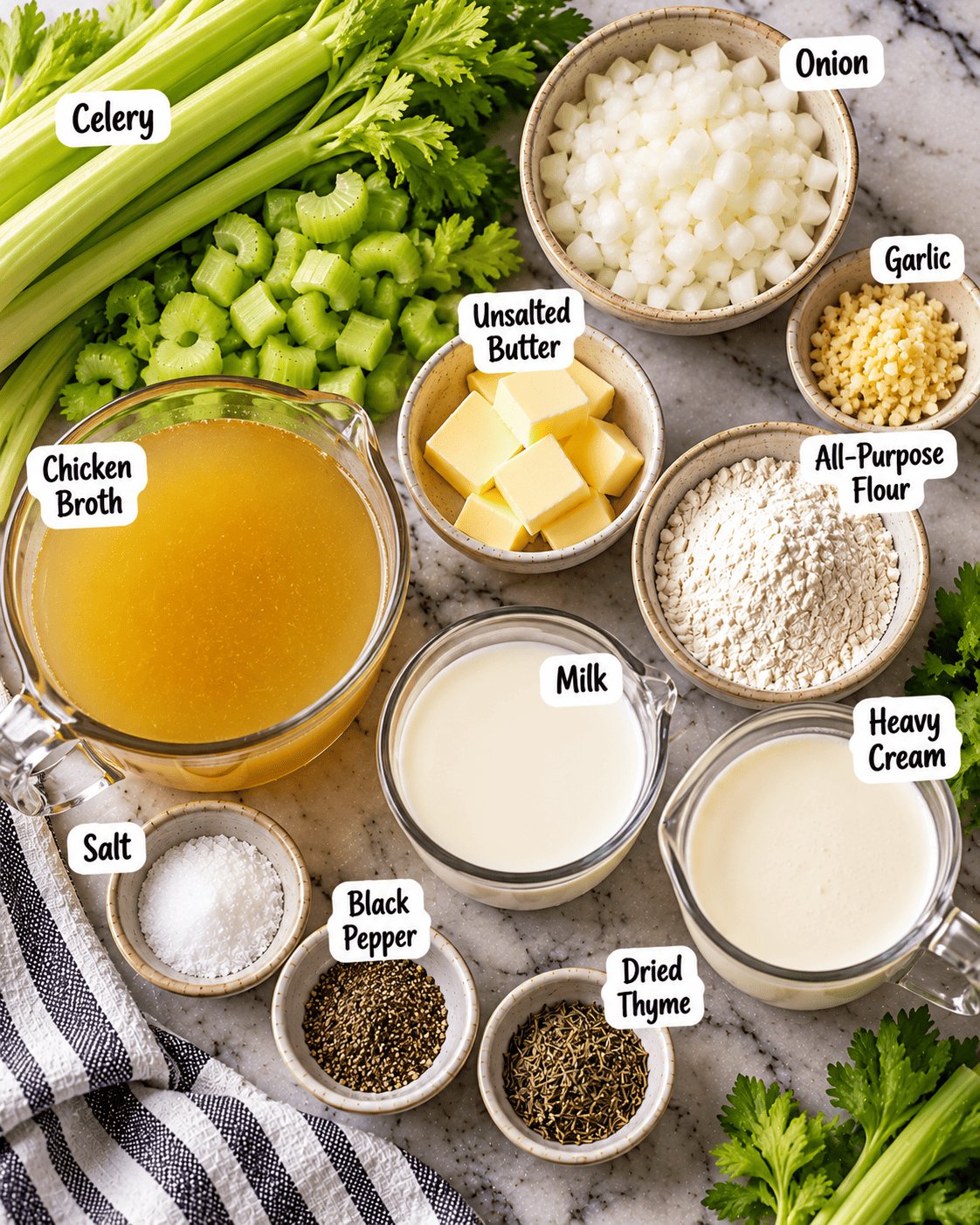
Ingredients
Method
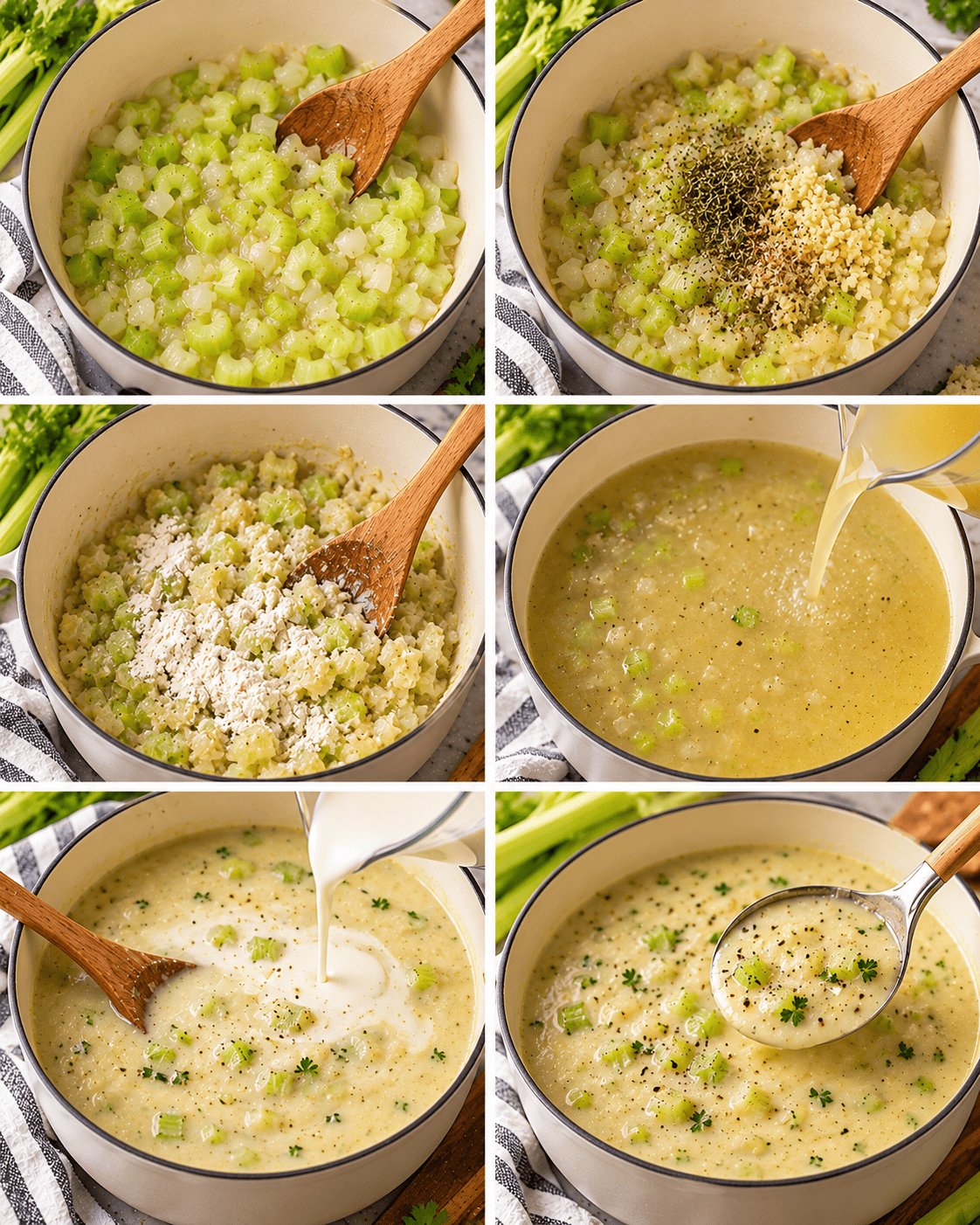
- Heat olive oil in a large pot over medium heat.
- Add diced onion and sauté until translucent, about 5 minutes.
- Stir in the chopped celery and cook for another 5 minutes until softened.
- Pour in the vegetable broth and bring to a simmer.
- Cook for 15-20 minutes until celery is tender.
- Using an immersion blender, blend the soup until smooth.
- Stir in the heavy cream and season with salt and black pepper to taste.
- Serve hot, optionally garnished with fresh herbs.