
Some Christmas candies are remembered as much for the tradition as for the taste. Divinity is one of those old-fashioned sweets that often brings back memories of holiday candy trays, family kitchens, and homemade gifts wrapped up for neighbors.
Good divinity candy has a distinctive texture. It’s light and airy, with a delicate sweetness and enough structure to hold its shape. It shouldn’t be wet and sticky, but it also shouldn’t feel like a hard piece of candy.
An old-fashioned divinity candy recipe can be a little particular about moisture and consistency. That’s part of its reputation. When the candy turns out well, though, it has a lovely texture that’s unlike fudge, caramel, or most other homemade sweets.
What Is Divinity Candy?
Divinity is a traditional American confection known for its fluffy, airy texture and sweet flavor. It’s often associated with Christmas and other special occasions.
Unlike chocolate fudge, divinity is generally pale in color and has a much lighter structure. Its texture is closer to a delicate, whipped confection than a dense candy.
The Classic Texture
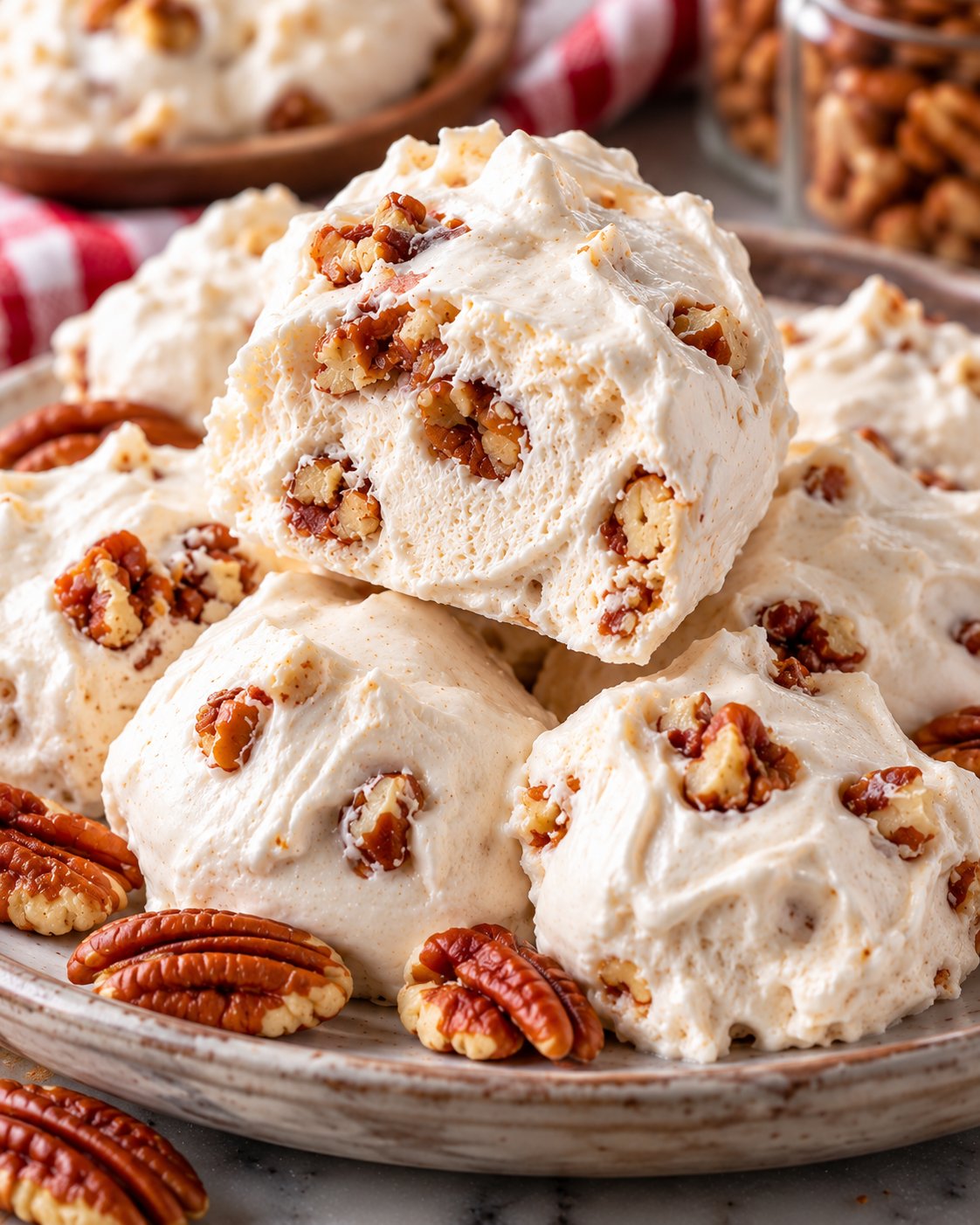
Well-made divinity should hold its shape while remaining light and pleasant to bite into. The surface may feel slightly dry, while the interior retains a softer, airy character.
The exact texture varies between recipes, but a wet, syrupy center usually isn’t the intended result. Divinity should feel like a finished candy rather than an unset mixture.
Divinity vs. Fudge
Fudge is usually dense, rich, and creamy, while divinity is lighter and more airy. Both are traditional homemade candies, but they have very different textures.
Some people use the term divinity fudge, although that doesn’t make divinity identical to ordinary fudge. The distinction is especially noticeable when you bite into each candy.
What Makes Divinity Set Properly?
Divinity’s texture depends on the way its sugar structure develops. Moisture and temperature both play important roles in the finished candy.
That sensitivity is why divinity sometimes has a reputation for being difficult. A batch can taste sweet and pleasant but still fail to hold the texture expected from traditional divinity.
Why Humidity Matters
Divinity is sensitive to moisture in the air. On a very humid day, the candy may remain sticky or take longer to develop the desired surface texture.
That doesn’t mean divinity is impossible to make whenever the weather is damp. It simply means environmental moisture can make consistent results more difficult.
A dry environment generally gives this type of candy a better chance of setting as intended.
Candy Temperature and Consistency
Candy-making temperatures influence the finished sugar structure. Small differences can affect whether divinity becomes too soft, too firm, or unpleasantly grainy.
The exact temperature targets belong in the tested recipe card. They shouldn’t be guessed or replaced with general advice, because divinity depends on precision.
Tips for Successful Divinity
The most useful thing to understand about divinity is what the finished candy should look and feel like. A properly set piece should be light, cohesive, and able to hold its shape.
Texture problems can develop even when the flavor seems fine. That’s why a batch that tastes good may still feel disappointing if it remains sticky or turns grainy.
Signs of Properly Set Candy
Finished divinity should be firm enough to handle without collapsing. It should have an airy bite rather than a syrupy or gummy center.
A little variation between pieces is normal in homemade candy. The important thing is that the texture remains pleasant and consistent.
Avoiding Graininess
Grainy divinity has a rough texture instead of the delicate, airy quality people expect. Sugar crystallization can influence that result.
The finished candy should feel smooth enough to melt pleasantly in the mouth, even though it isn’t creamy in the same way as fudge.
Why Sticky Divinity Happens
Sticky divinity may be affected by humidity, moisture, or the candy’s final sugar structure. It can also become tacky during storage if exposed to damp air.
A sticky batch isn’t necessarily a flavor failure, but it won’t have the traditional dry, light exterior.
Serving and Gifting Ideas
Divinity is especially attractive on a Christmas candy tray because its pale color contrasts with chocolate treats and darker confections. It also feels a little more traditional than many store-bought holiday sweets.
For edible gifts, divinity can be packaged in small boxes or tins once it’s properly set. The candy should be protected from moisture and kept in suitable conditions.
Holiday Candy Trays
A homemade candy assortment feels more interesting when it includes different textures. Divinity adds a light, airy option alongside denser sweets.
Its sweetness also means a small portion can be satisfying. A few pieces make a lovely addition to a holiday dessert table.
Packaging Homemade Divinity
Moisture protection is important when packaging divinity. Humid conditions can make the surface sticky and reduce its appeal.
Choose packaging that keeps the candy clean, dry, and protected from excessive handling. The finished pieces should remain separate enough to preserve their shape.
Storage and Make-Ahead Tips
Divinity generally stores best in an airtight container in a cool, dry place, provided the recipe’s ingredients and storage instructions permit room-temperature storage. Humidity can cause the candy to soften or become sticky.
Avoid assuming every divinity recipe has the same shelf life. Ingredients, moisture content, and packaging can all influence storage.
Freezing may work for some recipes, but condensation during thawing can affect the candy’s texture. For a gift or special occasion, the recipe’s tested storage guidance is the best reference.
Flavor Variations
Some divinity recipes include nuts, while others are plain. Pecans are a familiar addition in Southern-style versions, but they aren’t essential to every recipe.
Flavor extracts can also change the candy’s character. Any variation should preserve the light texture that makes divinity distinctive.
Frequently Asked Questions about Divinity Candy
Why Did My Divinity Candy Not Set?
Humidity, moisture, and the final sugar structure can all affect setting. If the candy remains sticky or collapses, it hasn’t developed the texture expected from traditional divinity.
Can You Make Divinity Candy on a Humid Day?
It may be possible, but high humidity can make the candy more difficult to set consistently. A dry environment is generally more favorable.
Is Divinity the Same as Fudge?
No. Divinity is typically light and airy, while fudge is denser and creamier. They belong to different styles of confectionery even though both are traditional homemade candies.
Final Thoughts
Old-Fashioned Divinity Candy Recipe is a lovely choice for anyone who enjoys traditional holiday sweets. Its airy texture and delicate appearance make it stand out on a candy tray.
Divinity rewards attention to texture and moisture, but the finished candy is worth the care. The complete recipe details are in the card below.
Old-Fashioned Divinity Candy
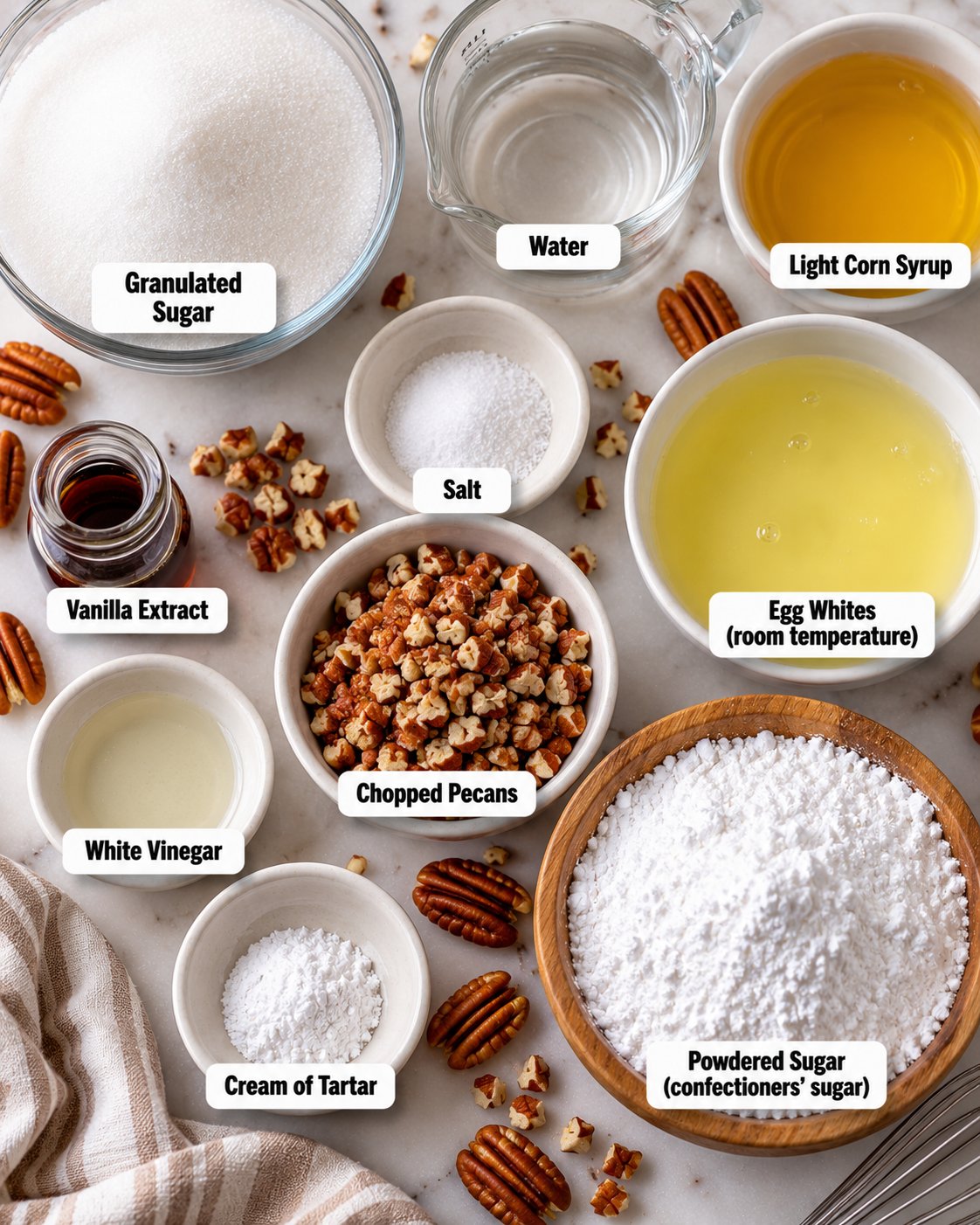
Ingredients
Method
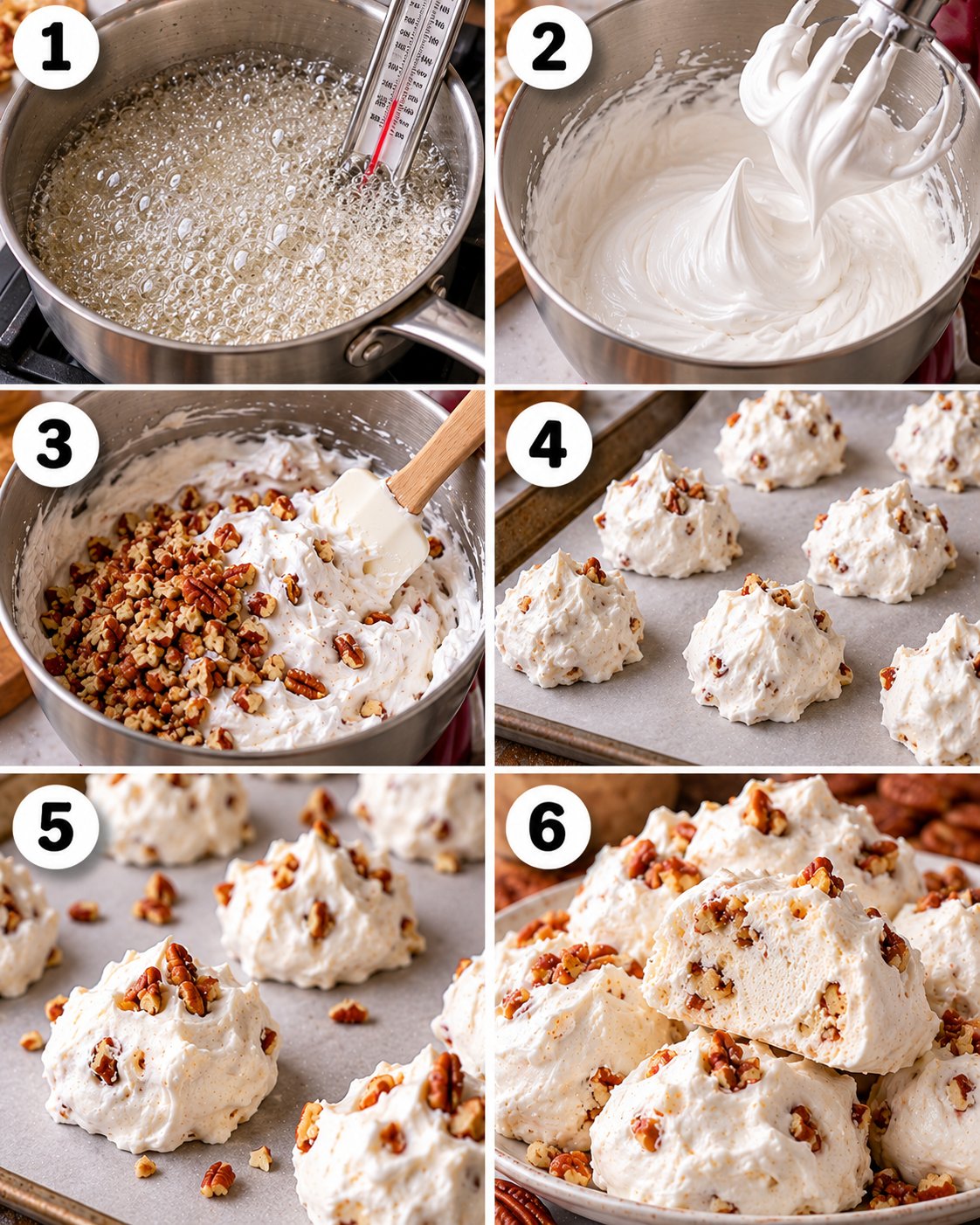
- In a saucepan, combine sugar, corn syrup, and water. Cook over medium heat until the mixture reaches a soft-ball stage (234°F or 112°C).
- While the sugar mixture is cooking, beat the egg whites in a separate bowl until stiff peaks form.
- Once the sugar mixture is ready, slowly pour it into the beaten egg whites while continuously beating until the mixture holds its shape and is glossy.
- Stir in the vanilla extract and nuts if using.
- Drop spoonfuls of the mixture onto wax paper or a greased baking sheet.
- Allow the divinity to cool and set for several hours before serving or packaging.