
Oatmeal cookies don’t always get the same attention as chocolate chip cookies, but a good one deserves it. There’s something lovely about the texture of oats in a cookie: a little chew, a slightly rustic crumb, and a flavor that feels warm and familiar.
The best soft and chewy oatmeal cookies aren’t cakey, dry, or hard around the edges. They have enough structure to hold together, but the center stays tender. You should be able to taste the oats rather than just sugar and butter.
These are the kind of cookies that work for an afternoon snack, a lunchbox treat, or a simple homemade dessert. They don’t need an elaborate frosting or filling. Getting the texture right is what makes them worth baking again.
Why You Will Love These Oatmeal Cookies
Oats give cookies a different character from those made with flour alone. Their texture makes every bite a little more interesting, especially when the cookies are soft in the middle.
An old fashioned oatmeal cookies recipe can also feel pleasantly nostalgic. It’s the sort of baking that fits into an ordinary afternoon, with a familiar aroma and a finished cookie that doesn’t need decorating.
Another reason oatmeal cookies are so appealing is their versatility. They can be enjoyed plain or adapted with additional flavors, provided the recipe supports those changes.
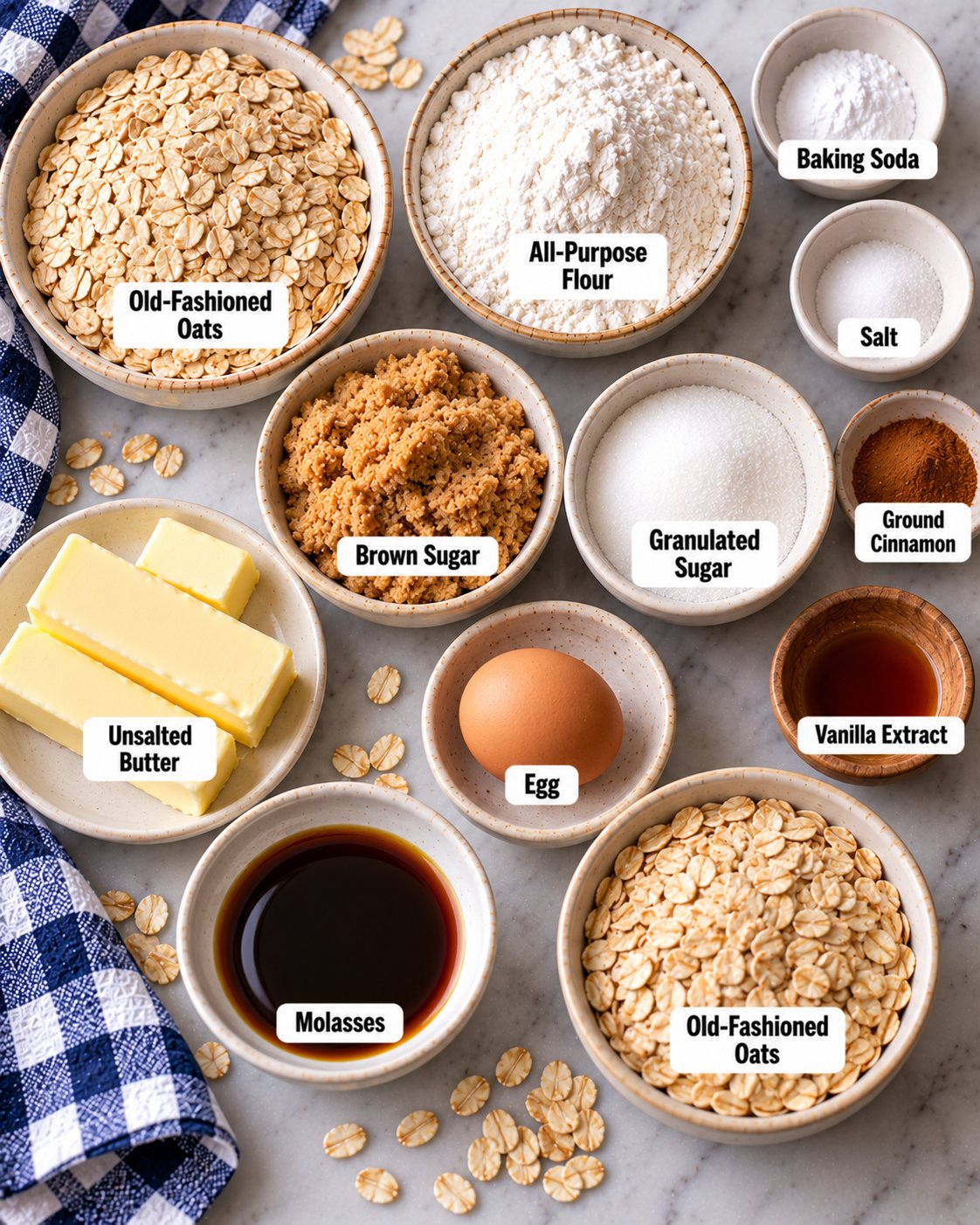
Best Oats for Cookies
The type of oats matters more than many people expect. Old-fashioned rolled oats create a recognizable oat texture, while quick oats are cut smaller and can produce a more uniform crumb.
Steel-cut oats are quite different. Their firm texture means they aren’t usually a direct substitute for rolled oats in an ordinary cookie recipe.
The amount of moisture the oats absorb also affects the finished cookie. A recipe developed for one type may become drier or softer when another is used.
If you want the texture shown in the original recipe, stick with the oat variety specified in the recipe card.
Texture: Soft vs. Chewy
Soft and chewy aren’t exactly the same thing. A soft cookie feels tender when you bite into it, while a chewy cookie offers a little resistance before it breaks apart.
Oatmeal cookies can have both qualities. The oats provide texture, while the balance of sugar, fat, and moisture helps create a tender center.
A cookie that’s too dry may feel crumbly rather than chewy. One that’s excessively moist can become heavy or under-set.
The ideal oatmeal cookie has a pleasant bite without being tough. It should feel satisfying, not like a dry granola bar.
Ingredients and Recipe Card
The recipe card below contains the complete ingredient list, measurements, and baking instructions. Those proportions determine how the oats, flour, fat, and sweeteners work together.
For oatmeal cookies, the balance is particularly important because oats absorb moisture. Adding extra oats or changing the flour without adjusting the rest of the recipe can affect the finished texture.
Any optional additions should also suit the recipe. Raisins, chocolate, and nuts all create different cookies, so the article shouldn’t describe them as part of the original unless they’re actually included.
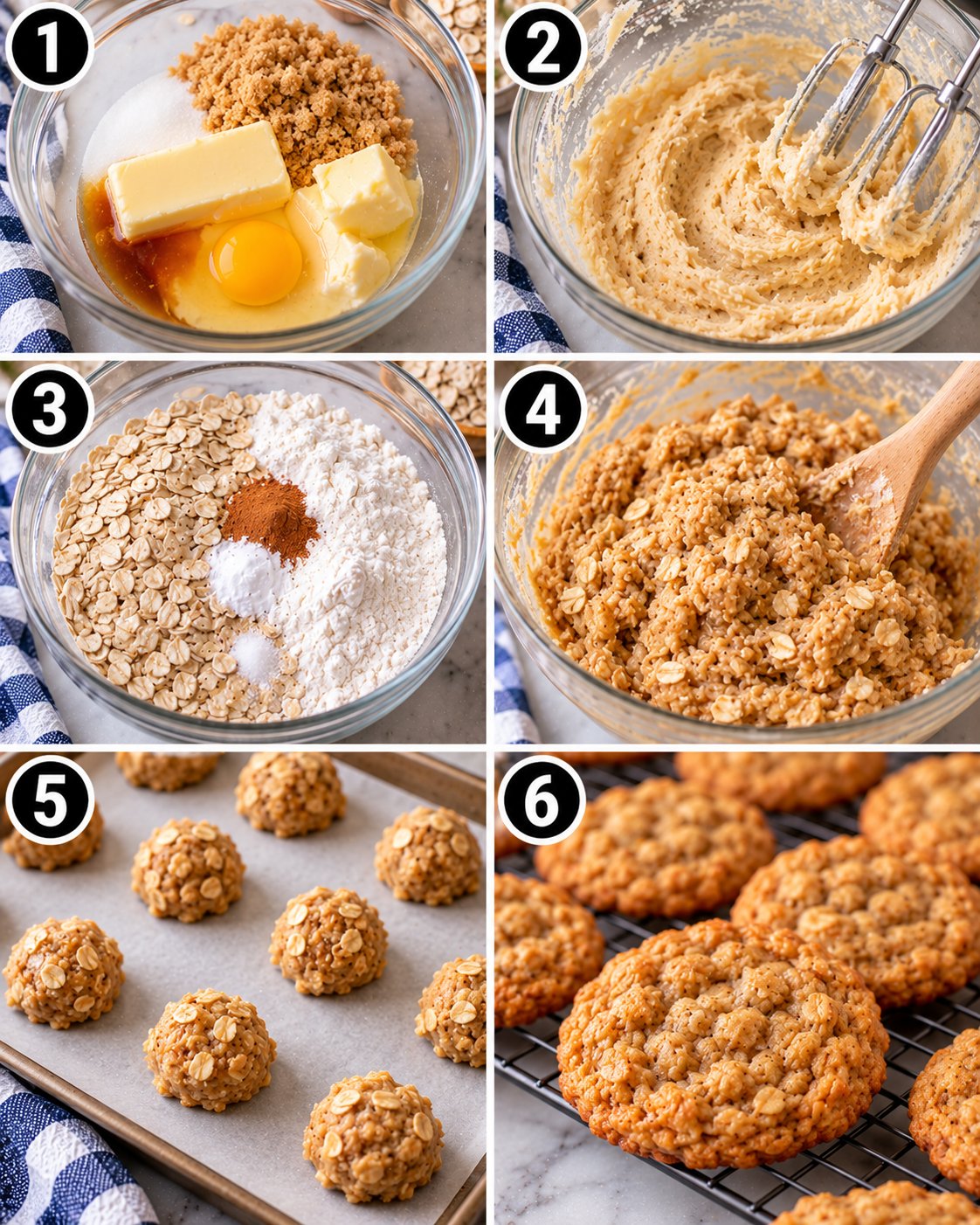
Tips to Prevent Dry or Flat Cookies
Dry oatmeal cookies are often the result of excess flour, too many oats, or baking longer than necessary. The cookies continue firming as they cool, which can make a slightly overbaked batch noticeably harder later.
Flat cookies can have a different cause. Warm dough, the type of fat, and the balance of ingredients can affect how quickly the cookies spread.
Oven temperature also matters. An oven that runs hotter or cooler than expected may change the way the edges set.
A good cookie should have enough structure to hold together while keeping its tender center. That balance is more important than making every cookie perfectly round.
Flavor Variations
Raisins are a familiar addition to oatmeal cookies because their sweetness contrasts with the oats. Chocolate chips create a richer version, while chopped nuts add crunch.
Cinnamon can bring warmth, and a small amount of spice may complement the cookie’s natural flavor. However, too many strong additions can overwhelm the oats.
If you’re experimenting with variations, consider how they affect moisture. Dried fruit and chocolate behave differently, and large additions can change the way a cookie spreads.
The original recipe should remain the starting point. A simple oatmeal cookie can be just as satisfying as one loaded with extras.
Storage and Freezing
Store cooled oatmeal cookies in an airtight container to help maintain their softness. Exposure to air can gradually make them firmer and drier.
Cookies with a tender center may change texture during storage, especially in a humid environment. Keep them in a cool, dry place unless the recipe includes perishable additions.
Many oatmeal cookie doughs freeze well, but the best handling depends on the recipe. Baked cookies can also often be frozen successfully when properly wrapped.
Frequently Asked Questions About Soft and Chewy Oatmeal Cookies
Can I use quick oats instead of rolled oats?
Sometimes, but the texture will change. Quick oats are smaller and can make cookies feel more uniform and less distinctly chewy than rolled oats.
Why are my oatmeal cookies dry?
Too much flour or oats, overbaking, and improper storage can all contribute to dryness. The cookies may also firm up considerably as they cool.
Can I freeze oatmeal cookie dough?
Many oatmeal cookie doughs can be frozen. Follow the recipe’s guidance for storage and baking because the dough may behave differently when chilled or frozen.
Final Thoughts
Soft and Chewy Oatmeal Cookies are proof that a simple cookie can be every bit as enjoyable as a more elaborate dessert. The oats provide character, and a tender center makes them especially comforting.
The best batch tastes like oats, has a little chew, and stays soft enough to enjoy with a cup of coffee or a glass of milk. That’s all a good oatmeal cookie really needs.
Soft and Chewy Oatmeal Cookies
Ingredients
Method
- Preheat the oven to 350°F (175°C) and line a baking sheet with parchment paper.
- In a bowl, whisk together the flour, oats, brown sugar, granulated sugar, baking soda, and salt.
- In another bowl, mix the melted butter, egg, and vanilla extract until well combined.
- Gradually add the wet ingredients to the dry ingredients and mix until just combined.
- Fold in any optional add-ins like chocolate chips or raisins.
- Drop spoonfuls of the dough onto the prepared baking sheet, leaving space between each cookie.
- Bake for 8-10 minutes until the edges are lightly golden.
- Remove from the oven and let cool on the baking sheet for a few minutes before transferring to a wire rack to cool completely.