
japanese cotton cheesecake is the dessert I make when I want something sweet but not heavy, and also when I need a little kitchen win. You know those days when you just want a soft slice of cake with tea and you do not want a complicated frosting situation. This one is airy, lightly cheesy, and it has that cute jiggle that makes everyone stop and stare. The first time I baked it, I kept opening the oven like a nervous parent, and yep, it taught me patience fast. If you have ever been disappointed by a dense cheesecake, this is your sign to try the fluffy version.
What Is Japanese Cotton Cheesecake?
Japanese cotton cheesecake is a light, fluffy cheesecake that feels more like a cloud cake than a typical cheesecake. It is still made with cream cheese, eggs, sugar, and milk, but the texture is totally different because of how the eggs are handled.
Instead of being rich and compact, it bakes up tall and soft, with a gentle sweetness and a delicate crumb. When it is done right, it looks like a simple round cake, but the inside is dreamy and springy.
If you like shortcut style cheesecakes too, you might also enjoy this super simple one I have made on busy weeks: 2 ingredient Japanese cheesecake yogurt cookie cheesecake. Different vibe, but still very snackable.
What Makes Japanese Cotton Cheesecake Different From Regular Cheesecake?
Regular cheesecake is dense and creamy because it is basically a baked custard on a crust. japanese cotton cheesecake is more like a sponge cake and cheesecake had a baby. The big difference is the whipped egg whites, which add air and lift.
Here is how they compare in real life:
- Texture: cotton cheesecake is fluffy and bouncy, regular cheesecake is thick and creamy
- Sweetness: cotton cheesecake is usually less sweet
- Feeling after eating: cotton cheesecake feels light, regular cheesecake feels rich
- Crust: cotton cheesecake often has no crust at all
If you are serving guests who say they do not like cheesecake because it is too heavy, this is the one that converts them. 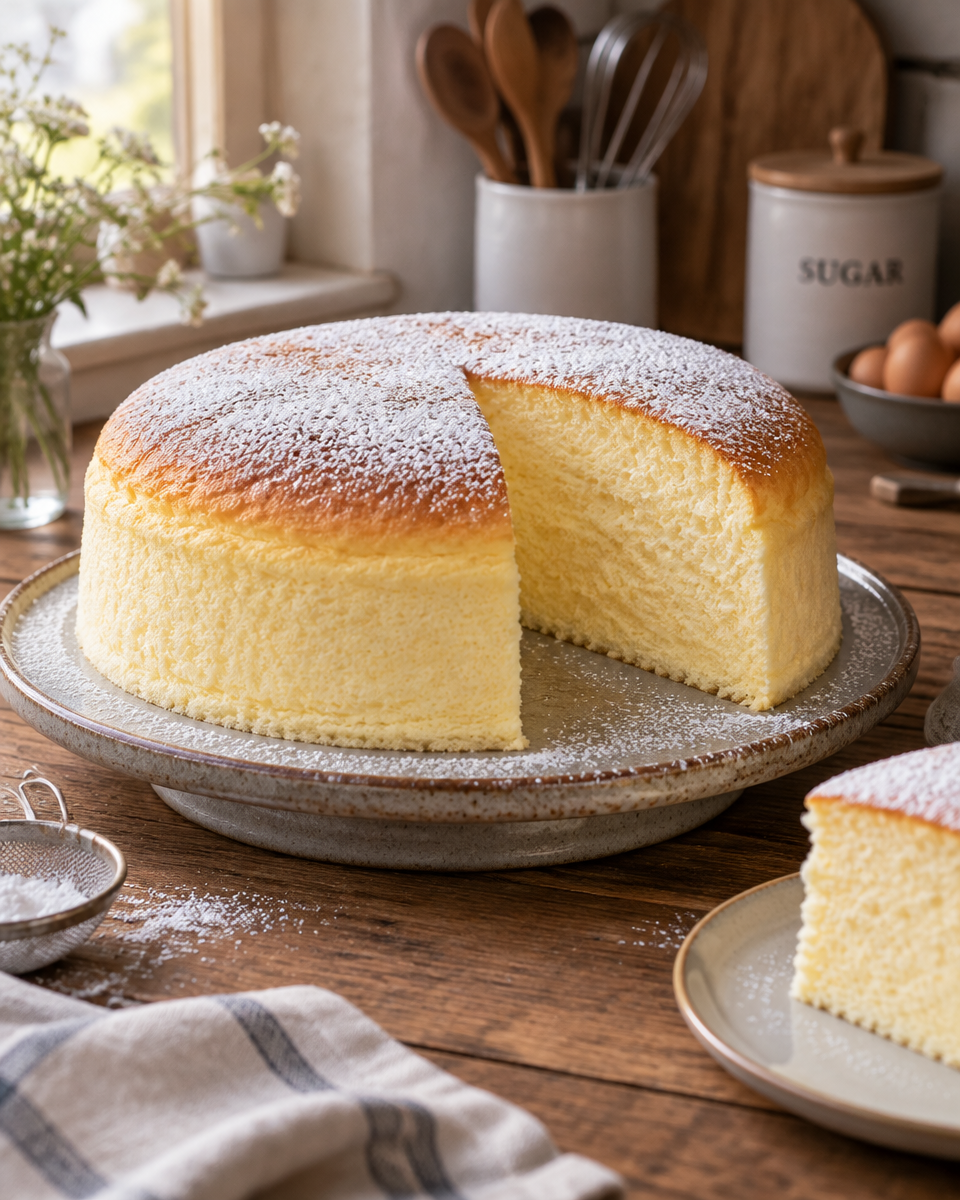
Why Is Japanese Cheesecake So Jiggly and Light?
That famous jiggle comes from air. Lots of it. You whip egg whites with sugar until they hold soft peaks, then gently fold them into the cream cheese batter. That trapped air expands in the oven and gives you lift.
Also, baking it gently matters. Most people use a water bath, which helps the cake bake evenly and stay moist, so the texture stays soft instead of drying out. The result is a cake that moves a little when you nudge the pan, like it is saying hello.
One more thing: cooling slowly helps the structure set, so it stays tall and tender instead of collapsing dramatically.
Tips for a Perfect Tall and Fluffy Japanese Cotton Cheesecake
This is the part where I save you from my early mistakes. My first attempt tasted good, but it looked like it got into a fight with the oven. Now I stick to a few reliable habits.
Use room temperature ingredients. Cold cream cheese is a pain to mix and can leave tiny lumps.
Do not rush the meringue. Whip egg whites until glossy soft peaks. Too stiff and the batter can deflate or crack.
Fold gently. I use a spatula and turn the bowl as I fold. Think calm and slow, not aggressive stirring.
Prepare the pan properly. Line the bottom with parchment and wrap the outside if you are doing a water bath.
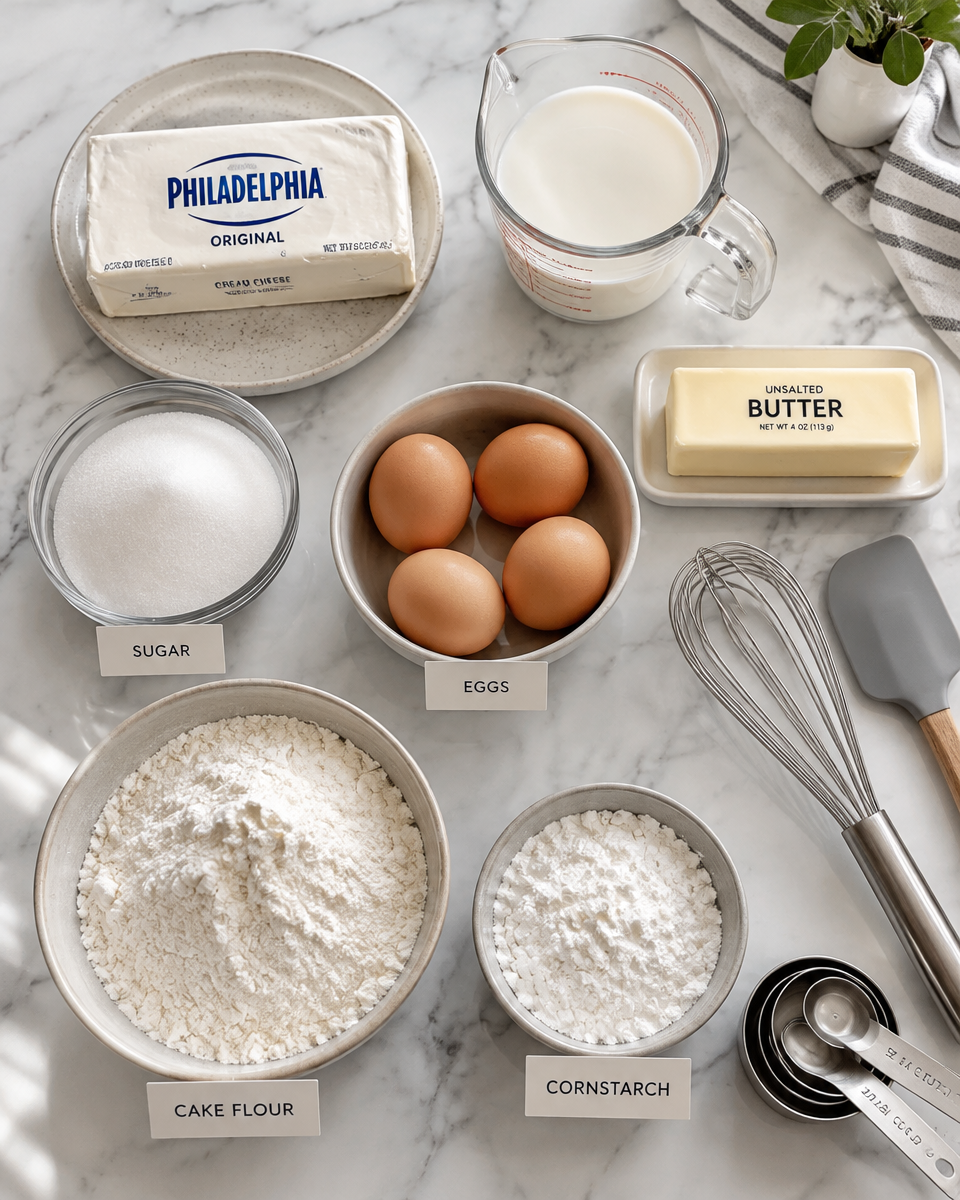
And here is a simple ingredient guide and plan so you can actually make it without bouncing around ten tabs:
- Cream cheese: full fat tastes best
- Milk: whole milk is ideal but any milk works
- Butter: just a little for richness
- Eggs: separate yolks and whites carefully
- Sugar: split between batter and egg whites
- Cake flour: keeps it delicate, all purpose works in a pinch but it is slightly less airy
- Cornstarch: optional but helps with tenderness
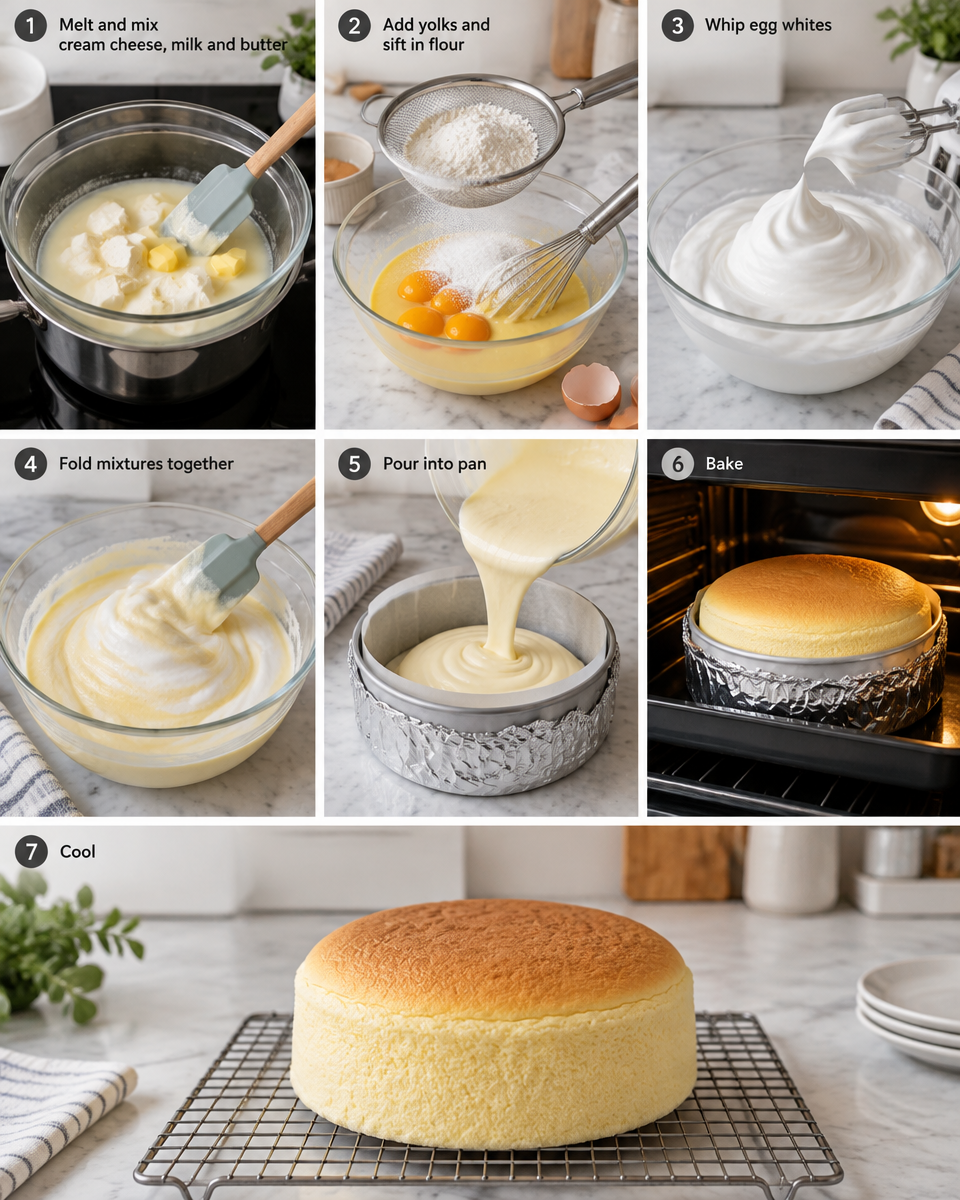
Basic direction (my weeknight brain version): melt and mix the cream cheese, milk, and butter until smooth, mix in yolks, then sift in flour. Whip whites with sugar to soft peaks. Fold in, pour into pan, bake low and slow in a water bath, then cool gradually.
If you want a citrusy cheesecake day, bookmark this for later because it is refreshing and easy: easy yuzu cheesecake Japanese citrus no bake.
Why Does Japanese Cheesecake Crack and How to Prevent It?
Cracks usually happen when the top sets too fast or the cake rises too quickly. Think of it like the cake is stretching and the surface cannot keep up. It is common, so do not panic.
Here is what helps the most:
- Lower oven temperature: high heat is the crack enemy
- Use a water bath: it keeps the heat gentle and moist
- Do not over whip the egg whites: very stiff peaks can create unstable rise
- Avoid sudden cooling: turn off the oven and crack the door for 10 to 15 minutes before taking it out
Also, try not to slam cabinets or stomp around while it bakes. I am only half joking. This cake is a little sensitive.
What Is the Secret to the Bouncy Texture of Cotton Cheesecake?
The secret is really a combination of three things: a stable meringue, gentle folding, and slow baking. When those three line up, you get that springy, bouncy slice that feels plush.
One small tip that made a big difference for me is not letting any yolk sneak into the whites. Even a tiny bit of fat can make it harder to whip them properly. I also use a clean, dry bowl for whipping, no water droplets.
I tried your method with the slow cool down and my cake finally stayed tall. The jiggle was perfect and my family ate half of it before it even chilled. Totally making it again.
If you love playful cheesecake textures, you might like this fun mashup dessert too: apple crisp cheesecake with caramel crunch. It is not cotton style, but it hits that cozy craving.
Can You Make Japanese Cotton Cheesecake Without a Water Bath?
Yes, you can, but it is trickier. The water bath gives you a gentle, even bake and helps prevent cracks and dryness. Without it, the edges can bake faster than the center, and the top can brown too quickly.
If you really want to skip the water bath, here is what I suggest:
- Bake at a slightly lower temperature than you think you need
- Place a pan of hot water on the lower rack to add moisture
- Keep an eye on browning and loosely tent with foil if needed
- Cool it slowly in the oven with the door cracked
My honest take: if this is your first japanese cotton cheesecake, do the water bath once. After that, you can experiment.
How to Store Japanese Cotton Cheesecake
This cake is best the day it is baked, when it is still a little warm and insanely soft. But leftovers are still great, especially chilled.
Here is what I do:
- Room temperature: up to a few hours, covered
- Fridge: store in an airtight container for up to 3 days
- Freezer: slice, wrap each piece tightly, and freeze up to 1 month
To serve from the fridge, I like letting it sit out for 10 to 15 minutes so the texture softens again.
Also, if you are into super simple versions, I have played with shortcut cheesecakes too, like this one: 2 ingredient Japanese cheesecake yogurt cookie cheesecake. Great for when you want cheesecake energy with less effort.
Frequently Asked Questions About Japanese Cotton Cheesecake
Why did my cake collapse after baking?
Usually it is underbaked in the center or cooled too fast. Bake until the center looks set but still slightly wobbly, then cool it gradually in the oven with the door cracked.
Can I use all purpose flour instead of cake flour?
Yes. Cake flour makes it lighter, but all purpose flour works. If you have cornstarch, swapping a little in can help keep it tender.
How do I know my egg whites are at soft peaks?
When you lift the whisk, the tip should bend over gently instead of standing straight up. The foam looks glossy, not dry.
Why is the bottom of my cake wet?
That can happen if water leaks into the pan during a water bath. Wrap the pan well with foil, and make sure the water level is not too high.
Can I flavor japanese cotton cheesecake?
Yes, keep it subtle. A little vanilla, lemon zest, or a small spoon of honey works well without weighing down the batter.
More Easy Japanese Dessert Recipes
If you are on a Japanese dessert kick, I get it. Once you taste the light texture of japanese cotton cheesecake, it is hard not to keep exploring.
A few ideas for your next sweet project:
- No bake citrus cheesecake like this: easy yuzu cheesecake Japanese citrus no bake
- A cozy crunchy option for fall cravings: apple crisp cheesecake with caramel crunch
- And if you want a super low effort cheesecake style treat: 2 ingredient Japanese cheesecake yogurt cookie cheesecake
If you want a solid reference to compare methods, this is a helpful read too: Cotton Cheesecake / Japanese Cheesecake – RunAwayRice.
My favorite way to serve it and a little pep talk
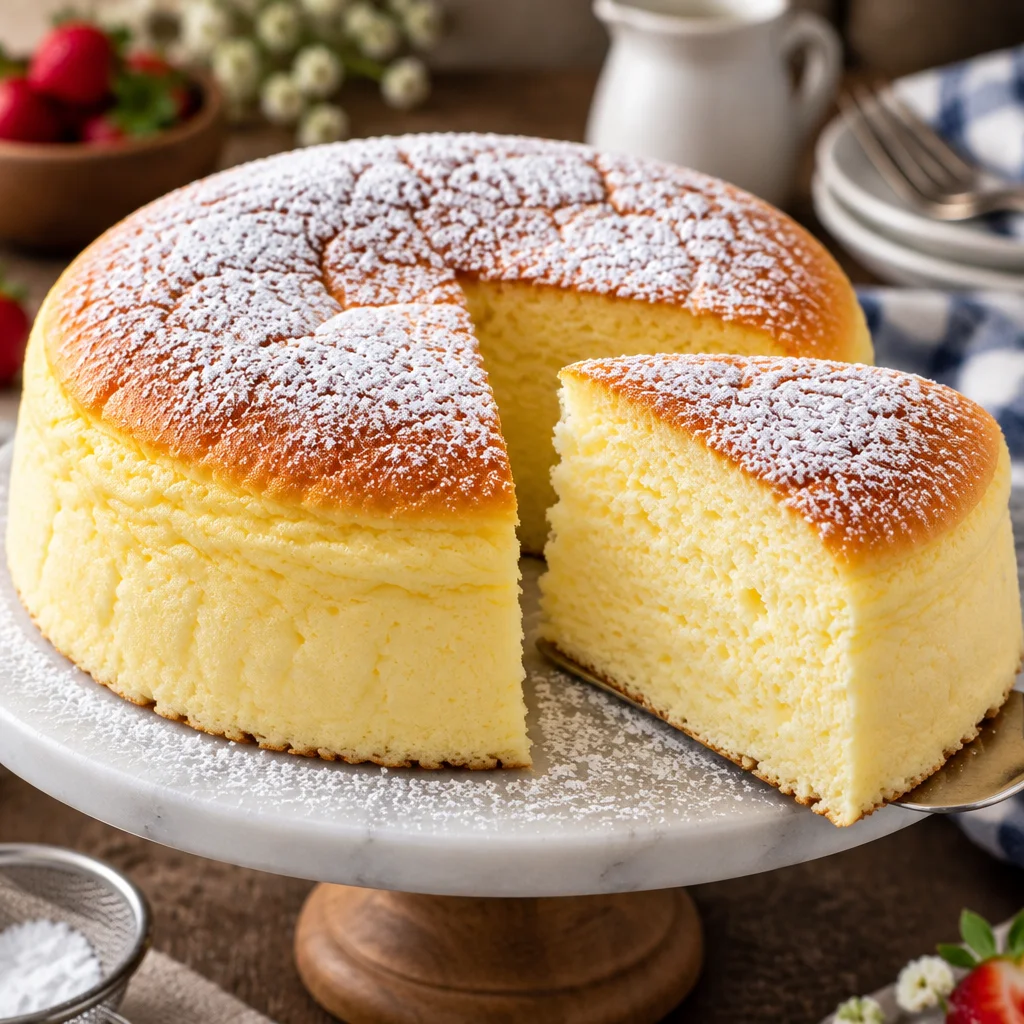
The best slice of japanese cotton cheesecake, in my opinion, is slightly chilled with a hot cup of tea, or fresh berries on the side. Keep it simple and let that fluffy texture do the talking. If your first one is not perfectly tall, do not stress, it still tastes amazing and you will learn fast. Bake it once, take notes, and bake it again, because the second one is usually the glow up. And when you get that gentle jiggle, you are going to feel ridiculously proud of yourself.
Japanese Cotton Cheesecake
Ingredients
Method
- Preheat the oven to a low temperature.
- Melt and mix the cream cheese, milk, and butter until smooth.
- Mix in the egg yolks, then sift in the flour and cornstarch.
- In a separate bowl, whip the egg whites with half the sugar until soft peaks form.
- Gently fold the whipped egg whites into the cream cheese mixture.
- Pour the batter into the prepared pan.
- Bake in a water bath for about 60 minutes.
- Turn off the oven, crack the door, and let the cake cool gradually.