
Pot roast is one of those things that makes the whole kitchen seem to welcome you. The meat gets tender, the cooking liquid gets a rich flavour and the final meal is satisfying without requiring an elaborate presentation. This Korean Pot Roast Recipe takes comfort food you know and gives it a Korean inspired flavour direction.
Korean-style pot roast can be a savoury, slightly sweet, aromatic sauce and not necessarily done with just the traditional American pot roast seasonings. The flavour will vary depending on the recipe, but the appeal of the dish is the tender beef paired with a braising liquid packed with flavour.
The trick is to be patient with the beef, and balanced with the sauce. A good pot roast should be tender enough to eat comfortably, and the cooking liquid should be flavourful, but not too salty or sweet.
What Makes This Pot Roast Korean-Inspired?
Pot roast, Korean style is the old standby of slow cooked beef with some nods toward Korean flavours. That could be soy-based seasoning, depending on the recipe, or aromatics, sweetness or chilli heat.
The end product is unlike a typical American pot roast, which often uses beef broth, onions, herbs and root vegetables. The Korean-inspired versions may have a deeper sweet-savory balance.
Note: Korean-style pot roast should not be confused with a certain traditional Korean dish. Korean cuisine does have some braised beef dishes, but an American-style roast with Korean-inspired seasonings isn’t exactly the same thing.
Some versions use gochujang, a Korean fermented chilli paste, but it’s not necessary for all recipes of Korean pot roast. The finished dish is spicy or not, depending on the actual ingredients.
The winning appeal is beef, tender and in a flavourful sauce. The seasoning should be used to enhance the natural beef flavour of the roast, not mask it.
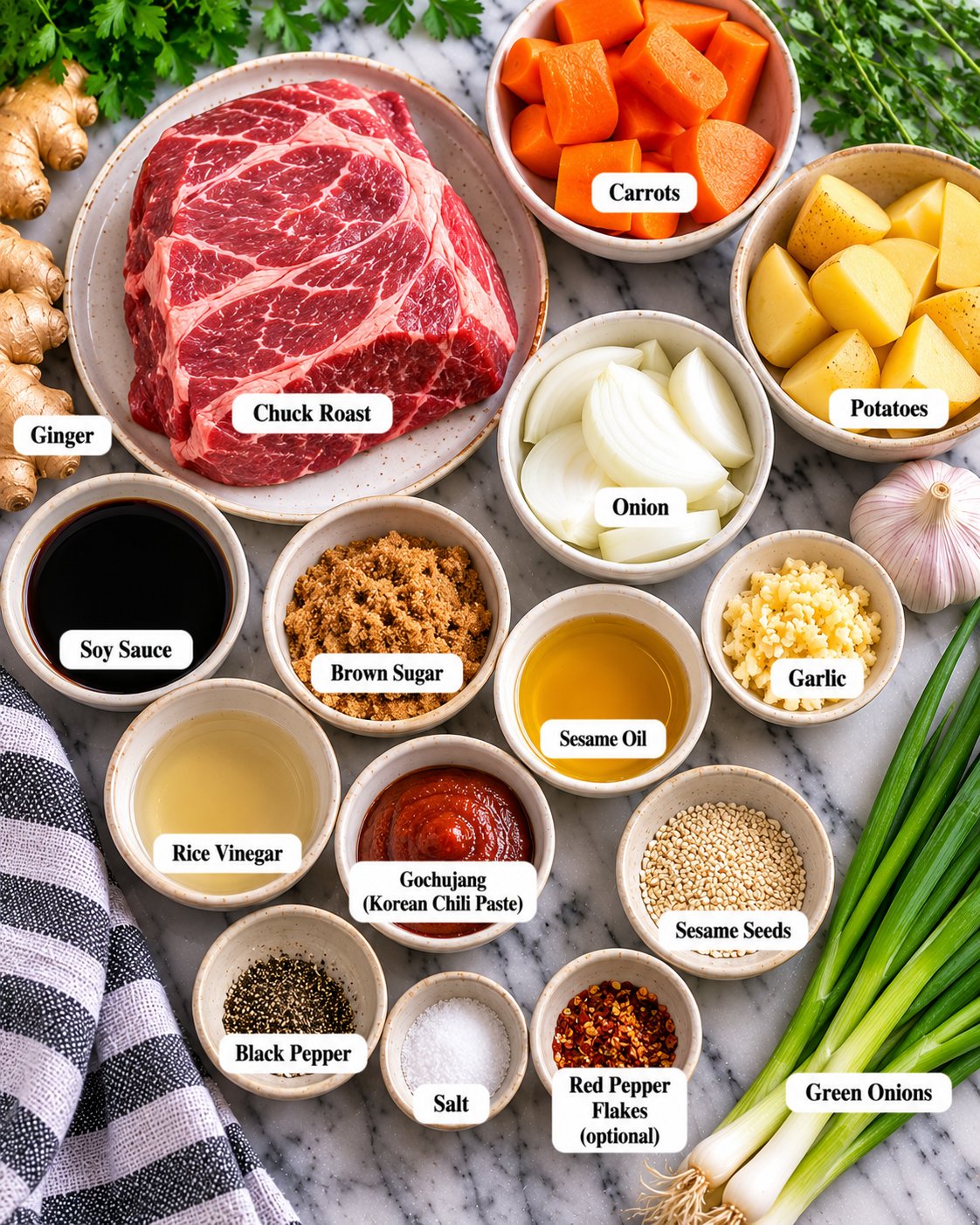
How To Cook Beef For Korean Pot Roast
Chuck roast is commonly used for pot roast as it has connective tissue that breaks down in long, moist cooking. That can give you the tender, pull-apart texture many expect.
Other cuts of beef may be used, but the fat content and structure of the cut will affect the final product. A lean cut cooks differently than a well-marbled roast.
Meat size and thickness are also important. Now , if both roasts are the same cut , a bigger roast will take longer than a small piece .
Tenderness is more than just temperature. Cuts with a lot of connective tissue need time for that tissue to soften.
For Korean pot roast, select the cut of meat listed on the recipe card. Usually the characteristics form the basis of the cooking method and sauce.
What is that sweet and savoury flavour profile?
A good Korean-inspired pot roast sauce should taste balanced, not like one strong ingredient is overpowering all the other flavours. The savoury seasoning adds depth, the sweetness can round out the flavour.
Korean-style sauces usually have soy-based ingredients, but the sodium content can vary. A heavily seasoned sauce may not need much additional salt.
Aromatics can add another level of complexity. Add garlic and ginger and they will impart warmth and fragrance without necessarily adding spice to the dish.
Some versions include chilli ingredients for heat. But spicy and nonspicy Korean-inspired beef dishes can both be tasty.
The aim is to have a sauce that goes well with the roast and tastes good with the sides. The flavour should be strong enough to complement the beef, but not bitter, too sweet or too salty.
Fall-Apart Beef Tips
Pot roast tenderness varies greatly depending on the cut and cooking conditions. A tough cut can remain chewy if the connective tissue has not been given enough time to break down.
Moist cooking environments are particularly good for cuts such as chuck roast. They help to create the conditions associated with traditional braised beef.
A roast can also dry out or become stringy if the cooking method is not suitable for the cut of meat. More time is not always the answer, especially for leaner beef.
The final texture needs to serve the purpose of the recipe. Some pot roasts are meant to be sliced, while others are cooked until they can be pulled apart easily.
Use the cooking method in your recipe card and judge tenderness accordingly. The goal is beef that tastes juicy and pleasant to eat, not just meat that has reached a certain clock time.
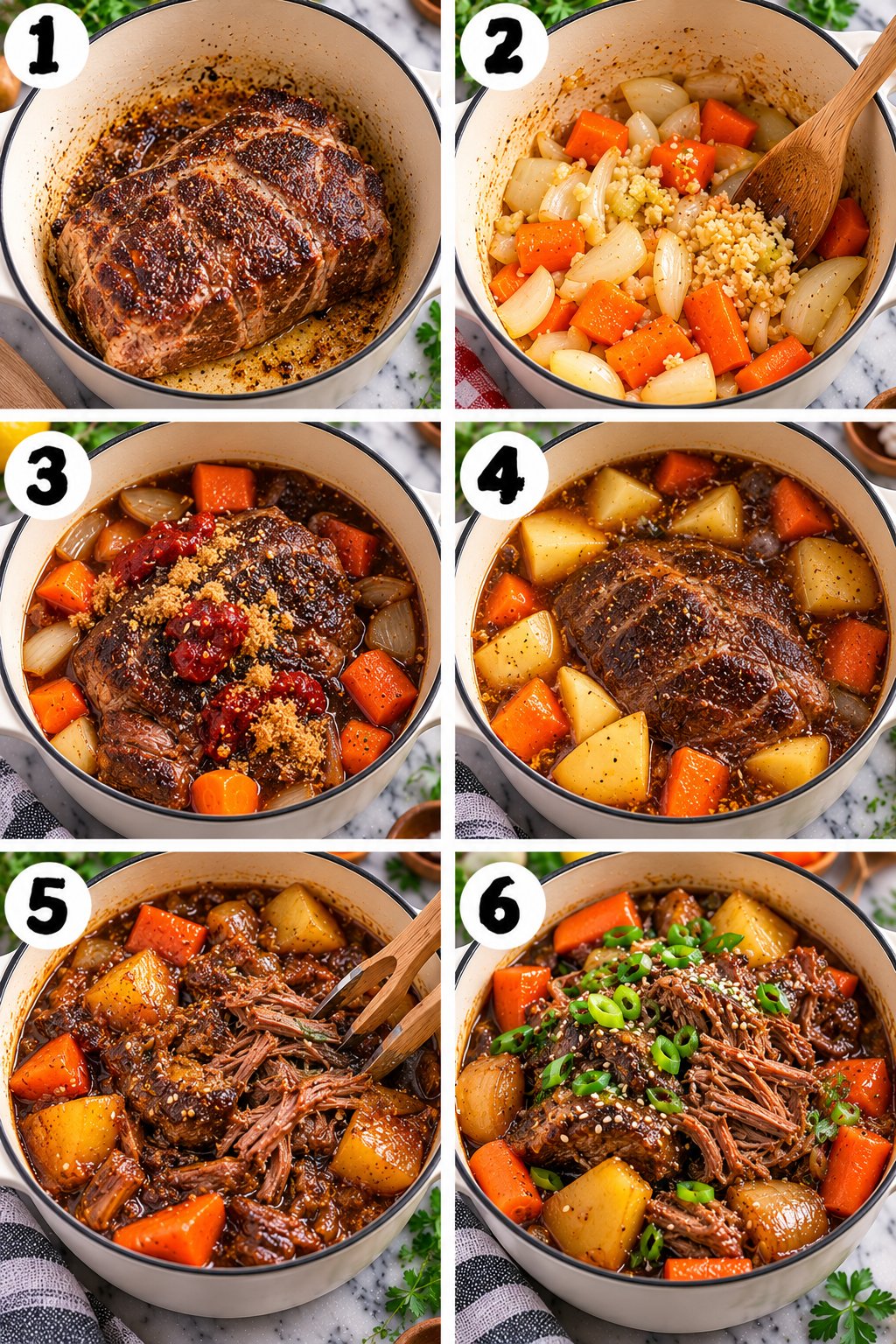
How to Balance the Sauce (or the sauce balancing act)
The sauce is what makes or breaks a Korean pot roast. A good sauce should add savoury depth, a hint of gentle sweetness and enough aromatic flavour to enhance the beef.
Salty taste is a common issue. It’s the mix of ingredients, not just one spice, that’s important because soy-based seasonings and prepared broths can deliver a lot of sodium.
Sweetness, too, must be checked. If the sauce is too sweet, it can be a bit heavy for a rich beef dish, particularly when it is served over rice or some other mild side.
Acidity can help brighten some variations, but it has to match what the recipe is supposed to taste like. Some Korean-inspired pot roasts don’t have to end with a sharp tang.
The consistency of the sauce is also important. A very thin liquid can taste watered down, and a too concentrated sauce can be intense.
The sauce should be cohesive and savoury enough to have some character to make the beef memorable.
Other Cooking Techniques & Slow Cooker
There are several ways to cook a pot roast, but they aren’t automatically interchangeable. Slow cooker, oven, pressure cooker – they all give different heating environments.
A slow cooker is often useful for slow, gentle cooking. It also holds moisture differently than an uncovered oven dish.
Depending on your cookware and recipe, you might have more direct control over the cooking environment if you braise in the oven.
For some beef dishes, pressure cooking can cut cooking time, but it requires the right liquid and procedure developed for the appliance.
If your Korean pot roast recipe is designed to be cooked in a particular way, don’t change to a different way of cooking without having tested guidance. Timing, sauce concentration and final texture can vary considerably.
What to Serve With Korean Pot Roast
Korean-inspired pot roast is naturally paired with steamed rice, whose bland flavour provides a counterpoint to a richly seasoned sauce. It also sets a simple stage for enjoying the tender beef.
Vegetable sides bring freshness and texture. Crisp cucumbers, lightly seasoned greens or other vegetables might offer a welcome contrast.
If it’s fermented and tangy, kimchi makes a great accompaniment to this dish. It’s intense, but can stand up to a rich beef. Not for everyone.
You can also serve it with roasted vegetables or mashed potatoes for a more traditional American dinner presentation. They are a different experience but still go well with the savoury roast.
The best side dishes are those that balance the sauce, not compete with it. In general, a good main course is better with at least one fresh or lightly seasoned side.
How to Store and Reheat
Leftover is great with Korean pot roast, because the beef and sauce cook together. However, the consistency may change during refrigeration and re-heating.
Refrigerate the roast immediately in shallow, covered containers at 40°F (4°C) or below. If you keep them in the fridge, cooked beef dishes should be eaten within three to four days.
Many pot roast recipes lend themselves to freezing, especially if the beef is frozen in its cooking liquid. The sauce can help to keep the texture of the meat, but the result might still not be the same after thawing.
Reheat leftovers to a safe internal temperature of 165 °F (74 °C). Don’t overheat for long periods of time as this may dry out or make the beef stringy.
Leftover pot roast can also be served in different ways, as long as the flavours go with the new dish. Its thick sauce makes it particularly good to have with rice or vegetables.
Frequently Asked Questions About Korean Pot Roast
Does Korean pot roast contain spice?
Not necessarily. Korean-inspired pot-roast recipes may include chilli paste or pepper flakes, or they may focus on savoury and sweet flavours with little heat. Spice level is determined by the real ingredients.
What is the best beef cut for pot roast?
Chuck roast is a popular choice because connective tissue in the meat breaks down during long cooking. Other cuts can work, but they have a different texture and require different cooking.
Can I make Korean pot roast in a slow cooker?
If a recipe calls for a slow cooker, you can use a slow cooker. But the liquid level, the timing and the consistency of the sauce may be different than oven or pressure-cooker methods.
Why is my pot roast tough?
The beef may need to cook longer to break down the connective tissue. Or it may not be the right cut of beef for the method. The tenderness will depend on the type of meat and the conditions of cooking.
Can you freeze a Korean pot roast?
Many cooked pot roasts will freeze well in containers. After thawing the texture of the sauce and meat may change a little, so follow the storage guidance in the recipe.
The Final Word
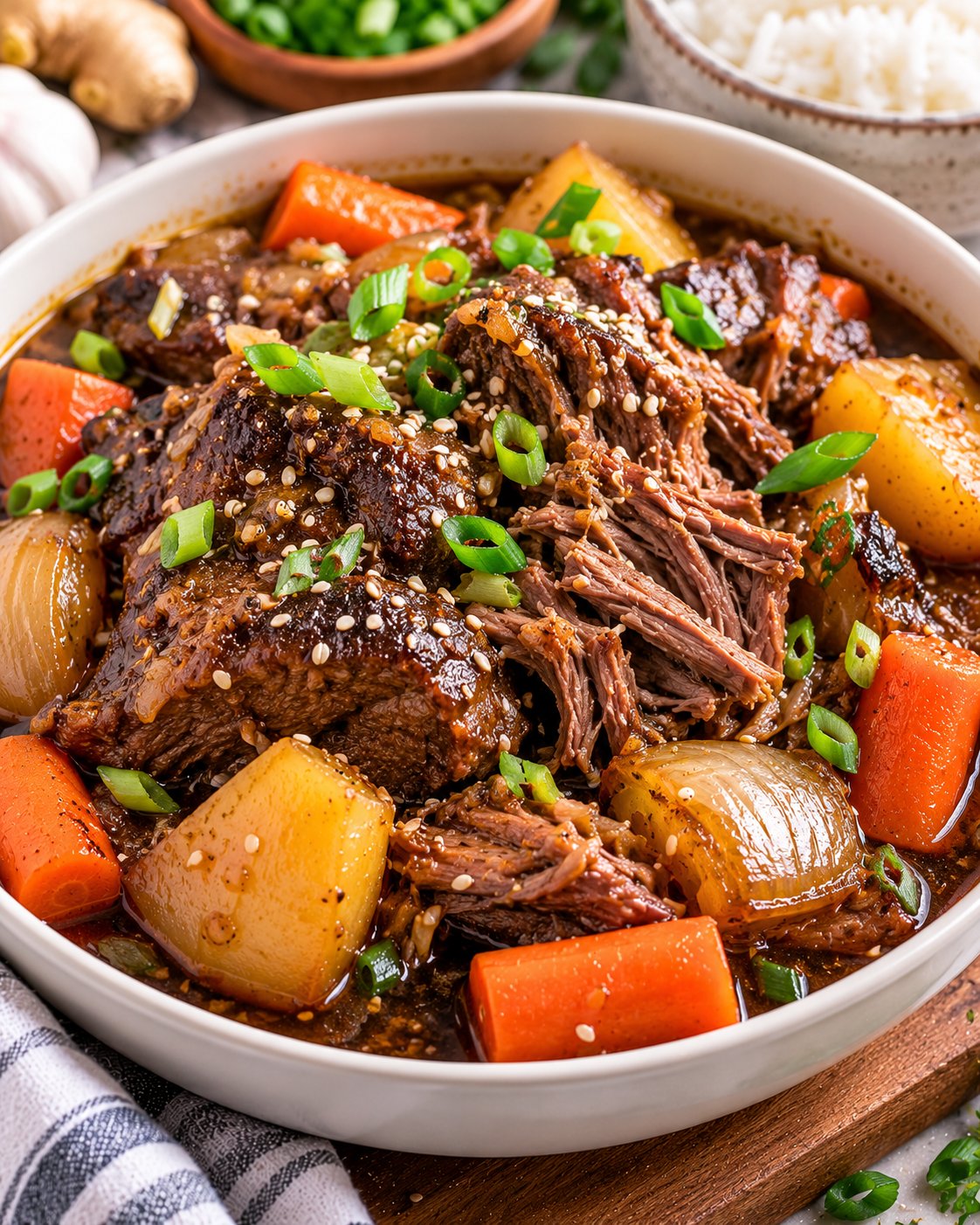
Korean Pot Roast is a delicious comfort food that features tender beef with a flavour profile that is different than a traditional pot roast. Its savoury sauce and aromatic seasoning make it especially appealing with simple rice and vegetables.
The main thing is choosing the right beef cut, allowing the meat to tenderise and keeping a balanced sauce. When all of these elements come together, the resulting roast is rich, satisfying and perfect for a family dinner.
Korean Pot Roast
Ingredients
Method
- Preheat your oven to 300°F (150°C).
- In a large Dutch oven, combine soy sauce, brown sugar, ginger, garlic, and gochujang.
- Place the chuck roast in the pot and sear it on all sides until browned.
- Remove the roast and sauté onions, carrots, and celery in the same pot until softened.
- Return the roast to the pot and add beef broth.
- Cover the pot and place it in the oven.
- Cook for approximately 5 hours, or until the meat is tender and falls apart easily.
- Remove the roast from the oven and let it rest for 10-15 minutes before slicing.
- Serve with steamed rice and your choice of vegetables.