
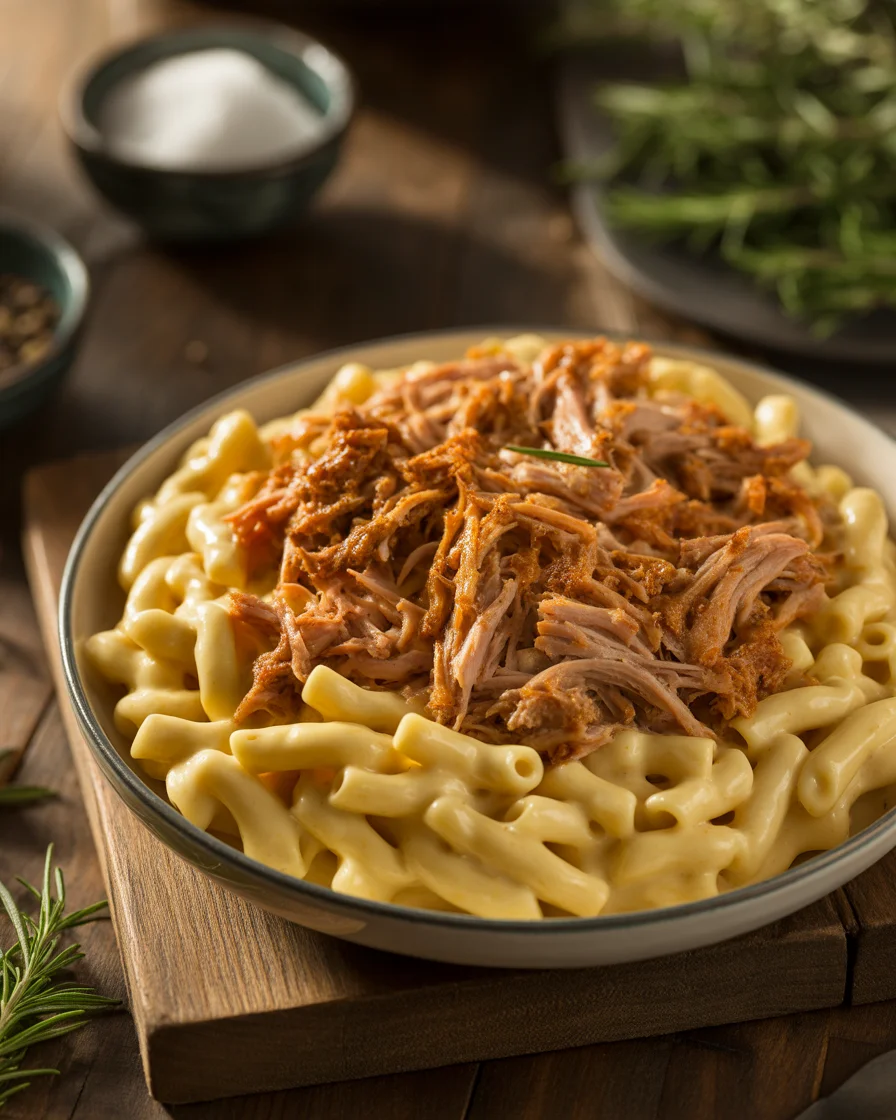
There are some dinners that sound like they belong on a restaurant menu but are surprisingly practical at home. Pulled pork BBQ mac and cheese is one of them. You get tender, smoky pork, creamy macaroni, plenty of cheese flavor, and a little tangy barbecue sauce bringing everything together.
This 30-Minute Pulled Pork BBQ Mac and Cheese is especially useful when you already have cooked pulled pork waiting in the refrigerator. Instead of serving another round of sandwiches, you can turn those leftovers into a rich, comforting pasta dinner that feels completely different.
The trick is keeping the cheese sauce creamy while letting the pork and barbecue flavor stand out. Too much sauce can make the dish overly sweet, and dry pork can take away from the creamy texture. When everything is balanced, it’s the kind of dinner that disappears quickly.
What Is Pulled Pork BBQ Mac and Cheese?
Pulled pork BBQ mac and cheese combines macaroni and cheese with cooked shredded pork and barbecue flavor. It’s a hearty variation on traditional mac and cheese that works as a main course rather than just a side dish.
The pulled pork adds savory depth and a more substantial texture. Barbecue sauce can contribute sweetness, tanginess, and smoke, depending on the type used.
The cheese sauce remains important because it connects the pasta and pork. A good version should taste creamy and cheesy, not like plain macaroni covered in barbecue sauce.
Some recipes are baked, while others are prepared entirely on the stovetop. For a quick 30-minute dinner, the preparation needs to be designed around already-cooked pork and a practical pasta method.
What Makes This 30-Minute Pulled Pork Mac and Cheese So Quick?
The biggest time-saving advantage is using pulled pork that’s already cooked. Preparing pork shoulder from raw meat takes considerably longer than 30 minutes, so a quick recipe depends on having the pork ready to use.
Leftover smoked pulled pork is a natural choice. It already has plenty of savory flavor, which makes it easy to turn into a different meal.
The pasta and cheese sauce also need to fit the recipe’s timing. A stovetop preparation can be convenient because it avoids a long additional baking period.
The 30-minute promise is realistic when the ingredients and preparation are designed for it. If you’re starting with raw pork, however, the total cooking time will be much longer.
That’s worth remembering when planning dinner. Having cooked pulled pork available is what turns this from a weekend barbecue project into a practical weeknight meal.
What Type of Pulled Pork Works Best in This Recipe?
Pork shoulder is a common choice for pulled pork because it becomes tender and easy to shred after proper cooking. Its rich flavor works beautifully with cheese and barbecue sauce.
Smoked pulled pork brings a deeper, more traditional barbecue character. Slow-cooked or oven-roasted pork can also work, depending on the seasonings used.
Moisture matters. Very dry pork can make the finished dish feel less creamy, while pork covered in a large amount of thin sauce may change the consistency of the cheese mixture.
The seasoning of the pork also affects the balance. A heavily sweetened barbecue pork may need a different sauce approach from meat that’s simply smoked and lightly seasoned.
For the best result, use tender, properly cooked pork that complements the cheese rather than overpowering it.
What Cheese Makes the Creamiest BBQ Mac and Cheese?
Sharp cheddar is a natural choice because its stronger flavor stands up to smoky pork and barbecue sauce. A very mild cheese can disappear beneath those bold flavors.
Monterey Jack can contribute a smoother, milder character, while some recipes use a combination of cheeses for both flavor and melting quality.
The type of cheese matters because not every variety melts the same way. Parmesan adds savory depth, for example, but it doesn’t create the same flowing sauce as a smooth-melting cheese.
Pre-shredded cheese can be convenient, although anti-caking ingredients may affect the texture of certain sauces. Freshly shredded cheese often melts more predictably.
The best cheese combination creates a creamy sauce that coats the pasta while still tasting distinctly cheesy.
Tips for the Creamiest Pulled Pork BBQ Mac and Cheese Every Time
One of the most common problems with mac and cheese is a sauce that becomes thick or grainy. Pasta continues absorbing moisture after it’s combined with the sauce, so the texture can change quickly.
Excessive heat can also cause some cheese sauces to separate. A smooth sauce depends on the right temperature and ingredient balance.
The pulled pork adds another variable. Dry meat can absorb moisture, while heavily sauced pork may thin the cheese mixture or change its flavor.
Barbecue sauce needs restraint. A little tangy sauce can brighten the dish, but too much may cover the cheese and make the pasta taste overly sweet.
The finished mac and cheese should be creamy enough that the pasta and pork feel connected. You want a forkful with cheese sauce, tender pork, and pasta, not three separate components.
What BBQ Sauce Is Best for Pulled Pork Mac and Cheese?
A tangy barbecue sauce can work particularly well because its acidity balances the richness of the cheese. Tomato-based sauces with a little vinegar are a familiar choice.
Sweet barbecue sauces create a different effect. They can be delicious with smoky pork, but too much sweetness may overwhelm the macaroni.
Smoky sauces can reinforce the flavor of smoked pulled pork. However, if the pork already has a strong smoke flavor, adding an intensely smoky sauce may make the dish feel unbalanced.
The best sauce depends on how the pork was originally prepared. If it’s already heavily coated in barbecue sauce, the pasta may not need much additional sauce.
For serving, offering a little extra barbecue sauce on the side allows everyone to adjust their own portion.
What to Serve With Pulled Pork BBQ Mac and Cheese
Coleslaw is one of the best side dishes because its crisp texture and tangy dressing balance the rich pasta. The contrast makes the meal feel less heavy.
A simple green salad is another good choice, particularly when the mac and cheese is the main dish. Fresh vegetables provide a welcome change from the creamy sauce.
Roasted broccoli or green beans can also work well. Their savory flavor complements the pork without competing with the barbecue seasoning.
For a larger gathering, cornbread and pickles fit naturally into a barbecue-inspired menu. Since the pasta is already filling, you don’t need several heavy sides to make the meal complete.
Can You Make Pulled Pork Mac and Cheese Ahead of Time?
Pulled pork mac and cheese can be prepared ahead in some cases, but the texture may change during storage. Pasta absorbs moisture, and cheese sauce often becomes thicker after refrigeration.
The pork may also lose some moisture during reheating, particularly if it was already cooked and stored before being added to the pasta.
If you’re planning a meal for guests, a recipe specifically designed for advance preparation will be more reliable than assuming every stovetop mac and cheese can be assembled hours ahead.
Refrigerate leftovers promptly in covered containers. Properly refrigerated cooked pork and pasta dishes are generally best used within three to four days.
Reheat leftovers thoroughly to 165°F (74°C). Gentle heating can help preserve the cheese sauce’s texture, although the result may be thicker than when freshly prepared.
Frequently Asked Questions About Pulled Pork BBQ Mac and Cheese
Can I use leftover pulled pork?
Yes, leftover pulled pork is ideal for a quick version of this dish. It saves the time required to cook pork shoulder from scratch and adds plenty of flavor. Make sure the pork has been stored safely and is still within its recommended storage period.
Can I make pulled pork mac and cheese without BBQ sauce?
Yes. Pulled pork can add plenty of savory flavor without barbecue sauce, especially when it’s already well seasoned. The result will taste more like a traditional cheesy pasta with pork rather than BBQ mac and cheese.
Why is my pulled pork mac and cheese dry?
Dryness can result from pasta absorbing too much sauce, excessive heating, or pork that lacks moisture. The sauce-to-pasta balance matters, particularly when the dish is reheated.
Can I freeze pulled pork mac and cheese?
Some versions can be frozen, but creamy cheese sauces may separate and pasta can become softer after thawing. A recipe designed for freezing usually gives more predictable results. Package it carefully and reheat thoroughly.
What pasta works best for pulled pork mac and cheese?
Elbow macaroni is the classic choice because its shape holds cheese sauce well. Shells and other sturdy short pasta shapes can also work. The best pasta should remain tender without becoming mushy when combined with the pork and sauce.
More Easy Pulled Pork Dinner Recipes
If you enjoy pulled pork mac and cheese, BBQ pulled pork sandwiches are an obvious favorite. Pulled pork baked potatoes offer another hearty dinner, while pulled pork quesadillas are useful when you want something crisp and cheesy.
For a casual gathering, pulled pork nachos and BBQ pork sliders make excellent party foods. They’re also practical ways to use leftover cooked pork without serving the same meal twice.
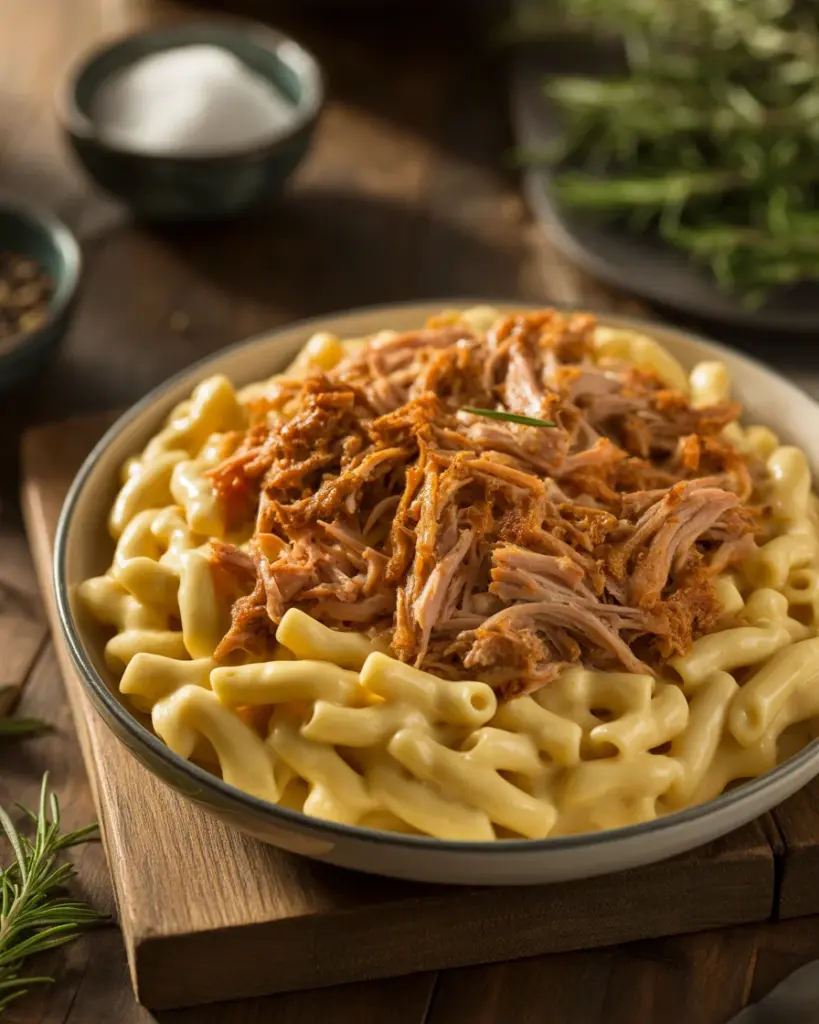
Pulled Pork BBQ Mac and Cheese
Ingredients
Method
- Bring a large pot of salted water to a boil and cook the elbow macaroni according to package directions until al dente. Drain and set aside.
- In a large saucepan over medium heat, combine the cooked pulled pork, barbecue sauce, and milk. Stir to combine and heat through.
- Gradually stir in the shredded cheddar and Monterey Jack cheese until melted and the sauce is creamy.
- Add the cooked macaroni to the cheese sauce and stir until well coated.
- Adjust seasoning with salt and pepper if necessary.
- Serve hot with extra barbecue sauce on the side.