
southern fried chicken livers are one of those foods that people either grew up loving, or they are a little nervous to try at first. If you have ever stood in the kitchen staring at a tub of chicken livers wondering what to do next, you are in the right place. I am going to walk you through how I make them at home so they come out crisp on the outside and tender inside. No weird aftertaste, no soggy breading, and no guessing games with the oil. This is the kind of recipe that feels old school in the best way.
I like my chicken livers with a real crunchy coat and a center that is cooked through but still juicy. The key is simple: clean them well, season the coating like you mean it, and fry in hot oil without crowding the pan. Once you get that down, this becomes an easy comfort food that you can pull off any day of the week.
Why You’ll Love This Recipe
What makes this version useful for home cooks
This is a practical, no drama method. You do not need fancy equipment or a deep fryer. A heavy skillet, a thermometer if you have one, and a little patience is enough. I also like recipes that give you wiggle room, like adjusting spice levels or doing a quick soak if the livers smell strong.
If you are into other down home crispy dinners, you might also like this chicken fried steak fingers situation for a similar crunchy comfort vibe.
Flavor, texture and occasions when it fits
Done right, you get **a salty, peppery crust** with a rich, savory inside that does not feel dry. They are perfect for game day snacking, a casual family supper, or when you want something that tastes like a little roadside diner treat. I also love them as a quick protein with a pile of mashed potatoes.
Recipe Overview and What to Expect
Expected taste, texture and appearance
Think crisp, golden brown coating that shatters a bit when you bite in. The inside should be fully cooked, not bloody, but it should still be soft. The flavor is bold and meaty, so it really loves a tangy dip or a dash of hot sauce.
Recipe-specific choices that affect results
Two choices matter most: your coating and your oil temperature. If the coating is under seasoned, the whole thing tastes flat. If the oil is too cool, the livers get greasy. If it is too hot, the crust burns before the inside is done.
Editorial note: For the exact ingredients, quantities, and step by step instructions, use the recipe card on the page. I am keeping the method consistent and I am not repeating the full recipe card here so you can follow it cleanly without scrolling past duplicates.
What Makes Southern Fried Chicken Livers Different?
Classic Southern seasoning and crispy coating
Southern style is all about **big seasoning** and a coating that actually sticks. Most folks go with flour plus spices like salt, black pepper, garlic powder, and a little cayenne. Some people add paprika for color. The idea is not to hide the liver, just to give it a crunchy, well seasoned jacket.
If you like learning little Southern kitchen tricks, this is a fun read too: southern fried chicken trick. It pairs nicely with the same mindset of keeping breading crisp and flavor strong.
Flavor and texture of chicken livers
Chicken livers have a deep, almost buttery richness. The texture can go from tender to crumbly fast if they overcook, so timing matters. When people say they do not like livers, it is usually because they had an overcooked batch that tasted bitter and felt dry.
Choosing and Preparing Chicken Livers
I always start by checking them over one by one. This part is not glamorous, but it is the difference between “wow these are good” and “hmm something is off.”
- Look for fresh livers that are moist but not slimy, and smell clean, not sour.
- Trim off any tough connective bits or greenish spots.
- Pat them dry before coating so the breading has a chance to cling.
Also, do not skip the drying step. Moisture is the enemy of crispy coating, and it can make the oil pop more than necessary.
Optional soaking: what it changes
Soaking is optional, but helpful if you are new to cooking livers. A short soak can mellow the flavor and improve tenderness. Many people use buttermilk, some use milk, and some add a pinch of salt. If you soak, drain well and pat dry so your coating still sticks.
“I made these exactly like you explained and they were crisp, not greasy, and my husband ate half the batch standing at the stove. I was nervous about livers, but this worked.”
How to Keep Fried Chicken Livers Crispy
This is where most batches go wrong, so I get a little picky here, in a friendly way. Crispiness is not luck. It is a few small habits stacked together.
Coating that sticks
Make sure each piece is dry, then coat thoroughly. Press the flour mixture on lightly so it grabs. Then let the coated livers sit for a few minutes before frying. That short rest helps the coating “set” so it does not fall off in the oil.
Oil temperature and batch size
Use enough oil so they can float just a little and fry evenly. Keep the oil hot and steady, and fry in batches. Overcrowding drops the temperature fast, and that is when breading turns soggy. If you have a thermometer, it helps a lot. If not, test with a small pinch of flour. It should sizzle right away and not just sink quietly.
Avoiding greasy coating or dry interiors
If your livers soak up oil, your oil was likely too cool or the pan was crowded. If they are dry or tough, they probably stayed in too long or the oil was too hot. Pull them when they are deep golden, then drain on a rack if you can. Paper towels work, but a rack keeps steam from softening the crust.
How to Tell When Chicken Livers Are Done
This part matters for both taste and safety. You want them cooked through, but you do not want them cooked to death.
Safe internal temperature and food thermometer use
Chicken livers are poultry, so the safe internal temperature is 165°F (74°C). If you own a thermometer, this is the easiest way to stop guessing. Check the thickest piece in the center of the batch.
Avoiding undercooked centers
If you cut one open, the center should not look raw or bloody. A tiny bit of moisture is fine, but it should look like cooked liver all the way through. If they brown too fast before they reach temperature, lower the heat a bit and keep batches smaller.
What to Serve With Fried Chicken Livers
This is where you can make them feel like a snack plate or a real supper. I have done both, depending on my mood and what is in the fridge.
Gravy, hot sauce and classic Southern sides
These are my go to pairings:
- Hot sauce for a sharp kick
- White or brown gravy for dipping
- Mashed potatoes, coleslaw, or mac and cheese
- Pickles or pickled onions to cut the richness
Turning them into a main meal
If I want a full plate, I serve southern fried chicken livers with mashed potatoes and a quick green vegetable. Even a simple bag of steamed green beans works. Add a biscuit or cornbread and you are set.
On nights when I want something lighter but still chicken focused, I make this crispy baked option instead: easy baked chicken parmesan crispy not fried. Totally different vibe, still comforting.
Storage and Reheating
Fresh is best, but leftovers are still worth keeping if you handle them right.
Refrigeration and safe handling
Let them cool, then refrigerate in a covered container. I try to eat leftovers within 2 to 3 days. Do not leave them sitting out for long, especially in warm kitchens.
Recrisping leftovers without overcooking
The oven is your friend here. Spread them out on a sheet pan and warm at a medium heat until hot and crisp again. A toaster oven works great too. Microwaving will heat them, but the coating will go soft.
Frequently Asked Questions About Southern Fried Chicken Livers
These are the questions I hear the most, and they are all very normal if you are making them for the first time.
Should chicken livers be soaked before frying?
Not required, but a short soak in milk or buttermilk can mellow the flavor and help with tenderness. Just dry them well after.
How do you keep breading on chicken livers?
Pat them dry, press the coating on, then let them rest a few minutes before frying. Also avoid flipping them too much in the oil.
Why are my fried chicken livers tough?
Overcooking is usually the reason. They go from tender to tough pretty fast, so pull them as soon as they hit 165°F and are nicely golden.
What temperature should chicken livers reach?
They should reach 165°F (74°C) in the thickest part for food safety.
Can you reheat fried chicken livers in an air fryer?
Yes. Use a lower to medium setting and check often so they do not dry out. Air fryers are great for bringing back crispiness.
More Recipes to Try
Relevant internal links to other Cuts Food recipes
If you are on a comfort food roll, here are a few more ideas I have bookmarked lately:
- Chicken fried steak fingers when you want crunchy, dippable bites.
- Southern fried chicken trick for another crispy, Southern style win.
- Easy baked chicken parmesan crispy not fried when you want the comfort without the frying.
- Easy baked chicken parmesan crispy not fried because it is honestly that reliable for busy nights.
- Easy baked chicken parmesan crispy not fried if you are feeding picky eaters who still want crunch.
Quick SEO Notes for Publishing
If you are posting this on your own site, here are a few simple things that help:
- Use a clear title and keep it consistent with the recipe card.
- Add photo alt text that describes what is shown, like “crispy fried chicken livers on a plate” without overdoing it.
- Make sure your recipe plugin outputs valid Recipe schema only once.
- Include the food safety note that poultry livers should reach 165°F.
Final Thoughts
If you have been curious about southern fried chicken livers, I hope this makes them feel totally doable at home. Focus on drying them well, seasoning the coating, and keeping your oil hot without crowding the pan. Once you nail that, you get that crunchy outside and tender inside that makes people convert fast. Grab the recipe card, give it a try, and let yourself snack on a few right by the stove because that is part of the fun.
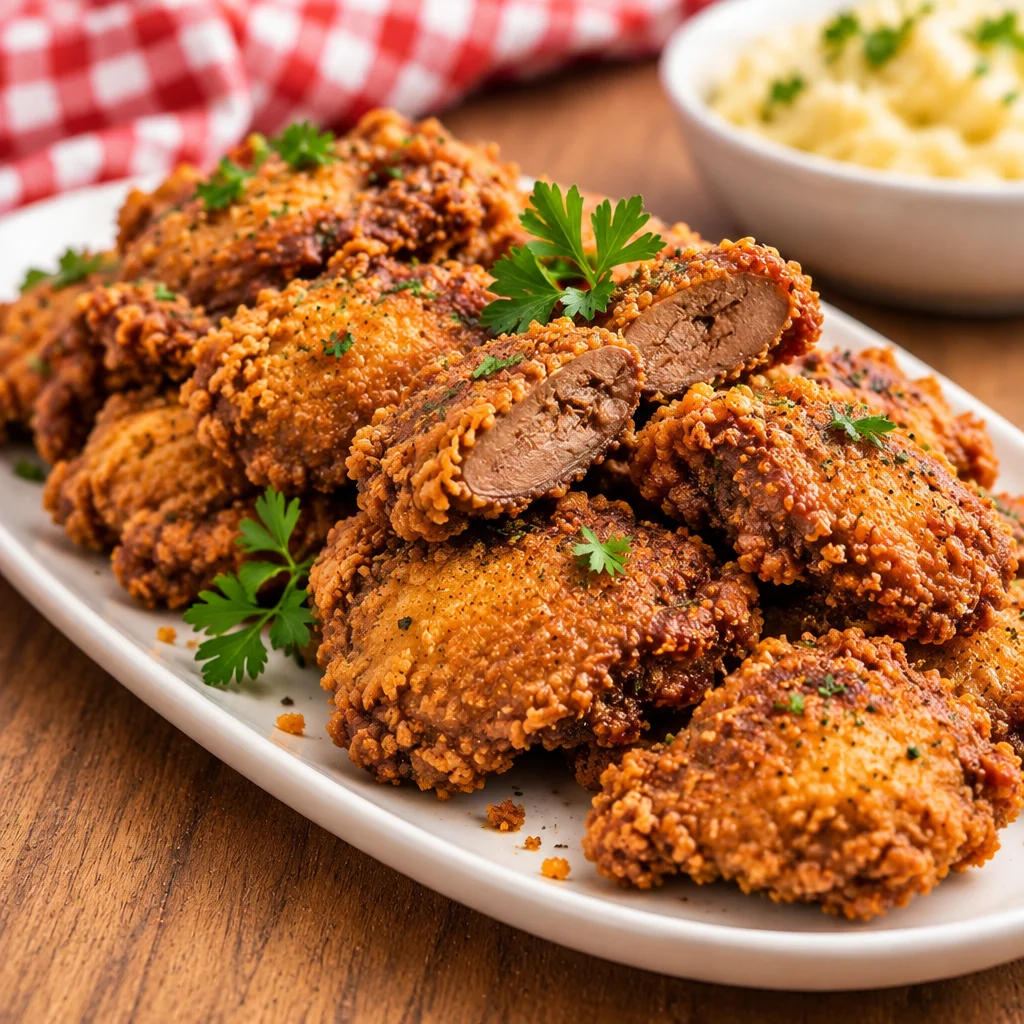
Southern Fried Chicken Livers
Ingredients
Method
- If soaking, place the chicken livers in buttermilk or milk for at least 30 minutes.
- Pat the livers dry with paper towels to ensure the coating will stick.
- Trim any connective tissue or greenish spots from the livers.
- In a bowl, combine flour, salt, pepper, garlic powder, cayenne, and paprika.
- Dredge each liver in the flour mixture, ensuring each piece is well-coated. Let them sit for a few minutes.
- Heat the vegetable oil in a heavy skillet over medium-high heat.
- Fry the livers in batches, being careful not to overcrowd the pan.
- Cook for about 5 minutes on each side or until they reach an internal temperature of 165°F and are golden brown.
- Remove from oil and drain on a wire rack or paper towels.