
Lemon meringue pie is one of those desserts that catches your eye before you even taste it. The pale yellow filling, the tall swirls of meringue, and the golden peaks make it look like something from an old-fashioned bakery window.
But the real appeal is the contrast. The lemon filling should be bright and tangy, the meringue soft and sweet, and the crust sturdy enough to hold everything together. When those three parts work well, the pie feels refreshing rather than overly rich.
It’s also a dessert that can be a little temperamental. Meringue sometimes releases moisture, lemon filling can turn runny, and a crust may soften beneath the filling. Knowing what causes those problems makes a homemade lemon meringue pie much less mysterious.
What Makes a Great Lemon Meringue Pie?
A good lemon meringue pie has a filling that’s smooth, thick enough to slice, and pleasantly tart. It should taste clearly of lemon without being so sharp that it overwhelms the meringue.
The meringue provides the opposite flavor and texture. Its sweetness balances the filling, while its light structure makes the dessert feel less heavy than a pie topped with dense frosting.
The crust brings everything together. It should provide enough structure to support the filling and offer a pleasant contrast to the soft layers above it.
A beautiful pie isn’t just about tall meringue peaks. The filling and crust need to taste as good as the topping looks.
Best Crust for Lemon Meringue Pie
A traditional pastry crust is a familiar choice for lemon meringue pie. Its flaky texture contrasts nicely with the smooth filling.
Some modern versions use crumb crusts, but those produce a different flavor and structure. A graham cracker crust isn’t automatically interchangeable with a pastry shell.
The crust needs to suit the filling’s moisture and the recipe’s baking method. A crust that isn’t prepared as intended may become soft beneath the lemon layer.
Use the crust specified in your recipe card. The filling and baking instructions may be designed around that particular style.
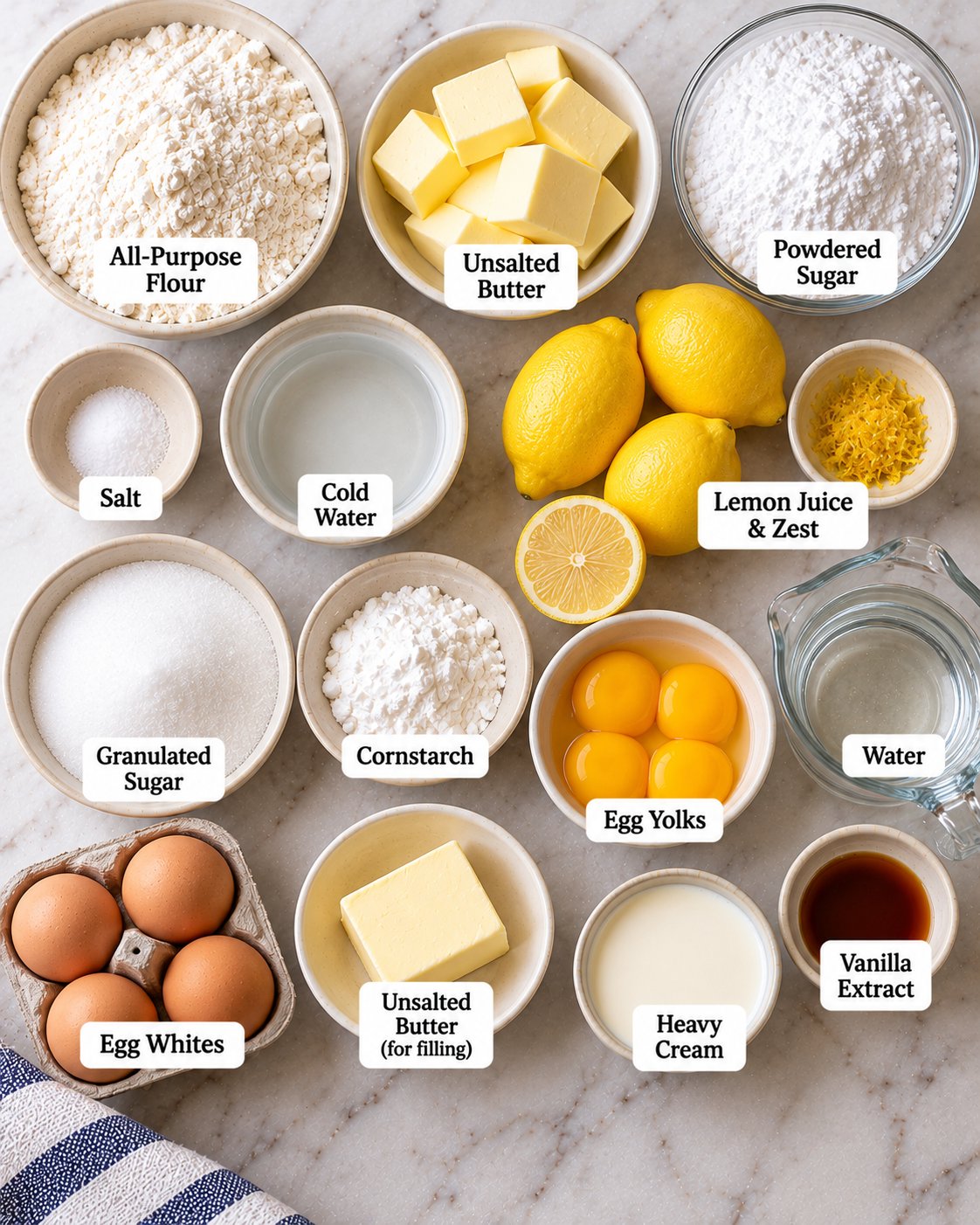
Lemon Meringue Pie Ingredients
The lemon component provides acidity and the dessert’s recognizable flavor. The filling also needs enough structure to hold a slice without becoming rubbery.
Eggs are commonly used in lemon fillings and meringue, but the exact proportions and other thickening ingredients vary between recipes.
Sugar balances the lemon’s tartness and contributes to the meringue’s texture. Too much sweetness can make the pie taste flat, while too little may leave the filling excessively sharp.
The crust adds its own flavor and texture, completing the contrast between crisp pastry and soft filling.
Follow the recipe card for the actual ingredients. Not every lemon pie uses condensed milk or the same thickening method.
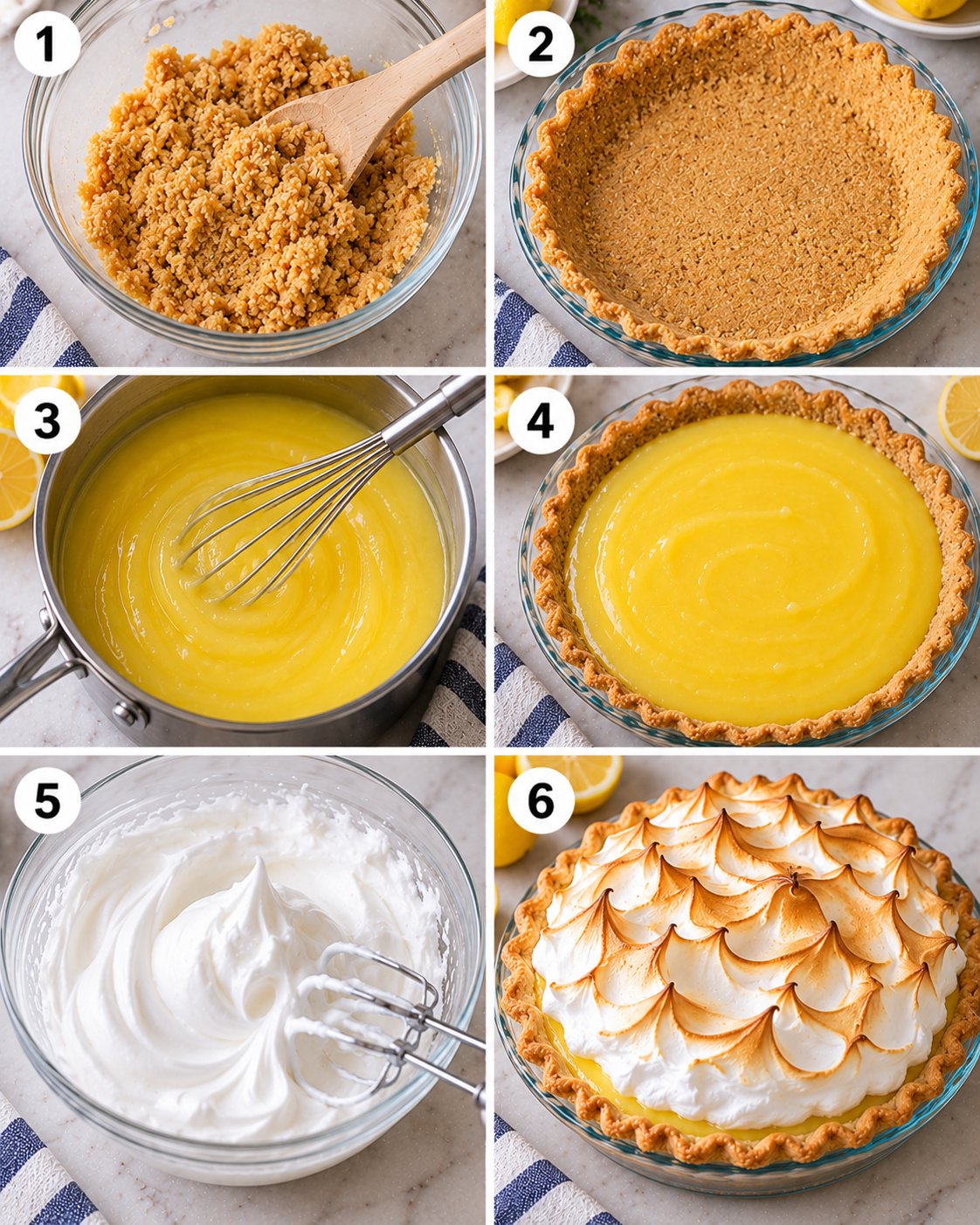
How to Make Lemon Meringue Pie
The complete recipe and preparation instructions are provided in the recipe card below.
The filling, crust, and meringue each have different texture requirements. The filling needs to set, the crust needs enough structure, and the meringue should remain stable.
Because this dessert contains egg-based components, follow the recipe’s cooking guidance carefully and use pasteurized eggs where appropriate for recipes that don’t fully cook the eggs.
How to Get a Smooth Lemon Filling
A good lemon filling should feel silky rather than grainy or rubbery. Its texture depends on the balance of liquid, thickener, and heat used in the recipe.
A filling that’s too loose may spill from the crust when sliced. One that’s overly thick can feel gummy and lose the delicate character that makes lemon pie enjoyable.
The lemon flavor should remain bright. An excessively sweet filling can make the pie taste more like vanilla pudding with a little citrus.
Cooling also affects the filling. A pie may appear softer while warm and become more structured as it settles.
How to Make a Stable Meringue
Meringue looks delicate, but it needs enough structure to hold its shape. The goal is a topping that’s light and airy without collapsing or releasing excess moisture.
Egg whites, sugar, and the recipe’s preparation method all influence stability. Small changes can produce a meringue that’s too loose or grainy.
Humidity can also affect the finished topping. A pie that looks beautiful immediately after preparation may develop moisture on its surface during storage.
The best meringue should be soft and pleasant to eat, with enough stability to remain attached to the filling.
How to Prevent Weeping, Shrinking and Soggy Crust
Weeping is the moisture that sometimes appears on or beneath meringue. It can result from instability in the topping, moisture migration, or unsuitable cooking and storage conditions.
Shrinking is another common problem. A meringue that pulls away from the crust leaves gaps around the edge and may affect presentation.
The crust has its own challenge. Moist lemon filling can soften pastry over time, particularly when the pie is stored for an extended period.
These issues aren’t always caused by the same mistake. The filling’s temperature, the meringue method, and the recipe’s assembly instructions all influence the final result.
Cooling, Slicing and Serving Tips
Lemon meringue pie needs enough cooling time for the filling to hold its shape. Cutting it too early can make the filling run across the plate, even when the flavor is good.
The meringue also needs careful handling. Its soft texture can cling to a knife and make slices look uneven.
For serving, a modest slice is often enough. The filling is bright and flavorful, while the meringue provides a sweet finish.
The pie is lovely with coffee or tea, and it doesn’t need another topping. The lemon and meringue already provide plenty of contrast.
Storage and Make-Ahead Advice
Lemon meringue pie is generally best enjoyed relatively fresh. The meringue can release moisture during storage, and the crust may soften beneath the filling.
Because the pie contains egg-based components, refrigerate it promptly at 40°F (4°C) or below. Follow the recipe’s storage guidance for the appropriate holding period.
Freezing a finished lemon meringue pie is usually less successful than freezing many other desserts. The meringue and filling can change texture after thawing.
If you’re preparing dessert for a gathering, consider the recipe’s cooling and storage requirements before deciding how far ahead to make it.

Frequently Asked Questions About Lemon Meringue Pie
Why Is My Lemon Meringue Pie Runny?
The filling may not have thickened as intended, or it may not have cooled sufficiently before slicing. Ingredient substitutions can also affect how well it sets.
Why Does Meringue Weep?
Moisture can collect on or beneath meringue because of its preparation, cooking, or storage conditions. Humidity and refrigeration may make the problem more noticeable.
Can You Make Lemon Meringue Pie the Day Before?
Some recipes can be prepared ahead, but the meringue may lose quality during storage. Follow the recipe’s timing guidance for the best appearance and texture.
Can You Freeze Lemon Meringue Pie?
Freezing is generally not ideal for a finished pie because the meringue and filling can change texture after thawing.
Final Thoughts
Lemon meringue pie is memorable because every layer brings something different. The crust adds structure, the filling provides bright citrus flavor, and the meringue softens that tartness with sweetness.
A well-balanced pie doesn’t need anything else. It’s a classic dessert that’s just as appealing for a holiday meal as it is for a simple family gathering.
Lemon Meringue Pie
Ingredients
Method
- In a saucepan, combine sugar, cornstarch, salt, and water. Whisk together and cook over medium heat until thickened.
- In a separate bowl, whisk the egg yolks and slowly add a small amount of the heated mixture to temper the yolks.
- Return everything to the saucepan and add lemon juice and zest. Cook for an additional 2-3 minutes, stirring constantly.
- In a clean bowl, beat the egg whites and cream of tartar until soft peaks form.
- Gradually add sugar while continuing to beat until stiff peaks form.
- Pour the lemon filling into the pre-baked pie crust.
- Spread the meringue over the filling, ensuring to seal the edges to prevent shrinkage.
- Bake in a preheated oven at 350°F (175°C) for about 10-15 minutes, or until the meringue is golden brown.
- Allow the pie to cool completely before slicing to ensure the filling sets properly.