
Easy Peach Sangria — Summer White Wine Drink is my go to fix for those sticky hot afternoons when you want something cold and a little fancy, but you do not want to babysit a complicated recipe. I started making it after one backyard get together where I ran out of beer in the first hour, and honestly, this saved me. It tastes like peaches, citrus, and sunshine, and it looks pretty enough that people think you tried harder than you did. The best part is you can prep it early, toss it in the fridge, and forget about it until friends show up. If you are hosting, heading to a pool day, or just sitting on the porch, this is the drink I keep coming back to. 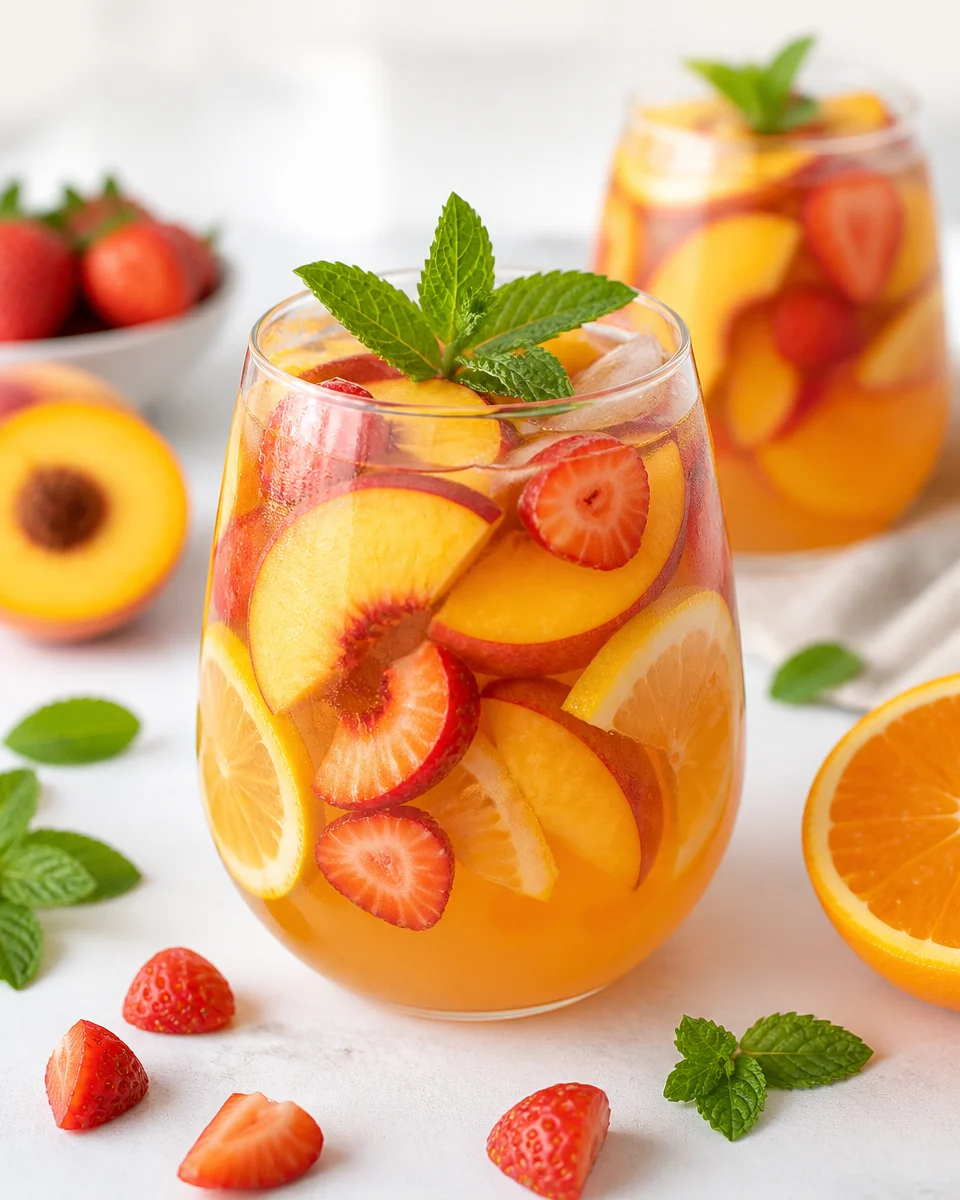
What is sangria?
Sangria is basically a wine punch. You start with wine, add fruit for flavor, and usually toss in something bubbly or a splash of liquor. People hear “sangria” and think it is complicated, but it is really just a flexible formula that you can tweak depending on what you like and what you have.
My version leans light and summery, which is why I love making Easy Peach Sangria — Summer White Wine Drink with white wine instead of red. Peaches give it that sweet, mellow flavor without being too sugary, and the citrus keeps it bright.
If you are planning a whole easy spread, I like pairing this with something snacky and cold like easy pasta salad with Italian dressing. It is the same vibe: low effort, high reward.
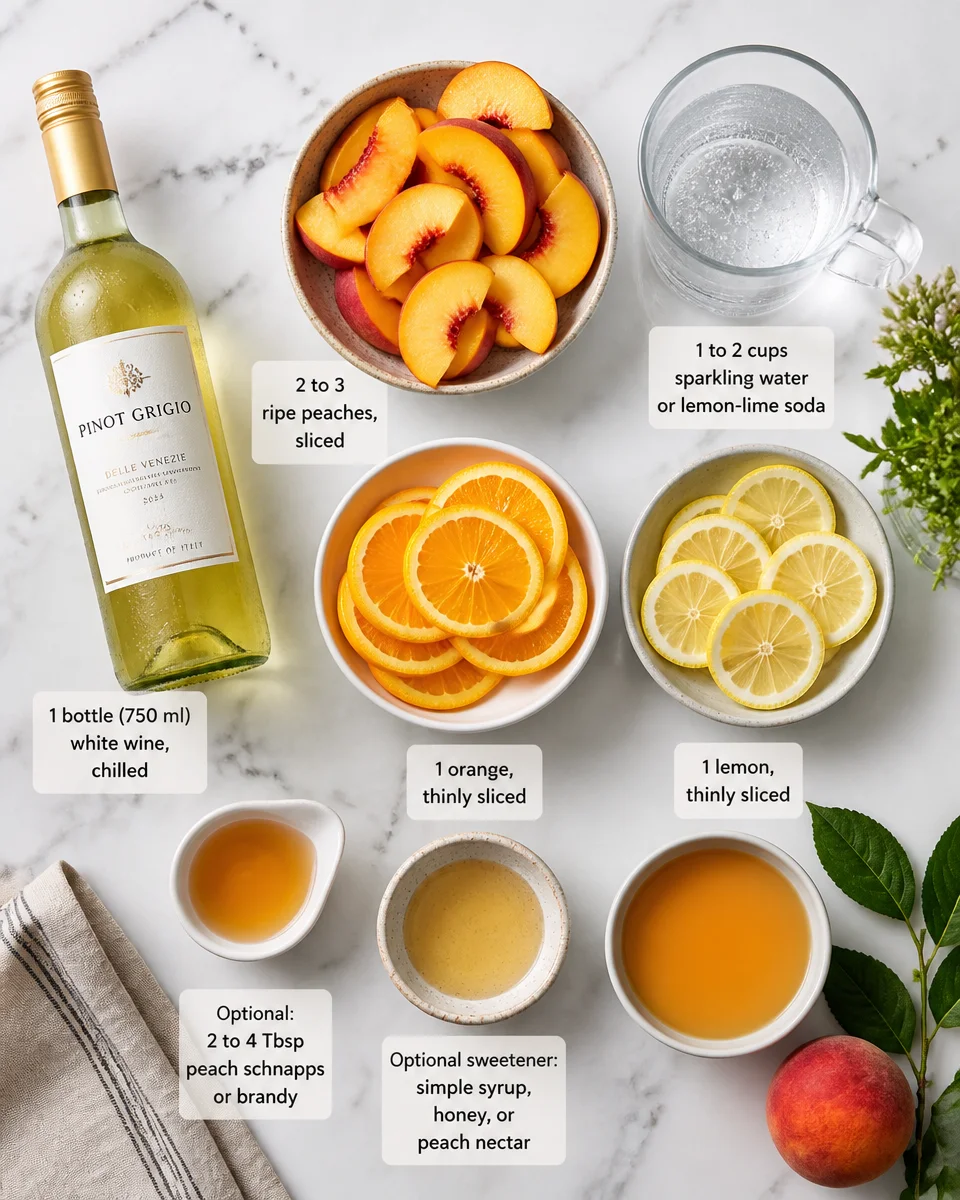
What you will need (nothing fancy):
- 1 bottle white wine (750 ml), chilled
- 2 to 3 ripe peaches, sliced (fresh is best, frozen works too)
- 1 orange, thinly sliced
- 1 lemon, thinly sliced
- 1 to 2 cups sparkling water or lemon lime soda (add right before serving)
- Optional: 2 to 4 tablespoons peach schnapps or brandy
- Optional sweetener: simple syrup, honey, or a splash of peach nectar
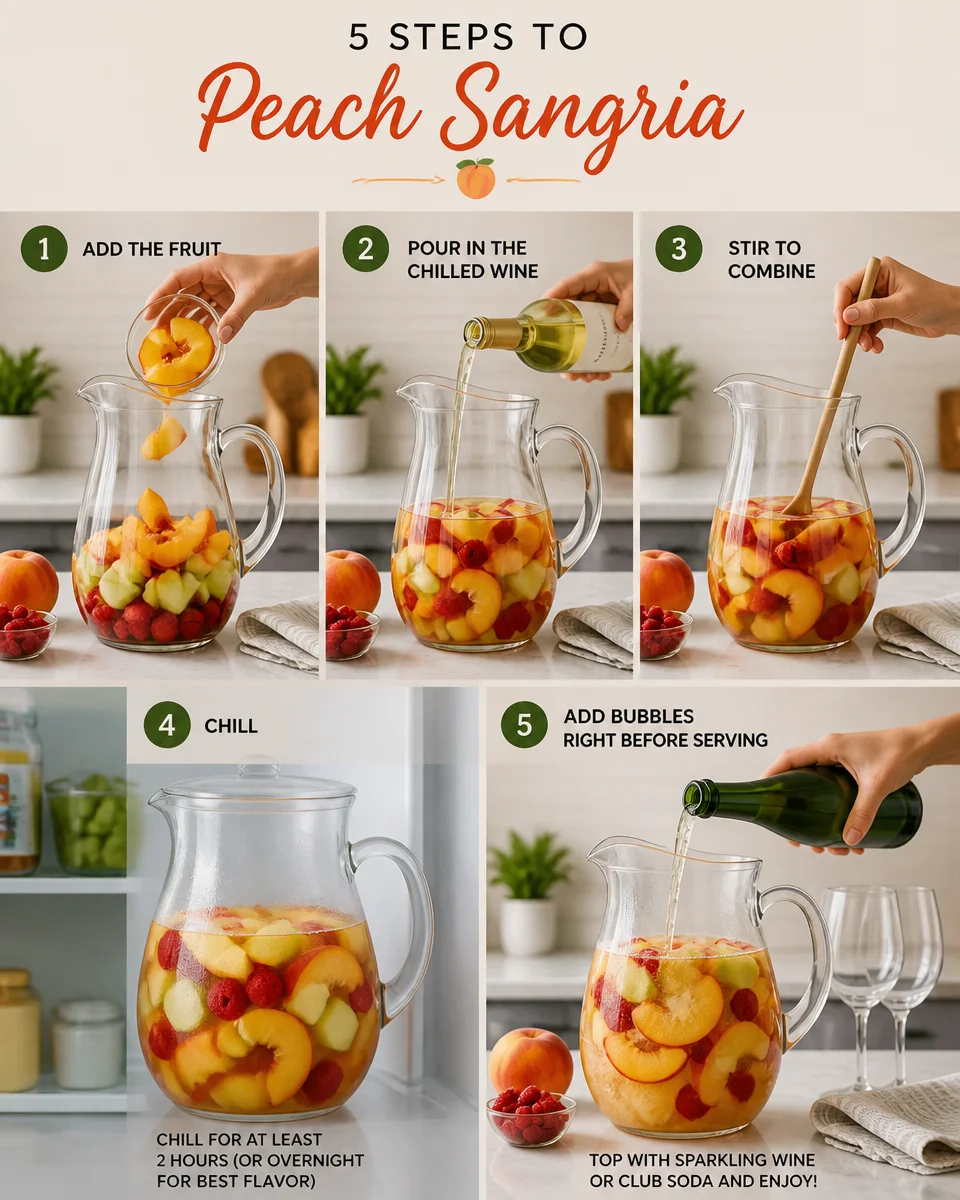
My lazy direction is: add fruit to a big pitcher, pour in wine, stir, chill, then add bubbles at the end. That is it.
“I made this for a lake weekend and everyone kept asking what was in it. The peach flavor was so fresh, and it did not taste too strong. It was gone in one night.”
What type of white wine is best for sangria?
This is the part people overthink. You do not need an expensive bottle. You just want something you would actually drink on its own, because if the wine tastes weird, the sangria will too.
For Easy Peach Sangria — Summer White Wine Drink, I usually grab one of these styles:
My favorite picks:
Sauvignon Blanc if you like crisp and citrusy. It keeps the drink from getting too sweet.
Pinot Grigio if you want something light and easy. This one is a crowd pleaser.
Unoaked Chardonnay if you like a smoother vibe. Just avoid the super buttery ones, because peaches plus heavy oak can taste off.
Moscato if you want it naturally sweeter without adding much sugar. If you use Moscato, go lighter on extra sweeteners.
Also, chill your wine first. Warm wine + ice is how you end up with watered down sangria. If you forget to chill it (been there), stick the bottle in the freezer for 20 minutes, just do not forget it in there.
Food wise, this drink works with a whole brunch spread too. If you are doing a morning hang, I love adding something simple like easy cheesy egg white muffins so there is at least one responsible item on the table.
When do I add my fruit to sangria?
I add fruit early so it has time to hang out with the wine and actually flavor it. If you toss fruit in right before serving, it looks nice, but the drink will taste mostly like wine with a hint of fruit. Still good, just not as peachy.
My simple timing rule
For the best flavor, add the fruit and wine together and chill for at least 2 to 4 hours. Overnight is even better if you have time.
One tip: if you are using super ripe peaches (the kind that bruise when you look at them), they will break down faster. That is not a bad thing, but your sangria might get a little pulpy. If you want it clearer, use peaches that are ripe but still slightly firm.
And here is the big one: add anything bubbly right before serving. Sparkling water, soda, or prosecco will lose its fizz if it sits too long. I like to keep the pitcher in the fridge, then top it off with bubbles as people arrive.
If you are doing a laid back summer dinner, this sangria is awesome with easy sides. I have totally served it next to easy Instant Pot white rice and grilled chicken, and nobody complained.
Can I make my sangria sweeter?
Yes, and you can do it in a way that still tastes fresh, not like candy. The sweetness level depends on your peaches, your wine, and what you use for bubbles.
Easy ways to sweeten without ruining it
1) Use a sweeter wine
If you start with Moscato, you may not need anything else.
2) Add simple syrup a little at a time
This is my favorite because it dissolves fast. Start with 1 tablespoon, stir, taste, then decide.
3) Add peach nectar or peach juice
This keeps the flavor on theme and makes it taste extra peachy.
4) Use lemon lime soda instead of sparkling water
This sweetens and adds fizz. Just know it will taste more like a party punch, which is not a bad thing.
Also, if you want a cozy dessert to go with it, you cannot beat something peachy. I love serving easy peach cobbler with cake mix when I have a crowd. It is simple and it makes the whole kitchen smell amazing.
And if you ever need a non alcoholic option for the table, I do a big batch of cold chocolate sometimes using this homemade drinking chocolate recipe and serve it over ice. It sounds odd for summer, but people love it.
How long does sangria last?
In the fridge, sangria is best in the first 24 to 48 hours. After that, it is still drinkable, but the fruit starts getting tired and the flavors can turn a little muddy. If you added bubbles already, it will also go flat by the next day.
Here is how I store it:
If I know we will not finish it, I keep the sangria base (wine + fruit) in a covered pitcher or jar, and I keep the bubbles separate. Then I just pour and top off each glass when I want one.
If the fruit has been sitting for two days and looks sad, I strain it out and add a few fresh slices. That little refresh makes it feel brand new.
One more honest note: if the sangria smells off or tastes fermented in a bad way, dump it. Wine is supposed to be fun, not a science experiment.
Common Questions
Can I use frozen peaches?
Yes. Frozen peaches are great, especially if fresh ones are not sweet yet. They also help keep the pitcher cold. I still like to add a few fresh slices at serving time for looks.
Do I need to peel the peaches?
Nope. I never peel them. Just wash well and slice. If the fuzz bothers you, you can peel, but it is totally optional.
What if I do not want to add liquor?
Skip it. This drink is still flavorful without schnapps or brandy. If you want extra punch without liquor, use a splash of peach nectar plus more citrus slices.
How do I keep it from getting watered down?
Chill everything first and go easy on ice. You can also freeze peach slices and use them like ice cubes.
Can I make a single serving instead of a whole pitcher?
Yes. In a glass, add a few peach slices and citrus, pour in chilled wine, let it sit 10 minutes, then top with sparkling water. It will be lighter on fruit flavor than the pitcher version, but still super tasty.
A little pep talk before you mix a pitcher
If you have been wanting a simple summer drink that feels special, Easy Peach Sangria — Summer White Wine Drink is the one to try. Keep the wine affordable, give the fruit time to soak, and adjust sweetness to match your taste. If you want more peach sangria inspiration, I have bookmarked White Peach Sangria – Joyous Apron and this one too, White Wine Peach Sangria – a fruity addition to your summer menu!, because it is always fun to see how other people mix it up. Make a pitcher, put it in the fridge, and let future you be grateful when it is ready to pour.

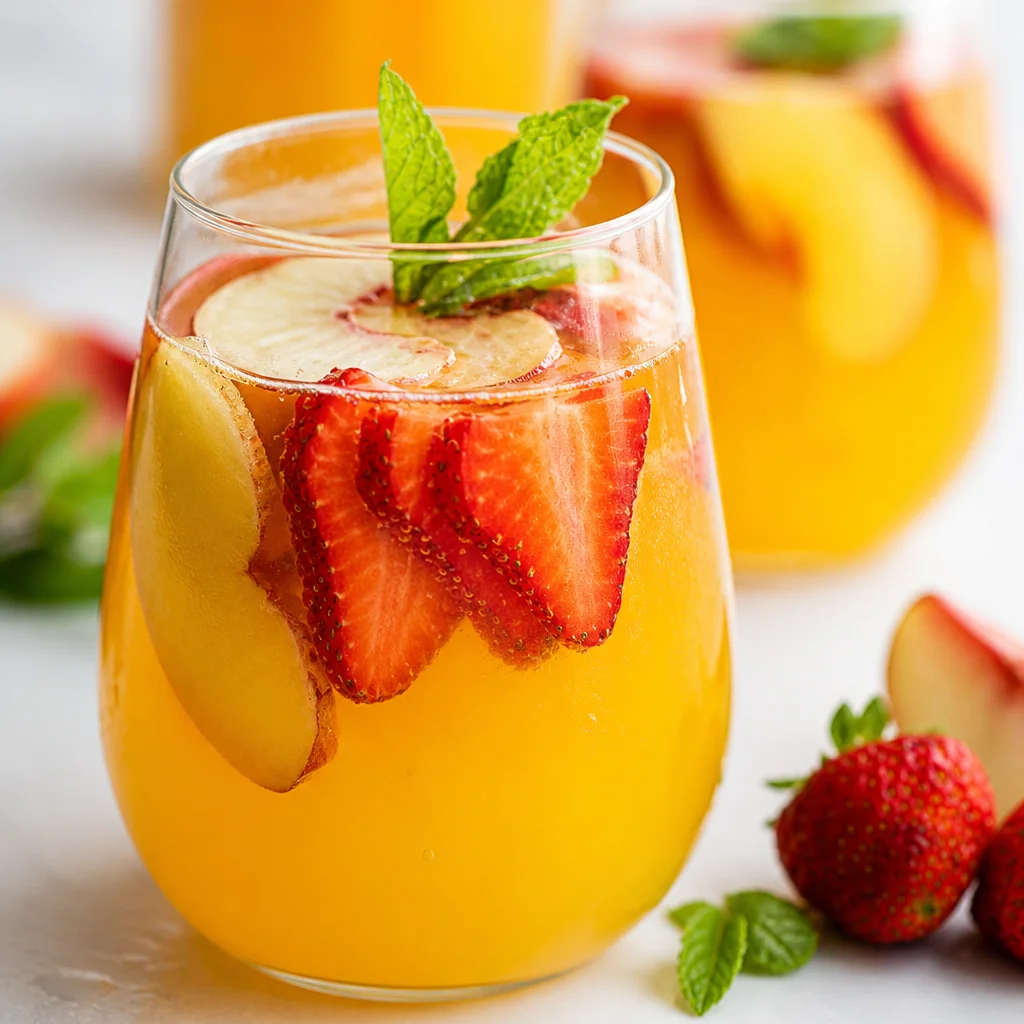
Easy Peach Sangria
Ingredients
Method
- Add sliced peaches, orange, and lemon to a large pitcher.
- Pour the chilled white wine over the fruit and stir.
- Cover and chill in the refrigerator for at least 2 to 4 hours, or overnight for best flavor.
- Just before serving, add sparkling water or lemon lime soda to the pitcher.