
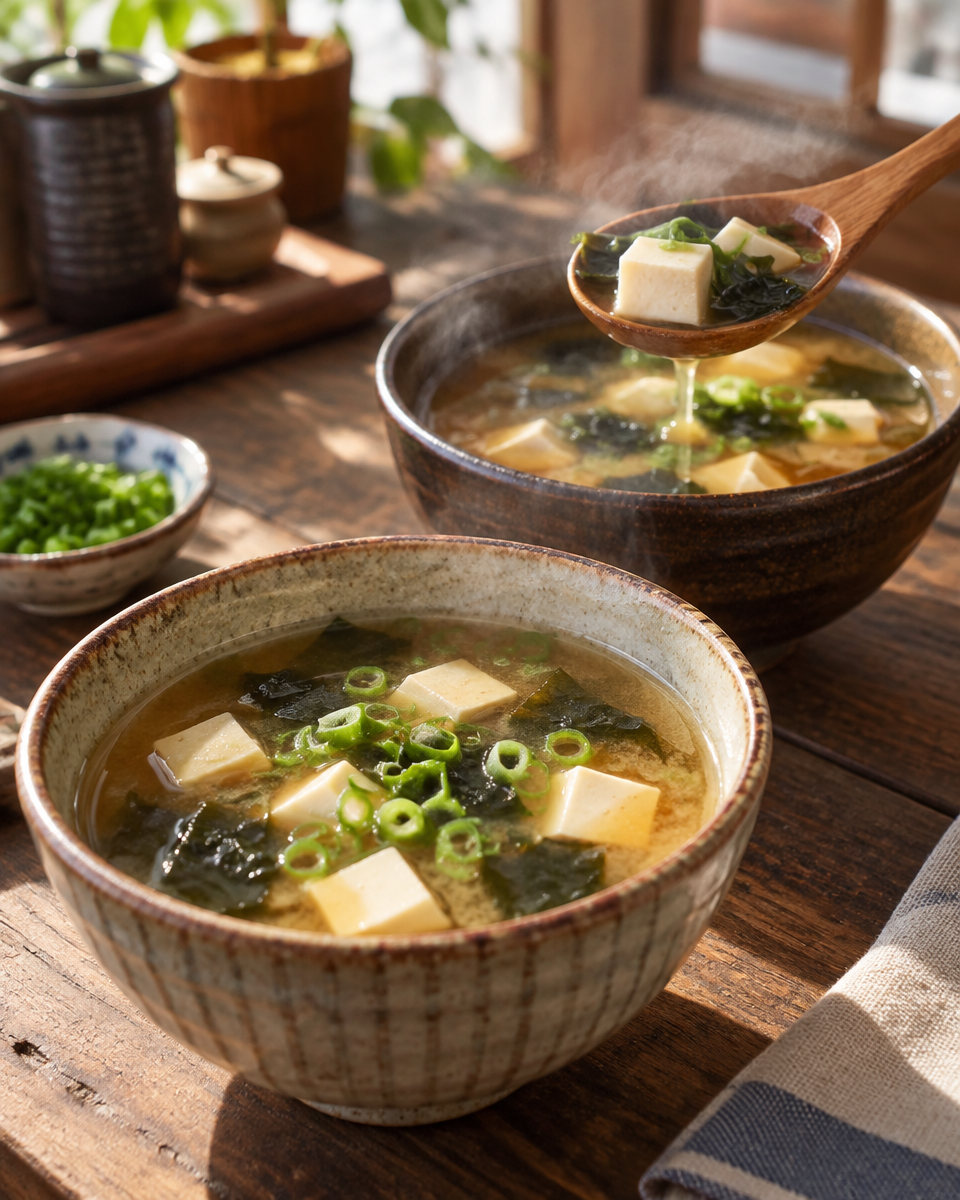
Miso Soup Recipe is one of those back-pocket fixes for nights when you want something warm, light, and comforting but do not want to spend ages cooking. This classic Japanese soup starts with dashi broth and miso paste, then gets simple additions like tofu, wakame seaweed, and green onions.
The whole thing comes together surprisingly fast. Once you know when to add the miso and how to keep it from boiling, homemade miso soup is easy to make with a clean, savory flavor that feels just right on a cool evening or alongside a simple meal.
What Is Miso Soup?
Miso soup is a simple Japanese soup built around two important ingredients: dashi and miso paste. Dashi is the broth base, often made with kombu and sometimes bonito flakes, and it gives the soup its light but deeply savory flavor.
Miso paste is fermented soybean paste, and it adds salty, earthy depth with a little sweetness depending on the variety you use. Once the miso is stirred into the warm broth, the soup gets its familiar cloudy appearance and rich flavor without becoming heavy.
Tofu, wakame seaweed, and sliced green onions are common additions. They keep the soup simple while adding a nice mix of soft, silky, and fresh textures.
Miso Soup Ingredients
You do not need a long ingredient list to make a good bowl of homemade miso soup. The key is choosing a flavorful broth and adding the miso gently so its flavor stays smooth and balanced.
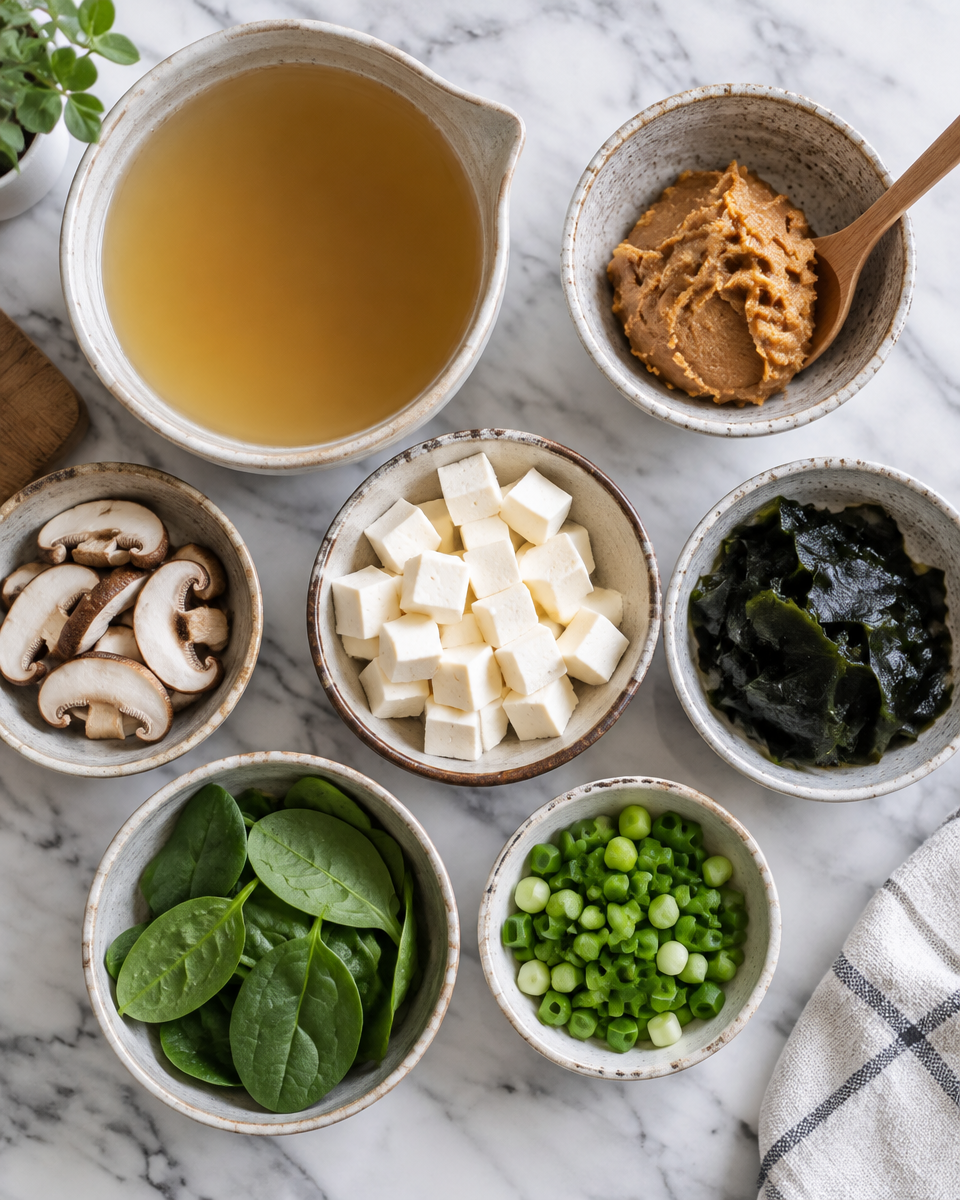
- Dashi: You can prepare dashi traditionally or use instant dashi powder with water for a convenient option.
- Miso paste: White, yellow, blended, or red miso can all work. Each one changes the flavor slightly, so choose according to how mild or bold you want your soup.
- Tofu: Soft or silken tofu gives the soup a delicate texture, while medium tofu holds its shape a little better.
- Wakame: Dried wakame seaweed expands considerably once hydrated, so you only need a small amount.
- Green onions: Thinly sliced green onions add freshness and a little bite right before serving.
- Optional additions: Sliced mushrooms or a handful of spinach can make the soup a little heartier without overwhelming the miso.
One thing to remember is that miso and prepared dashi can vary in saltiness from brand to brand. Taste the finished soup before adding any extra salt because you may find that it does not need any at all. Easy Miso Soup Recipe1
What Type of Miso Paste Is Best for Miso Soup?
The miso section at the grocery store can be confusing if you have never cooked with it before, but there is no need to overthink it. Different types simply give the soup different levels of sweetness, saltiness, and intensity.
- White miso, or shiro miso, is mild and slightly sweet. It is an approachable choice if you are making miso soup for the first time or prefer a lighter flavor.
- Yellow or awase miso sits somewhere in the middle. It has more depth than white miso without being as bold as red miso, making it a versatile option for an everyday bowl.
- Red miso, or aka miso, has a stronger, saltier, deeper flavor. A little can go a long way, especially if you are used to milder miso.
For a light soup with tofu and wakame, white or yellow miso works especially well. If you are adding mushrooms, greens, or other stronger ingredients, a more robust miso can stand up to those flavors.
You can also combine two types. Mixing mostly white miso with a smaller amount of red miso is an easy way to create a little more depth without making the soup overly strong. Easy Miso Soup Recipe1
How to Make Miso Soup
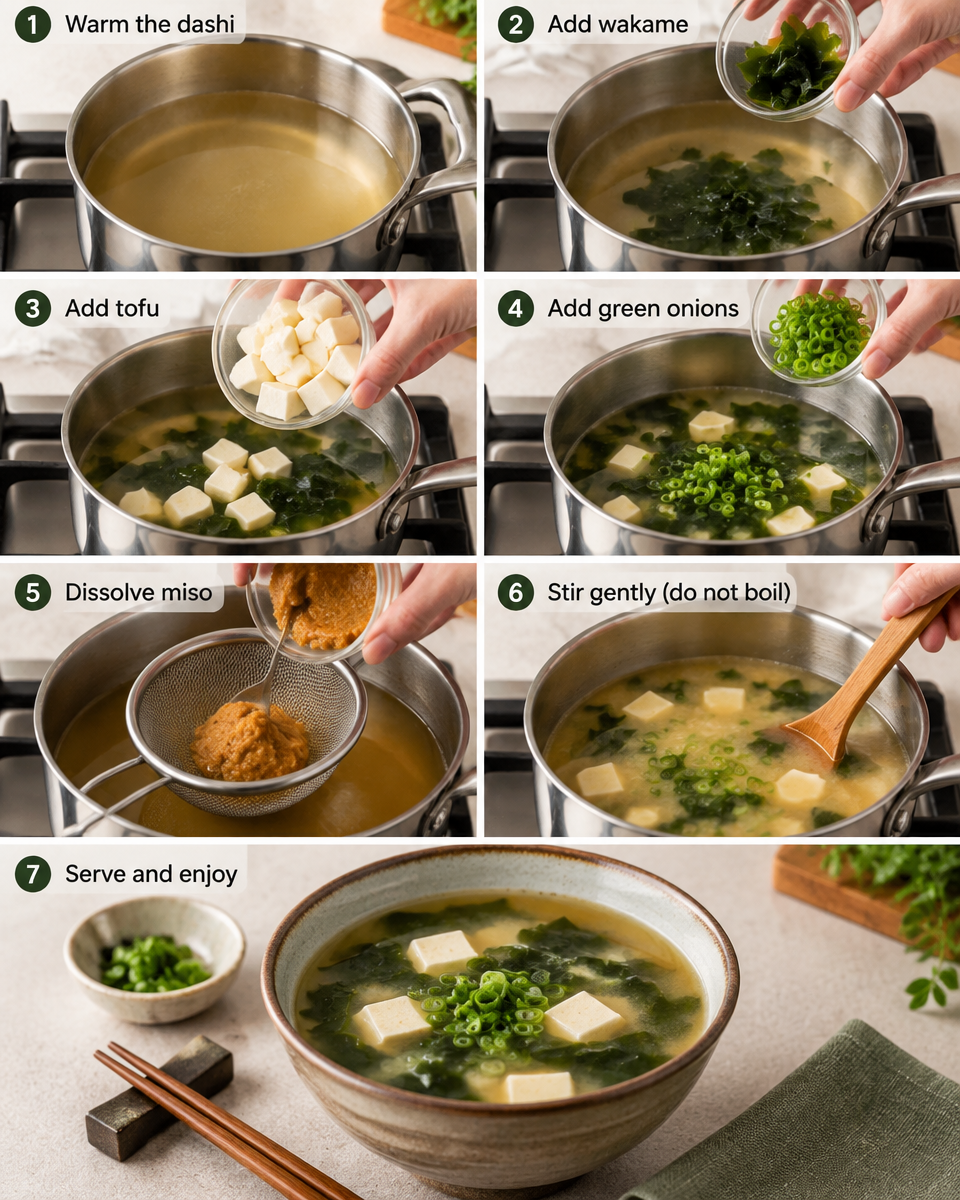
The order matters more than the difficulty. The biggest thing to remember is to keep the heat gentle and dissolve the miso before stirring it into the pot.
- Step 1: Warm the dashi in a small pot over medium heat until it is hot, but avoid a hard boil.
- Step 2: Add the dried wakame and let it rehydrate for about 1 minute.
- Step 3: Add the tofu cubes and let them warm through for 1 to 2 minutes. Keep the broth at a gentle heat so the tofu does not break apart.
- Step 4: Lower the heat. Scoop some of the hot broth into a small bowl or cup, add the miso paste, and stir until completely smooth.
- Step 5: Pour the dissolved miso mixture back into the pot and stir gently.
- Step 6: Warm the soup briefly without bringing it back to a boil, then turn off the heat.
- Step 7: Finish with sliced green onions and serve right away.
Dissolving the miso in a little broth before returning it to the pot may seem like an extra step, but it helps prevent stubborn clumps and distributes the miso more evenly throughout the soup. Easy Miso Soup Recipe1
Tips for the Best Homemade Miso Soup
A simple soup leaves very little room for ingredients to hide, so a few small details can make a noticeable difference.
Keep the heat gentle after adding the miso. Once the miso goes into the pot, avoid aggressively boiling the soup. Gentle heat is all you need to warm it through.
Taste before adding salt. Both miso and dashi can contribute plenty of saltiness on their own, and the exact amount varies between products.
Do not overcook the wakame or tofu. Wakame softens quickly, while delicate tofu can break apart if the soup is stirred too aggressively or boiled hard.
Dissolve the miso separately. Stirring it with a small amount of hot broth first makes it much easier to incorporate smoothly.
Serve the soup promptly. Miso soup is especially good when freshly made and the green onions still taste bright.
Miso Soup Variations
Once you have the basic miso soup recipe down, it is easy to make small changes depending on what you have available.
For mushroom miso soup, add sliced shiitake or other mushrooms to the dashi and simmer them until tender before adding the tofu and miso.
For extra greens, stir spinach or another quick-cooking leafy green into the soup near the end. It only needs enough time to wilt.
You can also change the type of tofu. Silken tofu creates a very soft texture, while medium tofu is easier to handle and holds together better.
Another option is to use a miso blend. Combining white and red miso lets you adjust the balance between mild sweetness and deeper savory flavor. Start with the milder miso and add the stronger one gradually until the broth tastes balanced.
What to Serve With Miso Soup
Miso soup is light and savory, so it works particularly well alongside other simple Japanese-inspired dishes rather than competing with them.
Try serving it with steamed rice, onigiri, a quick cucumber salad with rice vinegar, edamame, or grilled fish. Pan-seared salmon is another easy option when you want to turn the soup into part of a more substantial dinner.
You can also keep things extremely simple. A bowl of rice and hot miso soup can be enough when you want something warm without preparing a complicated meal.
Storage and Reheating
Miso soup tastes best freshly made, but leftovers can still be saved. Let the soup cool and transfer it to a sealed container before refrigerating it for up to 2 days.
If possible, keep fresh green onions separate and add them after reheating rather than storing them in the soup.
To reheat miso soup, warm it gently in a saucepan over low heat until hot. Avoid bringing it to a vigorous boil. If you are using the microwave, heat it in short intervals and stir between each one.
Do not worry if the soup appears slightly separated after sitting in the refrigerator. Miso naturally settles, so a gentle stir while reheating should bring everything back together. Easy Miso Soup Recipe1
Frequently Asked Questions About Miso Soup
What is miso soup made of?
At its simplest, miso soup is made with dashi broth and miso paste. Tofu, wakame seaweed, and green onions are common additions and are the ingredients used in this easy version.
What type of miso paste should I use?
White miso is mild and slightly sweet, yellow or blended miso offers a balanced flavor, and red miso is stronger and saltier. White or yellow miso is a good place to start if you prefer a milder soup.
Can I make miso soup without dashi?
You can make a version without traditional dashi, although the flavor will be different. A light vegetable broth can work when needed, while instant dashi powder is a convenient option if you want a more characteristic dashi flavor without preparing it from scratch.
Why should miso not be boiled?
Once the miso has been added, keeping the soup at a gentle heat helps preserve its smooth, balanced flavor. There is no need to vigorously boil the soup at this stage.
Can I make miso soup ahead?
You can prepare the dashi ahead of time and refrigerate it, then gently reheat it when you are ready to make the soup. For the best texture and flavor, add the miso, tofu, wakame, and fresh green onions closer to serving time.
How do I store leftover miso soup?
Store leftover miso soup in a sealed container in the refrigerator for up to 2 days. Reheat it slowly over low heat rather than bringing it to a hard boil.
A Cozy Bowl You Can Make Any Night
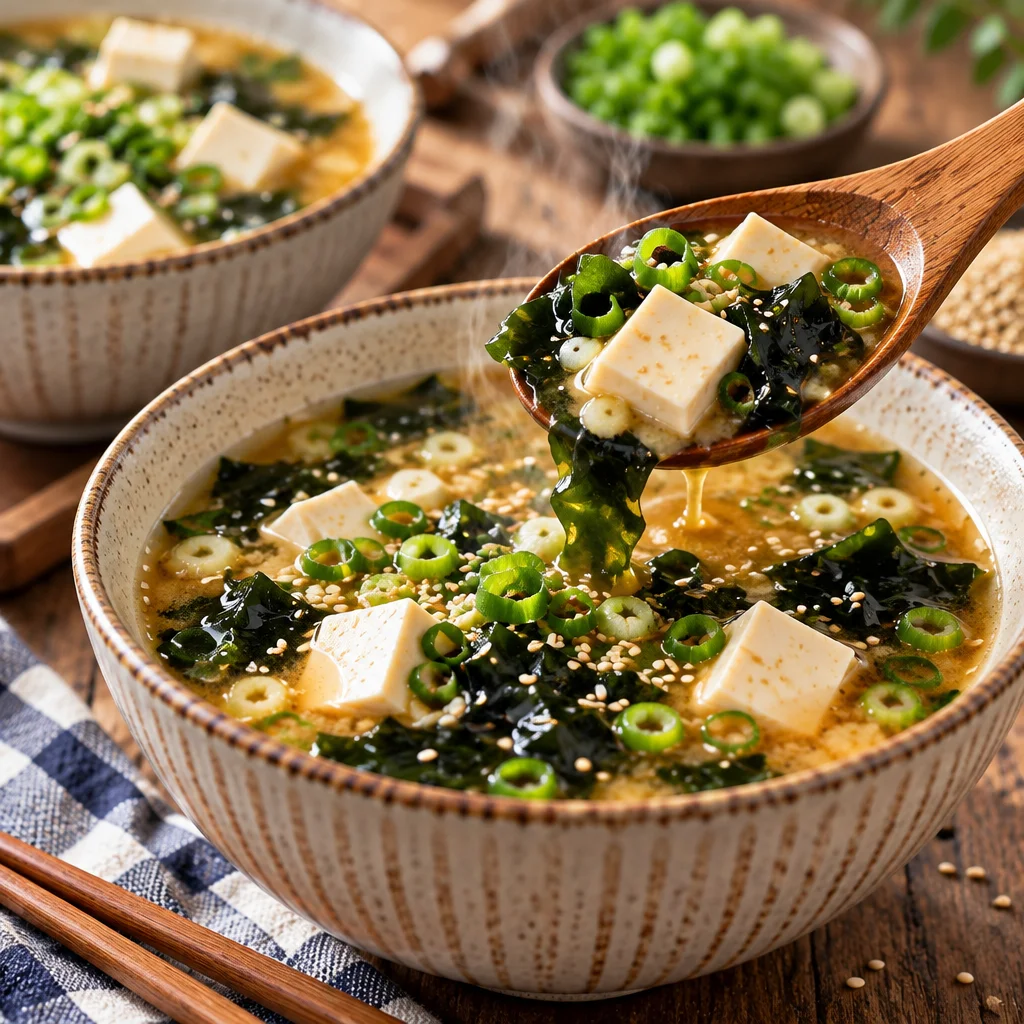
If you have been wanting to try homemade Japanese comfort food without taking on a complicated recipe, this easy miso soup is a great place to start. Once you understand the simple technique of dissolving the miso separately and keeping the heat gentle, the process becomes easy to repeat.
Keep your first bowl simple with dashi, miso, tofu, wakame, and green onions. From there, you can adjust the type of miso or add mushrooms and greens whenever you want a slightly different version.
Easy Miso Soup Recipe
Ingredients
Method
- Warm your dashi in a small pot over medium heat until hot but not boiling.
- Add the dried wakame and let it rehydrate for about 1 minute.
- Introduce the tofu cubes and warm them through for 1 to 2 minutes.
- Lower the heat and scoop some hot broth into a small bowl or cup.
- Add the miso paste to that bowl and stir until smooth.
- Pour the smooth miso mixture back into the pot and stir gently.
- Do not boil the soup after adding miso. Warm it for about 30 seconds, then turn off the heat.
- Top with green onions and serve immediately.