
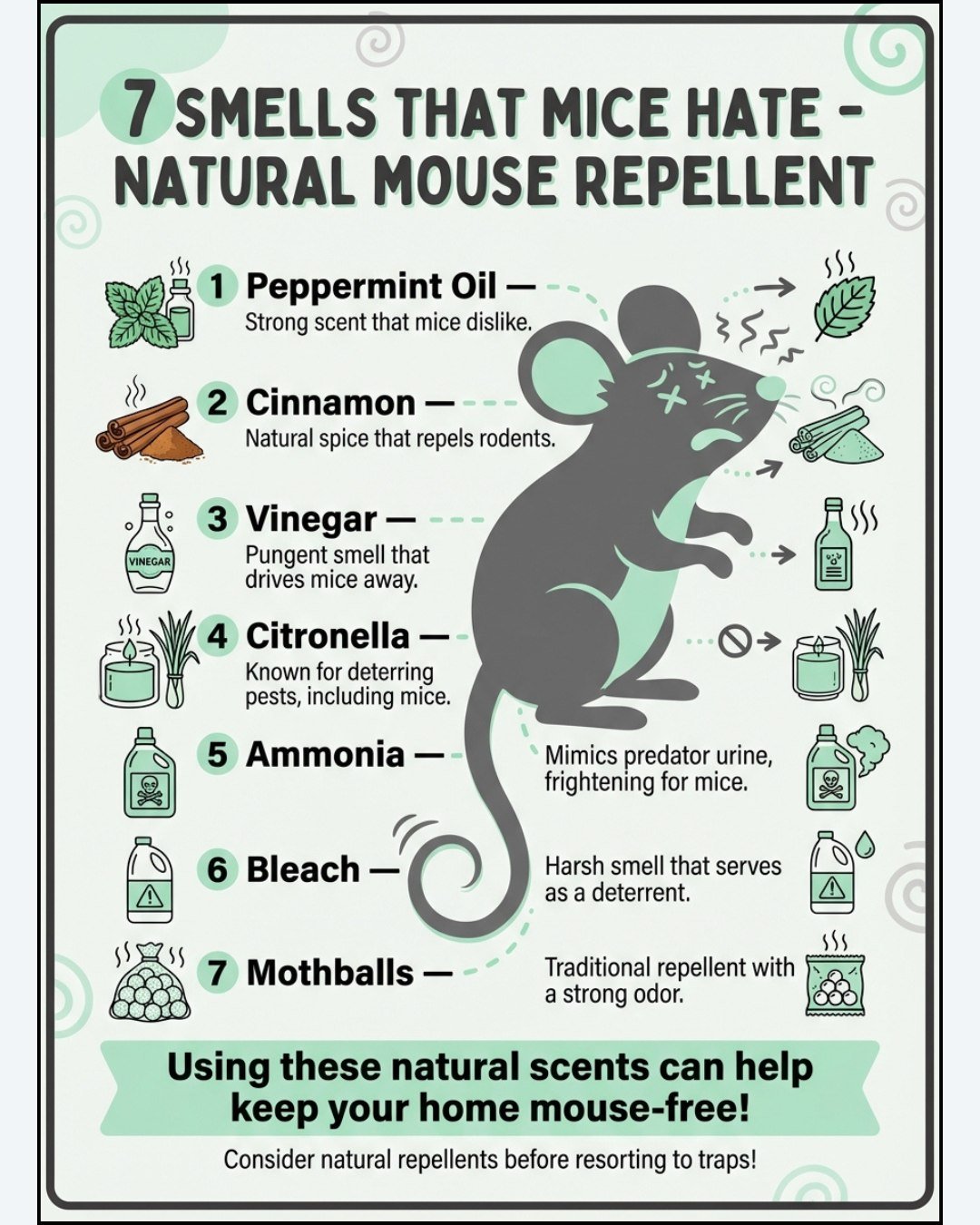
Ever wanted to never see (or, worse, hear) a mouse scurrying across your kitchen again? Trust me, you’re not alone. I’m telling you—7 smells that mice hate are totally a thing, and I wish I’d known about them the first time a tiny whiskered invader showed up next to my stove. You don’t have to go wild with traps or chemicals either; just plain old natural mouse repellent tricks. Sort of like those weird dish soap hacks for tough grease—sounds odd till you try ’em, then you can’t stop showing everyone at brunch. And, speaking of kitchens, if you need a sweet distraction from your rodent woes, I highly recommend my favorite 7UP bundt cake recipe. But let’s get back to banishing those mice for real—no crazy hardware store runs, just stuff you probably already have.

Scents that repel mice naturally
All right, so here’s the short list you’ve been waiting for—seven unique (and surprisingly normal) scents mice just straight-up hate:
- Peppermint oil – Smells great to us, but apparently it’s a mouse’s worst nightmare.
- Eucalyptus – A spa vibe for humans, but a roadblock for furry freeloaders.
- Ammonia – Smells like cleaning day gone wrong; mice run for cover.
- Cinnamon – Festive, sure, but dreadful for rodents (who knew?).
- Cloves/Clove oil – Strong and spicy is a dealbreaker.
- Vinegar – The tang is too much for their tiny noses.
- Cedarwood – Natural, earthy, and your cupboards suddenly mouse-free.
You’d think being so little, they’d be too busy to mind a bit of nice aroma—but no, they’re picky!
“I rolled up some cotton balls with peppermint oil and—honest, I haven’t seen a mouse since. Not even a fuzzy tail!” – Anne L., Austin

Common natural repellents for mice
Let’s get down to the basics—what can you actually use, easily and cheaply, that doesn’t make your home smell like a science experiment?
- Peppermint and eucalyptus oil on cotton balls – Place them in corners, cabinets, or even your pantry (no, it won’t mess with your food).
- Bowls of vinegar – Seriously, just set ’em by entry points—mice can’t stand it.
- Whole cloves or cinnamon sticks – Stick ’em in loose in kitchen drawers or wherever you hear the pitter-patter.
- Honestly, if you’re really desperate, a little ammonia in a cup in the garage or attic can work, but make sure no pets or kids get curious.
Pro tip? Make a little rotation schedule (calendar nerd here!)—swap scents every week or two, just so mice don’t get cocky and adapt.

Effectiveness of different scents like ammonia and eucalyptus
This is the “does it actually work?” part. I mean, anyone can tell you to spray oils, but that doesn’t mean your mouse-friends will move out by Tuesday.
- Ammonia is the real heavy hitter. Smells a bit like cat pee (gross, but true), and mice hate it—guess it triggers predator alarms.
- Peppermint and eucalyptus are close seconds. Just a few drops can be enough to keep them at bay—plus, your kitchen will smell like winter, which is kinda fun.
- Clove and cinnamon work, but—being honest here—they’re weaker over time, so you’ll want to refresh them often.
- For the “smell blind” mice (they’re stubborn!), try using a combo for max effect.
Remember, no scent is totally bulletproof. Honestly, I’d pair this with basic crumb patrol and plugging up holes.
Comparison of professional pest control vs. natural methods
Let’s just lay it out: you could go full five-star hotel for mice (the pros with all their sprays and traps), or you could keep it low-key and natural.
- Professional pest control—costly, can be kinda toxic, and frankly smells weird for weeks after they leave.
- Natural methods—cheaper and kid/pet-friendly. Might take a little longer but hey, your house won’t reek of mystery chemicals.
- A combo approach is sometimes best—the scents keep them away while you patch & clean, then call the pros if all else fails.
- If you’re a DIY type, the natural route feels pretty satisfying. Not instant, but definitely real.
I’ll say this: you can keep those little dudes out (most days) with just pantry basics and a bit of patience.
Recommended practices for using scents to deter mice
You don’t win a home-and-garden medal by just plopping down a cinnamon stick and calling it good. Here’s how to actually make it work:
- Put scented cotton balls or sticks exactly where you spot mouse droppings, chewed stuff, or obvious entry holes.
- Replace or refresh scents every 7-10 days—more often if the weather’s weird or the area’s drafty.
- Don’t leave food out ever (I know, I know, easier said than done with midnight snacking).
- Do a scent combo shuffle—makes it harder for mice to get used to any single repellent.
A little elbow grease here saves you—literally—from those late-night “what’s that noise?!” panics.
Common Questions
Q: Can I just use minty toothpaste or mouthwash to keep mice away?
A: Eh… not really. The oils in toothpaste are too diluted. Go with concentrated peppermint oil for the real punch.
Q: Do natural repellents actually get rid of mice, or do they just stop new ones from coming in?
A: Works both ways, honestly, but they’re better for prevention. Once a mouse has settled in, you might need traps or other options too.
Q: How often should I replace cotton balls with oil?
A: Every week or so. If you can’t smell them anymore, neither can the mice.
Q: Is vinegar safe to use around pets?
A: Yup—just keep it out of their water bowls (obviously), and be aware some pets hate the smell too.
Q: Can I mix a bunch of oils together?
A: Sure! Some folks swear by a peppermint-eucalyptus-clove combo. If it smells strong to you, mice REALLY won’t want to stick around.
Ready to Never See a Mouse Again?
So, to wrap it up—7 smells that mice hate really do give you a fighting chance to keep those pesky critters out, and your pantry all to yourself. Remember: peppermint and eucalyptus = gold, ammonia is a secret weapon, and mixing up your natural mouse repellent routine can make a real difference. Keep your kitchen clean, your scents fresh, and if you need more home hacks, check out these aluminum foil tricks or maybe a stress-busting turkey technique for holiday flavor (and peace of mind). If you’re curious for even more ideas, here’s a really detailed list of 15 smells that mice hate and some pro-level tips about natural repellents that work. Give it a go—your kitchen (and nerves) will thank you.